
Note: This website was automatically translated, so some terms or nuances may not be completely accurate.
 Behind the Scenes of "Let's Bloom Together. Happy Valentine's Day 2015" [2/2]
Young Creators Explore the Possibilities of Digital Expression [Part 2]
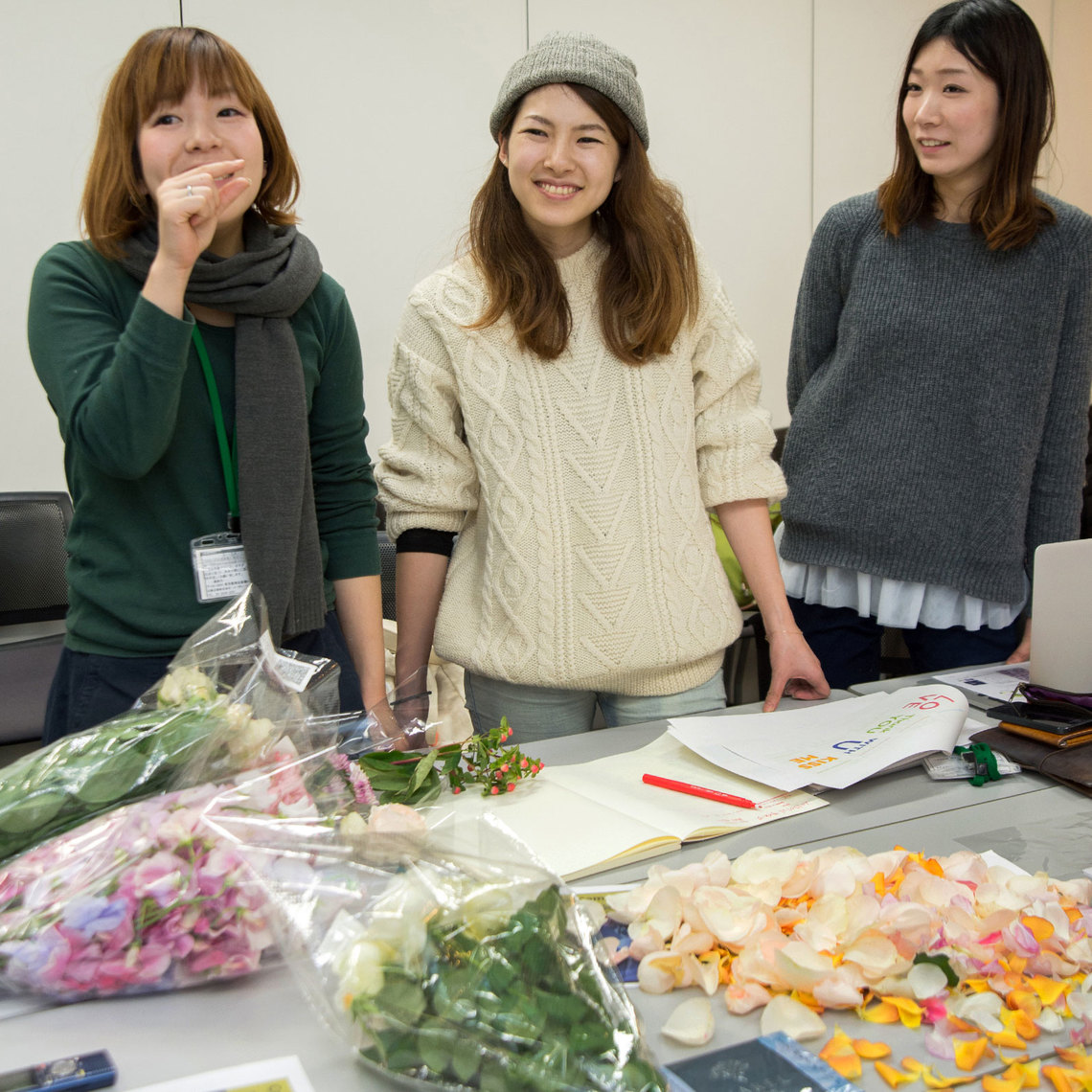
From Monday, February 9th to Sunday, February 15th, Dentsu Inc. collaborated with young creators to decorate the digital signage at Toei Oedo Line's Roppongi Station with flowers. Many visitors enjoyed the flower characters that appeared as petals fluttered, as well as the interactive "Flower Fortune Telling for Two" feature. In the second part of our roundtable with the three creators central to the project, they discussed the specifics of filming and setup, as well as the potential of digital signage.
"Let's Draw Flowers Together. Happy Valentine's Day 2015"
From February 9 (Mon) to 15 (Sun), the "Roppongi Home Vision" digital signage on the platform of Toei Oedo Line's Roppongi Station—developed and installed by Dentsu Inc. last year—hosted an installation themed "Let's Bloom Together." This featured a floral video installation by young Dentsu Inc. creators and an interactive flower fortune-telling system operable by human movement. This joint project between Dentsu Inc. Creative Direction Center (which aims to increase opportunities for creators) and the OOH Division was conducted to explore the potential of digital creativity alongside both in-house and external young creators.
During testing, petals didn't fly—just a rustling sound...
——In Part 1, we heard about the process of finalizing the concept and the thoughts behind timing it for Valentine's Day. In Part 2, we'll delve into the details of filming and setup. Were there quite a few decisions made on-site?
Tada: Plenty, yes...! We had to test many things: how much wind needed to make the petals fly beautifully, how many petals were required, and what gesture should start the flower fortune-telling. The flower character arrangement was actually finished on-site by Suzuki-san on the day of the shoot.
We also determined the number of flowers needed for the petals to dance in the wind after one test run, then had Suzuki-san consult with the market.
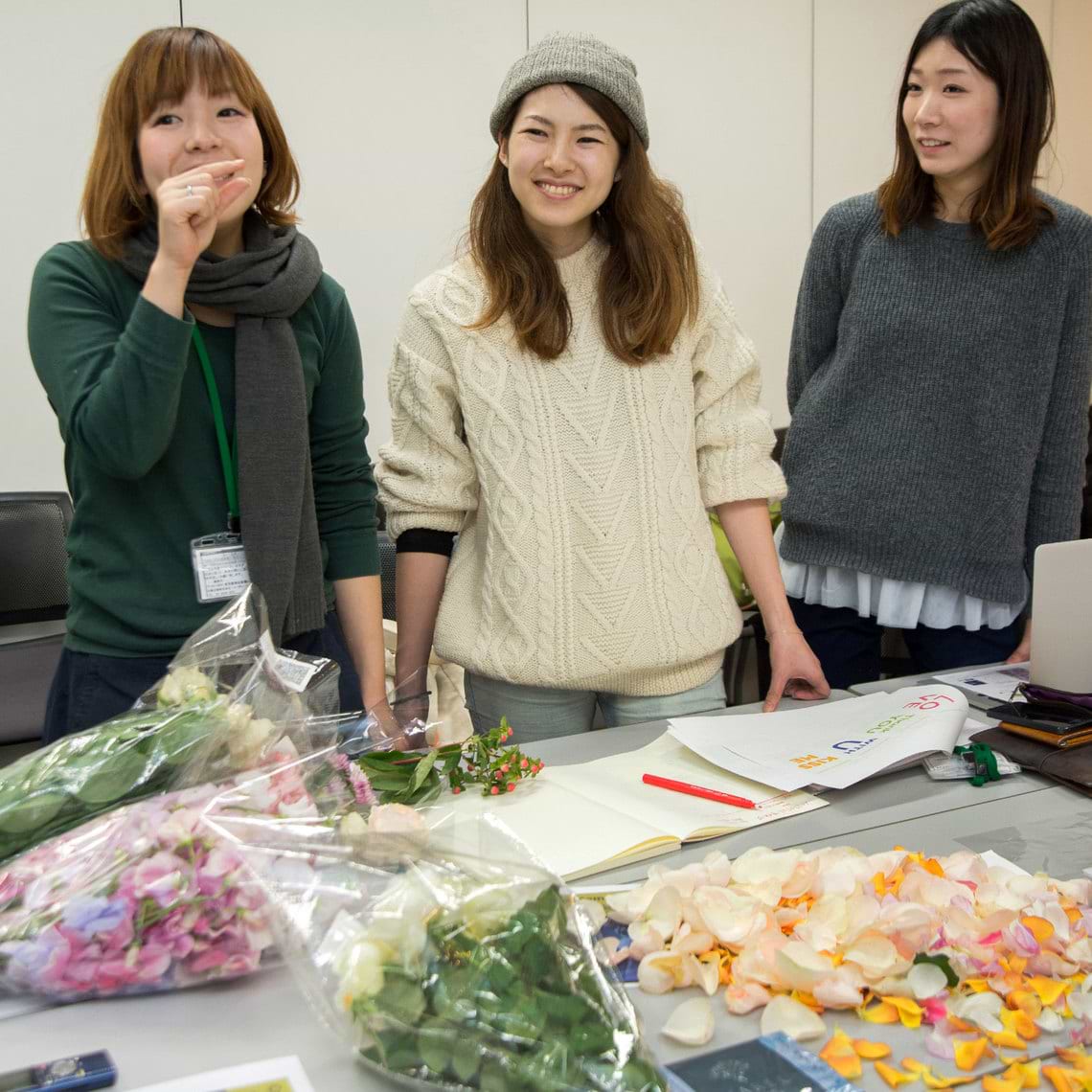
Suzuki: When sourcing flowers, strictly specifying varieties and colors can sometimes drive up the price. So, we balanced the budget by consulting with the market staff about how the flowers would be used, our budget, and the desired atmosphere. After testing, we determined we needed about 40 stems per attempt. Planning for about three attempts on the shoot day, we prepared 120 stems, totaling about 500 stems across four varieties.
――You prepared that many!
Suzuki: But we didn't end up using that many during the actual shoot. Initially, we planned to shoot at full size, but we ended up shooting slightly smaller and enlarging the images for display.
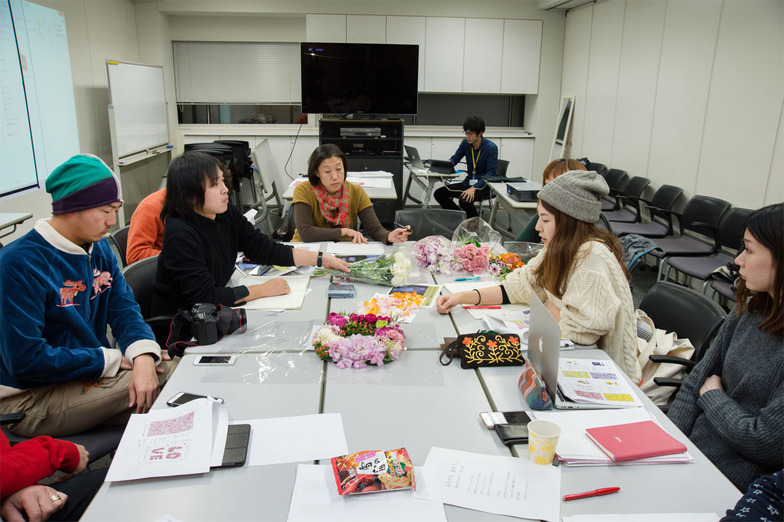
――That's true. It really changes how the petals look and how they flutter when viewed on the signage, doesn't it? And the size of the flower character arrangements too.
Tada: Exactly. During the test shoot in mid-January, we prepared everything assuming we'd shoot at full size. But when we tried using a hair dryer, the petals just wouldn't fly away enough (laughs).
Suzuki: The flowers were a bit past their prime, so the petals were wilted and heavy, but we wanted that lively, swirling movement (laughs).
Tada: I thought, "There's no way we can shoot this at actual size." We'd had a rough discussion with Taiyo Kikaku, who joined us for production, about how to shoot it, but actually trying it was completely different.
So we tested how it would look enlarged—projecting footage from the test shoot onto a wall. We concluded it might actually look nicer slightly enlarged, so we went with that. But that meant the arrangement itself would appear relatively smaller, making it harder for Suzuki-san to create. We all discussed that balance.
Also, for filming, we placed an acrylic sheet between the carpet of petals and the arrangement. We tested various things during the trial run: whether acrylic or glass was better, and how to direct the airflow.
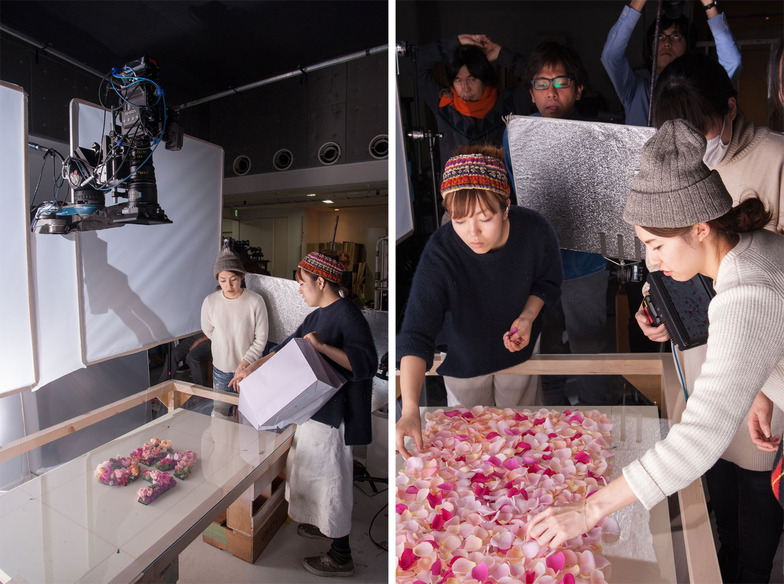
The team cheered at the fleeting beauty
――What was the atmosphere like on the actual shoot day?
Tada: Well, every time the flowers flew up, everyone clapped. It was the first time I'd experienced such a unified feeling on set! Between the tests and the actual shoot, Taiyo Kikaku tried so many things—how to launch the flowers, the strength of the wind, even how to quickly gather the fallen petals—so everything went incredibly smoothly.
Kani: Normally, shoots have time constraints and tend to proceed rather matter-of-factly, but this time we lost track of time and just enjoyed ourselves. The arrangements Suzuki-san finished right there on the spot were truly wonderful; we were all captivated watching them.
Tada: During filming, I think Suzuki-san was our backbone. Even when unexpected situations arose, he never flinched. He'd just say, "It's fine, I'll figure it out," and get things done efficiently. We were so grateful for that.
Suzuki: I had anticipated needing that kind of adjustment... I figured a lot of things would only work if we coordinated on-site, so I came prepared about 80% and planned to complete the rest during the shoot.
――Since the location this time was a station platform, I heard you could only test it on-site late the night before the event. What was the situation like?
Tada: As I mentioned earlier, we decided the specific gestures to start the flower fortune-telling here, consulting with Chromagnon, who specializes in signage. The first challenge was positioning the motion capture equipment. We had to consider the height and angle based on the participants' height and the station platform layout, ensuring it didn't obstruct foot traffic.
Also, the motion capture didn't just react when two people made a heart shape; it required a specific pose. So, figuring out how to instruct them was another challenge. We tested things like which hand people typically use to make a heart shape with several pairs, and what kind of illustration to display on the signage. We did extensive testing before setup to ensure as many people as possible could enjoy the fortune-telling.

Kani: Beyond the illustrations, we also considered how to make the pose instructions clear. There were many aspects we couldn't understand without actually trying it. In that sense, even with digital signage, we realized anew that it requires genuine human involvement and imagining the recipient's perspective.
――Once the project launched, what kind of reactions did you see from passersby? How did you feel about those reactions?
Tada: Since the flowers become visible, I noticed many women stopping to look. One couple watched the petals fall and the message appear, then happily speculated about what would come next or read it aloud. Some people even watched the train pass by, seemingly wanting to see the rest of the message.
Kani: Additionally, someone from Taiyo Kikaku, who worked on the project with us, told me they saw an elderly couple lovingly forming a heart together and doing the fortune-telling. Hearing that made me feel so glad to have been involved in this project.
Creative Evolution Through Technological Advancement
――Regarding the use of digital signage incorporating motion capture technology, what aspects did you focus on?
Tada: As mentioned earlier, we were careful about the gesture that starts the flower fortune-telling. It couldn't be too complex, and it couldn't react to two random strangers who happened to stand in front of it. There's still a lot of unfamiliar technology, so we progressed by consulting with the team at Chromagnon.
Kani: This is something I realized later on, but since digital signage like this is a light, accessible form of communication, I felt the copy should also be lighthearted. What you can create changes based on what the technology enables.
――As the digital realm continues to evolve, the appeal of creative work will likely change too. What kind of feedback did you get through this project?
Kani: Honestly, I used to be uncomfortable with technology-driven creative work. But this project allowed us to create something like Suzuki-san's arrangements—works that feel handcrafted. It completely changed my perception.
Suzuki: Fresh flowers have their own impact, but mechanisms like this one are something I could never create by hand. It was also a valuable opportunity to reach a wide audience, including people who aren't usually interested in flowers. Even just slightly enlarging the petals for display meant you could see them dancing from a distance, making it really captivating. I definitely want to actively pursue more work related to video and digital signage going forward.
Tada: I've also mainly worked on print projects until now, and like Kani-san, I'd been a bit hesitant about the digital realm... (laughs). But this time, I feel the boundary between print and signage has blurred a bit, or rather, the disconnect within me has diminished.
Also, what really stood out this time was how engrossed we all got during filming—we even let out spontaneous cheers. I believe people won't be motivated unless they're genuinely moved by what they're involved in. So, I want to keep working with a clear focus: "Does this move me personally?"
Special Thanks
CD Tetsuya Watanabe (Creative Direction Center)
AD/Planner Asuka Tada (1CRP Bureau)
CW Natsumi Kani (1CRP Bureau)
Dir: Gaku Ito (Taiyo Kikaku)
Pr. Katsuya Fujisaki, Hirotaka Tochihara (Taiyo Kikaku)
PM: Chiharu Naganuma (Taiyo Kikaku)
Cam Yasukata Kotake
Light: Tatsuya Doi
Flower Artist Akiko Suzuki (Mitsurin Tokyo)
ED: Toshihiko Odabe (Taiyo Kikaku)
Digital Signage Supervision: Haruhiko Yasuda (Chromagnon)
Special Cooperation: Ichiro Kinoshita (Creative Direction Center, Director), Yoko Ojima, Taku Shimizu, Yuri Yoshiyuki, Akinori Okai (OOH Division)
Was this article helpful?
Share this article


Newsletter registration is here
We select and publish important news every day
For inquiries about this article
Back Numbers
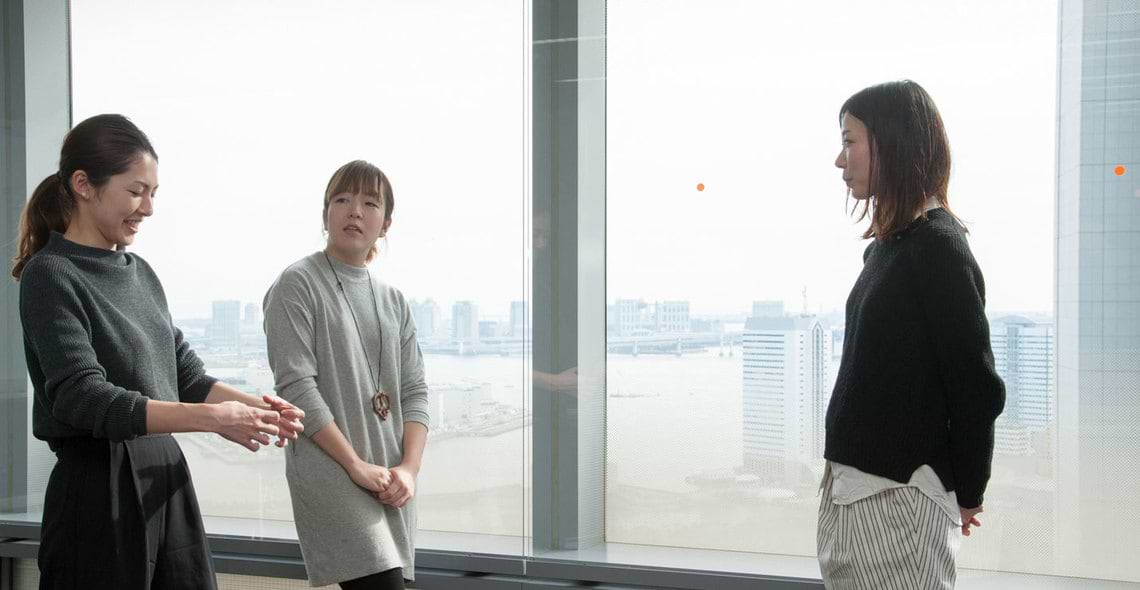
Author
Suzuki Akiko
Tokyo Jungle
Flower Artist
Asuka Tada
Dentsu Inc.
First CR Planning Bureau
Art Director
Kani Natsumi
Dentsu Inc.
Marketing Creative Center Communication
Copywriter