Note: This website was automatically translated, so some terms or nuances may not be completely accurate.
 The Secret to Successfully Launching a New Business [3/4]
The UX Design Approach Brought to Life by Air Register. Recruit Lifestyle Interview with Yuichiro Kage (Part 1)

Yuichiro Shikage
Recruit Lifestyle Co., Ltd.

Naoya Miura
Dentsu Inc.
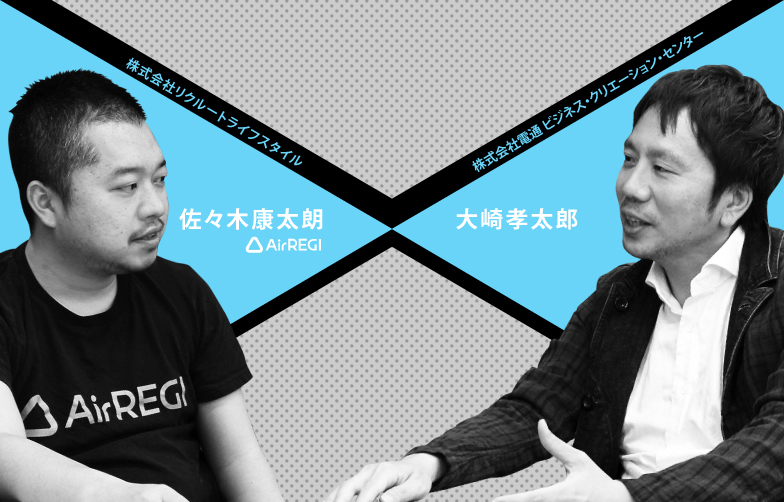
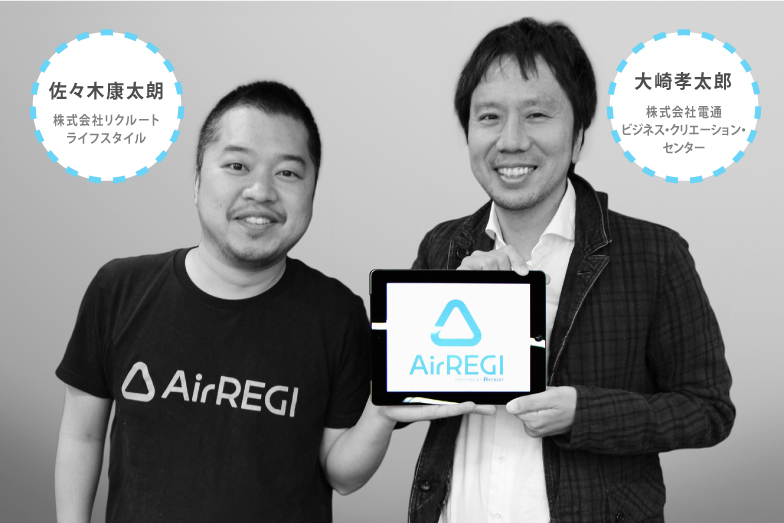
For the third and fourth sessions, we welcomed Yuichiro Kage from Recruit Lifestyle. He engaged in a dialogue with Naoya Miura from Dentsu Inc., focusing on the UX design of Air Register. We inquired about the role of Recruit Lifestyle's UX Design Group and how they design UX to promote the Air Register service.
Reasons for Establishing the UX Design Group and Its Role
Miura: Mr. Kage, you currently belong to the UX Design Group within Recruit Lifestyle's Net Business Division. What have you been doing since joining the company?
Kage: I was initially assigned to the Ponpare division, where we developed and released updates every two weeks. I handled the entire process for pages like "How to Use Ponpare" – from requirement analysis and content creation to design and coding. My mentor in the Ponpare division was someone who could do everything: research, planning, front-end design, coding. It seemed the intention was to cultivate talent like him.
In my second year, during the launch of Ponpare Mall, a team of three of us handled everything from design to implementation for both services: one for participating stores (clients) to register and sell products, and another for general consumers (customers) to shop. I was particularly involved in the customer-facing service, starting from research and concept creation.
I joined Air Register in August 2014. Beyond developing in-app features, I also explore possibilities outside the app itself.
Miura: Could you also tell us about the formation and mission of the UX Design Group?
Kage: The UX Design Group is a department now in its third year.
It started as a UX team within the Customer Web Group, which focuses on product improvement. Our goal is to cultivate talent capable of conducting research, planning, design, and implementation. Recruit values creating services while considering the business, but there was a challenge: the perspective tended to be too business-oriented, often lacking focus on who the users are and whether the service is truly easy to use. The UX Design Group supports this, primarily engaging in service development during the new launch phase.
The Structure for Realizing UX
Miura: I think UX design in the wider world often focuses on improvement perspectives—like how to change existing service designs to increase page views or conversion rates. What I find particularly novel about Kage's UX Design Group is its scope of "designing the UX for new services." What design methodologies do you employ to launch new services and gain user acceptance?
Kage: Previously, approaches varied by individual, so we created a defined framework as a process for new launches. It's meant as a guidepost; we don't specify concrete details like "use this tool to build this in this phase."
It indicates where we are in the process, what should come next, and who to collaborate with for smooth progress. We structured the framework around four phases: Strategy, Planning, Production, and Operations. The underlying philosophy is that maintaining a user perspective from the Strategy phase ensures smoother project execution.
Miura: In UX design, it's essential to optimize the whole system holistically rather than treating design, coding, marketing, and research as separate silos. How do you facilitate communication to integrate these elements?
Kage: The perspective you can bring depends on the breadth of your skill set, so it varies by project and person. New graduates often start by gaining experience in downstream processes like development, then move on to research and upstream phases. I believe experiencing the entire spectrum from downstream to upstream is crucial for developing people who can see the big picture.
Additionally, at AirRegi, development is divided among multiple small teams. We ensure each team includes three roles: someone with a business perspective, an engineer, and a designer. This structure prevents gaps in perspective during development. We frequently discuss what an ideal UX designer should be with group members and managers, but we haven't found the answer yet.
Requiring someone to possess all three perspectives—business, development, and design—and actually be able to build the service makes hiring difficult. We're now considering creating new job titles based on combinations of these skill sets. For example, calling someone who can design and code a "design engineer." We're exploring whether it's possible to first aim for the role of design engineer and then add the business perspective later.
The Role of UX Designers at Airレジ
Miura: I think Airレジ is a product with fast development speed that responds quickly to customer needs. What kind of team structure and decision-making process do you use for improvements?
Kage: We're divided into six teams based on functional units like accounting, reservations, and customer management. We focus on what features to add or improve to encourage adoption. It's crucial to clearly distinguish between two perspectives: one aimed at getting new users to adopt Air Register, and another focused on making it easier for existing users.
Previously, UX designers reviewed what each team member was considering to ensure consistency across the entire service, but that structure couldn't achieve the necessary speed.
Therefore, we increased staffing so that one UX designer can be assigned to every one or two teams, supporting each team's Product Owner. Product Owners must possess various skills—development, design, user perspective, data analysis—to improve their assigned functions. The UX designer fills the role of complementing this with the user and design perspectives.
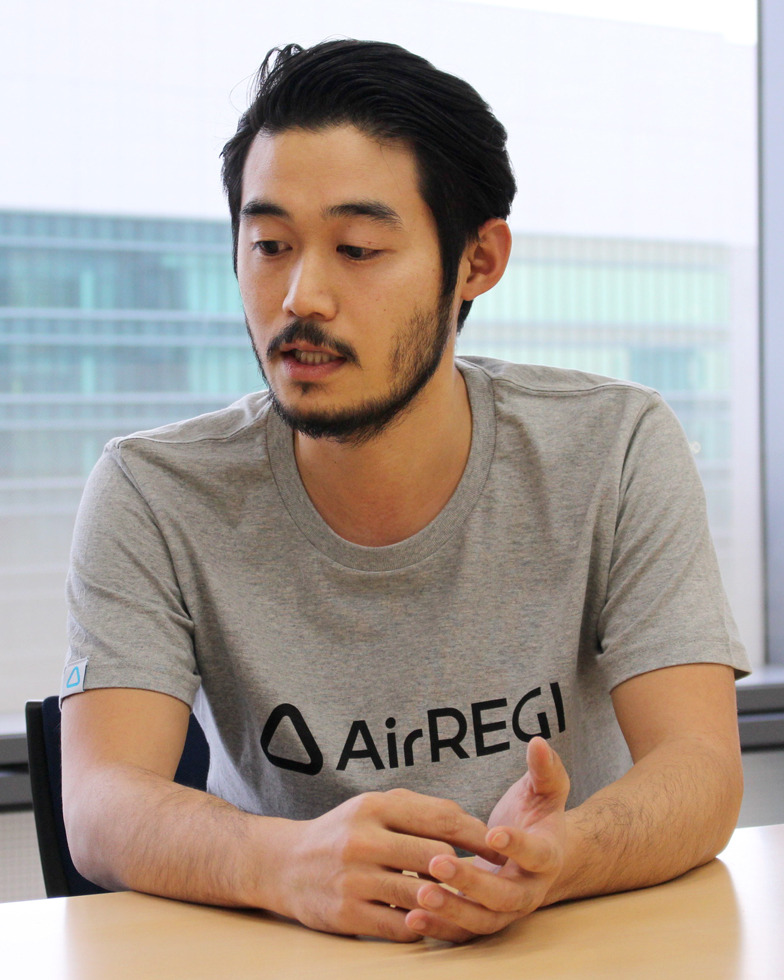
Miura: What role do UX designers play when releasing new services or features? It's common to delay releases due to unresolved concerns like "What if existing users leave when we add new features?" What research methods do you employ from a UX perspective?
Kage: That's definitely an internal challenge we face. AirRegi, where listening to user voices and thinking from the user's perspective is deeply ingrained in the culture, stands out even within the Recruit Group. Since its launch, AirRegi has been a product with a strong understanding of UX design and the user perspective. Consequently, even engineers and business personnel outside the UX design team often ask, "How would users feel about this?" We frequently visit actual stores to observe the field and listen to feedback, which often yields valuable insights.
※Part 4 is scheduled for publication on May 19.
Was this article helpful?
Share this article


Newsletter registration is here
We select and publish important news every day
For inquiries about this article
Back Numbers
Author
Yuichiro Shikage
Recruit Lifestyle Co., Ltd.
Naoya Miura
Dentsu Inc.
Business Development & Activation Division