
Note: This website was automatically translated, so some terms or nuances may not be completely accurate.
 The Potential of "Social Sourcing" to Obtain Resources from Society [11/11]
A New Flow of Funds Originating from Social Media

Toshiaki Hasamura
Dentsu Inc.
※Glossary
【Social Sourcing】
A mechanism for co-creation with society by obtaining necessary resources—such as ideas, funding, and skills—from the community.
【Crowdfunding】
A mechanism for broadly collecting money from individuals via the internet. Various methods exist, including "donation-based," "reward-based," "lending-based," and "investment-based."
【Fundraising】
The act of collecting money for a specific purpose.
◆Asahi Shimbun Enters Crowdfunding
Since its founding in 1879, Asahi Shimbun has supported literary giants like Natsume Soseki, Futabatei Shimei, and Matsumoto Seicho, as well as poets such as Ishikawa Takuboku. Today, it continues to support various cultural and sports initiatives, including the Japan national soccer team and the J.League. It is a massive conglomerate media group, with affiliated companies including TV Asahi and a nationwide television network, as well as influential magazine publishers like Weekly Asahi and AERA. Driven by the vision to "create a society where everyone can equally take on challenges, solve societal issues, and create new businesses and cultures," Asahi Shimbun has now entered the platform business for "purchase-type crowdfunding," a mechanism for the new era.
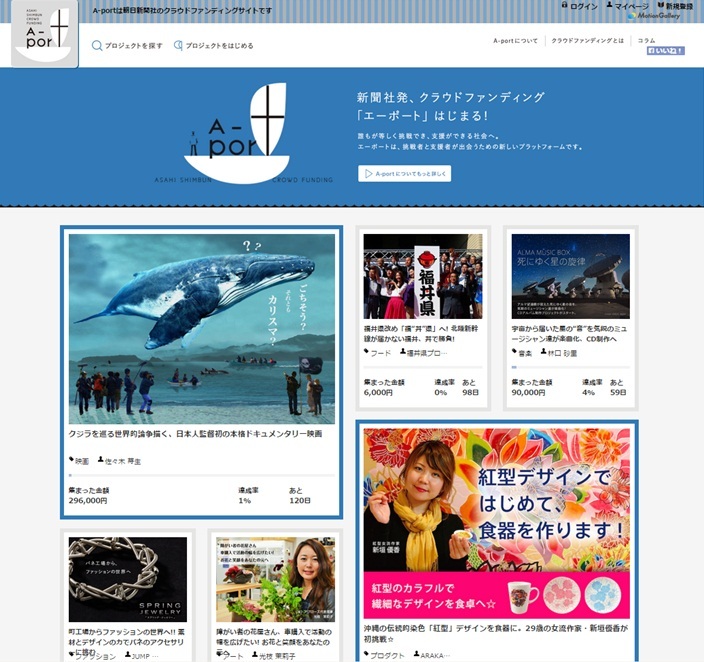
This venture began not through a typical M&A move like acquiring a crowdfunding company and making it a subsidiary, but as a new business initiative launched by the Asahi Shimbun Media Lab, a department dedicated to developing new ventures.
While many Japanese companies struggle with increasing conservatism, corporate bureaucracy, and the innovation dilemma—unable to overcome these challenges compared to startups and emerging IT firms—the Asahi Shimbun, as a national newspaper, is spearheading this effort, continuing to challenge and invest in new domains.
◆Asahi Shimbun Crowdfunding "A-port"
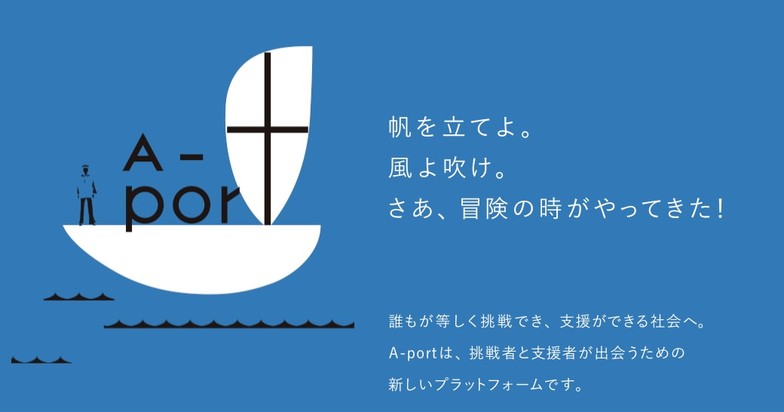
Having assisted in launching the Asahi Shimbun crowdfunding service "A-port," I'd like to briefly introduce it.
A-port is a "purchase-type" crowdfunding platform. It offers two funding models: All OR NOTHING and ALL IN. The All OR NOTHING model means funds are only collected if the target amount is reached. The ALL IN model collects funds regardless of whether the target is met or not, collecting whatever amount is pledged.
As an in-house initiative of Asahi Shimbun, it benefits from exposure across the company's influential media outlets like Asahi Shimbun Digital, The Huffington Post, and withnews, ensuring broad dissemination of funding information.
The crowdfunding industry will inevitably face discussions about the "legal and moral responsibilities of platform operators." This concerns the platform operator's obligations and potential compensation to backers (victims) if fraudulent, problematic, or non-compliant projects are listed and the platform assists in raising funds for them.
This debate is still in its early stages with no clear conclusion yet. However, as increasingly high-value projects become more common in this industry, the level of responsibility expected of platforms will grow significantly.
In this regard, Asahi Shimbun Company, as the parent company launching this venture, offers considerable reassurance regarding its responsibility capacity. Its capital base and management foundation significantly reduce bankruptcy risks.
◆New Money Flows and Surges Created by Crowdfunding
Following Asahi Shimbun, Yomiuri Shimbun, the world's largest newspaper by circulation, has also announced its entry into the crowdfunding business. Other major national newspapers and mass media outlets are likely to follow suit.
As mass media companies with powerful information dissemination capabilities pivot toward crowdfunding, I feel a new flow of money will emerge and become firmly established in society.
The philosophy of Asahi Shimbun's crowdfunding platform "A-port" states: "We aim to establish 'supporting through crowdfunding' as a new way of using money in Japan."
A society may emerge where it becomes commonplace for individuals to invest in projects and companies they personally resonate with and endorse through crowdfunding. While similar mechanisms existed before, such as consumer cooperatives, the highly developed power of the internet, the social infrastructure of SNS, and the widespread adoption of convenient online payments and internet banking could drive this into a large-scale phenomenon, potentially forming a new social structure.
Within 2015, "equity-based" crowdfunding will be permitted domestically following revisions to the Financial Instruments and Exchange Act. The crowdfunding industry is becoming increasingly hard to ignore.
Was this article helpful?
Share this article


Newsletter registration is here
We select and publish important news every day
For inquiries about this article
Back Numbers
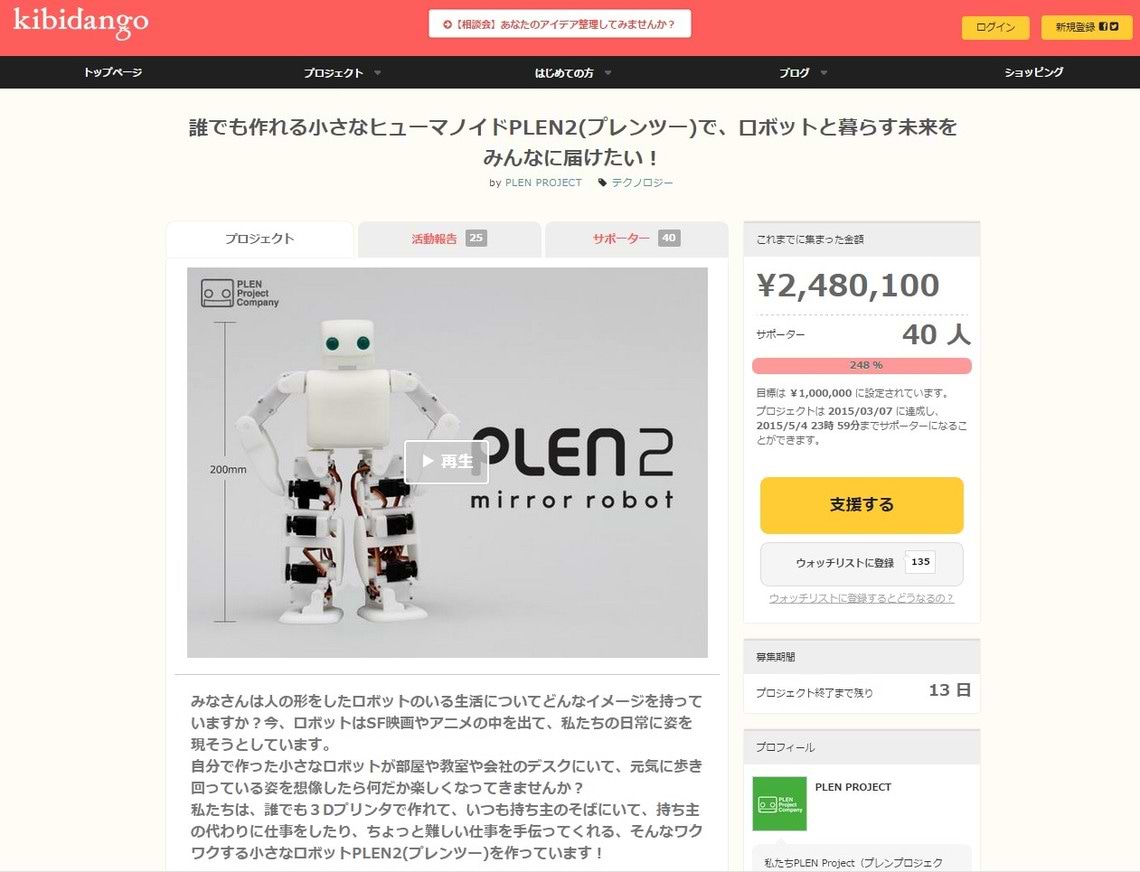
Author
Toshiaki Hasamura
Dentsu Inc.
Business Development & Activation Division
During my student years, I incorporated a photography business (started a company). I covered approximately 40 countries. Subsequently, I joined Dentsu Inc. with the goal of launching a social business within an organization capable of significant social impact. While working on new business development led by Dentsu Inc., I also engaged in PRE/PFI consulting, such as advisory services for PFI concession bidding projects like airport privatization, and consulting for new commercial facility development project planning. Examples of business development include: - 2013: Conceived and participated in launching Japan's first crowdfunded mass media broadcast project, "LISTENERS' POWER PROGRAM." - 2016: Conceived and participated in establishing Japan's first FinTech industry hub, The FinTech Center of Tokyo "FINOLAB Inc.", where I remain active daily as part of the operational team. - 2018: Left Dentsu Inc.