Note: This website was automatically translated, so some terms or nuances may not be completely accurate.
 Marketing ROI at the Forefront: The Future Unlocked by Analytics Technology [2/4]
Karl Weaver × Ken Nakagawa (Part 2): Client Services and Collaborative Initiatives Promoted by D2D

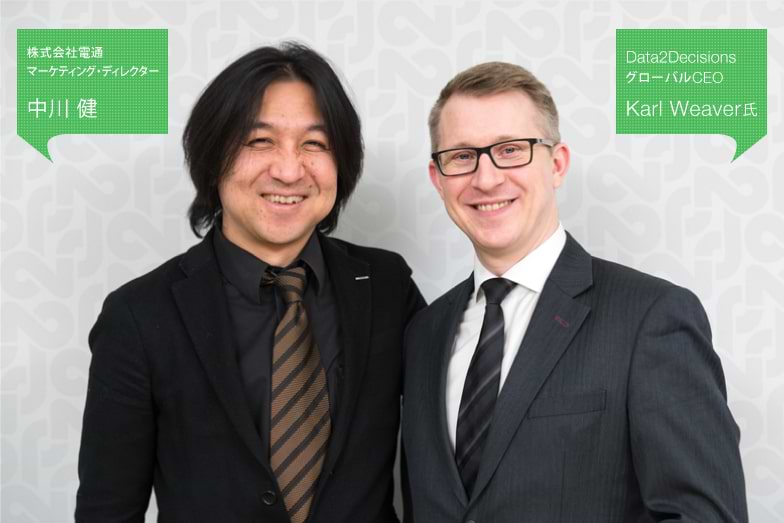
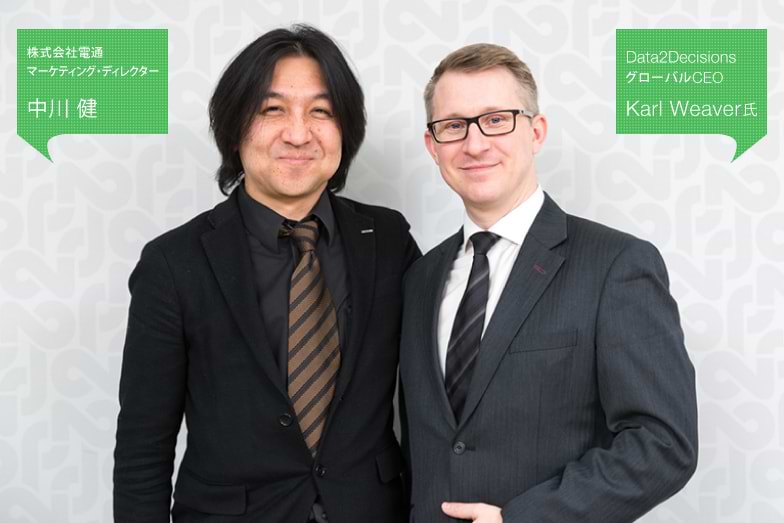
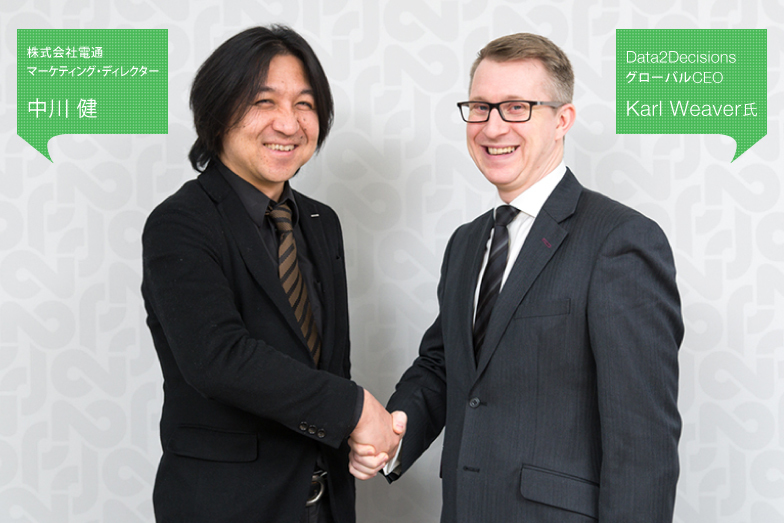
Karl Weaver
Data to Decisions

Ken Nakagawa
Dentsu Inc.
What is Data2Decisions (D2D)?
Based in London, UK, and as part of Dentsu Inc. Aegis Network (DAN), it provides global marketing consulting services based on data analysis. To maximize clients' marketing investment efficiency (ROI), it develops and operates cutting-edge analytical technologies, including econometrics such as Marketing Mix Modeling (MMM).
*MMM is an econometric model that analyzes the effectiveness and ROI of marketing activities, such as media spending, using sales data.
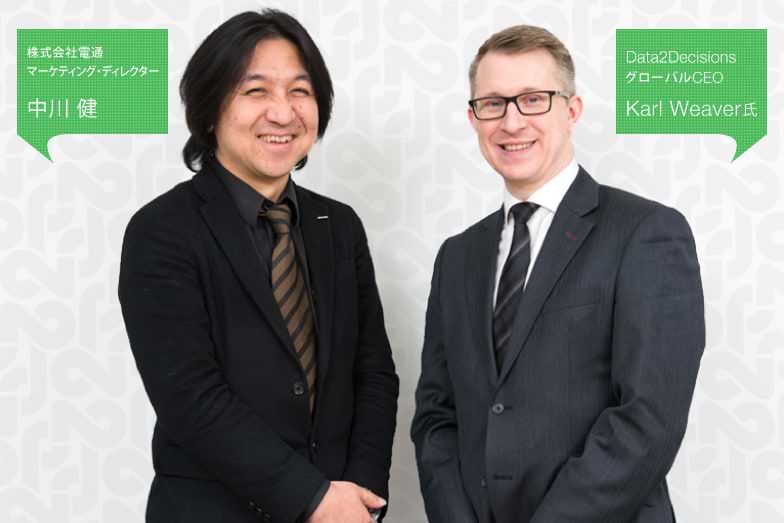
Following our previous discussion, we took the opportunity of D2D Global CEO Karl Weaver's recent visit to Japan to hear in detail about the cutting edge of analytics technology for maximizing clients' marketing investment efficiency and future trends. The interviewer was Ken Nakagawa, General Manager of the BI Promotion Department, Integrated Data Solutions Center.
Rapid Data Analysis Projected to Generate $200 Million in Annual Revenue Growth
Nakagawa: Regarding D2D's client services, could you share examples of the types of clients you work with and how you proceed?
Weaver: D2D manages accounts across diverse industries like energy, finance, electronics, apparel, and beverages. Every company seeks the right means to grow their business. Key themes consistently include identifying growth areas and determining whether pricing, distribution, or advertising drives that growth.
Take the example of a large FMCG (Fast-Moving Consumer Goods) company. Its CEO was concerned that growth rates weren't sufficient. Upon immediate research, we discovered that growth for five major brands had slowed within a relatively large market. As a first step, we focused not on the entire world, but on one or two specific regions within this market, and conducted an analysis on these five brands. We used the PoleStar tool mentioned previously. It quickly analyzed sales data to determine which marketing channels were effective, how price, distribution, and product line impacted performance, and predicted potential growth. The conclusion confirmed approximately $200 million in annual revenue growth potential. Furthermore, we were able to outline an action plan to realize this potential revenue increase.
Nakagawa: When D2D collaborates globally, do the London headquarters and the client's headquarters communicate directly?
Weaver: It depends on where the client is based, but for most major clients, the London headquarters is involved. Exceptions occur when the client's headquarters is in the US, in which case the US office may lead. Of course, there are also local projects; for example, when working in the Scandinavian market, the London headquarters isn't necessarily involved.
"Fully Customized Services" to Meet Client Needs
Nakagawa: Regarding D2D's client portfolio, do you have a policy on what types of clients you seek to acquire?
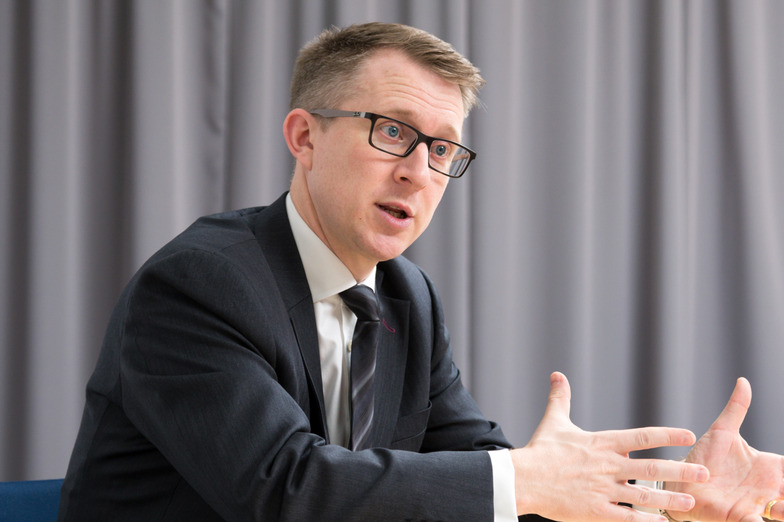
Weaver: We are always interested in clients who demonstrate a proactive willingness to embrace change. Our top priority is guiding clients toward the best possible decisions. Clients appreciate this approach from D2D. As the media environment grows more complex and client needs change rapidly, we analysts are also required to adapt to these shifts. This also drives the evolution of our tools, so in that sense, clients who are constantly and proactively embracing such change are invaluable to us.
Nakagawa: How do you customize your services for each individual client?
Weaver: Our service is essentially fully customized. For clients requiring significant customization, we hold numerous direct meetings. Fashion brands, for instance, prioritize creativity, so it might seem at first glance that they have little connection to historical data. However, we help them understand that data never hinders creativity; rather, it supports them in doing better work. For one client, leveraging platforms like Facebook, YouTube, and online video services and understanding their impact might be the challenge. For another, the focus is entirely on ROI. The more complex the consumer purchase journey we need to understand, the more customization is required. We also customize software like MEP ( mentioned in the previous article ). If a client desires, we can customize it to feel like software they own. Because the software we use is proprietary and we hold the intellectual property rights, such customization is possible.
Nakagawa: As part of Dentsu Inc. Aegis Network, how do you collaborate with other agencies?
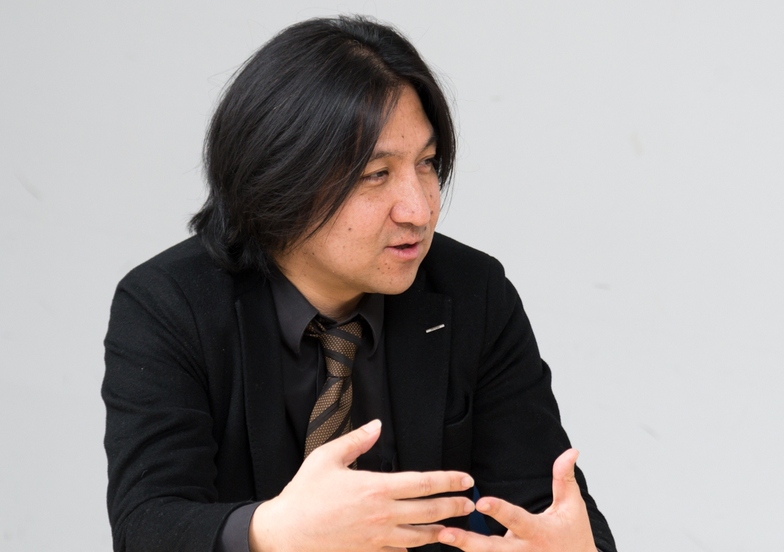
Weaver: It varies by case, but for media planning, we primarily collaborate with Carat and Vizeum. Tools like PoleStar are extremely valuable in the planner's decision-making process during these collaborations. They also provide opportunities for planners and clients to discuss business outcomes. We discuss not just media costs, but key drivers for brand awareness and sales. While building the right relationship with other agencies takes time, when collaborating with Carat or Vizeum, we support them throughout the entire planning cycle: first, supporting them in the initial planning stage; then, during implementation, verifying results data against forecasts; and finally, evaluating the effectiveness of marketing activities like media. We collaborate to help the client's business grow by maximizing marketing and finding more profitable ways to do so.
In the OOH space, we collaborate with Posterscope on various exciting developments. This area is increasingly digitized, enabling the handling of more granular data. We support them by developing algorithms that help buy the most optimal outdoor spaces for clients faster using this data. We contribute to the refinement and innovation of their services behind the scenes.
We've also begun collaborating in various ways with other Dentsu Inc. Aegis Network affiliates. Within Dentsu Inc. Aegis Network, The Story Lab is a crucial business unit developing content for clients. Evaluating content involves highly complex factors, so clear answers aren't yet available at this stage. However, we anticipate clients will eventually ask about content evaluation, so we're currently preparing for that.
The key lies in combining various analytical techniques
Nakagawa: How do you approach evaluation metrics for content marketing?
Weaver: I believe new metrics spanning various media will emerge in the future. One type is based on consumer surveys, such as brand awareness, purchase/usage intent, and top-of-mind awareness. These remain essential for determining whether specific marketing efforts are effective. However, we now have abundant web behavioral data. Online, individual responses are faster and more detailed, but analyzing this data is extremely complex, making it difficult to utilize effectively. Nevertheless, we have successfully linked people's online reactions in the digital sphere to metrics from other media. Which metric to use depends on what the content marketing aims to achieve. Of course, sales remain the ultimate critical metric, but for now, I believe it's best to choose whichever fits better: metrics based on web behavioral data or those based on consumer surveys.

Nakagawa: It seems like digital media and digital marketing are better suited for data analysis. What are your thoughts?
Weaver: In businesses like D2D, digital holds tremendous significance. Market analysis today broadly falls into two categories: methods using market data and methods using individual-level data. As the media environment and consumer behavior become more complex, individual-level data clearly takes center stage. The challenge, however, is that we don't jump straight into that realm. Market data still plays a vital role in understanding impacts like climate and economics. The direction is to use digital data within the analytical framework, combining it with techniques like econometrics and consumer research to support clients' present and future. The key lies not in choosing one technique, but in the combination of various techniques.
※Part 3 is scheduled for release on Friday, June 12.
Was this article helpful?
Share this article


Newsletter registration is here
We select and publish important news every day
For inquiries about this article
Author
Karl Weaver
Data to Decisions
Global CEO
Ken Nakagawa
Dentsu Inc.
Data & Technology Center