Note: This website was automatically translated, so some terms or nuances may not be completely accurate.
 Marketing ROI at the Forefront: The Future Unlocked by Analytics Technology [3/4]
Karl Weaver × Ken Nakagawa (Part 3): Ecosystem Analysis That Dramatically Increases Client Investment Efficiency

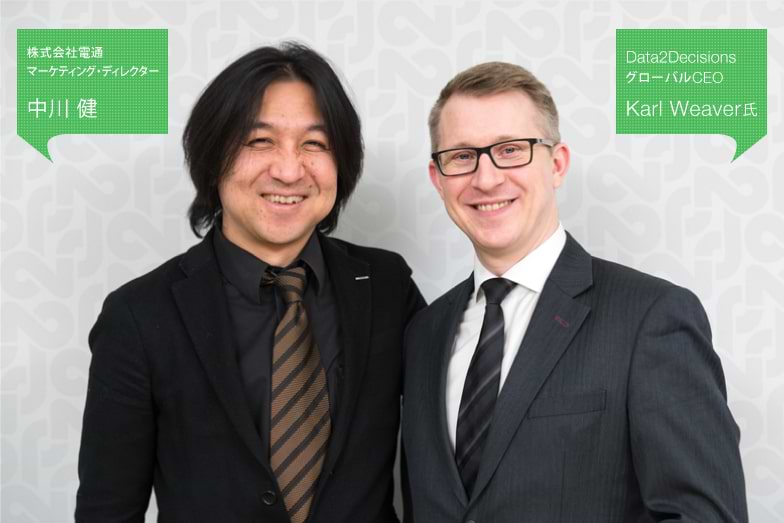
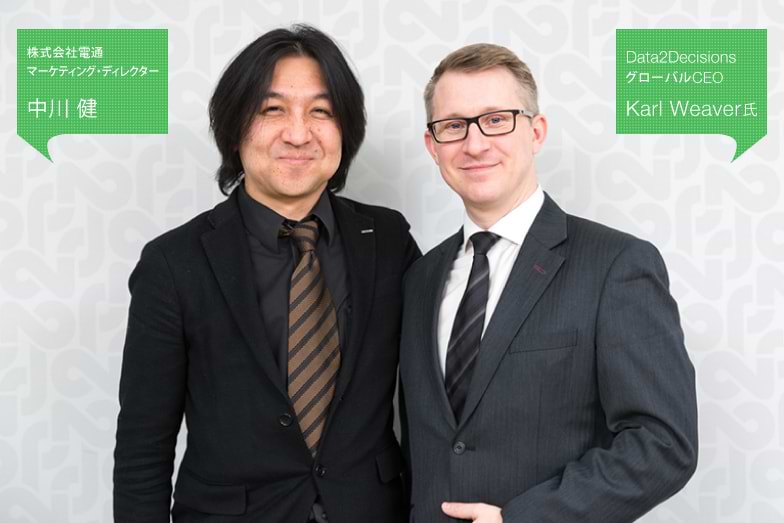
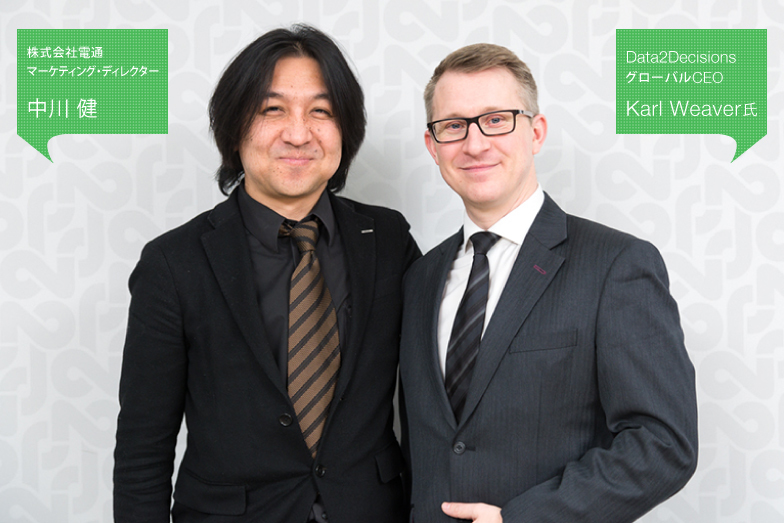
Karl Weaver
Data to Decisions

Ken Nakagawa
Dentsu Inc.
What is Data2Decisions (D2D)?
Based in London, UK, and as part of Dentsu Inc. Aegis Network (DAN), it provides global marketing consulting services based on data analysis. To maximize clients' marketing investment efficiency (ROI), it develops and operates cutting-edge analytical technologies, including econometrics such as Marketing Mix Modeling (MMM).
*MMM is an econometric model that analyzes the effectiveness and ROI of marketing activities, such as media spending, using sales data.
Following our previous discussion, we took the opportunity of D2D Global CEO Karl Weaver's recent visit to Japan to hear in detail about the cutting edge of analytics technology for maximizing clients' marketing investment efficiency and future trends. The interviewer was Ken Nakagawa, General Manager of the BI Promotion Department, Integrated Data Solutions Center.
Positive Impressions on Media Ecosystem Analysis Development
Nakagawa: I understand D2D is developing media ecosystem analysis. Could you tell us more about that?
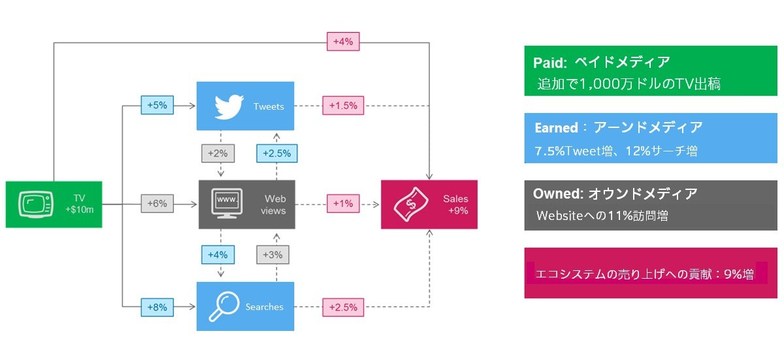
Weaver: Measuring the media ecosystem presents significant challenges because so many things happen simultaneously. Viewers might search online for something that caught their attention while watching TV. They might take further action after visiting a website. The same applies when viewing interactive content like YouTube or Facebook; it follows a complex, intertwined process. To analyze this in detail, we must undertake several challenging endeavors. We've explored several approaches so far, but we haven't yet arrived at a definitive answer. Even if we found an answer today, we recognize that the situation could change in a year, so we're actively seeking various solutions.
We are now introducing econometric techniques mentioned earlier. We are experimenting with combining models to handle complexity and already have a strong sense that this will provide highly valuable solutions for clients. Ecosystem modeling allows us to understand how paid, earned, and owned media interact with each other, enabling us to measure the ROI of digital channels like Facebook and Twitter. We can also optimize by factoring in the interactions between each media type. We've started combining these results with individual-level consumer surveys and digital data. I believe this is working very well, but the challenge going forward is how to make measurement faster and more efficient. Marketing mix modeling faced the same situation five or ten years ago, but I don't think it will take long for ecosystem modeling to achieve such efficiency as we accumulate more cases and leverage the learning gained from them.
Nakagawa: Do you conduct ecosystem modeling and ecosystem analysis in partnership with specific agencies like Carat or iProspect?
Weaver: Carat has probably done the most work in ecosystem planning, but other agencies like Isobar and Vizeum have similar approaches. What's truly needed now is for planners at every brand to understand this and incorporate it into their planning. It's not simply about having TV and then adding digital on top. It's not about mass vs. digital; it's about how everything works together. So planners must evolve. Clients must too. Recently, some forward-thinking companies have started planning with this ecosystem understanding. Media is no longer separate; it interacts. Consumers sense this and no longer draw lines.
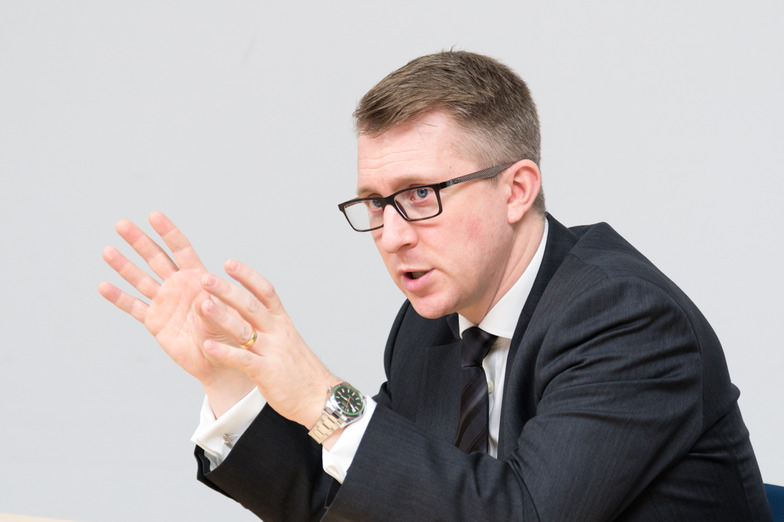
If you can effectively leverage the ecosystem, ROI could potentially increase by over 50%.
Nakagawa: What kind of clients show the most interest in ecosystem analysis?
Weaver: The FMCG (Fast-moving consumer goods) industry is full of innovative companies, and we already have several clients showing interest. Clients with physical stores or branches, like utilities and financial services, also have a strong sense of urgency. A key concern is how many stores or branches will truly be needed going forward. The same applies to retail. As many consumers browse products online, data accumulates on their purchase histories and preferences, enabling the delivery of personalized messages tailored to individual tastes. Retail companies want to understand this mechanism as the touchpoints with consumers shift from physical stores to online. They also need to understand how the ecosystem itself will evolve, but the nature of that evolution will likely change significantly within just two years. That uncertainty is a key concern for them.
Nakagawa: The ecosystem is booming in the Japanese market too, and many employees of Dentsu Inc. are highly interested in D2D's services and capabilities in this field.
Weaver: The era is indeed moving toward ecosystems, but we must recognize that clients not fully leveraging ecosystem power are seeing significantly lower ROI. If used effectively, ROI could potentially increase by over 50%. However, when owned media and content development are involved, it's far from easy. Planning requires considering interactions, such as synchronizing search behavior with TV viewing timing. Ultimately, what matters is understanding how things connect – grasping the ecosystem's mechanics. Then, you fit the optimal content into that system. Another crucial point is that e-commerce significantly influences the ecosystem's value. How do you get consumers to ultimately purchase the product? By evolving that process to be as simple as possible for the consumer, ROI should improve considerably. For companies like ours, that's incredibly rewarding.
Nakagawa: What kind of collaboration do you envision with Dentsu Inc.?
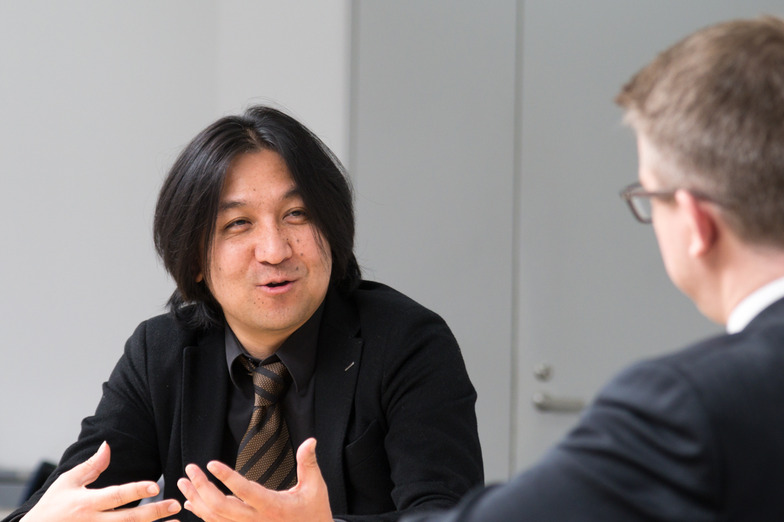
Weaver: First, we're very satisfied to have had this opportunity to explain our modeling analysis approach and solution delivery to clients in detail to the Dentsu Inc. team. Over the past six months to a year, we've had extensive discussions on how we can collaborate with Dentsu Inc., and we're now in a position to provide D2D's expertise in any way possible. We've also begun exploring how our tools can support planning globally.
Another area of interest is how to effectively combine data, creativity, strategy, and technology. Our clients also have a very high level of interest in this. There are countless opportunities if Dentsu Inc., which is already working in this field, and other agencies within the Dentsu Aegis Network collaborate and pool their technology and expertise. How can data play its role in this area? We also want to collaborate with the data solutions team within Dentsu Inc.
※The final installment, Part 4, is scheduled for release on Friday, June 19.
Was this article helpful?
Share this article


Newsletter registration is here
We select and publish important news every day
For inquiries about this article
Back Numbers
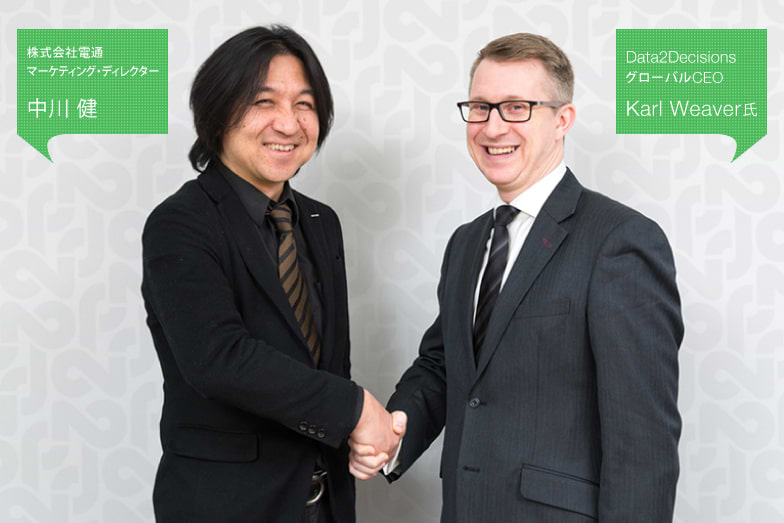
Author
Karl Weaver
Data to Decisions
Global CEO
Ken Nakagawa
Dentsu Inc.
Data & Technology Center