Note: This website was automatically translated, so some terms or nuances may not be completely accurate.
 Marketing ROI at the Forefront: The Future Unlocked by Analytics Technology [4/4]
[Final Installment] Karl Weaver × Ken Nakagawa (Part 4): Marketing Mix Modeling in the Asia Region, Whose Importance Will Continue to Grow

Karl Weaver
Data to Decisions
Ken Nakagawa
Dentsu Inc.
What is Data2Decisions (D2D)?
Based in London, UK, and as part of the Dentsu Aegis Network (DAN), it provides global marketing consulting services based on data analysis. To maximize clients' marketing investment efficiency (ROI), it develops and operates cutting-edge analytical technologies, including econometrics such as Marketing Mix Modeling (MMM).
*MMM is an econometric model that analyzes the effectiveness and ROI of marketing activities, such as media spending, using sales data.
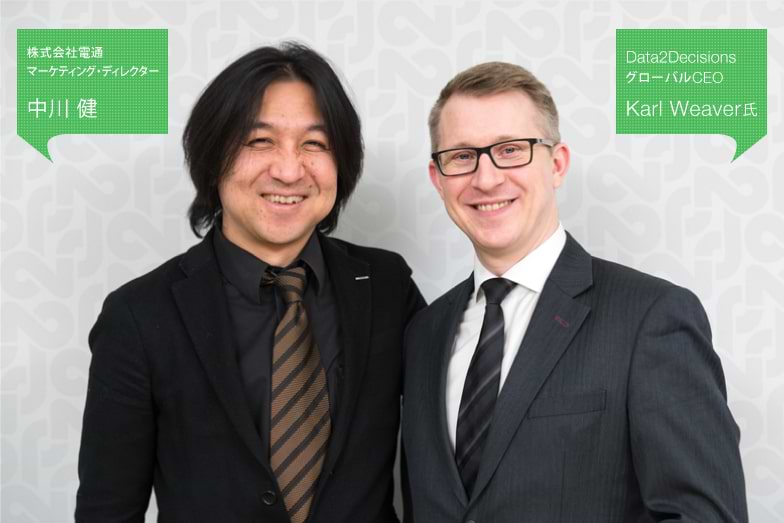
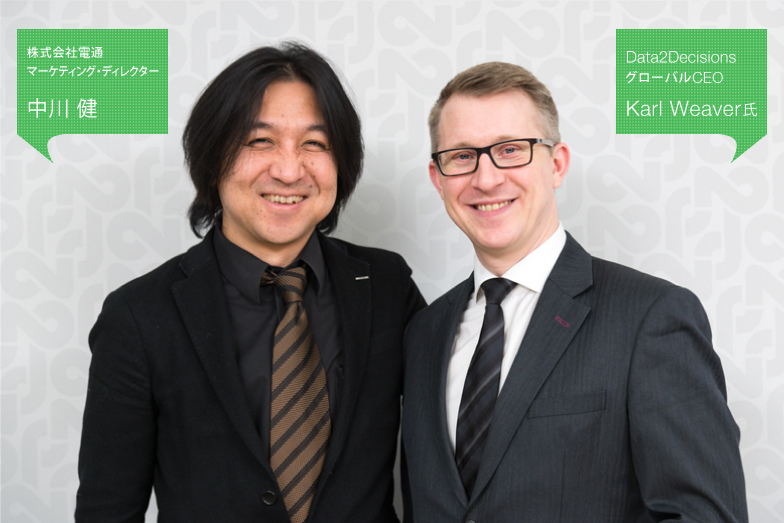
Following our previous discussion, we took the opportunity of D2D Global CEO Karl Weaver's recent visit to Japan to delve deeper into the cutting edge of analytics technology for maximizing clients' marketing investment efficiency and future trends. This concludes our interview series. The interviewer is Ken Nakagawa, General Manager of the BI Promotion Department, Integrated Data Solutions Center.
The interaction between data, creativity, and technology is crucial
Nakagawa: Could you share D2D's future strategy?
Weaver: For the next two to three years, our goal is to enhance analytical techniques to increase client benefits. We will focus more on analyzing individual-level data, such as digital data, and combine it with market data analysis. In other words, it's about converting analytics technology. We are already providing this to some clients, and the results are beginning to show in the ecosystem planning work we have done.
Another critical challenge is the creative impact on media effectiveness. While brand size directly influences ROI, creative is the next major factor affecting it. This means business outcomes can vary significantly depending on creative effectiveness. Over the next 2-3 years, we believe we can apply data—in the broad sense of information and insights—not only to measuring creative effectiveness but also to the creative development process itself.
What we're starting to do is entrust information and data to the creative staff. If we can consolidate data, technology, creative strategy, and planning, the creative briefs will become more focused, ultimately enabling us to deliver the best possible solutions for clients. The key lies in how data, creativity, and technology interact. This is already a hot topic at Cannes, and a new award related to this was introduced this year. We'll see more and more successful examples emerge, so we need to systematize insights on how they function. The focus shouldn't be on choosing between data and creativity, but on how they complement each other.
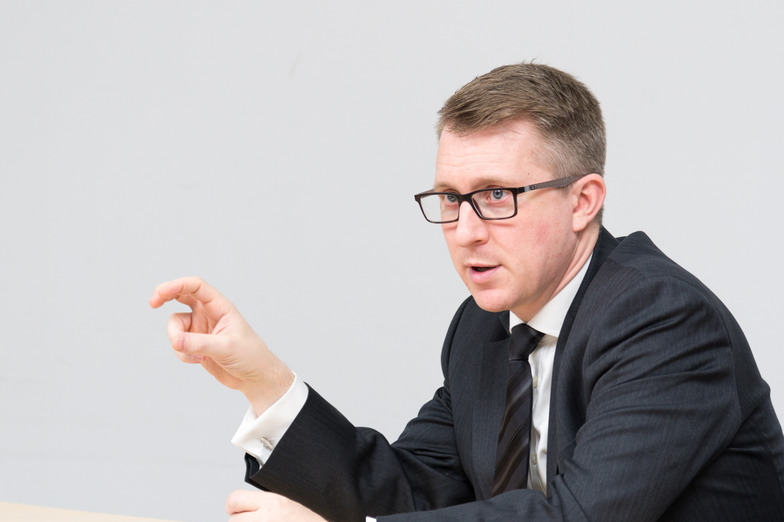
Nakagawa: Measuring the effectiveness of creative work is extremely important for us. Several creative agencies within Dentsu Inc. Aegis Network (DAN), which operates in global markets, already exist, and everyone wants to know how to measure their impact. In that sense, the collaboration between Dentsu Inc. and D2D holds significant meaning.
What are the MMM trends in Europe/America versus Asia?
Nakagawa: I'd like to ask about regional trends in MMM. Mr. Weaver previously mentioned that MMM is significantly more advanced in the UK and US, with other European countries following behind, while the Asia-Pacific region, though still developing, is growing rapidly. Could you elaborate a bit more on this MMM trend?
Weaver: Regarding econometrics and MMM, which we've touched on earlier, the technique is widely adopted in the US, and the level of implementation is quite advanced given the scale of business. Europe is similarly mature, and in terms of the level of approach, Europe and the US are roughly on par. However, in Europe, markets with different characteristics coexist, meaning the benchmarks differ and the methods of implementation vary. What this implies is that there are some techniques where compromises must be made. We must keep that point in mind.
The Asia-Pacific region is a vast and complex market. The challenges here are obtaining the right data and whether there is an environment receptive to using analytical techniques like modeling. Without prior experience with these techniques, there's a tendency to mistakenly believe someone will simply bring numbers or spreadsheets and provide answers, which is clearly incorrect. In Asia-Pacific, it's essential not only to prepare the data but also to help stakeholders understand how these analyses can improve their business processes and be useful for future business growth.
However, we believe change in this area is happening very rapidly in relatively smaller markets like Asia Pacific and Europe. These regions don't necessarily need to follow the same development stages as the US or Europe. The ability to leapfrog directly into individual-based data analysis, aligned with digital marketing and ecosystems, is an advantage for these regions.
To accelerate this pace, DAN's capabilities are indispensable.
Nakagawa: Many employees of Dentsu Inc. are interested in your career as the head of D2D, DAN's major brand. Could you tell us a little about yourself?
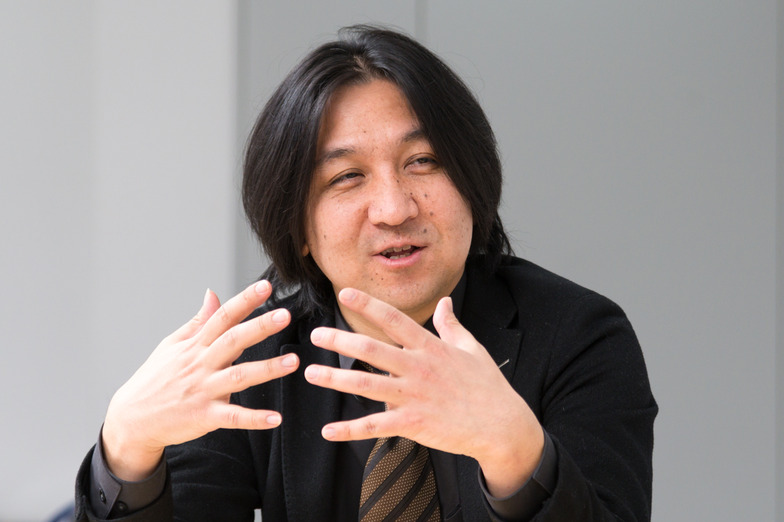
Weaver: I've been with D2D for 12 years. The founder of D2D is Paul Dyson, and I joined the company right after it was established. I was the second employee. Paul and I met in 1999. We both joined Mindshare, a company now part of WPP. Before that, I worked at a consulting firm called Henry Center, doing economic forecasting and modeling. I've been involved in the field of data-driven effectiveness measurement for over 20 years now, with 12 of those spent at D2D.
D2D now has nine offices worldwide and employs approximately 120 people. Since being acquired by DAN, the company's growth has accelerated significantly. Access to DAN's infrastructure and data has dramatically enhanced both our brand and the speed of our work. In recent years, clients have demanded consistent global solutions to manage complex portfolio products. It was within this context that we joined the former Aegis umbrella in 2012 and DAN in 2013. Both Paul and I saw this as a great opportunity to become a brand focused on data analytics clients could truly leverage.
To achieve that goal, we made significant investments in technology. We needed to accelerate for the future. While we had the data analytics technology, we also required a network enabling faster delivery. That's where DAN's expertise, support, extensive client access, and capabilities became indispensable.

Nakagawa: What do you see as the major difference between DAN and WPP or Publicis? I'd appreciate your perspective, both within your specific field and more broadly.
Weaver: The major difference is the greater flexibility we have when working with various brands within the network. At DAN, we call this the operating model. It originated from Aegis's philosophy, which I believe was a major factor in Dentsu Inc. acquiring Aegis. Dentsu Inc. and Aegis actually share many commonalities. In the data analytics domain, having access to various brands within DAN is invaluable. Compared to competitors' models, DAN's organization is structured so all these brands can collaborate more flexibly. I think there's a unique driving force within DAN that others lack, and this naturally fosters an entrepreneurial spirit. The influence of the organization's leadership also plays a role. Witnessing firsthand the process of setting ever-greater goals as an organization, driven by the top leadership's strong ambition and effort, is truly inspiring. It fuels our own desire to contribute to achieving those goals.
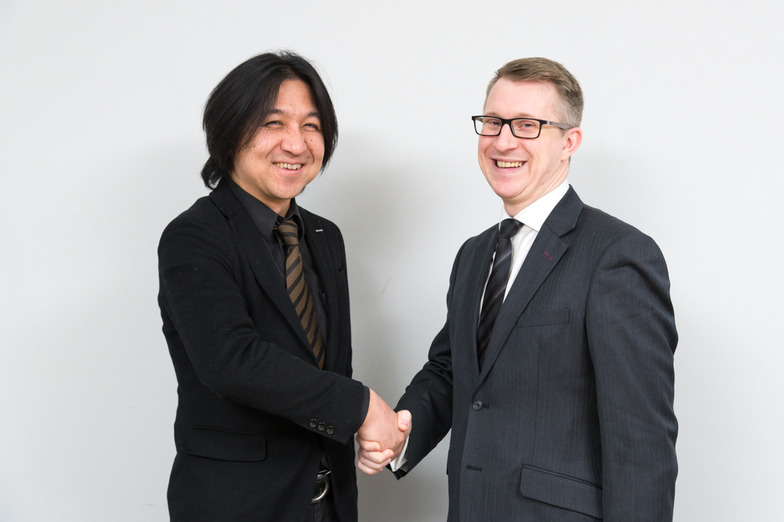
Nakagawa: Thank you. I look forward to more opportunities for collaboration and growing together.
Weaver: I believe that by working together and collaborating, true innovation is born, enabling us to grow faster.
Was this article helpful?
Share this article


Newsletter registration is here
We select and publish important news every day
For inquiries about this article
Back Numbers
Author
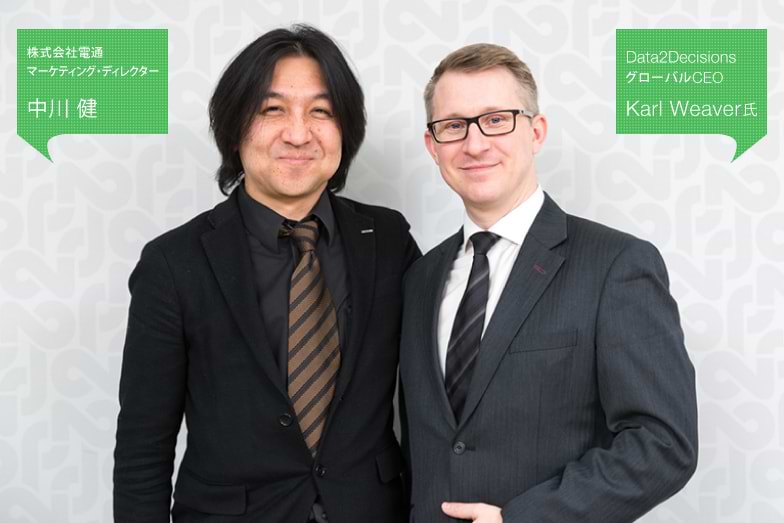
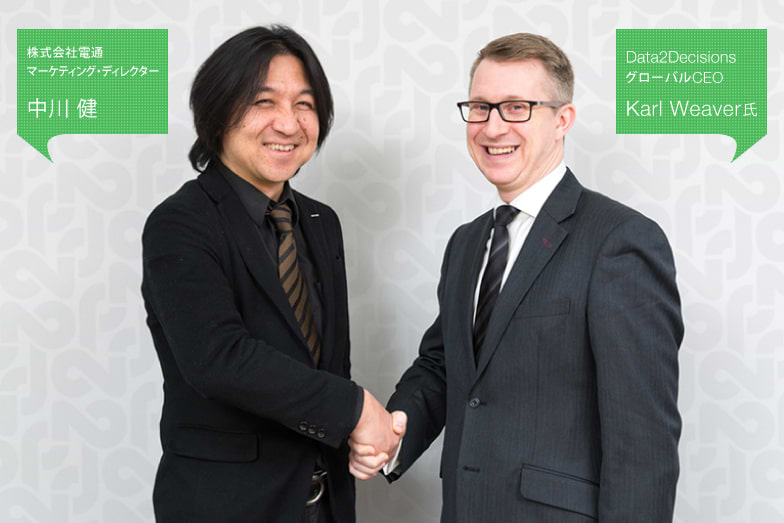
Karl Weaver
Data to Decisions
Global CEO
Ken Nakagawa
Dentsu Inc.
Data & Technology Center