Note: This website was automatically translated, so some terms or nuances may not be completely accurate.
 Smartphones and the Japanese [1/4]
Video Research Ltd. + DENTSU SOKEN INC. Joint Report "Smartphones and the Japanese" (Part 1)
The iPhone debuted in January 2007 with the slogan "redefining the mobile phone."
In the roughly eight years since, smartphones have flooded the market. While smartphones have dramatically changed our lives, what exactly has changed? A survey by Video Research Ltd. and DENTSU SOKEN INC. Media Innovation Research Department reveals the outline. Here, we report on some aspects of how smartphones and Japanese people interact today.
Fact 1
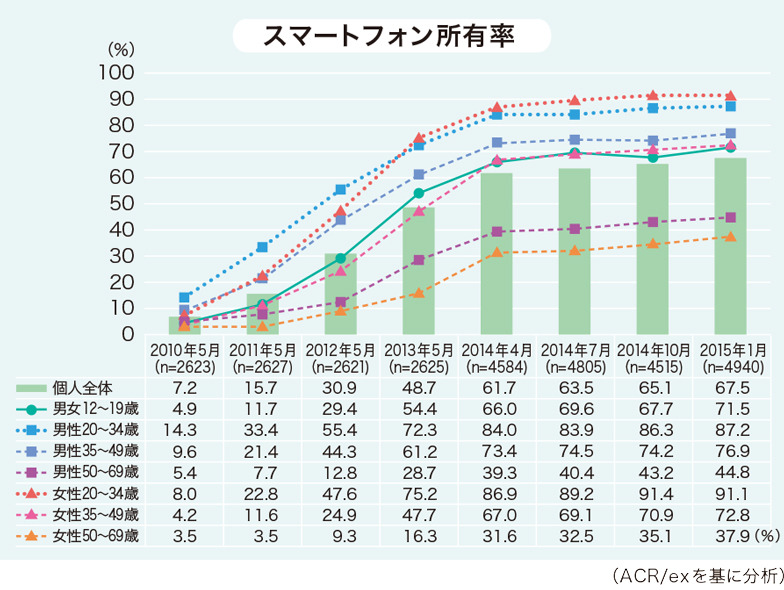
Smartphone and feature phone penetration rates exceed 100% for all demographics except teens and F3
〈Explanation〉
Male business professionals carry two phones: a feature phone and a smartphone
Dual-device ownership is most pronounced among men aged 35-69. This is likely because business communications involve both email and phone calls. Additionally, owning a traditional mobile phone (feature phone) may be practical for receiving various documents and conducting work-related exchanges via smartphone. Approximately 90% of 20-34 year olds, the future backbone of consumption, and about 70% of teens use smartphones. Whether men aged 35 and above will continue to demand feature phones warrants some reservation.
〈Research Team Comment〉
The "100 Million Smartphone Era" is Approaching
Since April 2014, the combined ownership rate of smartphones and feature phones has exceeded 100% for all individuals. The latest data from January this year shows that, excluding teens and F3 (women aged 35-44), the average number of devices per person exceeded one across all age groups (due to some individuals owning multiple devices). The situation is nearly identical nationwide. Considering that feature phones will also transition to smartphone-type platforms in the future, consumers' lives cannot be discussed without acknowledging the smartphone's presence.
Fact 2
Teens and M1 use their own rooms; F-segment uses the living room
〈Explanation〉
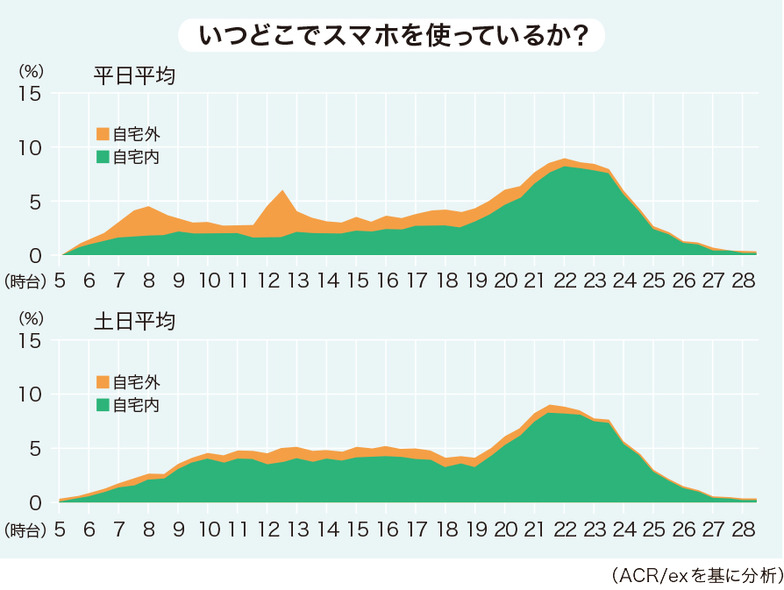
Three peaks: morning, noon, and evening/night
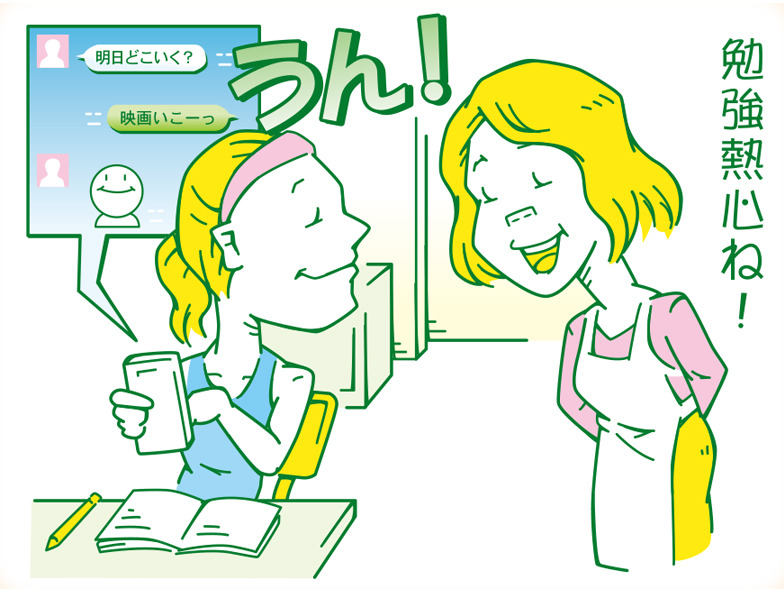
Teens and M1 (men aged 20-34) tend to stay in their rooms using smartphones. For teens, the boundary between communication and studying via smartphone seems blurred. Overall, weekdays show three peaks: morning commutes, lunchtime, and evening to night, with 8 PM to midnight being the peak time common across all age groups. Additionally, all age groups spent more time using smartphones at home than when out.
〈Research Team Comment〉
Higher Usage at Home than Outdoors
This may seem surprising, but it clearly shows longer smartphone usage at home. This aspect emerged from quantitative research, suggesting the need for detailed investigation into factors like interactions with other devices. For women aged 20 and above, higher usage outside their rooms likely relates to spending more time in shared family spaces.
ACR/ex is
A report that captures people, brands, and media from multiple angles based on three perspectives—"consumer attributes," "product involvement," and "media exposure"—for the same survey participants. Provided by Video Research Ltd. Survey participants are approximately 10,700 men and women aged 12 to 69 across seven major regions nationwide. Approximately 4,800 participants within the Tokyo 50 km radius are part of a year-long panel survey.
Was this article helpful?
Share this article


Newsletter registration is here
We select and publish important news every day
For inquiries about this article
Author

Ritsuya Oku
Representative of Media Vision Lab
Honorary Fellow, DENTSU SOKEN INC. / Director, Video Research Ltd. Media Design Institute
The Future of Media"2014 Japan Advertising Expenditures" Special InterviewSmartphones and the JapaneseShiodome Media Researcher CommentarySpecial Discussion: "Japan's Advertising Expenditures"The Near Future of Advertising from the Device's PerspectiveSmartphones: A Decade of Creative DestructionThe "Time Performance Era": How Should We Design Viewing Environments for Consumers?Information Media White Paper 2024: The Rapidly Changing Media Environment and Consumers

Akira Miwa
Dentsu Inc.
Dentsu Inc. Media Innovation Lab
Director of Media Innovation Research
Insight MemoSmartphones and the JapaneseShiodome Media Researcher CommentaryThe Future of Visual Communication with Dominique ChenThe Future of Video ServicesSmartphones: A Decade of Creative DestructionMedia Behavior Data × Social Sequence AnalysisThe 30 Years of the Heisei Era: The Transformation and Innovation of Information MediaThe Reiwa "New" Era! Where is the Media Society Headed?