Note: This website was automatically translated, so some terms or nuances may not be completely accurate.
 What exactly is globalization? [2/6]
Is the problem with communication the words themselves?
Buenos días!
For the second column, I'll write about "meetings."
As I mentioned in the previous article, students from 72 countries gather at my school.
In class, we tackle assignments in groups of 4 to 6 people, but the members' countries of origin and experiences are all over the place.
In such groups, meetings are completely different from what I experienced in corporate settings.
In corporate meetings, haven't you heard exchanges like, "Isn't this interesting?" or "That's pretty good, right?"
When it's just Japanese people, or people from the same industry, you don't need to go over every little detail. Those kinds of meetings feel comfortable and enjoyable, right?
However, when meeting with people from different countries and backgrounds, saying "Isn't this interesting?" doesn't work at all. At first, I thought it was just a language issue, but I realized that wasn't the case. Just like how Japanese people use American jokes, the very concept of "interesting" is fundamentally different.
If you get angry every time thinking, "Why don't they get it?", just like in romance, nothing will work out.
Business schools, where differing values are the norm, provide several frameworks to address this.
As one example, I'd like to introduce the "Presentation Canvas" I learned in a presentation class.
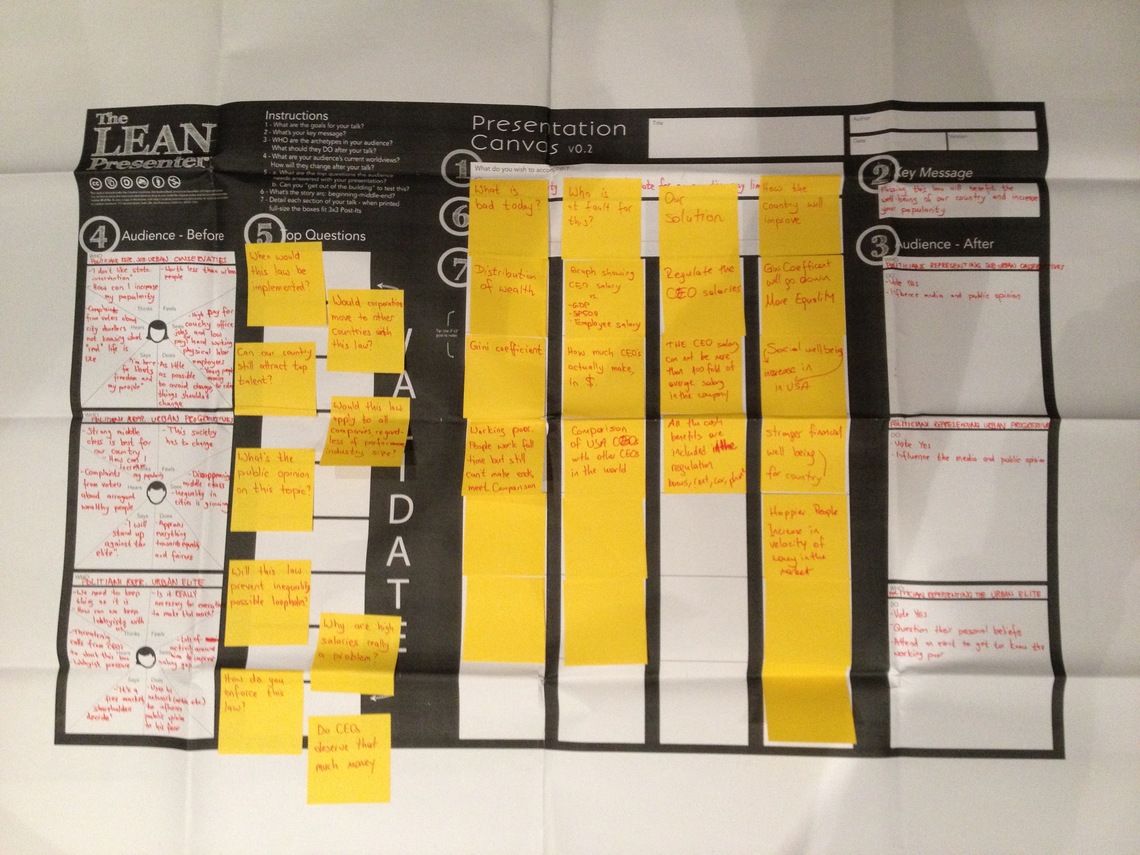
As you can see, this is a framework for delivering presentations, divided into the following six steps:
① What is the purpose?
② What is the key message?
③ What do you want the audience to think?
④ What are the listeners thinking right now?
⑤ What do they want to hear?
⑥What will the presentation's story be?
Putting it into words like this, it might seem like things you "already do regularly." But when meeting with people who have different values, I truly felt sharing these steps is effective.
In class, we had two presentation opportunities. The first was prepared in one week, partly as practice. The second was assigned on Friday with a Monday deadline.
It felt like one of those emails you get on Friday saying, "Please have this ready by Monday." But because we'd already shared the framework as a team, the preparation progressed surprisingly quickly. The content of the presentations was also significantly better than the first time for all teams.
Assuming "it's natural for things not to get across," we collaborated to create "something interesting for everyone."
I believe this is the most important thing when working with people who have different values.
This isn't limited to working with overseas partners; even within Japan, different generations and specialties mean values inevitably differ. But rather than each person thinking about "interesting" separately, if we work together to create "everyone's interesting," couldn't we achieve work with greater scope?
I dislike using buzzwords like "innovation platform" because they sound pretentious. But considering that all team sports have rules, when working with people of different values, maybe meetings could also benefit from "rules for mutual understanding."
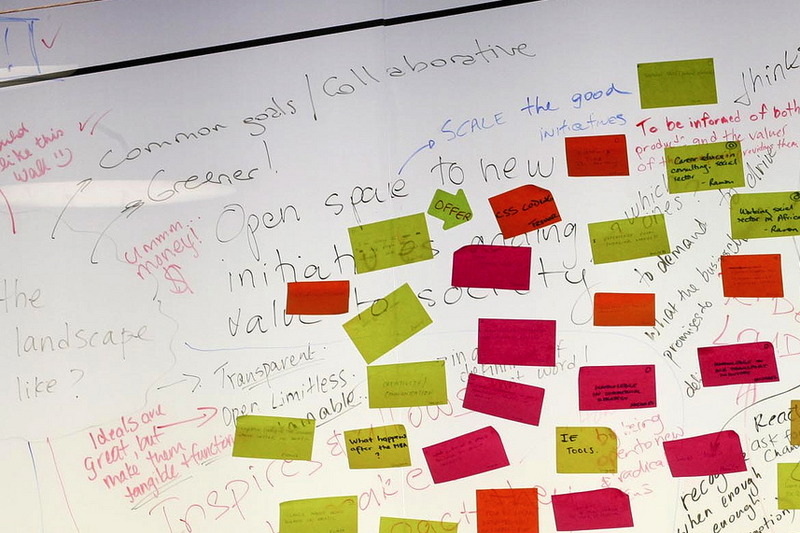
Post-it notes are indispensable. Even the meeting room walls can double as whiteboards.
Was this article helpful?
Share this article


Newsletter registration is here
We select and publish important news every day
For inquiries about this article
Back Numbers

Author

Atsuo Nambe
Dentsu Inc.
Dentsu Inc. Business Design Square