Note: This website was automatically translated, so some terms or nuances may not be completely accurate.
 MOM meets MOM Project [4/4]
Let's change the future with mothers' voices.
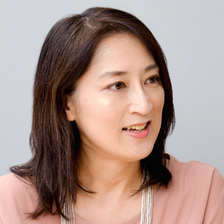
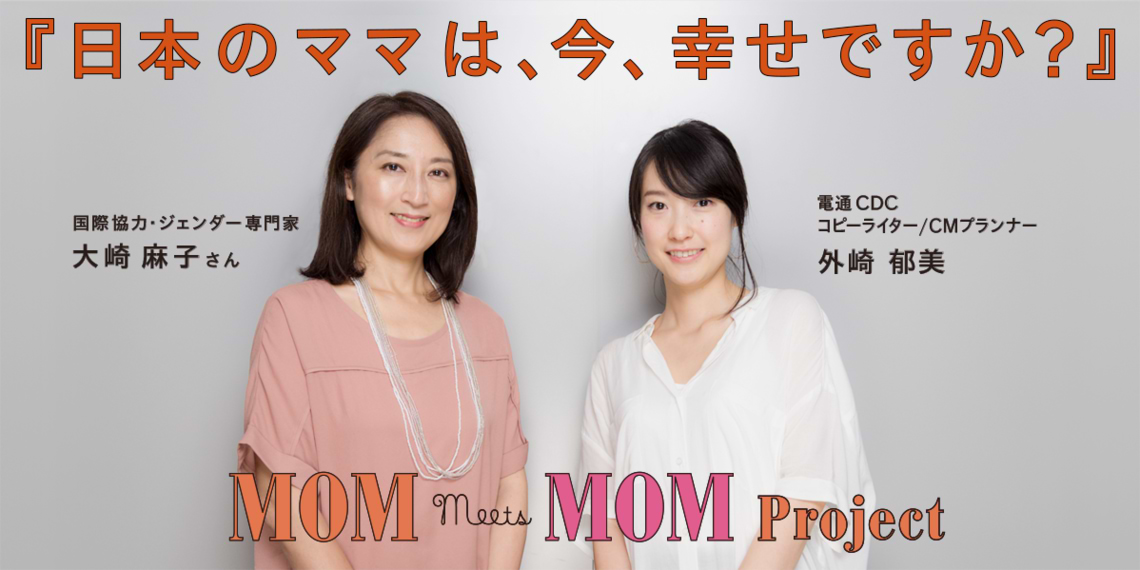
Asako Osaki
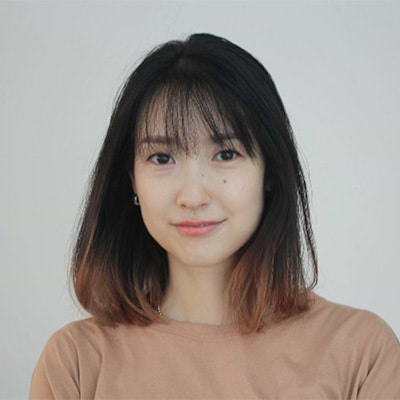
Ikumi Toga
Dentsu Inc.
Globally, approximately 800 women lose their lives every single day due to pregnancy or childbirth. To improve this situation, JOICFP, an international cooperation NGO supporting women in developing countries , and Dentsu Inc. Gal Labo, which handles communication for women, have jointly launched the "MOM meets MOM Project" as part of the White Ribbon Campaign to protect pregnant women and mothers worldwide. Saraya's skincare brand, Lactoferrin Lab, provides full support as a sponsor.
By raising awareness among Japanese mothers about the realities faced by mothers and mothers-to-be globally, we aim to foster mutual understanding and expand the circle of support. In this series, project member and author Ikumi Togasaki reflects on the state of maternal and child health in Tanzania, which she visited for an inspection in June. She explores the challenges and future possibilities for mothers in Japan and around the world.
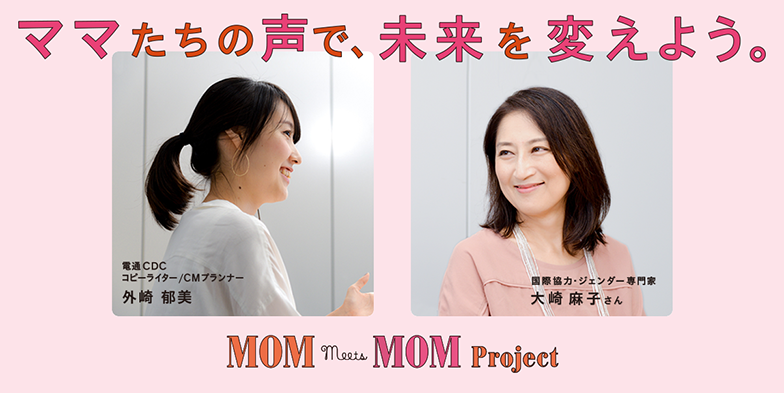
Last time, we revisited the situation of Japanese mothers in comparison with other countries through a dialogue with Ms. Asako Osaki, an international cooperation and gender expert involved in women's empowerment worldwide. This is the final installment of the MOM meets MOM project planning. Building on the discussion with Ms. Osaki, we will explore concrete ways for mothers to find happiness. (Continued from Part 1 )
◆If things continue as they are, women's burdens could double!?
Otsuki: It's surprising that Sweden, which now has systems making it easier for women to balance childcare and work, was in a situation similar to Japan's just a few decades ago. National policies really do significantly impact people's lives.
Osaki: Especially whengovernmentsstart talking about "women's empowerment," it's often a policy aimed at improving the country's economic situation.
Tozaki: With Japan's ongoing economic downturn, will we follow this trend and become like Sweden?
Osaki: In Sweden's case, women raised their voices, demanding, "Let's create systems where society properly shares the unpaid care work we've shouldered!" and drove change. Japan now faces a declining birthrate and aging population, meaning its workforce will shrink. So the government announced its policy within the context of an economic growth strategy, arguing, "Having women work and utilize their abilities will also boost international competitiveness."
But the crucial question now is : Who will take on the care work currently shouldered by women in Japan?
Otsuki: Who will be involved in this discussion? Is input from the private sector important?
Osaki: I believe every individual voice matters. Without this discussion, the structure where women bear unpaid care work remains unchanged, while they're told to participate in the economy and boost GDP.
Tozaki:For women, it just means more burden... I think many young girls in Japan today, seeing their parents' or grandmothers' generation, assume it's normal for women to only do care work. When I interviewed high school girls for a project, less than half of the young girls said they wanted to continue working after marriage.
Osaki: From a young person's perspective, they've seen their mothers doing care work. And when they see people trying to balance care work with paid work outside the home, it probably looks incredibly difficult.
Those working mothers who seem to be struggling so much are responsible for both their jobs and their households. The social consciousness that care work is women's responsibility is still deeply ingrained, and societal structures are built on that premise.
Tozaki: How do current Japanese policies affect women?
Ōsaki: When I saw policies prominently promoting "women's participation" about two years ago, I sensed a message telling women: "Work more, contribute to GDP, and pay taxes." Indeed, these policies were part of the economic strategy known as Abenomics. As Japan's domestic market shrinks and the global market expands, leveraging women's abilities and perspectives in corporate activities is seen as boosting international competitiveness.
The most convenient scenario would be for women to enter the workforce, pay taxes, participate in corporate development, contribute to raising stock prices and the value of the Japanese market, and still perform care work for free as before... That's the ideal, right?
Sotozaki: That's twice the workload...!
Osaki: Exactly. That's why, over the past two years, domestic policy experts on gender and labor, along with those working on the front lines supporting women like single mothers and victims of violence, have made all kinds of proposals to the government regarding this "utilize women in the economy" stance. I think some of these are gradually starting to be reflected in policy. Even the phrasing has changed from "utilizing women" to "women's participation."
Tozaki: I see.
Osaki: When the government first used "utilizing women," it felt like they were just labeling people who could contribute to the economy as "women. " But after hearing voices asking, "What about single mothers?" and "What about non-regular employment?", issues like single mothers and maternity harassment also became policy topics. I think Japanese women are starting to raise their voices, and it's crucial for this movement to keep expanding.
◆How can we make "child-rearing" valued?
Tozaki: I joined the company in 2006 with about 200 peers, of whom fewer than 40 were women. But now, nearly half of new hires are women. I often get asked by young women, including students, about their future dreams and specific career plans. While I'm very excited about the near future, the prime age for pregnancy and childbirth also arrives during the period when people are building their careers. If society as a whole doesn't take an interest in "child-rearing" and share the burden, it's physically tough to continue both.
Osaki:Childcare is actually at the core of gender issues.
I teach at a university, and when I ask students, "Does your mother work?", about half of them answer , "My mother doesn't work." So then I ask, "What does your mother do all day?" They reply, " She cooks meals, does laundry, goes shopping, I guess." When I ask, "Who does the ironing?" they say, "Mom." So I press, "But you just said she doesn't work. What does 'working' even mean? "
Osaki: That's true...!
Osaki: Everything moms do that kids don't include in their definition of "work" is actually labor—meaning using their own effort and time to provide services to others. Moms are working.
So, "What's the biggest difference between Dad's labor and Mom's labor?" Well, Dad's labor gets paid. Mom's labor doesn't get paid. But actually, it's both labor, right?
Tozaki: Thinking about it, that's really true.
Osaki: But what underpins the so-called "productive labor" that fathers primarily do in today's Japanese society—the labor that contributes to GDP (Gross Domestic Product) —is "care work. "
Tozaki: It's the foundation of life, after all.
Osaki: Cooking meals, doing laundry, keeping the home in order. Productive labor only functions because of this care work. On top of that, childcare is even more crucial—it nurtures the next generation's workforce.
Giving birth and raising people is actually one of the most economically and socially significant forms of labor. Because it's currently "free," it isn't properly valued by society. I believe properly valuing this is the first step toward gender equality.
Tozaki: I see.
Osaki: Whether we can adopt this perspective greatly changes society's evaluation of mothers. Childcare is often seen as a personal matter, but collectively, it shapes the next generation's workforce and taxpaying population.
Tozaki: So raising children has significant societal meaning.
Osaki: The reason society now views the declining birthrate and aging population as problematic is because fewer children pose a major issue for the national economy. That's why current policies focus specifically on "having children," such as informing people about the optimal childbearing age.
However, investment in children after birth remains considerably low in Japan compared to other countries. Data clearly shows that support after a child is born is severely lacking.
Tozaki: So national policies directly impact people's lives.
Osaki: Amidst the current push for women's advancement, a major concern raised by older generations is, " If women work, won't the number of children decrease even more? " But I think if the government properly invested in postnatal support and established the necessary social infrastructure, many more women would feel positive about having children.
Tozaki: Many women are aware of the optimal childbearing age. The problem is that knowing this doesn't change the situation. It's the reality that makes them think, "Having a child seems really tough."
Osaki: That's why we need to articulate "what exactly is difficult." Young women, future generations, and even those currently raising children must present the message: "This is a problem; make it a policy priority. Otherwise, it's impossible!" Otherwise, the situation won't change.
◆ Child-rearing is an investment in society
Tozaki: If we consider child-rearing as an investment for society too, then spending money on it and having society as a whole support child-rearing becomes a natural progression. For example, when companies think about developing human resources, they invest heavily in new employees who initially don't earn much at all. Child-rearing is the same.
Osaki: How a country spends its money reflects the state of its society. Currently, there's a prevailing attitude that "child-rearing is the mother's personal responsibility." But looking at Japan's actual budget allocations, spending on child-rearing is overwhelmingly low. You can see society's perspective on children, right?
Tozaki: When it's framed as personal responsibility, mothers get pushed further and further into a corner. Whenever there's an incident involving a child, everything becomes the parents' fault. We don't know what's happening inside the closed space of the home... Perhaps many problems are lurking within that situation.
Osaki: I think that's exactly it. When you look at cases where children become victims of crime, you often find underlying issues of poverty. Support for single mothers is insufficient, and behind that lies the problem of non-regular employment, which accounts for the majority of working women.
But right now, because moms supporting families are in unstable non-regular employment, they're more likely to fall into poverty. That's the background behind the spread of child poverty in single-mother households.
Tozaki: Poverty in Japan is also becoming more severe, isn't it?
Ōsaki: It's said that half of children in single-parent households live in relative poverty. In Japan, the employment rate for single mothers is exceptionally high by global standards; they are certainly not idle. The problem is that their jobs are inherently unstable, non-regular positions with low wages. On top of that, they are raising children alone.
Recently, many men are also in non-regular employment, so fathers in single-father households face the same issues. For example, when children go out late at night and get involved in incidents, it's not simply because "social media exists" or "neighborhood watch has weakened. " Behind this lie issues of poverty and labor. Unless we focus on these structural problems, I don't think we can achieve a fundamental solution.
Tozaki: I hadn't realized Japan was in such a desperate situation... Many people might not feel a sense of crisis. Even in such circumstances, is women's labor still a significant potential for society?
Ōsaki: To enhance Japan's international competitiveness, women's power is certainly necessary. As globalization advances, whether in agriculture, manufacturing, or the service industry, the key lies in generating innovation and responding to diversifying needs. In the coming era, the added value that can be created by companies composed solely of Japanese men will likely have its limits. That's where women's power becomes invaluable.
Tozaki: To truly harness women's potential, we also need work environments that are supportive for women, right?
Osaki: Exactly. That's why we need to speak up. When women themselves raise their voices, systems change, and new corporate cultures and social awareness are cultivated. Looking at other countries, we see that women have changed society by connecting and speaking out together. Perhaps Japan is at that stage now.
◆Gather Mothers' Voices to Create a Movement!
Tozaki: What does "raising our voices" mean practically? How can we participate?
Osaki: For issues like poverty, labor conditions, redistributing care work, domestic violence, and sexual violence—the policy-level stuff—experts and I are working hard to make proposals. We need more backing for those voices.
Tozaki: What kind of backing, for example?
Osaki: No matter how good the proposal, if only about ten experts raise their voices, it won't have much impact. However, if we can say, "Hundreds of thousands of women are saying this, demanding this," or "This many women believe that with this in place, they could feel positive about childbirth and continue working," then the influence on policy becomes much greater.
Tozaki: I see. Let's do something! A movement to gather voices.
Osaki: Exactly. A movement to gather voices is incredibly important. We mentioned Sweden, but take Kenya, for example. Local women were providing unpaid care for AIDS patients and orphans who lost parents to AIDS. At that time, a Kenyan women's NGO used data to demonstrate how much women were contributing to grassroots HIV/AIDS responses. They made policy proposals arguing that proper public funding should be allocated. And it led to a change in national policy!
Tozaki: Amazing! Kenyan women are activists too.
Ōsaki: Tanzania is another example—there are so many incredible women in developing countries. By making problems visible and building large movements, policies can change.
Tozaki: Your work in women's empowerment, Osaki-san, also helps create these kinds of movements, right?
Osaki: For example, at UNDP (United Nations Development Programme), my job was to provide that kind of support. I provided necessary information, developed human resources, and built networks.
Tozaki: So without a voice, the government won't act.
Osaki: Exactly. What surprised me a bit after returning to Japan was how women's issues rarely gain a strong voice. There are feminist activists and plenty of researchers on women's issues.
But "advocacy" isn't working well. Advocacy means pushing for policy change. To succeed, you need concrete "recommendations" based on data and analysis, backed by the "voices" of people supporting them. Looking at global examples, relying on just one isn't enough. That's why researchers, women's groups and activists, the media, and the women directly affected need to team up.
Otsuki: So it's about connecting people from various fields horizontally around a single theme. If we could just pull together all the individual efforts happening now, I feel like things could really start moving fast.
Ōsaki: Exactly. After creating those connections and bonds, we need to communicate women's needs in concrete, policy-oriented language. That's when real change will happen. Otherwise, won't the declining birthrate trend just continue?
Tozaki:Now is the chance for change. For example, to advance women's participation in companies or create stages where mothers raising children can thrive, we need to innovate organizational mindsets and evaluation methods. But it feels like it might take time.
When introducing new systems, results won't necessarily show up in the numbers immediately. In fact, they might even decline at first. A long-term perspective is essential, right?
Osaki: Exactly. It comes down to whether you see it as a cost or an investment. If companies can't challenge themselves by viewing it as an investment to build new systems, I don't think they'll survive going forward.
Tozaki: When leading companies create successful case studies, does that make it easier for other companies to adopt them?
Osaki: Yes, that's true. However, large corporations and SMEs have different financial foundations, so it's crucial that large corporations lead the change. Strategic executives are already incorporating diversity and women's initiatives into their management strategies, anticipating the progress of globalization. Understanding the preferences and trends of women in Asia, the Middle East, and Africa – regions poised to become important markets – will also be vital for marketing.
Tozaki: Globalization will advance even further, won't it?
Osaki: Looking globally, many countries have greater female political participation than Japan. If Japanese companies continue exporting domestic logic and customs overseas without considering women's work styles, they risk facing significant problems.
Tozaki:Values considered normal in Japanese companies today might increasingly prove ineffective in more advanced countries.
◆Now is the time for change!
Tozaki: The world is starting to change... or rather, it's a situation where change is essential. For moms struggling with things like finding daycare right now, is it just a matter of hanging on until society changes...?
Osaki: But from my own experience, mothers raising children are incredibly busy; they simply don't have time for advocacy work. However, that doesn't mean mothers themselves need to propose policies.
Improvements to women's working conditions and childcare environments, countermeasures against maternity harassment, expanding support for single mothers, measures against domestic violence and sexual violence—experts in gender and women's policy, including myself, are working hard to raise our voices and make these proposals.
Otsuki: That's exactly right. But surprisingly, this might not be widely known at all.
Osaki: I hear young people say things like, "Feminists seem scary" or "I don't want to be like that." But I want them to support the people who are working hard right now on lobbying and policy proposals.
Even good proposals won't change anything if no one is there to back them up. For moms struggling now and those who might face similar challenges later, it would be great if we could make their voices saying, "We really want this to happen!" more visible.
Tozaki: Specifically, how can ordinary people raise their voices?
Ōsaki: We have social media now. Its potential is enormous.
Tozaki: Anyone can easily participate. While anonymous platforms often seem chaotic, those where you use your real name feel more reliable.
Osaki: Platforms like Change.org for online petitions or Facebook. Even expert groups and women's organizations increasingly use these social media tools to gather voices when making policy proposals.
While crafting policy proposals from scratch might be challenging, you can participate in advocacy by expressing support for proposals you agree with or signing online petitions.
Tozaki: If you're not familiar with politics, you might not know what policies could help you. As a concrete way to raise your voice, is it good to share what you're struggling with?
Osaki: That's one way. For instance, the Cabinet Office solicits public comments on important bills and policies like the Act on Promotion of Women's Participation and Advancement in the Workplace and the Basic Plan for Gender Equality. You can submit comments online, so that's a good avenue.
However, few people know about these systems or understand how to use them effectively—like what kind of comments to make. I want to connect experts with the knowledge and know-how to those moms and women who want to raise issues and voices as stakeholders.
Tozaki: Hearing you talk, I realized I didn't understand this at all either. We really need to visualize what issues moms are actually facing on the ground.
Ōsaki:Public opinion is what actually motivates politicians to act, so making it visible is crucial. Until now, the only media shaping and disseminating public opinion were mass media like newspapers and TV. Since mass media itself was male-dominated, many issues concerning women weren't covered.
However, recently, for example, when the Tokyo Metropolitan Assembly debated measures against the declining birthrate, the heckling directed at female assembly members wasn't initially reported by newspapers or TV. But it sparked outrage on Twitter, and a petition on Change.org gathered nearly 100,000 signatures in just one week. Mainstream media then picked it up, making the issue visible. A new cycle has emerged, from SNS to mainstream media.
Otsuki: So SNS also plays a role in turning public voices into public opinion.
Osaki: For instance, even issues the media didn't consider problematic can spread and become topics of discussion when someone writes about them on a blog, Twitter, or Facebook. Things that previously struggled to become public opinion can now shape it and influence policy. SNS can be seen as a mechanism for making problems visible.
◆For Moms to Find Happiness
Tozaki: In this discussion, we've delved deeply into concrete ways to solve the challenges moms face. But what do you think "moms' happiness" —the theme of this session—actually means?
Osaki: First, I think it's incredibly important for them to be mentally independent and free as individuals. Then, as "moms," I hope they also recognize the happiness of being able to raise children in a safe environment.
Togaki: Could you elaborate?
Ōsaki: For example, a mother who came to Japan from Rwanda, where there was a genocide, once said that after arriving in Japan, she could finally sleep peacefully with her child. She no longer had to worry if someone would attack while they slept, if her child would be abducted, or if they would be killed... On a global scale, I think the minimum condition for "happiness" is being able to raise children safely, without fear for their lives.
Tozaki: I see. That's certainly true.
Ōsaki: Moving a step further, something we often hear from mothers in various developing countries is, "When my child gets sick, there's no hospital I can take them to." Having access to medical services and insurance when something happens to your child is incredibly important for raising them. In terms of having the basic environment in place to protect a child's health and life, I think that constitutes happiness.
Tozaki: We're fine for now. Though the future is a concern...
Osaki: First, I think it's important for people to recognize that Japan has this fundamental level of happiness.
Tozaki: Yes, looking at the world, I truly feel that way.
Osaki: However, it's true that the care work imposed on mothers is demanding. But in Japan, we have the freedom to speak out about it. Because it's a democratic society, women can vote for politicians as voters, and they won't be punished for speaking up, right?
Tozaki: So there's freedom of speech.
Osaki: Yes. I want people to know that every mother has the right and freedom to speak up about problems and work towards solutions.
Tozaki: That's a perspective I'd overlooked. I'd forgotten, but we should be able to voice our opinions. While some countries have restrictions there, Japan is free.
Osaki: Exactly. The frustrations Japanese mothers feel now are justified. The way society is structured, deeply rooted stereotypes, and the policies and systems in place create a system where mothers must raise their children solely on their own responsibility. It's only natural they feel dissatisfied.
But I believe Japan already has the means to address this, so I hope we can move forward positively to resolve it.
Tozaki: Yes, solving these issues will make life much easier going forward.
Osaki: I meet many mothers who aren't just focused on themselves or their own children, but are actively striving to change society for the better. Even if they can't connect with local mom friends, if mothers with broader perspectives can connect through platforms like Twitter, their horizons will expand further. I believe this leads to greater happiness for both themselves and their children.
Tozaki:It's great that even if we can't meet at the park, we can connect through SNS. That wasn't possible before. I think many people feel unsure of what to do, so the idea that "it's okay to connect more" and "it's okay to speak up more" actually feels incredibly new.
Osaki: One reason today's moms feel parenting is their sole responsibility is that they were raised with the idea that "you mustn't trouble others." But it's okay to ask for help. There's actually a lot of support available from government agencies and NPOs.
Who to turn to and where to seek advice when you're struggling. This kind of life literacy, just like sex education that starts with mutual respect between men and women and the idea that women should have autonomy over their own bodies and sexuality, needs to be taught from a young age. It's something every mom should know, right?
Tozaki: That kind of education is needed starting in elementary and junior high school.
Osaki: Exactly. Adolescence is especially crucial. It's dangerous for girls to be conditioned to think they shouldn't voice opinions or say no. Learning to build equal partnerships with men and to say no to things they dislike profoundly impacts how they navigate life as adults. Seeing victims of domestic violence firsthand really drives this home.
Tozaki: This also applies to the prevailing culture of "reading the air," doesn't it?
Osaki: The reason I'm focusing so much on empowering young girls lately is because properly empowering them at a young age is directly linked to how freely they can live their lives later on.
Tozaki: Thinking about it that way, there's probably a lot we can do to create a society that's easier to live in, not just for today's moms, but for future moms too. Please let us help!
Osaki: Absolutely. The real challenge begins now. Let's do our best!
[Part 3 (Part 2) Reflections]
This concludes the MOM meets MOM project series. Through my conversation with Osaki-san, I gained a clear understanding of how directly politics impacts people's lives. And that politics and policy can be changed by our voices. Furthermore, I realized we are in a transformative period now, and the near future will be significantly shaped by our actions. The keyword "mama" holds many of the challenges facing Japan today. While "declining birthrate and aging population" didn't quite resonate for me before, thinking about the children who will live in this country going forward, I feel that "raising children" is "nurturing the future" – regardless of whether one is married or single, or has children or not. How can society truly engage with this "raising children"? I want to continue thinking about what I can do.
Was this article helpful?
Share this article


Newsletter registration is here
We select and publish important news every day
For inquiries about this article
Back Numbers
Author
Asako Osaki
Visiting Professor, Kwansei Gakuin University Director, International NGO Plan Japan
Ikumi Toga
Dentsu Inc.
Second CR Planning Bureau
クリエイティブディレクター/コピーライター
GIRL meets GIRL Project Beyond Advertising: What We Can Do for GirlsMOM meets MOM ProjectMOM meets MOM projectGirl Meets Girl Project Relay ColumnLearn business development from Finland!Signs of Reiwa GirlsCreating a Sustainable Era: Insights on Collaboration—Sustainable d Actions—The "New Standard" for Sustainable FashionTaking on the Challenge of "Intractable Diseases × Work" Through Creativity