Note: This website was automatically translated, so some terms or nuances may not be completely accurate.
 Experience-Driven Showcase [68/77]
Advancing Humanity Through Digital Communication: Tomoyuki Sugiyama (Part 2)
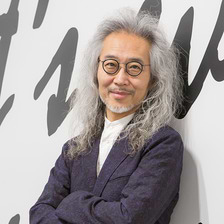
Tomoyuki Sugiyama
Digital Hollywood University
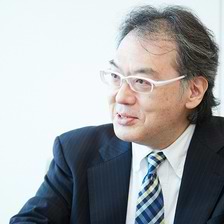
Masaaki Kaneko
Dentsu Inc.
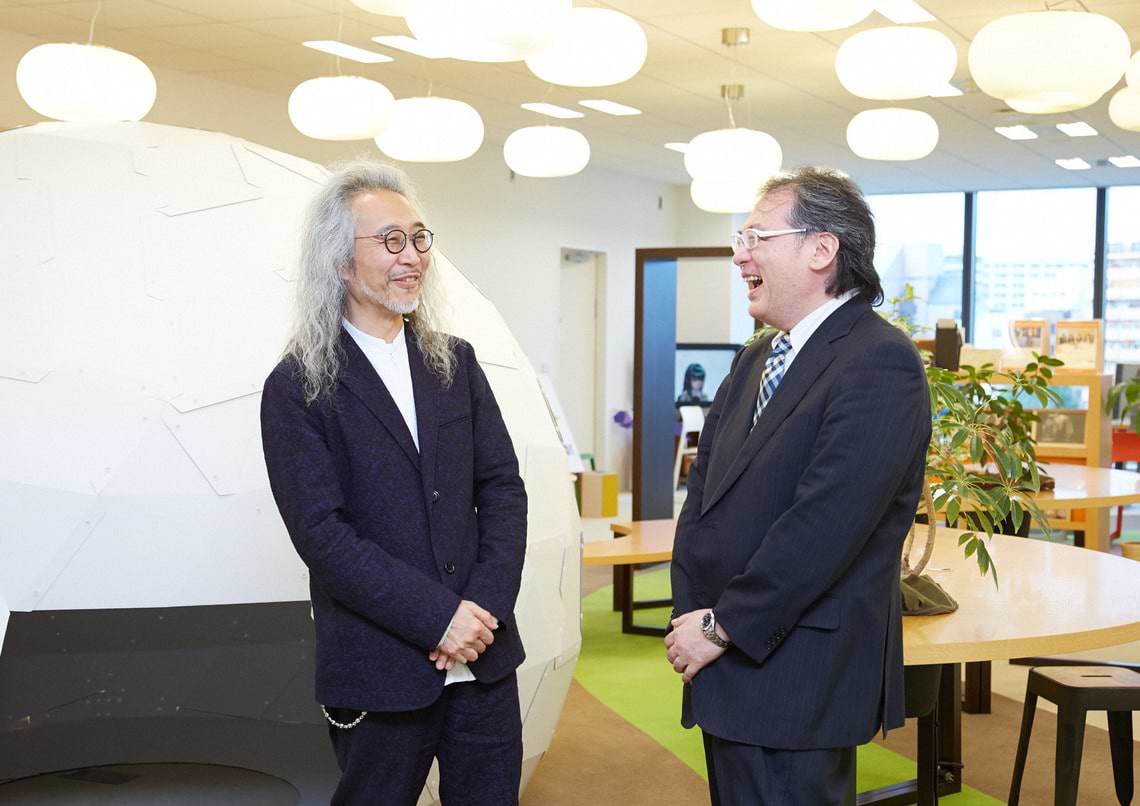
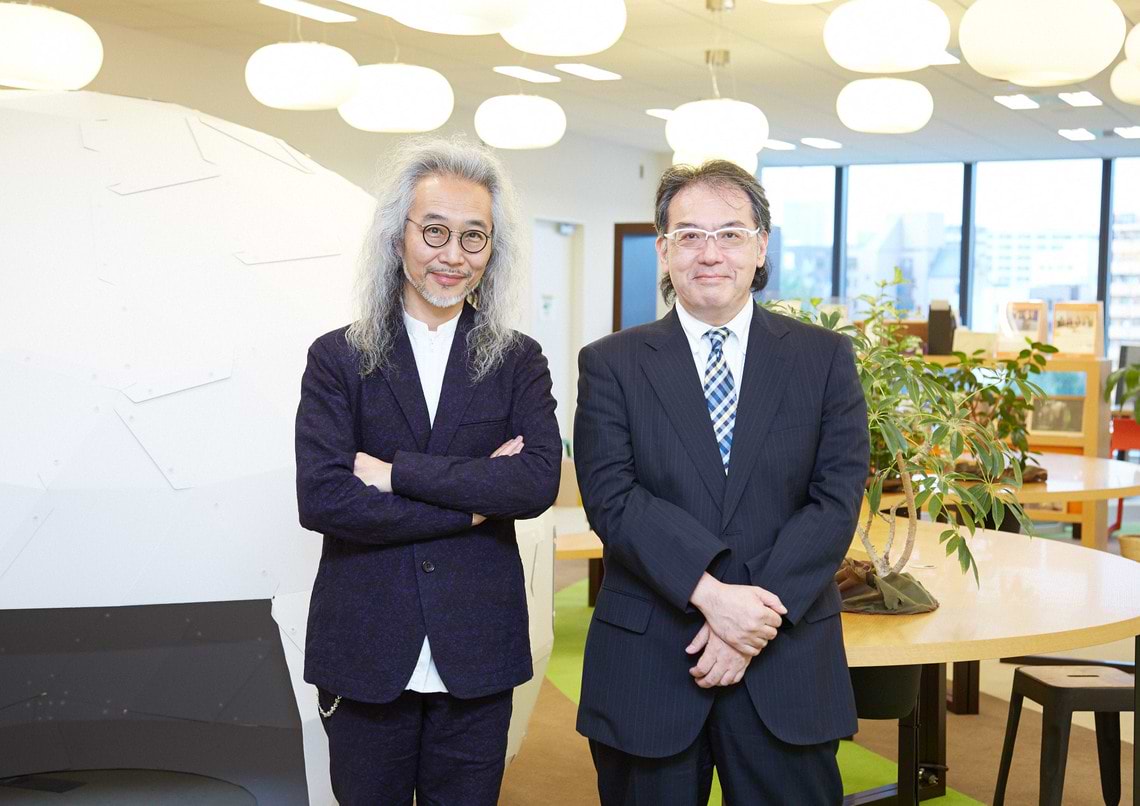
"Going to Meet the People We Want to Meet!" Episode 9: Masaaki Kaneko from Dentsu Inc. Event & Space Design Bureau met with Tomoyuki Sugiyama, President of Digital Hollywood University. Professor Sugiyama has nurtured numerous talents supporting Japan's content industry. Mr. Kaneko himself enrolled at Digital Hollywood during a pivotal life transition and has maintained a connection through both work and study. As the IoT society approaches, we heard about Digital Hollywood's initiatives and philosophy, which involve rapidly updating programs and advancing industry-academia collaborative projects.
Interview & Editing: Aki Kanahara, Dentsu Inc. Event & Space Design Bureau
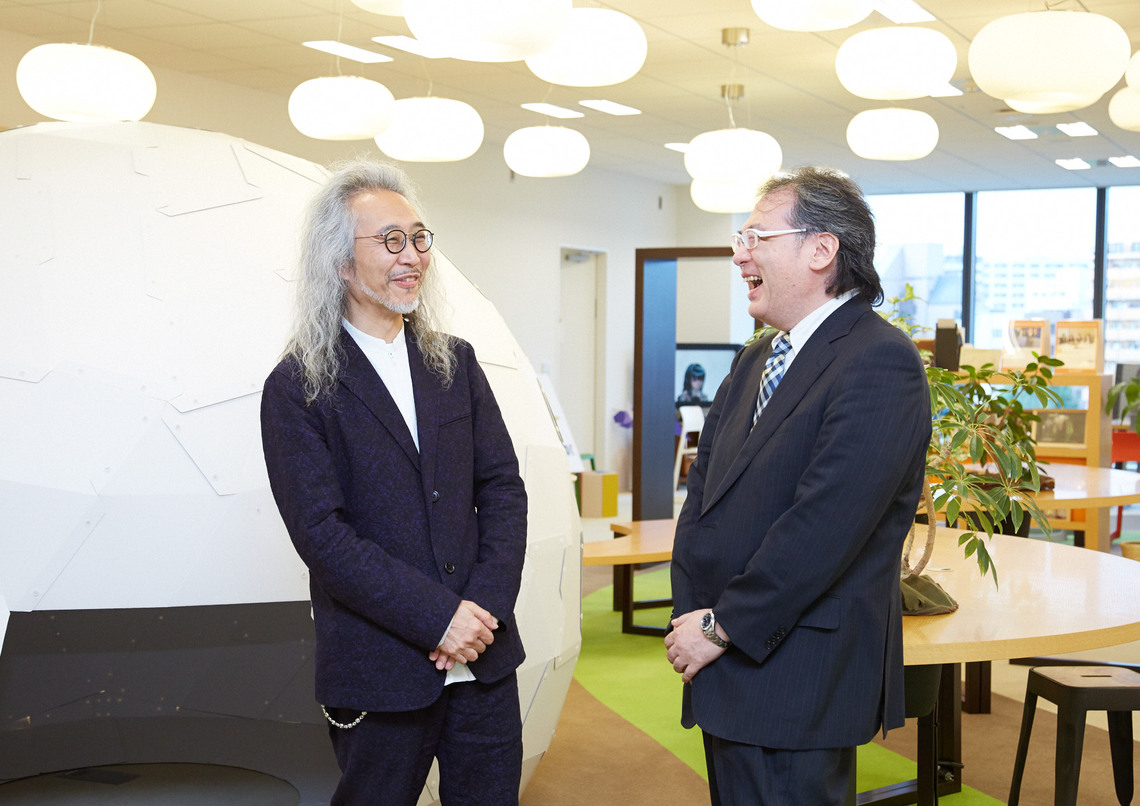
Precisely because it's digital education, we must properly teach "what it means to be analog"
Sugiyama: What is the newly opened "G's ACADEMY"? Rather than creating tech-savvy hacker types, its purpose is to cultivate people who can express their business ideas and potential solutions through programming. This approach should naturally lead to more startups.
Kaneko: We're in an era where even creative professions must engage with data-driven measurement and analysis. Has education seen changes stemming from this?
Sugiyama: Not really. In fact, the more data-driven things become, the more I believe physical intuition becomes crucial. That's why universities are actually enhancing their analog-based education. Precisely because we live in a world where even things like being human, human capabilities, tactile sensitivity, and skin sensation can be digitized, it's vital to consciously reflect on these aspects yourself.
Once you become a professional, you'll enter a world that believes in measurement and data-driven approaches. That's why it's crucial for students to verify their own physical sensations while they're still learning. Otherwise, you truly won't be able to bridge engineering with physical sensations and sensibility – both sides.
Kaneko: In event creation, commercial space design, and urban planning, are there any interesting artists from Digital Hollywood? I'd love to meet and collaborate with new talent myself (laughs).
Sugiyama: Like Mari Asada.
Kaneko: The artist who did the installation at Tokyu Plaza Ginza, right?
Sugiyama: For the HINKA RINKA corner spanning three floors, she placed interactive media art objects inspired by the Winged Victory of Samothrace, Nike, at three key spots near the main elevators. She's done various projects and is also a graduate student here.



Sugiyama:Motoyoshi Hirata (※1), who works in fashion and digital technology, is also quite interesting.
(*1) Motoyoshi Hirata... Representative of Mode Factory Dot Com. Researcher at Sugiyama Laboratory, Media Science Research Institute, Digital Hollywood University Graduate School. Founder and Total Director of "FashionTech Summit #001".
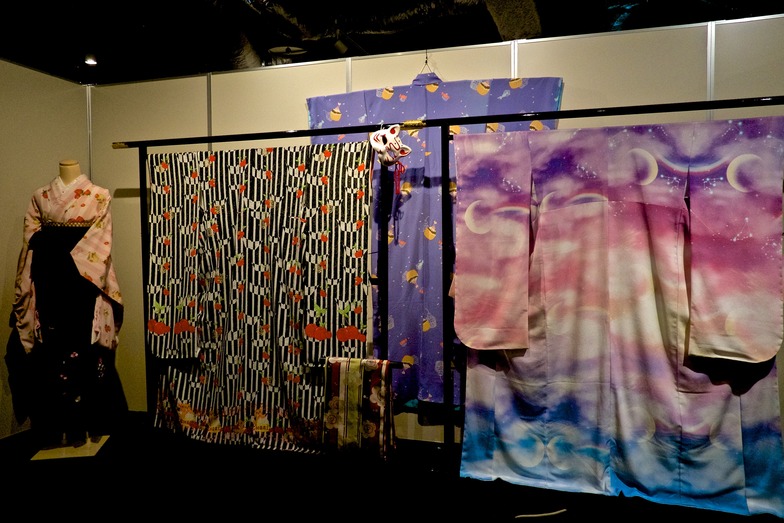
Sugiyama: Even though it's their university graduation project, many students use professionals. For example, Lin Zi'yi, a female student from China who loves Japanese fashion, created cute-style textiles and made them into kimonos. She commissioned a Chinese factory that has been a subcontractor for Japanese kimono makers for 30 years, gave them detailed instructions for every step, had them produce it, and then sold it on a website she created herself. And that is her graduation project.
Kaneko: That's pure business (laughs).
Sugiyama: Exactly. She essentially built a business as her graduation project. The finished product was cute, but I actually value that entire process more. Students who are good at expressing themselves get real jobs in no time, so they often try to leave around their sophomore year. Keeping those students until graduation is tough (laughs).
Right now, there are about 7.2 billion people on Earth, but actually, over half are under 30. So I tell 18-year-olds, "If you just focus on what people under 30 will accept, you'll be able to make a living just fine." It doesn't matter what adults say; as long as you have digital communication as your weapon, you can fight. It's just like what American youth shouted in the late '60s: "Don't trust anyone over 30." (laughs)
Kaneko: So today's graduates are about to compete on a global scale, right?
Sugiyama: Exactly. Being in Japan, we feel stifled by the declining birthrate and aging population, but I tell them places like Asia are full of young people. Young folks all play games, watch anime, and love content. Kids definitely need educational content, right? Everyone agrees wholeheartedly.
Let computers handle all the inhuman tasks, so humans can surpass their own limits.
Kaneko: You've been advocating for the multiplication of ICT, creativity, and business. What do you foresee for the future with this triple multiplication? How does it look from your perspective, Professor Sugiyama?
Sugiyama: Until now, it seemed like each industry had filled every nook and cranny of human society, leaving no gaps. But as people work using digital tools, holes are popping up in this previously seamless fabric – areas where humans don't need to work. From a human perspective, it's becoming hollow. Yet, it's still somewhat enclosed, like a net.
Within that sparse landscape, some may feel they've lost their jobs, others might lack clear goals. But my visualization of the future is this: as machines take over work, humans are gradually being freed from the constraints of labor.
I feel this could be an era where people increasingly venture into worlds of more human pursuits, things only humans can truly enjoy. And I believe new businesses can be created in those very frontiers. That's why the fusion of engineering, design, and business is the fundamental, essential package for achieving this.
Why do I focus on content? Because ultimately, if the work is for people, the business is all about moving hearts. I believe the know-how for that lies within the entertainment industry—or in Japan, the content industry.
There's a continuous flow of expression in literature, art, and various other fields. My vision for the future of "ICT × Creative × Business" is to channel that flow beyond mere individual artistry and contribute to humanity in diverse ways. We have no choice but to challenge ourselves to push the boundaries of what humans can achieve.
Kaneko: It feels like we're finally gathering the tools to reach the places humanity has aimed for.
Sugiyama: In the past, we could rely on social norms to live by. We could define ourselves by thinking, "If I just follow this person's teachings, I can live happily." But those constraints have been broken. We're now in an era where each individual must forge their own horizon.
No matter how difficult it is, rather than just retreating inward for spiritual training, I've believed for 25 years that digital communication can serve as a weapon to positively charge into that near future. I think that era has finally arrived.
My final mission is to foster as many young people as possible who find this era exciting and dare to try. It's tough. But the very difficulty is what makes it interesting. It's proof we're actually challenging ourselves.
<End>
Was this article helpful?
Share this article


Newsletter registration is here
We select and publish important news every day
For inquiries about this article
Back Numbers
Author
Tomoyuki Sugiyama
Digital Hollywood University
President / Doctor of Engineering
Masaaki Kaneko
Dentsu Inc.
Business Planning Bureau