Note: This website was automatically translated, so some terms or nuances may not be completely accurate.
 WMS2016 Special Interview [1/2]
The Path Marketing Aims For ― From Corporate Profit to Global Innovation
Philip Kotler
Northwestern University
Hirose Tetsuji
Dentsu Inc.
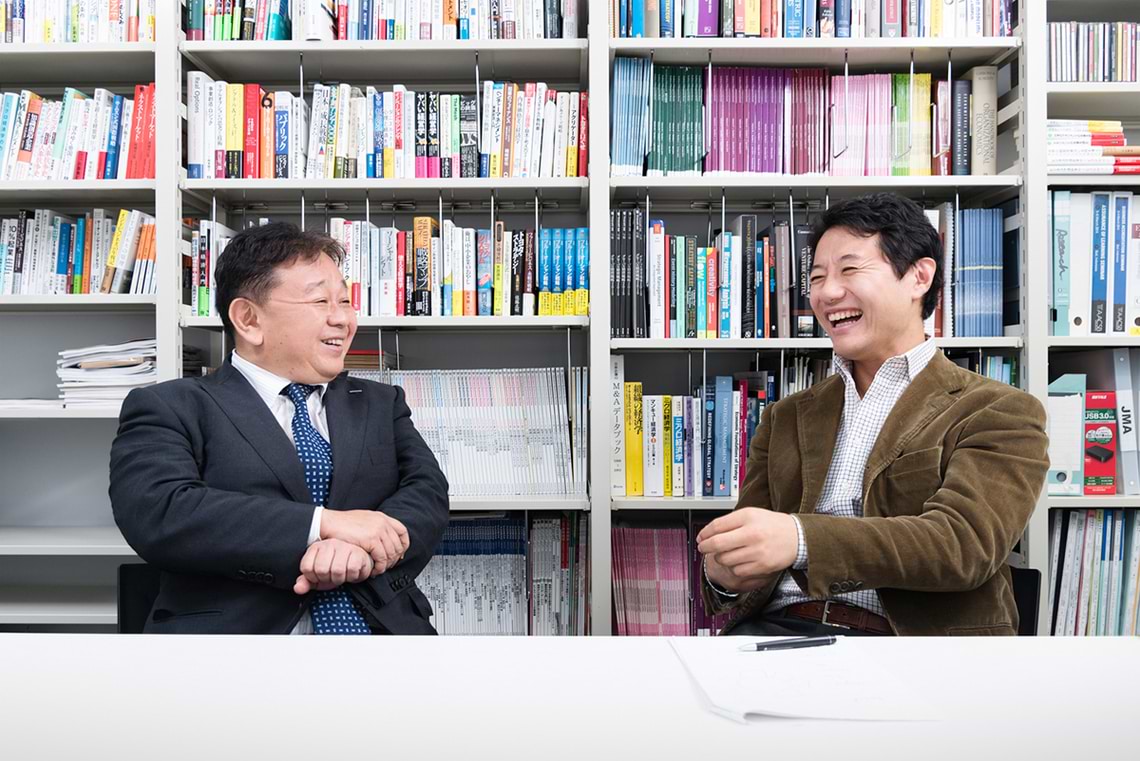
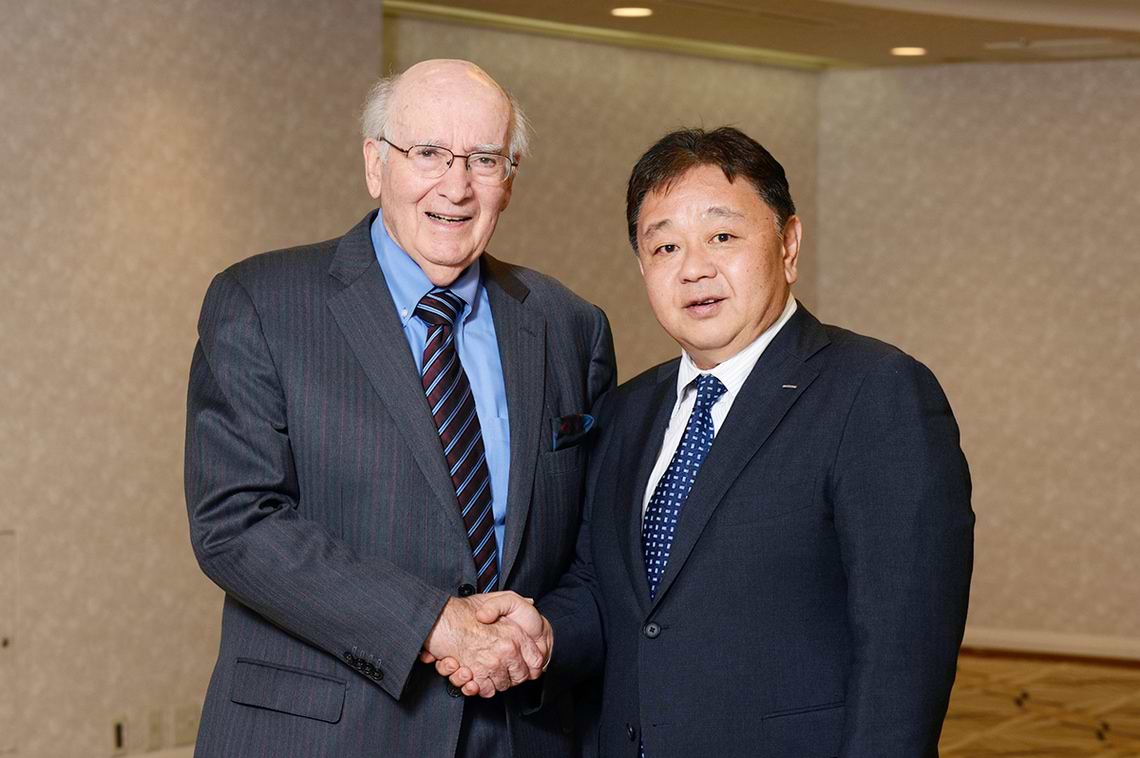
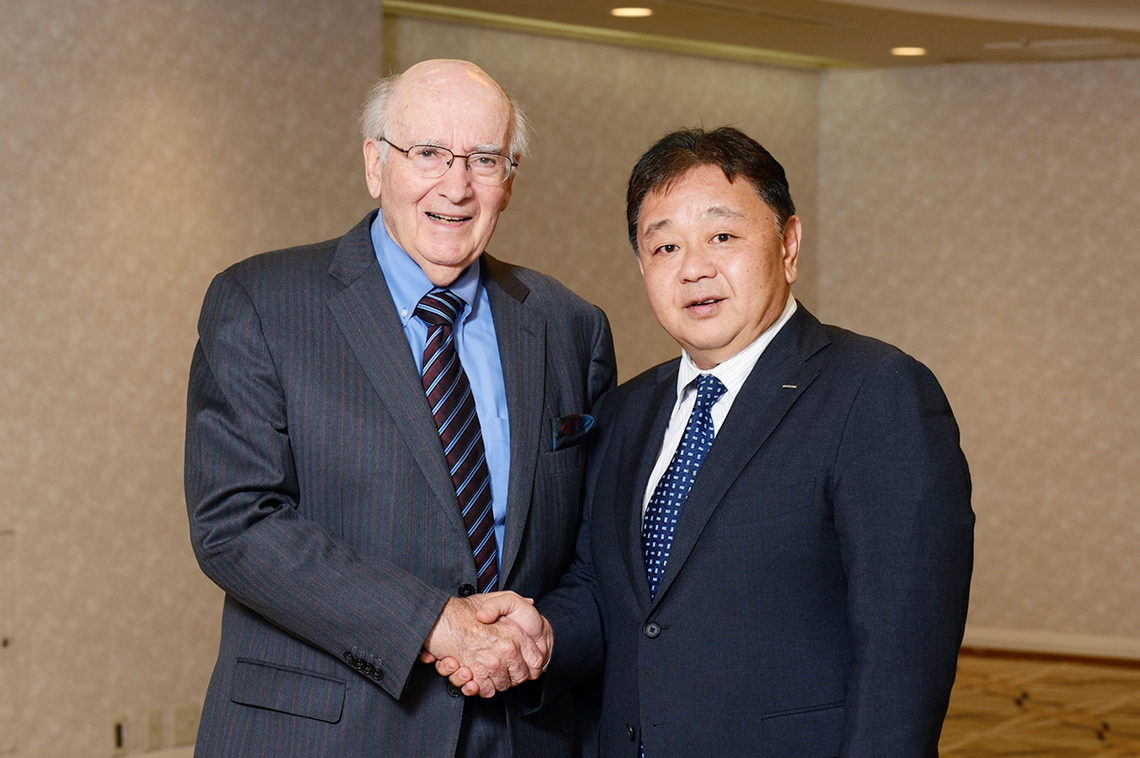
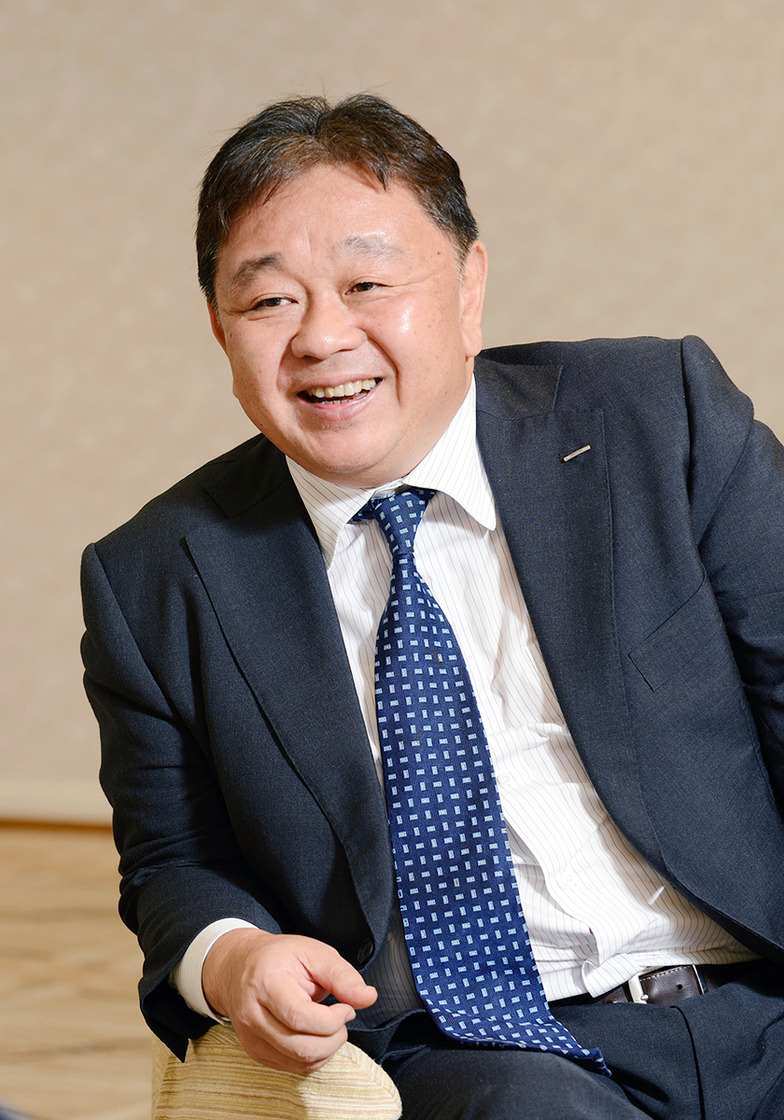
The World Marketing Summit (WMS), an international marketing conference held in Tokyo for three consecutive years starting in 2014, concluded its Tokyo events for the time being with the "WMS Japan 2016" conference held on October 11 and 12. With the conclusion of "WMS Japan 2016" on October 11th and 12th, the Tokyo hosting cycle has temporarily ended. To mark this closing, Tetsuji Hirose, President of Dentsu Consulting Inc. and Head of Dentsu's Marketing Solutions Division, interviewed Professor Philip Kotler of Northwestern University's Kellogg School of Management, the summit's organizer. They discussed the perspectives required in today's marketing and Japan's challenges heading toward 2020.
In an era of change, marketing becomes the driving force for social development
Hirose: You visited Japan for this year's WMS. Could you share the background behind holding this conference, now Japan's largest marketing event, in Tokyo for three consecutive years?
Kotler: WMS is an international conference where leading marketing experts, business leaders, and academics from around the world gather under the slogan "Marketing for a Better World." We learn and discuss the marketing perspectives needed in today's rapidly changing times from various angles. After holding it in Tokyo in 2014, which was very well received, we decided to hold it for three consecutive years with different themes and guests. The theme for this final year in Tokyo is "Marketing for Success in Mature Markets." I believe the content provided many valuable insights for Japanese participants regarding future marketing and innovation.
Hirose: What struck me most in Professor Kotler's lecture was his repeated emphasis that marketing is a driving force for social and economic development.
Kotler: What is required in corporate management is a marketing perspective that contributes to the development of a better society and economy, rather than simply pursuing profit. In Japan, marketing is still often seen as merely one function within a company, isn't it? For example, while the number of people with the title CMO is increasing in Japan, the real issue is who these individuals typically work with on a daily basis. In my view, I would like them to spend at least half their time exchanging ideas and formulating strategy with people outside marketing-related departments – for instance, those in finance, corporate planning, and other divisions. And I want them to be involved in the company's critical decision-making.
Hirose: Both marketing and the business environment itself have changed dramatically.
Kotler: Exactly. Precisely because we live in such a rapidly changing era, the marketing perspective is crucial. Looking at Japan's environment, we face the major challenge of how to address the declining birthrate and aging population. Various strategies are being considered, such as expanding opportunities for women to thrive, accepting foreign workers, and utilizing the senior population. However, to realize these, we need to make strategic judgments within the overall framework, prepare the surrounding environment, and overcome numerous challenges. It's crucial to consider, from a marketing perspective, what actions will benefit the greatest number of people and drive economic development.
Furthermore, digitalization has made everything visible and increased contact points, which in turn has complicated the measurement of marketing effectiveness and strategic decision-making. It is vital to build upon classical marketing foundations while integrating them with the marketing of this new era. I touch upon this new era of marketing in my upcoming book, "Marketing 4.0" (Japanese title pending), scheduled for release this December. I've compiled my thoughts on the latest themes: the customer journey in the digital age, its measurement metrics, and the nature of customer engagement.
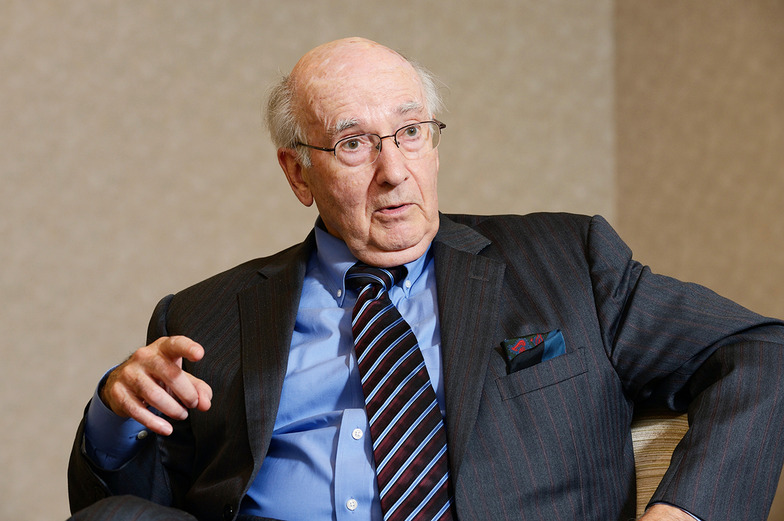
Hirose: Shifting from product-driven Marketing 1.0 and consumer-oriented Marketing 2.0 to value-driven Marketing 3.0, and further to Marketing 4.0 that fulfills self-actualization needs, is particularly important in mature markets like Japan. I eagerly await the publication of your new book.
Marketing as the Breakthrough for "Japan-Origin Innovation"
Hirose: What is required of Japanese companies as they practice this higher-level marketing? Some say that while Japanese companies excel at "Kaizen" (continuous improvement), their ability to generate innovation has weakened.
Kotler: That's not true. Japan has all the ingredients. What's crucial is identifying problems people aren't even aware of and addressing "unconscious needs." If marketing becomes stronger not just in offering pleasant smiles, but in proposing new value and solving problems, the economy will grow stronger, and world-changing innovation will continue to emerge from Japan.
Hirose: I see. Marketing truly can change the world. The Tokyo Olympics and Paralympics will be held in 2020. What kind of opportunity do you think this will be for Japanese companies and their marketing?
Kotler: Needless to say, the Olympics will be an excellent opportunity for Japan to once again show the world how wonderful and full of charm it is. Japanese companies should view this not just through the short-term lens of direct sales impact, but as a grand stage to showcase Japan to the world. It's crucial to demonstrate how they contribute to society—leveraging cutting-edge technology and their unique strengths. They need to reframe this opportunity by asking: What kind of country are we? What kind of companies are we? How do we want the world to perceive us?
Japan already has a well-established reputation for quality. We should use the Olympics to further convey the excellence of Japanese service and design to visitors and those interested in Japan. Every time I visit, I am struck by the meticulous care shown to customers in restaurants and shops, and the beautiful design sense and creativity evident in everything I see. Communicating and promoting these softer, cultural aspects is meaningful.
Hirose: The flag handover ceremony to Tokyo during the Rio de Janeiro Olympics closing ceremony was a perfect showcase of Japan's wonderful culture and content, becoming a global talking point.
As we look toward 2020, we too believe in the power of marketing and hope to contribute, even in a small way, to creating a better world. Thank you for today.
Was this article helpful?
Share this article


Newsletter registration is here
We select and publish important news every day
For inquiries about this article
Author
Philip Kotler
Northwestern University
Kellogg School of Management
Professor
Hirose Tetsuji
Dentsu Inc.
Executive Officer