Note: This website was automatically translated, so some terms or nuances may not be completely accurate.
 Shinmeikai "Strategic PR" [42/51]
Question 6: Doesn't "repositioning" sound like it defies common sense?
Let me state this clearly! "Breaking through preconceived notions is what repositioning is all about!"
Yes, lately I've been filled with this urge to raise my voice, though I'm not quite sure why. Exactly! Starting with good vocal projection really helps get into the rhythm during presentations, doesn't it? And lately, I've been talking a bit too much. How has everyone been? Alright, let's dive into this week's "#AskIguchi"!
By the way, it's gotten really cold lately, and I'm sure everyone's already switched to their winter clothes. It makes me think... I don't really feel that sense of "big trends" in fashion like we used to. Of course, trends exist, but it feels like this whole vibe has taken hold: "Fashion should be whatever you want! That's what makes you unique, right?" Personally, I'm all for it! If you're always chasing trends and buying this and that, your allowance disappears in no time. That said, it's a bit embarrassing when someone thinks, "Oh, they're wearing that again! They wore it a lot last year too." But fashionable people manage to wear their existing items well with just a little creativity, don't they? So, I started wondering if this kind of creativity could be applied to PR too.
Finding new value through deliberately shifted usage
Exactly. Here, I want to lean on "repositioning" again. That idea of "looking fresh with a slightly different approach" applies not just to fashion, but to all sorts of things, right? Cooking methods, singing styles, work approaches... In truth, each has its "proper way," and arranging that with your own twist is what makes it "your own style." But when you think about it, is the so-called "orthodox" or "mainstream" approach that everyone assumes is the best or correct one really the best? (There it is—my skeptical nature!) Maybe those values were just instilled from the outside and accepted as common sense because no one ever questioned them. And new discoveries made by digging into those areas tend to stick in your mind with a surprising impact, right?
Take "10-Minute Donbei" (Yesss—(゚∀゚)━! It's right nearby). A single person's experience overturned the cup noodle preparation method manufacturers had promoted for 40 years. They deliberately doubled the recommended 5-minute cooking time, only to find it unexpectedly tasted better than the standard method. This might align with the "repositioning" perspective in PR—changing the situation in which the product or service is used, like the season, time, or location.
Are we getting too caught up in our own "common sense"?
Information provided by manufacturers often presents the environment (situation) they believe offers the best possible benefits from their perspective. For consumers, this becomes a kind of given "common sense," and the instruction manual naturally reflects these guidelines. Few consumers would have the courage—or perhaps recklessness—to ignore this from the start and start using the product their own way. However, as discussed in the previous column, for products that have long-standing popularity yet face specific challenges, I believe it's necessary for manufacturers themselves to expand the interpretation of this "common sense" and present new value.
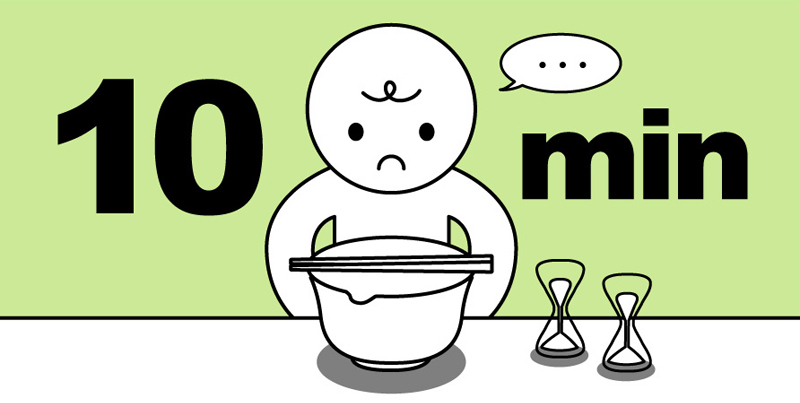
While "10-Minute Donbei" blossomed through a sort of aikido-like process—consumers accidentally discovering a "justifiable exception to the norm" and the manufacturer then giving it official endorsement (I admire this manufacturer's courageous decision)—I believe manufacturers themselves could also adopt this perspective to actively seek out new value. By thinking beyond the "common sense" associated with a product – its place, time, or season – and asking questions like "Where would eating this make it taste even better?", "When would eating it offer greater health benefits?", or "What if we deliberately sold this product during this season?", new value might emerge.
This perspective of "changing the situation" to transcend existing "conventional wisdom" seems like an interesting mental exercise. One crucial caution: it's not about irresponsibly overturning norms. What's needed is an attitude of redefining the neglected conventions of product specifications in light of the current external environment. You probably already know that many long-selling food and beverage products involve analyzing consumers' tastes daily and making minor adjustments every few years. The idea is to apply that approach at a higher level. So, why not start right away? Next time, I'll introduce the repositioning technique of "changing how it's used." Stay tuned! (Yay, I got you hooked again!)
Was this article helpful?
Share this article


Newsletter registration is here
We select and publish important news every day
For inquiries about this article
Back Numbers
Author

Inokuchi Tadashi
PR Consulting Dentsu Inc.
Executive Officer
Chief PR Planner
Shinmeikai "Strategic PR"Long time no see! CRAFTPRMeasuring PR Effectiveness: Supporting Management with Data-Driven InsightsNow is the time to reexamine the essence of PR / Its futureThe Future of Corporate Museums as PR AssetsBeyond Conference Report【Special Discussion】Public Relations Enters a New Era: Proposals for PR 4.0