Note: This website was automatically translated, so some terms or nuances may not be completely accurate.
 Mom's Potential Value [1/6]
Behind the Scenes at Mama Lab ①
DENTSU SOKEN INC. Mama Lab Senior Researcher Rie Tanaka clearly explains Mama Lab and the environment surrounding today's mothers.
── Ms. Tanaka, I understand you returned from childcare leave this past April. It's been about three months back on the job. How has it been?
Tanaka: I feel like I'm gradually getting back into the swing of things. I think it's a common concern for working mothers, but during these past two months, I had to take quite a few unexpected days off due to my child. However, I was actually more anxious about balancing work and childcare while on leave. Once I actually started back, I thought, "Oh, I can manage this surprisingly well."
── How about the understanding from those around you, or the support system?
Tanaka: I'm incredibly grateful for the support, both from my family and at work. Dentsu Inc. has quite a few senior female colleagues who are both moms and powerhouse workers. It's a culture where that's the norm, which makes it easier.
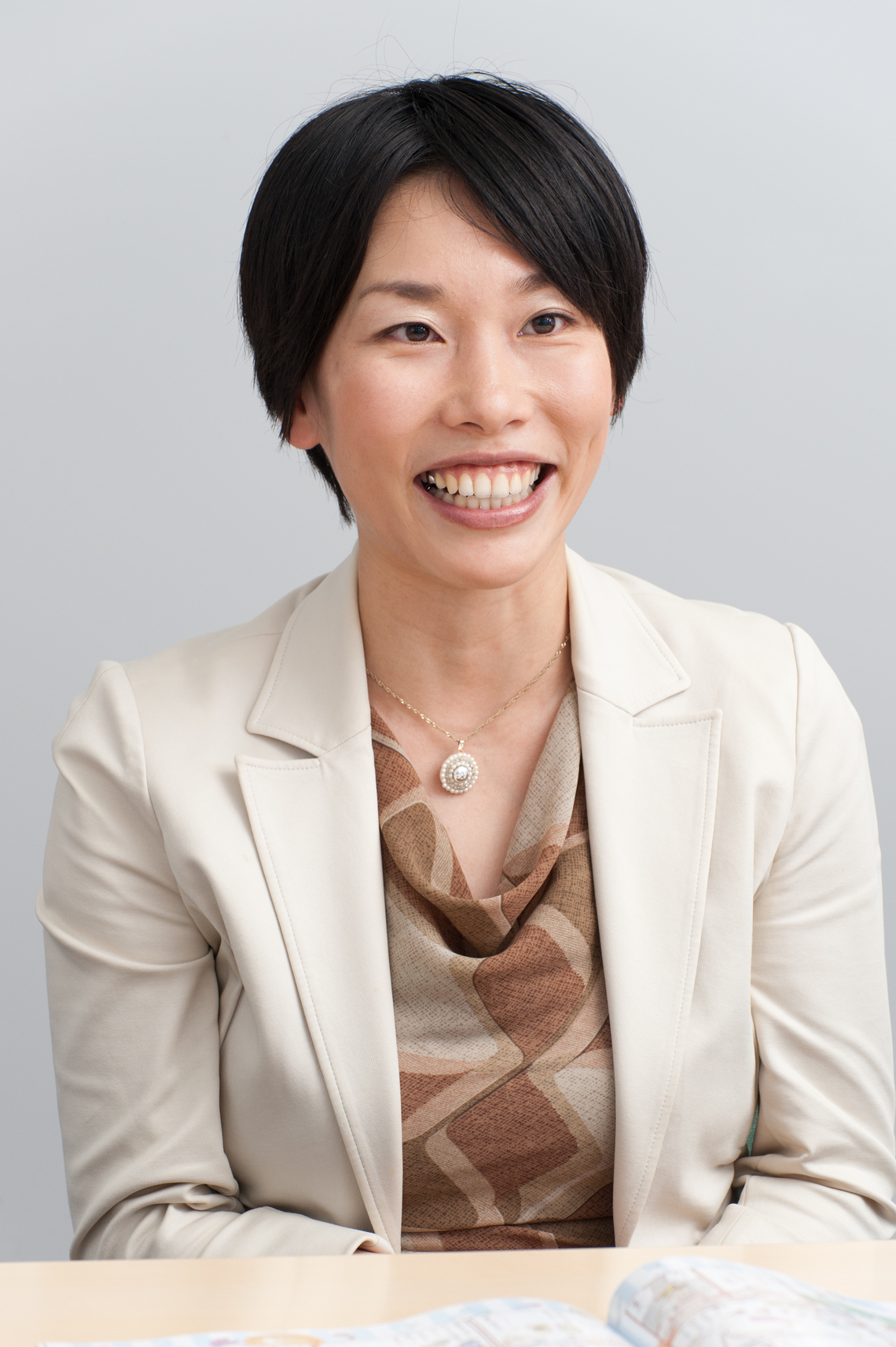
── After returning, you became the representative of Mama Lab, right?
Tanaka: That's right. I stopped everything I was doing before returning and now focus solely on Mama Lab. When it was first established, Yuko Kitakaze was the director, but now that we've built up our track record and expanded our team, I'd like to move towards a structure where anyone can represent Mama Lab.
── Could you reintroduce Mama Lab?
Tanaka: Mama Lab is a cross-functional team formed in 2008, primarily by DENTSU SOKEN INC., which is a subsidiary of Dentsu Inc. Our activities aren't centered on research; they're more business-oriented. We handle everything from mid-to-long-term market forecasting on how things will change, to product development and promotion. We're a team that thoroughly solves problems from a mom's perspective—from planning to execution—considering how to create products and craft messages based on how moms are changing. While we certainly research what moms are feeling now, we go beyond analysis to drive solution-based projects for clients across various industries.

── I see. Could you share an example?
Tanaka: For example, in the white goods industry, where technological competition is fierce and cutting-edge tech is always featured, we act as advocates, saying, "But what moms actually want is this kind of thing." Manufacturers certainly develop products with the user perspective in mind, but how you communicate the same thing is crucial. For instance, there are various terms like "energy-saving," "eco," and "power-saving." Right after the earthquake, we showed data indicating that "power-saving" resonated more than "energy-saving," so we changed the messaging approach.
Additionally, in distribution, the year is packed with events: starting with April's new school year and fresh starts, followed by the travel season, Mother's Day, Father's Day, summer vacation... At each of these times, we consider how to energize the sales floor, what product lineup to offer, and how to present it to make it appealing to moms. We provided detailed support throughout the year, from product development to commercial content and in-store POP displays. This kind of year-round assistance is very much the hallmark of Mama Lab's work.
── Are all the members at Mama Lab moms, besides Ms. Tanaka?
Tanaka: Some are moms, some are single, and we currently have members on maternity or childcare leave. Sometimes our planners are men. It might sound like a huge organization, but our core planning team has always been a small, elite group. Mama Lab isn't a vertically integrated team where we have a set number of members covering everything from planning to creative to media. Of course, we do it all from a mom's perspective, but we assemble the optimal team for each product or theme. Having just one Mama Lab member per project is sufficient. It feels more natural for the team composition to change with each project. Since we don't work with fixed members, it's incredibly open.
── By the way,in therecentarticles in"Nikkei Trendy Net" and "Nikkei Distribution News," the term "Ala Mama" felt fresh. Why "Ala Mama" now?
Tanaka: We define "ara-mama" quite simply as "women who want to have a child within the next three years." Typically, Mama Lab focuses on "moms with children in elementary school or younger and their families." So why did we highlight people in the "pre-mom" stage, those who "want to become moms"? I think it's because after the earthquake, there was a boom in seeking "ordinary happiness," a rush of celebrity births, and increased personal life posts on social media, suddenly making childcare very visible. At that time, we conducted a little research from the perspective of how many people were aspiring to become moms and what they wanted.
In fact, one in four unmarried women in their late 20s answered that they "want children within the next three years." When asked on a four-point scale, a clear 25% responded with "I definitely feel that way."
Specifically, these women are very active shoppers with high awareness of beauty and health. At first glance, "wanting children" and "beauty" seem unrelated. But with the mom trend, women sensitive to trends end up aspiring to be moms, and these are the ones wanting beauty appliances. It's less about wanting to be beautiful to find a partner, and more about wanting to stay beautiful even after becoming a mom. That felt very real.
── So they're thinking about things like wanting to travel before giving birth, or even before getting married.
Tanaka: I was surprised by how many people, based on celebrity pregnancy and birth news, say things like "I'll travel once I'm in my second trimester." They understand how demanding it will be after birth and are already mentally prepared. So the idea of "I want to go now while I can" is quite readily accepted. It's interesting that they're not just thinking about themselves right now, but acting after considering various future factors. Also, traditionally, "marriage" should come first, but the fact that they have the image of "childbirth" first feels very modern.
── To be continued next time.
Was this article helpful?
Share this article


Newsletter registration is here
We select and publish important news every day
For inquiries about this article
Author
Rie Tanaka
株式会社電通ライブ
シニアディレクター
![[SB 2026 Tokyo] What Is Required of Corporate Sustainability Communicationsのサムネイル](https://cdn.speedsize.com/e7df76a9-4406-40f5-bc97-57e7c2c2d99d/https://cdn.dentsu-ho.com/834def09-4013-422a-a14f-45c659fd7b82/gbc33_top.jpg/f_auto,w_3840)