Note: This website was automatically translated, so some terms or nuances may not be completely accurate.
 Creative Things in London [1/4]
After working at an advertising agency in London
Nice to meet you. I'm Kosuke Takeshige, working as a Creative Director at McGarry Bowen, an advertising agency in London.
McGarry Bowen is positioned as a creative agency within the Dentsu Inc. Aegis Network. It operates around 12 locations worldwide, including London. Based in London, my job involves developing and executing creative ideas for TV commercials, print ads, and digital campaigns broadcast across the UK, Europe, and other regions.
Based on my own hypothesis that "there might be surprisingly few Japanese people working at UK advertising agencies," I'll be sharing various insights about the UK creative scene with everyone back in Japan.

British Advertising Creatives That Evoke "British Culture"
"How magnificent this country's literature and art are, and how profoundly that magnificent literature and art influence the national character... Britain has no word for 'samurai,' but it has the word 'gentleman'—and what meaning does that gentleman embody... Various things catch the eye, while various irritations also come to mind..."
This is an excerpt from Natsume Sōseki's "Letters from London," written in 1900 during his studies in Britain.
Over a century has passed since then, yet I find myself resonating so deeply with Natsume-san that I'd love to sit down with him in a pub this evening. Perhaps what Japanese people living in Britain feel hasn't changed much, even as the times have shifted.
So, first, I'd like to talk about how "British culture," which even Natsume Soseki admired, influences advertising creativity.
I've always liked British advertising, but the more I learn about "British culture," the more depth and flavor the stories within the ads gain.
Take Christmas, for example. For the British, Christmas is a special event that's hard for Japanese people to fully grasp.
In this country, Christmas advertising campaigns start preparing around May. By October, preparations for street illuminations are already underway. Then in December, people exchange gifts not just with family, but with many others like relatives and friends. On Christmas Day itself, everyone spends time with family, so many shops close, and the streets fall quiet. Incidentally, a recent tradition has emerged where people compete to wear the most hideous "Christmas jumper" sweater before Christmas. The uglier, the cooler it is.
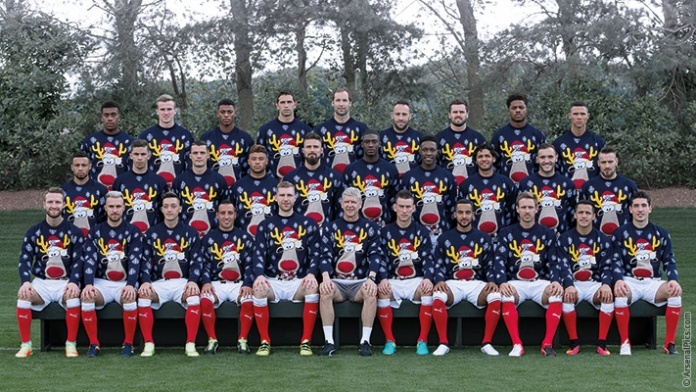
This "Christmas jumper" tradition apparently stems from the insight that grandparents often give sweaters as Christmas presents to their grandchildren, who then have to smile and wear the tacky sweaters they don't want.
Without understanding this kind of "British culture" surrounding Christmas, it would be hard to come up with ideas like Harvey Nichols' "Sorry, I Spent It On Myself," which taps into the awkwardness that arises when families exchange gifts at Christmas.
https://www.youtube.com/watch?v=ITyeI3YyYw8
This ad was highly praised at Cannes Lions because people in Europe, who share close ties with British culture, could relate to its insight. Furthermore, there was a shared understanding that Christmas ads represent "the defining ads of that year."
While the UK embraces diversity by welcoming many immigrants, it also possesses a certain "strong attachment to its own culture" that is somewhat akin to Japan. Being an island nation might play a role, but this tendency stands out even within Europe. And it's precisely this that attracts people worldwide and keeps them captivated.
Three Characteristics of the UK Advertising Industry, a Global Powerhouse
The UK's influence in the global advertising creative industry is undeniably significant.
The headquarters for global advertising awards like the Cannes Lions and D&AD are based in London, and the WPP Group is the world's largest global agency.
Looking at the 2016 Cannes Lions awards, the UK ranked second only to the US. It also won the Grand Prix in the Film and Creative Effectiveness categories.
The advertising business in this "advertising superpower" seems to have several distinct characteristics. While it's impossible to define them solely through a "British" lens, I'll highlight three features I've observed.
■Small, Elite Groups of Specialists
Working in the UK, the first thing I noticed was that, compared to Japan, many people build their careers as specialists, both at the company level and as individuals.
Company sizes are also not as large as Japanese advertising firms. Looking specifically at creative agencies, most have around 100 employees total, with larger ones reaching about 300. They operate with minimal staff to control costs, enabling swift decision-making and workflow. Their stance is that if work increases, they simply hire freelancers as needed.
As for individual skills, it's rare to see people working across multiple roles, such as "I handle both creative and strategy" or "I'm creative but also do sales." The prevailing mindset is that individuals excelling at their specific roles is the most efficient route for the entire organization to deliver results.
Much like this country's education system, the basic career path seems to be honing specialization early on, becoming an independent specialist, and building your career using clearly defined skills as your weapon.
■Diverse Talent Gathered from Around the World
Diversity in talent is another hallmark of the UK. While my current workplace has many British employees, it's perfectly normal to find people from other countries—like Australia or Spain—alongside me, a Japanese national. Multinationality is so commonplace that even when you notice someone is of a different ethnicity, you rarely feel the need to ask their country of origin.
Moreover, given that these are people who have specifically come from overseas to secure jobs in London, they generally seem highly motivated and, as talent, exceptionally capable. After all, with a population of about 65 million, the UK faces limitations relying solely on its own domestic talent pool. By actively welcoming and utilizing many talented individuals from abroad, the country is likely enhancing its overall potential.
As an aside, some theories suggest that London's recent surge in delicious food is significantly influenced by its proactive acceptance of foreigners. The Indian restaurant I frequent is truly excellent—feel free to contact me personally if you're interested.
So why does the UK attract talent from around the world to this extent? Of course, the business scale of a global city like London plays a major role. However, the reasons for maintaining the country's appeal as a whole can also be found within its cities. This time, I'd like to focus on the UK's "cultural assets."
In the UK, world-class assets like the British Museum are open to the public free of charge. This successfully draws in many tourists and projects a positive image of the country internationally. This is said to be influenced by the Enlightenment* that began in the 18th century. Because such ideas are deeply rooted in the nation, it may be particularly adept at building society with a perspective that extends beyond its own borders.
I often see children from the UK and neighboring countries visiting these museums as part of their school trips to learn history. Each time, I think their perception of Britain is surely being shaped in a positive way.
This privileged environment is one reason I wanted to work in London. For someone in the advertising industry, high-quality exhibitions can also serve as inspiration for ideas.
By maximizing the use of "history and culture" as resources, diverse talent is drawn from around the world. Utilizing that talent, and using it to further develop the nation. This, too, is a strength of the UK.

■Scalability of Ideas
This diversity of talent also plays a positive role in advertising creativity. A key aspect is the scalability of ideas.
While the future after Brexit remains uncertain, many global companies currently use the UK as their European base. Consequently, creative agencies in this country routinely handle campaigns not only for the UK market but also for Europe-wide rollouts.
Even when we say "expanding across Europe," each country has completely different histories and cultures. Therefore, it must be verified whether the advertising expression will actually work for each specific country.
This is where having team members with diverse backgrounds proves invaluable. Essentially, they can assess whether an idea will genuinely resonate and drive sales when rolled out in neighboring countries. This allows for verification from a local perspective, right here in the UK.
This "diversity of talent" stands in stark contrast to Japan, which has developed primarily around a single ethnic group, and there is much to learn.
That said, simply adopting the UK approach won't always work in Japan, given its different history and culture.
The key lies in discerning which aspects of other countries to adopt and how to leverage them for the development of our own nation and company. This discernment will be crucial for growing our business while balancing globalization.
In future installments, I'll also touch on the unique aspects of Japanese advertising agencies that I rediscovered while working overseas, as well as practical differences I've observed between the UK and Japan.
*Enlightenment thought: A philosophy aiming for the liberation of humanity, distinct from feudal thinking. It also gave rise to the concept of the cosmopolitan, a global citizen active across national borders.
Was this article helpful?
Share this article


Newsletter registration is here
We select and publish important news every day
For inquiries about this article
Author

Kosuke Takeshige
Dentsu Inc. McGarryBowen UK