Note: This website was automatically translated, so some terms or nuances may not be completely accurate.
 Creative Things in London [3/4]
Cannes Lions from a London Perspective
Coming to London has slightly shifted my perspective on advertising awards compared to when I was in Japan; I might now view them with a bit more distance. In the advertising creative business, I believe it's worth reconsidering how we should approach and utilize awards like the Cannes Lions. While we shouldn't be swayed by them, it's also true that they offer unique information, inspiration, and business opportunities that start there.
Some companies, like Publicis Groupe, have made the decision to "not participate in next year's Cannes Lions," which may be a perfectly sound business judgment. I was tempted to write a column waving an anti-thesis to advertising awards in a similar vein, but unfortunately, I lack both the courage and the insight for that. Moreover, I'm generally more positive about advertising awards.
So this time, I want to consider how people working at creative agencies in London approach advertising awards like Cannes Lions in their daily work, and what the differences are between Japan and the UK in their approach to international advertising awards.
Differences Brought by Geographic Distance
It takes about two hours by plane from London to Nice, the nearest airport to Cannes. In Japan, that feels like a domestic trip. Especially for young people who benefit from the relatively affordable entry fees for Cannes Lions, it's a convenient distance that makes attending every year a feasible option. In fact, quite a few people participate for just a few days, pinpointing their attendance around work commitments. Compared to how Cannes Lions is perceived by advertising professionals working in Japan, those working in London or Europe seem to view it as something more familiar, held within their own business sphere.

On the other hand, news about advertising awards held in Asia, like AdFest or Spikes Asia, surprisingly rarely reaches us. Of course, these events also feature brilliant ideas worthy of Cannes Grand Prix wins, but the impact of geographical distance on how we engage with these awards is surprisingly significant. This difference is evident even during the Cannes Lions judging process. Advertisers working in London are constantly watching Western advertising and have a cultural foundation, making it easier for them to empathize with those insights. In other words, it's true that they find it easier to evaluate. It's probably similar to how, in our daily lives in Japan, ads that become widely discussed topics tend to be recognized at Japanese advertising awards.
How does the language difference affect things?
Language differences—specifically between English and Japanese—can significantly impact award outcomes in certain categories. Japan is often said to excel in design and digital creative work. Our London colleagues seem to share this perception. Designs reflecting Japan's unique, unparalleled culture attract considerable interest from many Westerners, including Britons. Or rather, have attracted it.
In 1968, the ICA museum in London held an exhibition called Fluorescent Chrysanthemum showcasing Japanese design. It featured works by Japanese graphic designers like Kohei Sugiura and filmmakers, generating considerable buzz. More recently, the British Museum hosted an exhibition on Katsushika Hokusai, where I was struck by how many foreigners were intently studying the works on display.
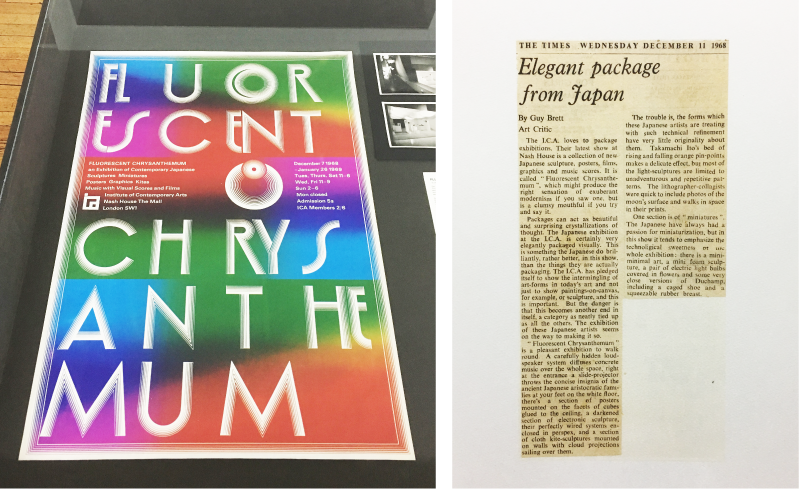
In this way, design reflecting Japan's unique culture has long attracted attention overseas, particularly in the UK. This is largely due to design's relatively low dependence on language compared to other communication methods. The high regard for digital creative work also stems significantly from elements like design and UI, which can convey nuance beyond language.
In contrast, the hurdle for Japanese ideas to win Gold or higher in categories centered around film, which emphasize copywriting and storytelling, is high. A major factor is the linguistic barrier, which limits the approaches available for expression. When we look at Japanese copywriting, even when copy aims to convey similar messages, some resonate deeply while others don't. The same principle applies to English copywriting. To compete effectively in these categories, we may need to confront English copywriting head-on.
The difference in news becomes the difference in advertising
While it's often said that award-winning work tends to feature ideas addressing social issues, in countries like the UK and other European nations, making a campaign newsworthy almost inevitably requires a social issue theme. This is because the topics covered in the BBC news I absentmindedly watch every morning before heading to work are mostly terrorism, politics, gender, etc. You rarely see anything like Japanese variety shows where networks compete to broadcast celebrities' personal scandals.
In other words, it's no exaggeration to say that gaining publicity equals addressing social issues. In Europe, incorporating social issues into advertising doesn't seem like something done specifically with awards in mind; rather, it appears to be an extension of regular marketing activities aimed at generating conversation and empathy among consumers.
For example, the "Fearless Girl" campaign, which won Grand Prix awards in multiple categories at this year's Cannes Lions. As you may know, this idea aimed to bring attention to gender discrimination by placing a statue of a young girl in front of the iconic "Charging Bull" statue on Wall Street, timed to coincide with International Women's Day.

This idea received such high praise largely because all its elements were designed to perfectly align with the focus of major global media: ① addressing the social issue of gender inequality, ② timing it with International Women's Day, a globally recognized occasion, and ③ executing it in Wall Street, a globally significant location. Even living in London, I saw this news in real time across major outlets like the BBC, The Guardian, and The New York Times. It's easy to imagine how the fact that judges from around the world experienced this campaign's real-time global buzz through major media significantly influenced the judging results.
Articles about trends at this year's Cannes Lions are common, but they essentially reflect parts of global media coverage and interests. To gain a deeper understanding of what's discussed at Cannes Lions, keeping up with global news daily is paramount. With that foundation, why not try enjoying the unique characteristics of Japanese media coverage? You might discover the fascinating aspects of Japan's distinct culture that shine through, and that understanding could potentially be applicable at Cannes Lions.
Was this article helpful?
Share this article


Newsletter registration is here
We select and publish important news every day
For inquiries about this article
Back Numbers


Author

Kosuke Takeshige
Dentsu Inc. McGarryBowen UK