Note: This website was automatically translated, so some terms or nuances may not be completely accurate.
 Creative Things in London [4/4]
Ideas have nationalities too.
“SOMEWHERE BETWEEN LIES AND TRUTH LIES THE TRUTH”
(Somewhere between lies and truth lies the truth)
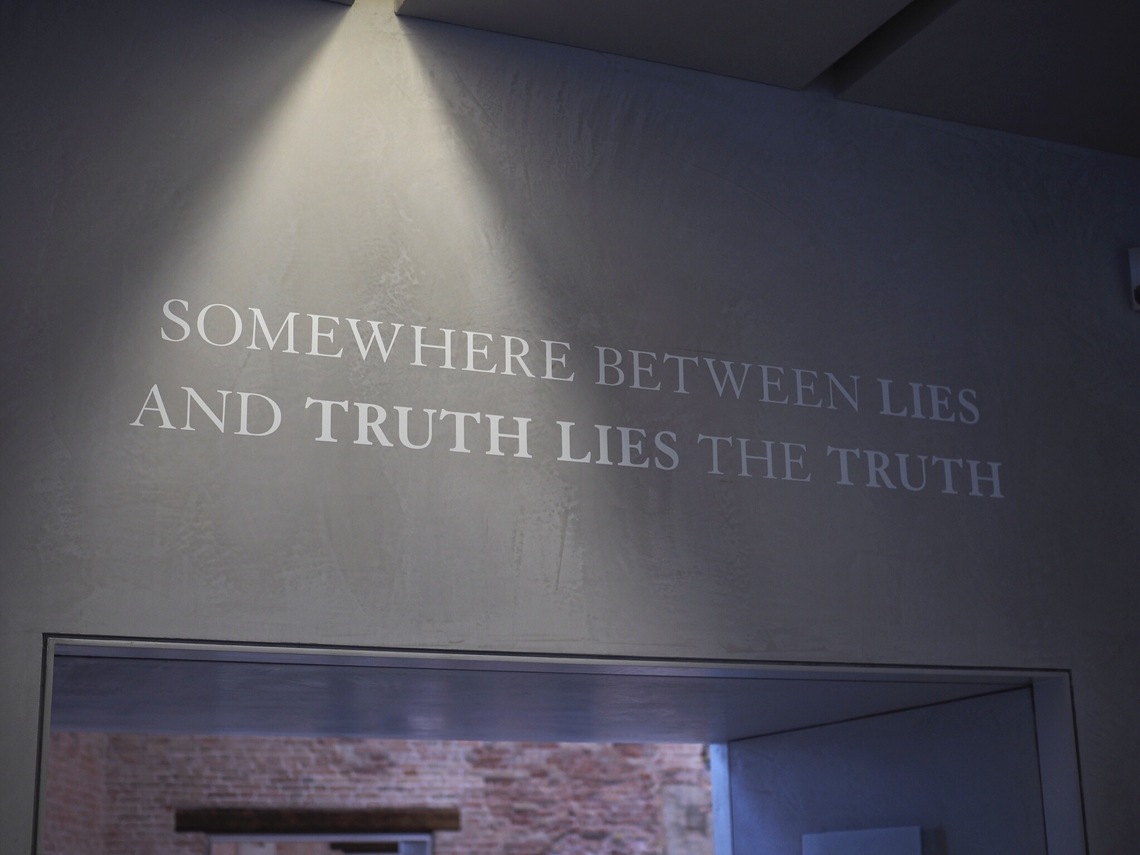
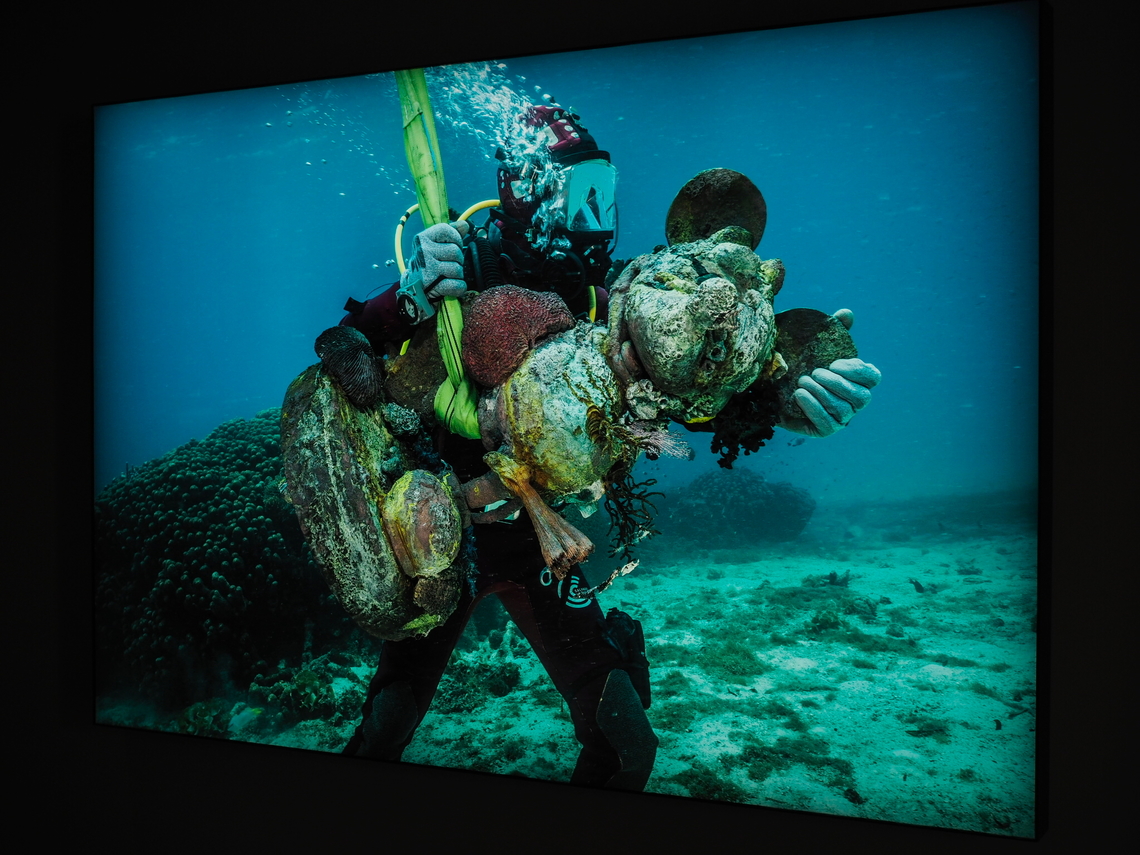
This is a phrase from British artist Damien Hirst's solo exhibition "Treasures from the Wreck of the Unbelievable," which I saw recently in Venice. I don't know if it relates to his discovery by Charles Saatchi, founder of the advertising agency Saatchi & Saatchi, but Damien Hirst's work is always advertising-like and fascinating.
This exhibition featured over 200 treasures of various sizes, supposedly excavated from the Indian Ocean seabed after 2000 years. Having endured two millennia, the jewelry, marble statues, armor, and other items were beautifully encrusted with coral and moss, overwhelming the viewer. However, as the exhibition progresses, it reveals a bronze statue shaped like Mickey Mouse. This creates a device where the audience becomes confused about the ambiguous boundary between what is truth and what is fiction. For us, constantly overwhelmed by information without judging its authenticity, this was a thought-provoking exhibition.
From my perspective, constantly struggling to keep up with British ideas every day, there's something strangely satisfying about this exhibition being conceived by British minds. The definition of "idea" as conceived by the British differs slightly from what we in Japan consider an "idea."
British Planning Methods Based on the "Creative Brief"
First, let's consider the planning methodology for generating ideas. The planning process leading up to a presentation in the UK is largely similar to Japan's, but there is one significant difference: planning is based on the "Creative Brief"*.
In the UK, they meticulously develop concrete creative plans that adhere very closely to the creative brief. For example, no matter how interesting an idea comes from the creative staff, it will be ruthlessly rejected if it doesn't align with the creative brief. Phenomena rarely seen in Japan, like "This creative idea is interesting, so let's change the strategy to fit it," or "Sales people getting restless because the strategy and creative aren't aligned," are almost unheard of in reputable UK agencies.
In UK creative work, the essence of the matter is first thoroughly examined, and a major concept is derived from that. Then, a story is added to enrich and expand that idea. Considerable time is spent thinking about the novelty of the concept itself, before moving to concrete planning outputs. This becomes the creative brief and the core of the idea. In other words, the "idea" referred to in the UK is closer to a concept compared to its Japanese counterpart. Take Damien Hirst's example: the opening phrase "SOMEWHERE BETWEEN LIES AND TRUTH LIES THE TRUTH" represents the "idea" as understood in the UK. Without novelty or intrigue in that concept, it cannot be considered a good idea.
In Japanese advertising creative, the term "idea" often refers more to the output-oriented design and craft aspects than to the concept itself. In other words, to be evaluated in a typical advertising creative pitch, meticulously refining the specific story, shot breakdown, and graphic craftwork for a TV commercial becomes a crucial element.
Meticulous and Delicate Ideas Born in Japan
Next, I'd like to consider the characteristics of ideas born in Japan.
I recently returned to Japan after a long absence. Even though I'd only been away for a year, I was constantly excited by the ideas evident in Japanese products and services. First, I was amazed by a product called "Cheese-Filled Mentaiko Mayo-Flavored Crab Stick." This brilliant product embodies a Japanese-born idea. It takes the classic combination of mentaiko and mayonnaise, adds cheese, and gently wraps it all in a crab-flavored fish cake with a refreshing texture.
This is a brilliant idea, incredibly meticulous and delicate, reaching into those hard-to-reach places – something only a Japanese person could conceive. As someone who adores crab-flavored fish sticks, I've gratefully enjoyed this product every single day since returning home. Japan is overflowing with these kinds of "ideas that reach into those hard-to-reach places." Variations in ramen flavors, countless collaborative apparel models, and even the heated toilet seat are all meticulously detailed, delicate ideas born in Japan.
Unfortunately, however, such ideas often fail to gain broad acceptance overseas when exported directly. Ideas crafted by Japanese people, for Japanese people, and appreciated for their meticulous detail by Japanese consumers, can sometimes be perceived as over-engineered, superfluous, or too niche to scale commercially.
Awareness of an idea's nationality
Thus, there are distinctly British ideas and distinctly Japanese ideas. This is inevitable because ideas conceived by an individual are deeply colored by their country's history, culture, and the values of its people. As long as people generate ideas, ideas inherently possess a nationality. In other words, being mindful of an idea's nationality allows us to grasp its scope of applicability. 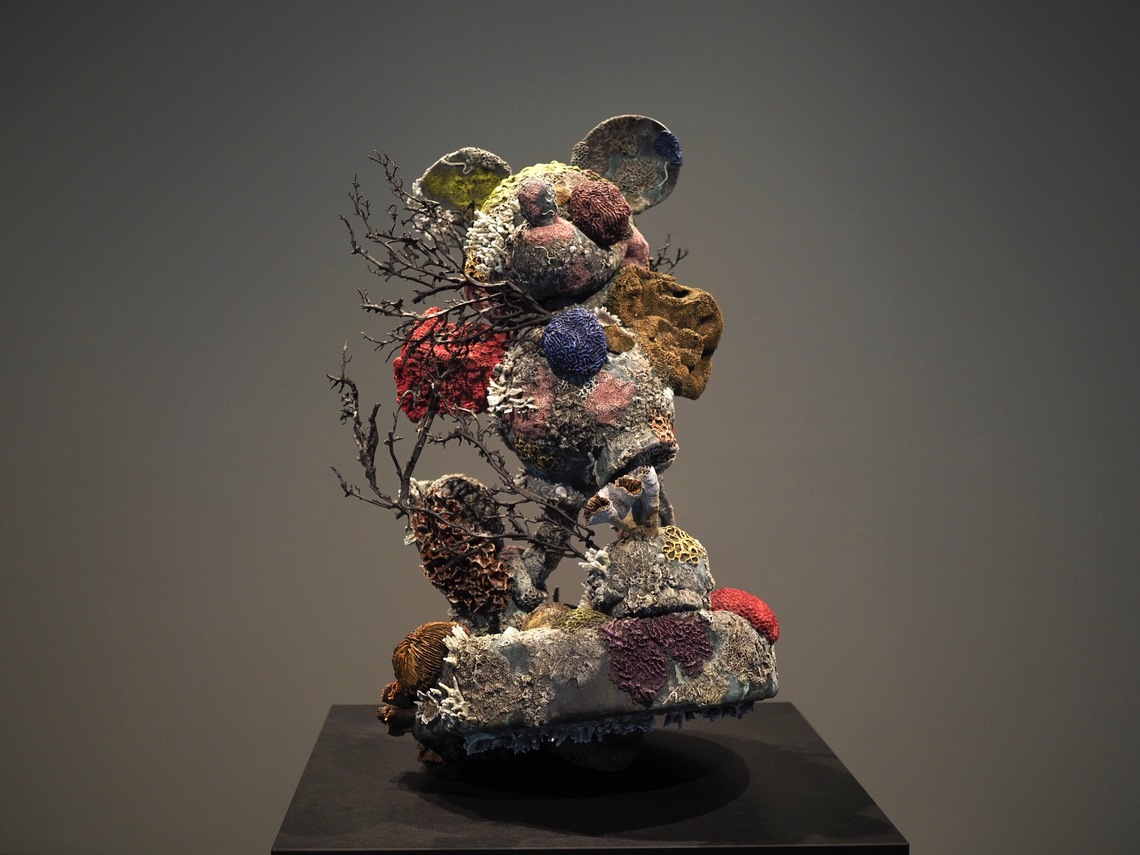
In the UK, when developing business ideas, it's a given that you must consider expansion into countries with diverse nationalities and various European cultures. Therefore, ideas overly focused on specific national preferences are unusable. Instead, ideas need to be conceptual, allowing for tuning in each country. Conversely, to globally expand ideas born in Japan and aimed at Japanese consumers, you must simplify and conceptualize them as much as possible through subtraction.
In today's environment demanding broad-ranging solution ideas, Japan too could increase opportunities beyond traditional advertising and global business by embracing more concept-driven ideas and enhancing proposal capabilities in this area. Craftsmanship in output and fresh perspectives in concept development—there is much to learn from the British approach to concept-driven thinking.
*A Creative Brief is a document created after receiving client orientation, developed through repeated discussions among sales, strategic planners, and creative directors. It serves as the basis for assigning work to in-house creative staff. It clearly and simply outlines the campaign's purpose, consumer insights, advertising tone, and overall concept.
Was this article helpful?
Share this article


Newsletter registration is here
We select and publish important news every day
For inquiries about this article
Back Numbers

Author

Kosuke Takeshige
Dentsu Inc. McGarryBowen UK