Note: This website was automatically translated, so some terms or nuances may not be completely accurate.
 F2 is the "Frustration-Filled" generation where frustration and irritation are at their peak?! [3/4]
Decoding "coping consumption" driven by "moyamoya fullness"
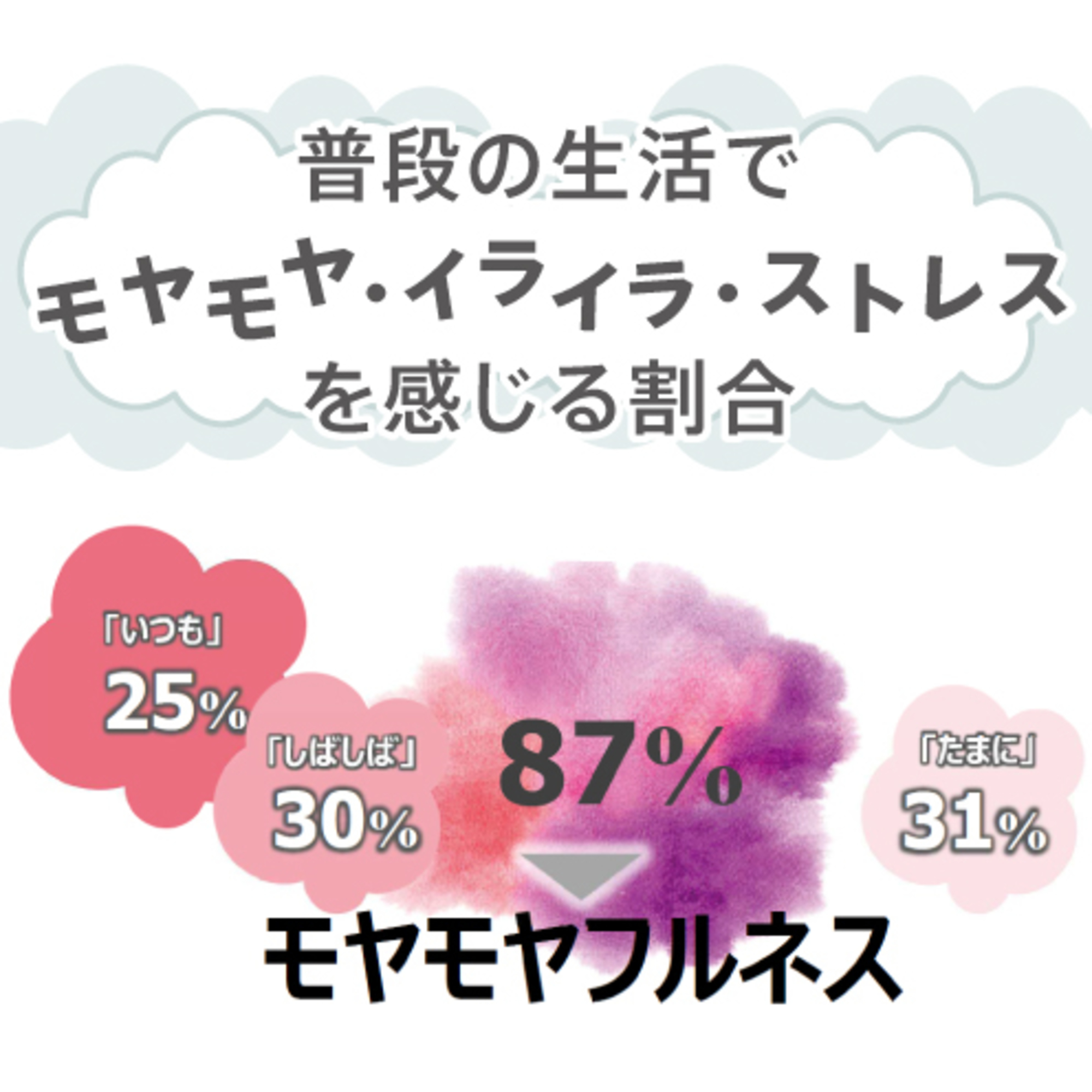
Previously, we've discussed the diversification of F2 in modern times and their troublesome, foggy-fullness-filled daily lives. This time, we'll focus on the actions F2 take to navigate that foggy-full life.
Understanding F2's Fuzzy Lives Through "Coping"
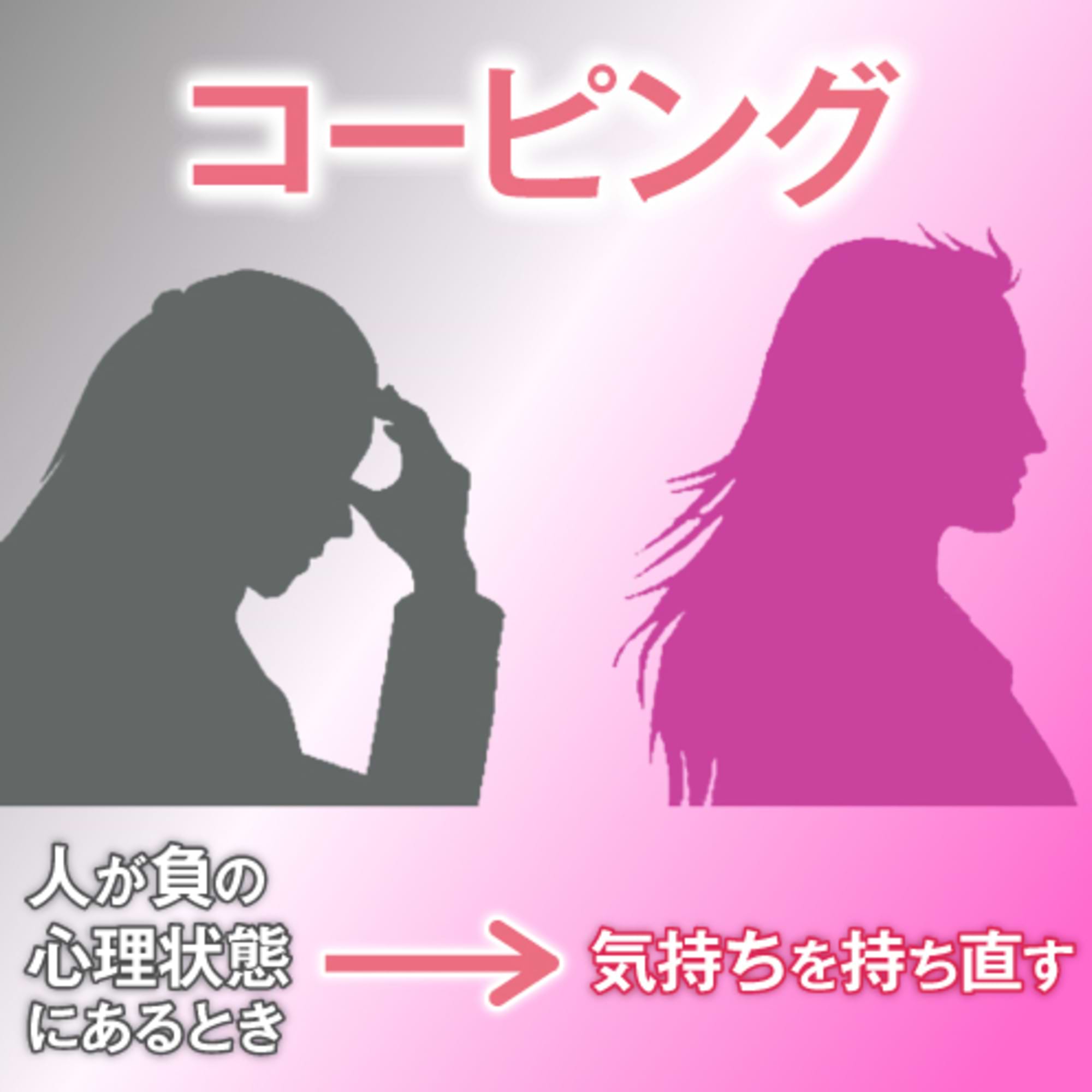
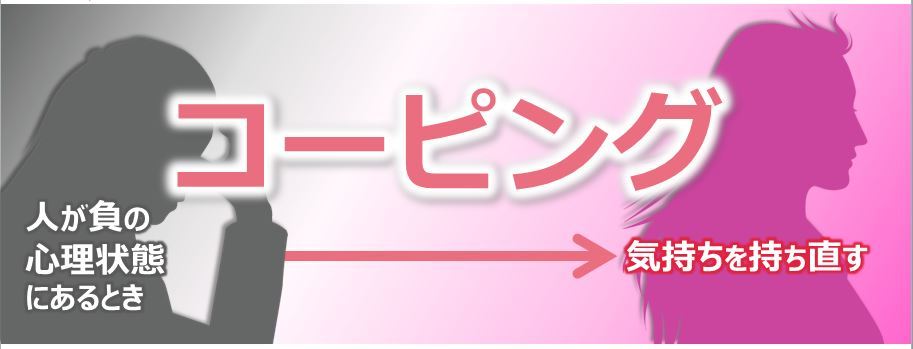
First, we decided to understand how F2s handle stress by focusing on psychological stress theory. In psychology, the term "coping" defines all actions people take to reduce unpleasant feelings or solve problems when in a negative psychological state. Various studies have been conducted on its types and effects.
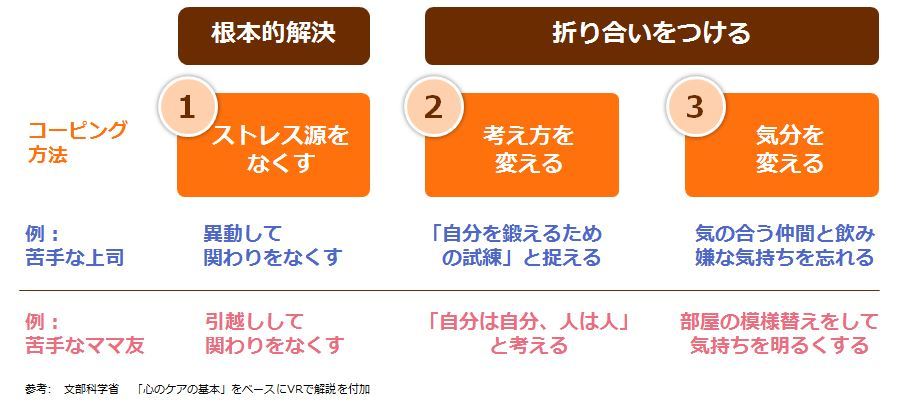
Coping can be categorized into three types:
① Eliminating the stress source
② Changing one's perspective
③ Changing one's mood
.
First, "① Eliminating the source of stress" means, for example, if a difficult boss is your stress source, transferring to another department to avoid interaction.
Next, "② Change Your Perspective" means, using the previous example, reframing it positively as "This is a challenge to strengthen myself."
Finally, "③ Change Your Mood" involves taking actions like going out for drinks or engaging in distractions.
As you may have experienced, coping by ① eliminating the stress source is often extremely difficult in reality because many hurdles are beyond one's control. While desiring such a fundamental solution, the focus of coping is on ② and ③—changing your mindset and mood—to live healthily day by day while managing the stress source.
Small daily consumption acts as coping
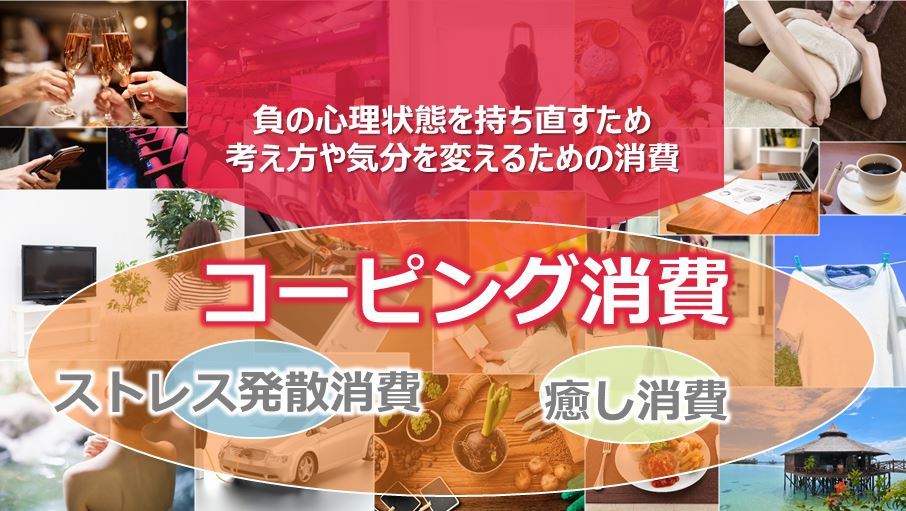
Our research revealed that F2 consumers engage in the consumption of goods, services, and content as a coping behavior for stress. We have named this overall pattern of consumption "coping consumption."
We believe coping consumption represents a broad concept encompassing not only established activities like stress-relief or comfort consumption, but also all forms of emotional self-care aimed at shifting perspectives or moods to restore mental balance.
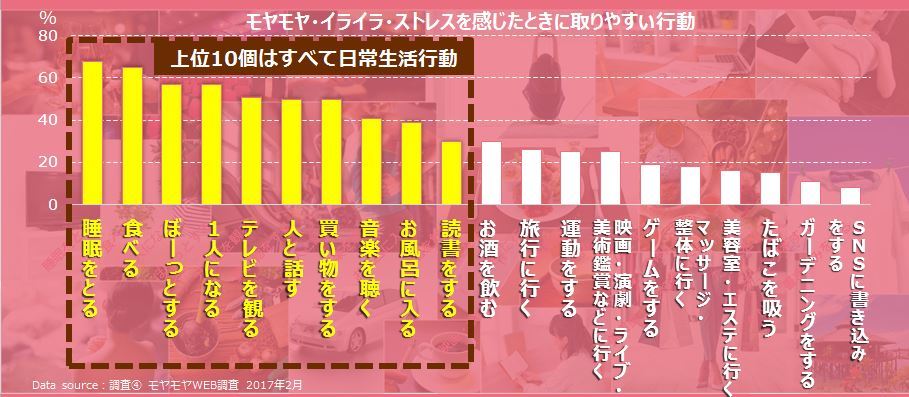
Looking at actual coping behaviors among F2, activities like "getting sleep," "eating," "being alone," "zoning out," and "watching TV" ranked highly. Considering their relationship to consumption, for example, "getting sleep" could lead to purchases like a slightly better mattress or pillow. Similarly, desires to "zone out" or "be alone" might drive visits to cafes, potentially connecting to a wide range of consumption.
Incidentally, regarding "watching TV," our separate surveys also show increasing numbers selecting "to change moods or relieve stress" as the value they seek from TV in recent years, indicating a strong connection.
A key characteristic of F2's coping consumption is its overlap with everyday activities. While traditional stress-relief consumption might immediately bring to mind non-routine activities like travel or spa treatments, the data shows these are relatively infrequent.
The reason, as mentioned previously, is that F2s are often overwhelmed by "housework," "childcare," and "work," leaving them with limited free time. Furthermore, household financial burdens like education costs and loans tend to be heavy, resulting in lower disposable income. Given this lifestyle filled with constraints and sacrifices, it's understandable that F2s must cope through their daily routines and actions within their living environment.
For example, we see the key point of F2's coping consumption in small, everyday expansions—like slightly indulging personal preferences during regular family shopping or buying a higher-grade product.
The Six "Coping Values" Behind Coping Consumption
As you can see, F2 coping consumption represents a broad market with significant business opportunities. However, the wide variety of consumption targets may make it challenging to approach. We therefore concluded that understanding the values sought in coping consumption would provide valuable insights for approach strategies.
We defined the true purpose behind coping consumption as "coping values" and set out to clarify their nature.
Specifically, we conducted qualitative research, then quantitative research based on hypotheses derived from it. We then applied factor analysis to the quantitative results and interpreted the findings. This revealed that Coping Values for F2 can be organized into the following six patterns.
First is "Security and Stability" – the ability to relax, feel at ease, and spend time calmly. Precisely because F2 individuals often carry anxiety, this itself holds significant value.
The second is "Freedom/Carefree." Precisely because they juggle many roles and often put themselves last, they crave even brief moments to do what they enjoy alone.
Third is "Excitement/Exhilaration" – feeling refreshed or uplifted through an activity. Precisely because they feel foggy-headed daily, they crave even a slight mood boost when feeling down.
Fourth is "Escape and Forgetfulness" – temporarily slipping away from reality and time. This reflects a desire to create a psychologically detached space just for themselves, even if only briefly.
Fifth is "growth and a sense of accomplishment." F2 individuals often struggle to affirm themselves. This reflects a desire to feel more confident or discover a new side of themselves.
Sixth is "Acceptance and Recognition" – feeling joy when someone understands you or shares your feelings.
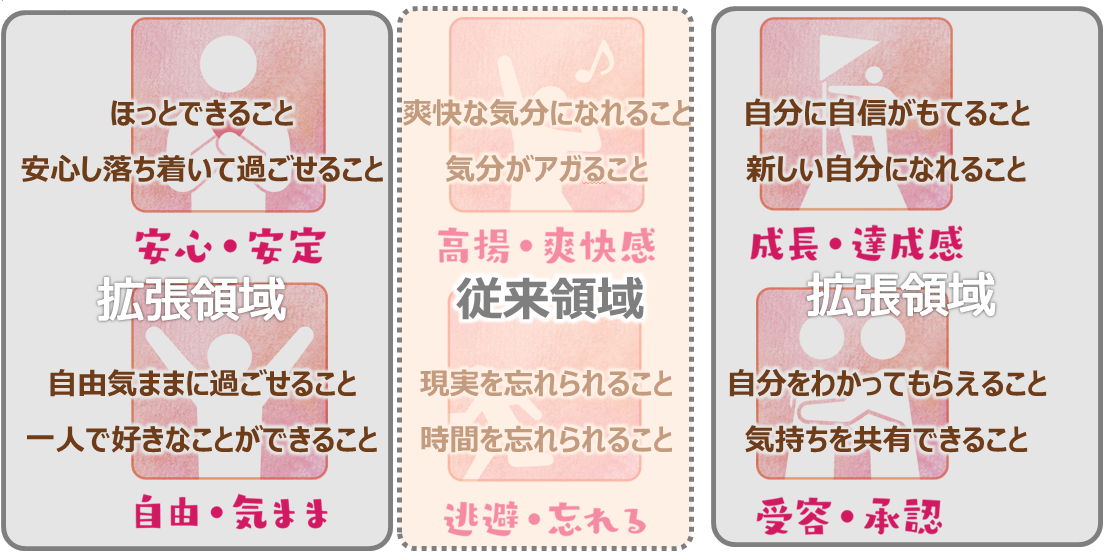
Incidentally, among these six types, "Excitement/Euphoria" and "Escape/Forgetting" are easily understood as the traditional stress-relief domains. However, we are now focusing on the four additional domains on either side: "Security/Stability," "Freedom/Spontaneity," "Growth/Sense of Accomplishment," and "Acceptance/Recognition" as the new coping values for today's F2 generation.
Thank you for reading this far. In the next and final installment, we'll use these coping values to analyze recent hit products and trending content, discussing the potential of marketing based on coping values.
Was this article helpful?
Share this article


Newsletter registration is here
We select and publish important news every day
For inquiries about this article
Back Numbers

Author

Reiko Murata
Video Research Ltd.
Human Research Institute
f2 Lab Leader