
Note: This website was automatically translated, so some terms or nuances may not be completely accurate.
 9.America in Years 11 to 15: Leadership in an Age Without Charts [6/7]
What does it mean for women to build a career?
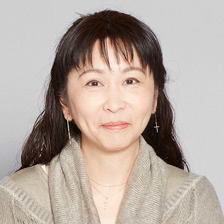
Kimié Morishita
This time, I'll tell you about our friend Francine, who came from Africa to America with five children.
Among the 12 participants in the NGL (Next Generation Leaders) Program*, Francine left a particularly profound impact on me. If I had five children (five!), the idea of taking them on a year-long, unknown overseas program would never have crossed my mind.
She embodied the "ability to create stories" and the "attitude of moving toward one's true north" discussed in the first and second installments of this series more than anyone else.
*For details on the NGL program, see Part 1 of the series.
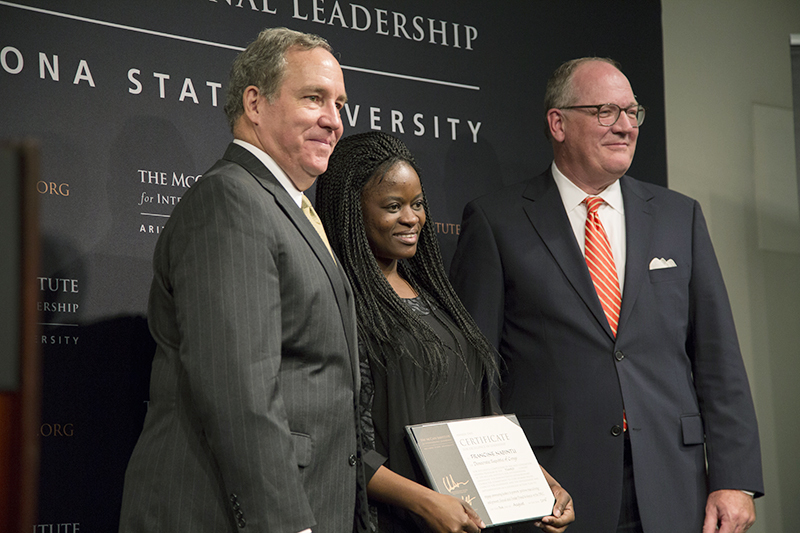
A Congolese mother of five came to Washington, D.C.!
I first met Francine Nabintu in September 2015.
She appeared before us eleven women, gathered from around the world and arriving in Washington, D.C. with trepidation, her children darting around the lobby. She had traveled 10,000 kilometers from the Democratic Republic of Congo, Africa's second-largest country, to reach America.
Our schedule in Washington was packed from morning to night for the first three weeks: nonstop assignments, sessions, parties, and meetings with intimidating political and business leaders. After that, we were called to different parts of the US three times a year, each time requiring us to be away from home for two to three weeks. Everyone was amazed: How could Francine manage the program in America, where the law forbids leaving children without sufficient judgment behind, especially with five children ranging from 12 years old to just 1 year old?
But the hardest part came afterward. Each of us went to workplaces across the United States, selected according to our individual plans, and worked there for a year. Every placement involved the top leadership of the respective organizations, who had high hopes for our track records and potential. Consequently, each of us had to deliver results that earned recognition from our surroundings within a short timeframe. All while establishing a life in unfamiliar regions.
Is a woman's place in the kitchen? Is marriage and childbirth her destiny?
Do you know the Democratic Republic of the Congo (DRC)?
Formerly known as Zaire. Located in Central Africa, it's a poor country plagued by constant conflict over its abundant mineral resources, and particularly notorious for the low status of women. Due to the high incidence of sexual violence and domestic violence, a UN representative once called it "the worst country for women."
Francine, born and raised in the DRC, was a girl who was fascinated by the various events happening around her from a young age, constantly asking "Why? Why?" Each time, her family would tell her, "Be quiet. Don't acquire knowledge or wisdom, or you won't be able to get married."
The prevailing belief was that women should not speak in front of men, should marry and bear children, and should stay in the kitchen. Pursuing education or a career was discouraged because it would distance them from the path to becoming a good wife and mother.
Raised in such an environment, she is now an expert in gender and communication. How did this girl, whose curiosity was constantly stifled from a young age, transform into a resilient working mother who protects women and children exposed to violence?
The catalyst for her career was marriage.
Her grades were top-tier, and she graduated high school at 17. Yet she couldn't defy her family's traditional beliefs. Francine's turning point came when she married, left her family, and decided to start a new life.
When she decided to marry, Francine didn't fully understand her husband Christian's perspective. Yet he was a man who believed "women must also work to support society."
After marrying and having three children, she one day told her husband, "I want to work." Raised in a conservative family, she had always held the belief that "women should enter society and work just like men." To her, her husband said:
"How are you going to find a good job? If you really want to work, you have to go to college first."
That single sentence made her decide to go to university. While pregnant with their fourth child.
Me: "Wait, of all times, that timing?"
Francine: "I didn't know I was pregnant at first. But when I found out, I thought if I missed this chance, I'd never go to university. Because once that baby was born, I wouldn't have time to study."
I couldn't quite grasp how different it would be from the challenges with her three existing children, but just imagining going to university with three kids plus a baby on the way sounds incredibly tough!
She commuted an hour each way by motorcycle with her large belly and graduated at the top of her class. She apparently became such a campus celebrity that the university president eventually offered to drive her to school every morning.
After graduating, she began working at "Heal Africa," a domestic NPO within the DRC supporting women who had suffered violence. There, she encountered what would become her life's work: "activities to eliminate sexual violence and domestic violence." Then, influenced by the economic stagnation, she launched a very rare project within the country targeting men who could only demonstrate their power through violence. Through group therapy, she sought to spread a new concept of "masculinity" and stop the spread of violence. These activities and her vision for the future were major factors in her selection as an NGL member.
Husbands quit their jobs to support their wives' careers
Me: "When you received the NGL offer this time, did you hesitate about joining the program?"
Francine: "Not at all. Because I thought it was a once-in-a-lifetime opportunity."
Me: "Have you ever lived abroad before?"
Francine: "No. I've been to other African countries, but other than that, I only came once a year ago when I was invited to a seminar in America."
Me: "Didn't you worry about it being okay with five kids?"
Francine: "I figured it would work out somehow."
And the result? It all worked out.
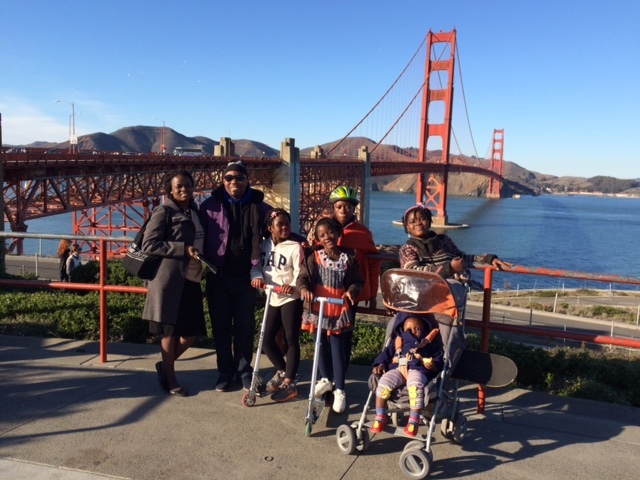
Stationed in San Francisco, she worked at the NPO "Futures Without Violence," which operates globally to end violence against women and children. She successfully completed her duties while raising her child, gaining much inspiration and insight from the political and business leaders she met during that year.
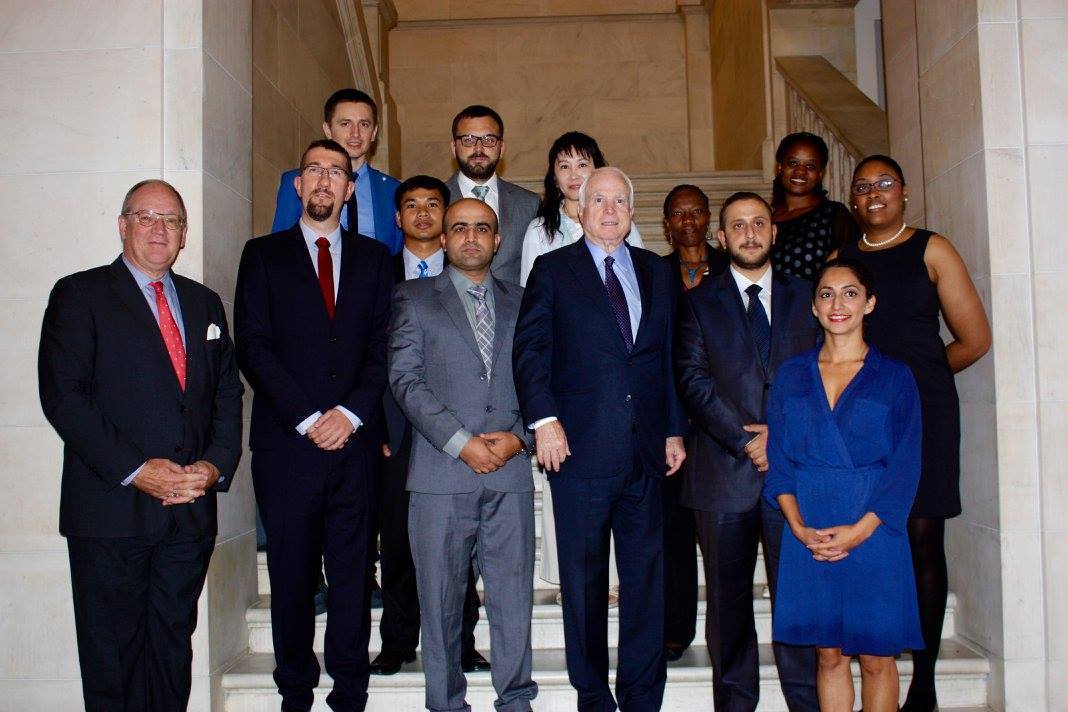
Better to do it than worry about it — or was it? Of course not. First, she was physically and mentally exhausted just from the apartment hunt.
In San Francisco, one of the world's most expensive cities for rent, a woman from Africa without permanent residency, bringing five children, was asking to rent an affordable place. "Can you really afford the rent?" she was turned down repeatedly. At the very last moment, her workplace and the McCain Institute jointly stepped in, helping her find an apartment. She also managed to arrange schooling for the children all by herself while working.
The biggest crisis came when the visa for her niece, who was supposed to help care for the children, was ultimately denied, leaving the program's continuation hanging by a thread. The realistic option was to return to the DRC with the children.
But her husband's decision gave her strength. He told her he would quit his job and come to America. He joined Francine and the children in San Francisco one month after they started living there. He supported her and the children for the next ten months, until the program ended.
Learning from Francine: What Leaders Need
■Receiving from others and giving to others.
Francine's workplace in the background. "The San Francisco NPO I worked for had many mothers among both management and staff. As long as you got the work done, they were quite flexible about working hours and location. Some employees would pick up their kids during work hours or take weekdays off to work on weekends, so I could sometimes work from home or bring my kids to work."
Behind Francine stands her husband. "For my husband, who had a distinguished career and held a management position at the DRC, quitting his job to support me and the children for a year was nothing but sacrifice. Without his support, I wouldn't have the life I have today." Many women possess abundant talent and skills yet lack sufficient support and understanding from partners or society, forcing them to choose between marriage and career. And if they do work, they're often expected to handle most household chores too. We need to change that societal mindset."
On the other hand, behind every great husband is a great Francine. In fact, he himself probably wouldn't have considered giving up his job to support his wife when they first married. However, he had witnessed her talent and dedication firsthand over many years and had come to truly recognize her worth. He came to believe that "staying in America would be best for the children's future, and that putting his own career on hold would be the best choice for both the children and Francine." Francine herself brought about change in her husband.
Behind every child, there is Francine. "The children were truly astonished to see so many female bosses at work and to witness husbands washing dishes at colleagues' homes. I never once said 'women can't rise to the top.' But I think what they saw in the DRC, the reality of discrimination against women, spoke louder than any words." Her bold decision and drive undoubtedly opened the door to a new world 10,000 kilometers away for them.
■Know your True North and stay the course.
How does Francine look back on this past year?
"Before coming to America, I was content supporting women and children in a small community. But in America, meeting many leaders and global peers made my dreams grow bigger. Even when celebrities spoke on TV, I'd just think, 'They're special people.' But meeting them in person and hearing their stories, I realized they were just like me—starting small, working hard, and achieving results. It made me feel I could do more, that I had to. Now I want to help not just women and children in the DRC, but around the world."
Listening to her story, what strikes me first is how crucial—and how difficult—it is to know your True North: what you're passionate about and what you want to achieve, and to stay true to it. Francine faced countless hurdles beyond imagination. Yet, she never stopped learning despite family opposition, and she and her family tackled unknown opportunities together. She radiates a strength that makes you think, "Whatever comes next, she'll be okay."

What is absolutely essential for "her" to thrive throughout Japan and the world
At first, I thought, "If I were in her situation, I probably wouldn't take on the challenge." What exactly made me think that? This feels surprisingly deep.
・First, giving up intuitively before even trying, thinking "It's impossible"
・I couldn't push past opposition from others – comments like "You're being selfish," "What will you do afterwards?", "Think it over again."
・Lack of confidence to take responsibility for involving family or others in what could be considered a reckless plan
Writing this down makes me feel pretty pathetic, but haven't you ever given up on something for reasons like these?
To someone like me, Francine's answer earlier—"I thought it would work out"—was an immediate response.
Can you believe things will work out? But thinking about it now, it wasn't so much that "it worked out" as that "I made it work." Before fretting over problems that haven't even happened yet, just try it first. Once you develop that reflex, you start to feel like maybe there's a bit more you can actually do...
Incidentally, in the DRC today, economic stagnation has drastically reduced work opportunities. With husbands alone unable to support households, many wives have started working. The issues then become less about gender and more about education, ability, and skills. That's not what we talked about. If she had followed her parents' teachings and stayed confined to the kitchen for her entire life... It's not about whether that's good or bad. It's her life. Even if she fails—or precisely because she might fail—she should choose a path she can accept.
And now. I'm surrounded by many working women and mothers. My own mother worked while caring for my grandfather and raising three children. Even outside the DRC, in Japan – still a male-dominated society in many ways – countless women struggle to balance work and family, or consider giving up their dreams. To them, I want to say: "Why not be bold and want more?"
It might sound irresponsible, but Francine's bold decision, despite our worries, hasn't led to any accidents or incidents. Her kids are running around full of energy. Francine undoubtedly worked her fingers to the bone, but with support from family or others, she could achieve so much more.
Yes, what today's "her" overwhelmingly lacks is understanding and concrete support from those around her. Could Francine, arriving suddenly from the DRC, manage to work and raise five children in today's Japanese society?
When I imagine whether the many women who want to work could really push their subordinates hard and work until retirement... I recall the words Francine spoke.
"Without understanding from my family and workplace, it would have been 100% impossible!"
**According to the 2015 Human Development Index by the United Nations, it ranks 176th out of 188 countries, making it one of the world's poorest nations.
http://hdr.undp.org/en/countries/profiles/COD
Was this article helpful?
Share this article


Newsletter registration is here
We select and publish important news every day
For inquiries about this article
Back Numbers


Author