
Note: This website was automatically translated, so some terms or nuances may not be completely accurate.
 Advertising Legal Pitfalls Explained in 3 Minutes [4/9]
What happens if you make false claims in advertising...?
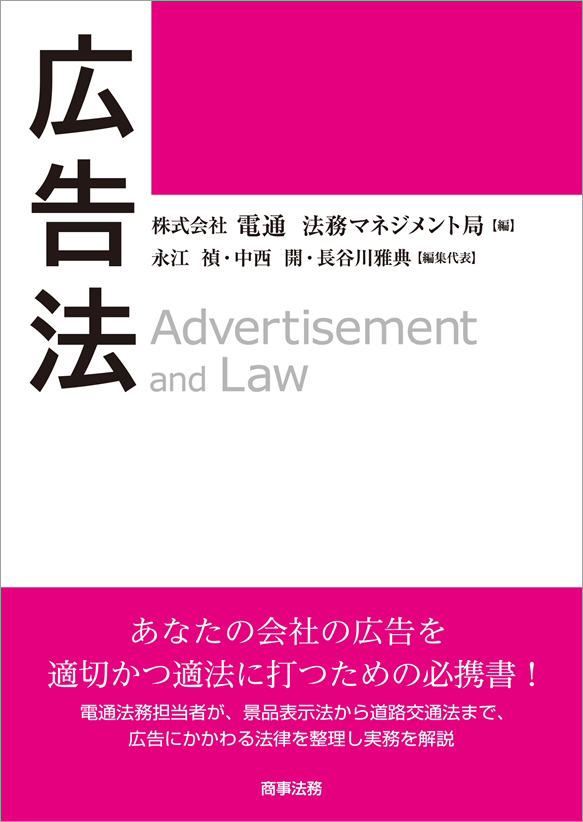
This series focuses on particularly practical points from the book "Advertising Law," explaining them in a Q&A format.
This time, we'll address unfair representations under the Act Against Unjustifiable Premiums and Misleading Representations, focusing on "advertising content."
Q. We plan to advertise the outstanding performance of our products and the affordability of our service fees.
What should we be careful about?
When advertising products or services on your company website, it's common practice to actively promote their superior performance or low prices. However, you understand that problems arise if you falsely represent them as significantly better than they actually are.
A. Representations that cause general consumers to mistakenly believe the content or performance of products/services is significantly superior to the actual product, or that the transaction conditions (such as price) are significantly more favorable than the actual product, may constitute unfair representations under the Act Against Unjustifiable Premiums and Misleading Representations.[Basic Knowledge]
Advertising content is subject to various legal regulations, with the Act Against Unjustifiable Premiums and Misleading Representations being a primary example. This Act regulates unfair premiums and misleading representations.
Here, we explain unfair representations.
1.What is an Unfair Representation?
The Act defines three types of unfair representations. While specific cases for type ③ are defined for each product/service, we will focus on the more general types ① and ② here. In cases ① and ②, representations that are significantly better than the actual product may constitute unfair representations.
① Misleading Representation of Superiority
Representations that lead the general consumer to believe the quality, specifications, or other attributes of a product or service are significantly superior to what they actually are.
② Misleading Representation of Advantage
Representations that cause general consumers to mistakenly believe that transaction conditions, such as price, are significantly more favorable than they actually are.
③ Other Representations Likely to Mislead
2.Unsubstantiated Advertising Restrictions
The Commissioner of the Consumer Affairs Agency may request businesses to submit documentation providing reasonable evidence supporting representations regarding the quality, specifications, or other attributes of goods or services. If such documentation cannot be submitted within 15 days of the request, the representation shall be deemed an unfair representation.
3.Disclaimers
Advertisements may emphasize favorable aspects of quality, price, etc. (referred to as "emphasized representations").
When such emphasis statements are subject to restrictions or conditions, failure to clearly display information about these restrictions or conditions (referred to as "disclaimers") may prevent consumers from recognizing the limitations or conditions associated with the product or service. Consequently, if consumers are misled into believing the product or service is significantly superior or more advantageous than it actually is, this constitutes an unfair representation under the Act Against Unjustifiable Premiums and Misleading Representations.
Therefore, when providing disclaimers, it is necessary to comprehensively consider factors such as the placement location, the balance between the size of the emphasized statement and the disclaimer text, and the size of the disclaimer text.
4.Violations of the Act Against Unjustifiable Premiums and Misleading Representations
Violations of the Act Against Unjustifiable Premiums and Misleading Representations may result in a corrective order issued by the Consumer Affairs Agency.
The content of the corrective order is as follows:
① Thoroughly publicize the violation of the Act Against Unjustifiable Premiums and Misleading Representations to general consumers
② Implement measures to prevent recurrence and ensure thorough awareness among the business operator's officers and employees
③ Refrain from repeating the violation in the future
④ Reporting on items ① and ② to the Commissioner of the Consumer Affairs Agency
In addition, the business receiving the corrective order must take actions such as: recalling products if the packaging contains misleading statements; replacing commercial materials if the narration in TV commercials contains misleading statements; and recalling posters if they contain misleading statements. This aspect also places a significant burden on the business.
Furthermore, when a business engages in misleading representations about quality or advantages, the Commissioner of the Consumer Affairs Agency must order the business to pay a surcharge.
The amount of the surcharge is generally calculated as follows:
Penalty Amount = 3% of the sales amount for the goods or services transacted during the period subject to the penalty
As described above, making false or misleading representations can result in significant financial burdens for businesses. However, the issues extend beyond this. Such representations also constitute deceptive practices toward consumers and can lead to serious reputational damage. Please be aware of this.
For more details, please refer to 'Advertising Law', which comprehensively explains advertising-related laws and regulations from both practical and theoretical perspectives.
Was this article helpful?
Share this article


Newsletter registration is here
We select and publish important news every day
For inquiries about this article
Back Numbers


Author

Masanori Hasegawa
Dentsu Inc.
Legal Management Bureau

