
Note: This website was automatically translated, so some terms or nuances may not be completely accurate.
 Advertising Legal Pitfalls Explained in 3 Minutes [5/9]
If you appear in an advertising shoot, is that copyright infringement?
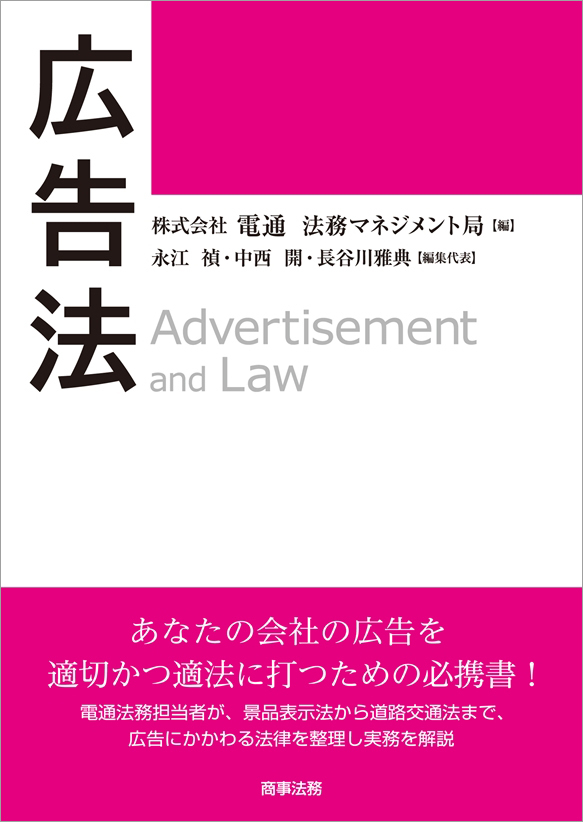
This series will focus on particularly practical points from the book 'Advertising Law', explaining them in a Q&A format.
This time, we address the unauthorized use of third-party creative works in advertising production (including unintentional use).
Q. We produced a graphic advertisement. We rented a private home for an indoor shoot, and a painting displayed on the wall behind the subjects in the photograph used for the ad was captured in the shot. Although it's out of focus and not clear, the type of painting is generally recognizable.
The artist of this painting has filed a claim stating the advertisement infringes on the painting's copyright. Does this truly constitute copyright infringement?In Part 2 of this series, we explained that using another person's creative expression of ideas or emotions (i.e., a copyrighted work) in an advertisement without permission (unauthorized reproduction) or using it after making minor alterations (unauthorized modification) could potentially raise copyright infringement issues.
In this case, the advertisement uses another person's copyrighted work without permission. Does this constitute copyright infringement?
A. In cases like Q's, where a third party's copyrighted photograph is inadvertently captured in the background, it may not constitute copyright infringement.
However, the possibility of a factual claim cannot be ruled out. Therefore, sufficient consideration is necessary in the practical production of advertisements. The Copyright Act stipulates cases where the author cannot exercise their rights. One such case is this type of background inclusion.
Suppose, when creating a work of authorship through methods like photographing, there are objects that are difficult to separate from the subject being photographed and thus appear in the photograph.
Since photography constitutes reproduction, if the incidentally captured object is a third party's copyrighted work, it means the third party's work is being reproduced. This might suggest that unauthorized photography would constitute copyright infringement.
However, even if the captured object is a third party's work, if it constitutes only a minor component of the intended work, reproduction during the creation process (e.g., photography) generally does not constitute copyright infringement (Copyright Act Article 30-2, Paragraph 1). Therefore, depending on the specifics of the capture, a case like Q's likely does not constitute copyright infringement.
That said, the possibility of de facto claims from the authors of the captured works cannot be ruled out. Therefore, in advertising production practice, it is necessary to exercise sufficient care regarding such incidental inclusion during photography.
Below are examples of cases that often become problematic in advertising production practice.
【Cases That Often Pose Problems】
■Cases Prone to Unauthorized Reproduction Issues
・Cases where paintings or photographs are scanned and used in advertisements
・Cases where passages from novels are quoted without permission
・Using content beyond the agreed-upon usage period, even when permission was granted
・Expanding the agreed-upon scope of use without permission, even when permission was granted
■Common Cases Involving Unauthorized Modification
・Cases where images or photos are not only scanned but also slightly altered from the original before use
・Parodies of movies, dramas, etc.
The above are cases that could constitute copyright infringement. However, there are also cases like the example provided that, while not necessarily legal issues, carry the potential for claims. When producing advertisements, it is essential to exercise caution regarding the use of third-party materials.
For more details, please refer to 'Advertising Law', which comprehensively explains the legal regulations related to advertising from both practical and theoretical perspectives.
Was this article helpful?
Share this article


Newsletter registration is here
We select and publish important news every day
For inquiries about this article
Back Numbers

Author

Masanori Hasegawa
Dentsu Inc.
Legal Management Bureau

