
Note: This website was automatically translated, so some terms or nuances may not be completely accurate.
 The Collaborative Creation Model Pioneered by Inolab [3/10]
Learning from Overseas Examples: Successful Open Innovation
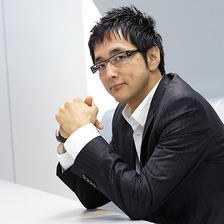
Nobuhiko Watanabe
"What exactly is open innovation?" In this third installment of our series, Nobuhiko Watanabe, Director of the Open Innovation Lab (InnoLab) at Dentsu Inc. International Information Services (ISID), gave us a lecture on the state of open innovation overseas.
Creating Systems That Encourage Challenges, Where Failure Is Followed by a Fresh Start
――Please tell us about open innovation practices overseas.
Watanabe: A globally renowned success story in open innovation is P&G's "Pringles Prints." This technology involves printing directly onto each individual Pringles potato chip. P&G and an Italian bakery pooled their technologies to develop it. While there are various other success stories, to be honest, the reality isn't that different from open innovation practices within Japan. Many projects are top-down, led by large corporations, and collaborative development styles still seem prevalent.
――Are there any characteristics unique to overseas open innovation that aren't seen in Japan?
Watanabe: I think the decisive difference is the presence of an ecosystem that allows for a fallback even after failure. Projects have milestones at key points, and you first advance to the first milestone. If it goes well, you move to the next milestone; if it fails, you take a step back. Because this mechanism is well-established, especially around Silicon Valley, young people are constantly challenging themselves with new initiatives. You'll hear a young person say, "I want to try something like this," and six months later, they've started a company, and another six months after that, they might be back at their original company (laughs).
Japan and Silicon Valley have different cultures, so I don't think we can create an identical ecosystem. However, it's a system I want to emulate or at least draw inspiration from.
Building teams that transcend borders and languages, and working together on the ground!
――How about team building? If there are characteristics not found in Japanese project teams, please tell us.
Watanabe: I'm currently involved in a major urban development project being led by a city in France. What shocked me was that the project manager is someone brought in from another country. It's an enormous undertaking, yet they deliberately recruited a leader from abroad to set the direction and entrusted them with everything from planning onward. They have a clear vision of how they want to transform the city and gather the best talent for that purpose, even crossing national borders. I think this courage and mindset are things Japanese people lack, and I realized we probably couldn't easily build such borderless teams ourselves.
That said, if we keep forming teams solely within Japan, made up only of Japanese people, we won't be able to ride the wave of globalization that's surely coming. Like them, the time will come when we too must build dynamic teams that transcend national borders and language barriers. Therefore, I believe we should gradually start looking to overseas team-building methods for inspiration and explore ways to incorporate global talent.
――What form should open innovation take with emerging nations like India and China? Are there any key strategies?
Watanabe: This may not be limited to emerging nations, but I believe the key is overcoming distance, time differences, and cultural barriers to advance projects together. To achieve this, it's essential not to go in with large investments, but to go in with modest funds and be willing to roll up your sleeves. True innovation won't emerge unless engineers bring funds covering only basic expenses, persuade partners with "Let's launch a project with this as seed money," and then say "But this is all we have, so let's sweat it out together," sharing both the hardships and the rewards. The key to open innovation with overseas teams, including those in emerging nations, lies in whether you can genuinely commit to the business as a local vendor.
Inspired by Nordic banks, we want to create a "city that remembers its people"
――In our previous interview, you mentioned advancing "new town development." Are there any overseas examples you reference?
Watanabe: While not an open innovation case, I'm focusing on a particular town in Scandinavia. The local bank has a kids' room where many children come to play with the bank staff after school. Apparently, when they get a job or get married, they report it to the bank staff next after their parents. The bank becomes a gathering place and a community hub where communication naturally happens.
――That's an interesting phenomenon.
Watanabe: Yes. The bank employees understand almost every aspect of their life plans—their dreams, the families they grew up in, and their spending habits. So, when they enter the workforce, the bank can naturally provide them with the optimal financial products. The customers, in turn, accept the packages offered by the bank employees as a matter of course. I was impressed by how wonderfully mature this system is.
I want to use IT to build towns like this. Towns where people can safely entrust their personal data and behavioral logs, and where someone familiar—like a bank teller in a Nordic town or a local shopkeeper in a Japanese downtown neighborhood—navigates them. I believe towns need this kind of information system. Building it will create the "towns that remember people" and "towns that connect" we're aiming for.
Was this article helpful?
Share this article


Newsletter registration is here
We select and publish important news every day
For inquiries about this article
Back Numbers
Author