Note: This website was automatically translated, so some terms or nuances may not be completely accurate.
 The Present and Future of Design and Innovation by frog [18/49]
Who will drive innovation?
This article presents content originally published in DesignMind, a design journal operated by frog, under the supervision of Noriaki Okada of Dentsu Inc.'s Experience Design Department.
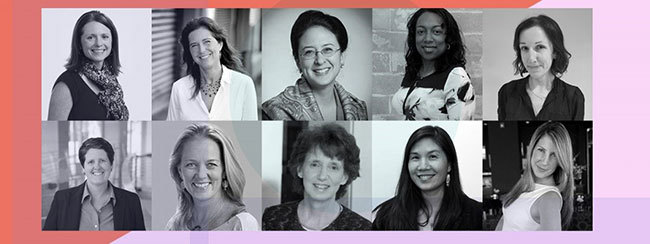
Two questions were posed to the Design & Strategy team at frog's Austin studio: First, "What role do women play in spaces driving innovation?" Second, "How can we enable more women to participate in these spaces?"
Close your eyes and imagine. Picture the people envisioning the future and bringing innovation to life. Or the innovation officers and leaders who will bear the responsibility of driving, growing, and transforming organizations for years to come. Who did you picture? Who was in that role?
Let's look at the data. Only one in five board members is a woman. Furthermore, women of color make up less than one in thirty. Does this match your imagination? From the perspective of a woman working in innovation consulting, the gathering of leaders tasked with shaping the future looks remarkably similar across industries to what it did about fifty years ago. Yet, as a designer, it's clear that achieving the highest level of innovation requires incorporating diverse perspectives, backgrounds, and contexts into the space.
The Lineage of Innovation
It wasn't always this way. In fact, it's widely accepted that the first computer programmer in human history was a woman named Ada Lovelace. In 1840, she recognized the potential of an advanced analytical engine and was the first to publish algorithms that led to modern general-purpose computers. So what exactly changed?
To find the answer, we interviewed pioneering women who lead innovation as executives in business, design, science, and technology. We asked how they rose to their current positions, the challenges they faced, and what they learned along the way. Their stories compelled us to take action and drive change so that men and women gain equal opportunities as we seek.
Two Warnings and Four Pieces of Advice for Women Advancing to Senior Positions
The 25 female innovation leaders we interviewed come from diverse backgrounds—varying industries, experiences, races, ethnicities, origins, and ages—yet they share common traits: strength, perseverance, drive, self-awareness, and courage. In short, they are "superwomen." Here are the two warnings and four pieces of advice they shared for reaching high positions.
Warning 1: Assumptions Are Inevitable
Dr. Karin Lakmi, who holds two doctorates, is the founder and Head of Science at Bioz, a company providing a search engine specialized for the life sciences field. While conducting research at Stanford University, she once found that despite her outstanding achievements, she was mistaken for an administrative assistant managing meeting schedules simply because she was the only woman on an email distribution list. Concluding she couldn't pursue her research effectively in such a biased environment, she left her privileged position at Stanford to lay the groundwork for the world's first AI search engine for life science experiments.
Whether intentional or not, how should we confront the biases born from such assumptions?
Warning 2: When fatigue builds up, your mind becomes preoccupied with balancing things
Lucy Swizemby, Creative Director at frog design, frequently applies her design skills to solve business challenges. While tackling numerous issues, she noticed that most women "try to hide their fatigue to avoid showing weakness." How much effort does it take to balance every area demanding attention?
Being a superwoman is exhausting. How can we help them maintain the vitality that matters most?
Tip 1: Don't Fear Risk
Candace Xie, Head of Clinical Development and Regulatory Affairs at AIVITA Biomedical, lives by the motto "Nothing ventured, nothing gained." When mentoring female employees at her company, she advises, "You might not get what you ask for. But if you don't ask, you'll never get it."
What can we do to encourage women who take calculated risks?
Tip 2: Don't be bound by common sense and convention
Mary Murphy-Hoye, who was head of IoT consulting at Cognizant Technology Solutions, has built her career by setting ambitious goals for herself. She says that women in the high-tech industry in the 1980s and 1990s were isolated and different from today. They had to believe strongly in themselves and encourage themselves by saying, "It's okay. It'll work out."
Thomas Malone, a professor at the Massachusetts Institute of Technology Sloan School of Management, author of The Future of Work, and her collaborator, says he encouraged Mary to set her own code of conduct. "He's a person who is completely unconstrained by common sense. When I asked him how long it would take to build a house, he replied, 'It won't take 24 hours. 'It won't take 24 hours. You just need to change the rules of the game and the way you think about it.'"
Ivy Ross, head of hardware product design at Google, feels that the source of her current success lies in her experiences as a young artist and her efforts to remain true to herself: "I just jumped into this world and always tried to be myself."
What kind of support can help us understand the unspoken rules of work and break them?
Read the rest of this article in the web magazine "AXIS".

Jonah Moore
With 18 years at frog, she leads the North American technical team for innovative user experience design and serves as a leader in organizational development. Her award-winning work spans government agencies and Fortune 500 companies including King County Metro, Marriott, USAA, Johnson & Johnson, Banco Azteca, Microsoft, and WA State. His hobby is exploring new places with his family—his husband and their 4-year-old son.
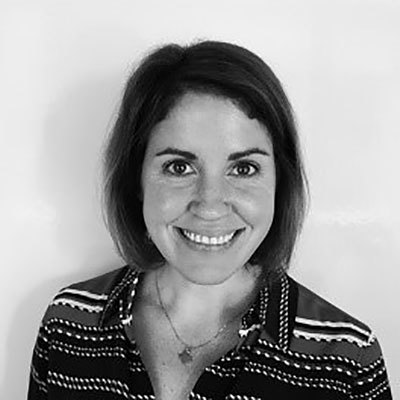
Larcom Teichgrebe
Joined frog in 2015. Leads strategy for the Austin studio. Works with large and small companies in retail, consumer goods, healthcare, and automotive. Prior to frog, at General Mills, she led brand strategy and new product development for cereal, snack, and yogurt businesses. She thrives on helping users and clients devise innovative ways to reinvent traditional items. Owns a dog named Kevin John Poodle.
Was this article helpful?
Share this article


Newsletter registration is here
We select and publish important news every day
For inquiries about this article
Back Numbers


Author
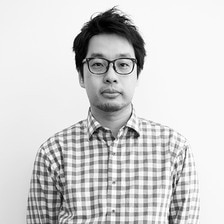
Noriaki Okada
Dentsu Inc.
CDC Experience Design Department
Creative Director