
Note: This website was automatically translated, so some terms or nuances may not be completely accurate.
 "engawa Serendipity Day" Report [3/3]
engawa Serendipity Day Report #03
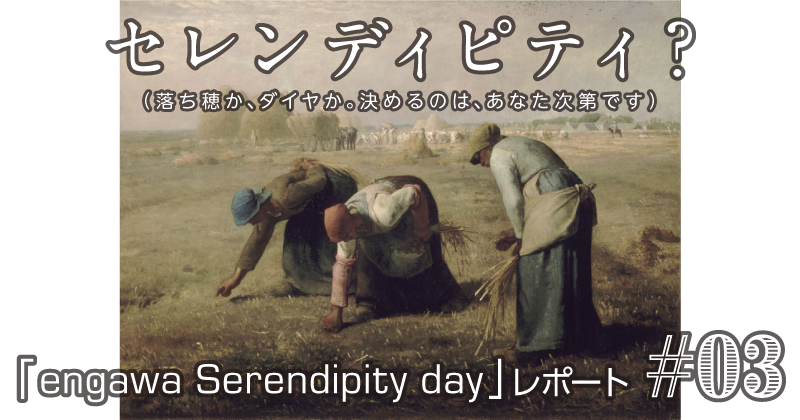
Have you heard of the word Serendipity? This term, which describes "the ability to discover unexpected value and seize good fortune through chance encounters," is currently gaining attention in the business world. What exactly is Serendipity, said to have originated from a Sri Lankan fable? Let's explore clues at the webinar "engawa Serendipity day" held on April 15, 2021. Great discoveries and happy encounters are surely waiting there.
(Responsible for text and analysis: Web Dentsu Inc. Editorial Department)
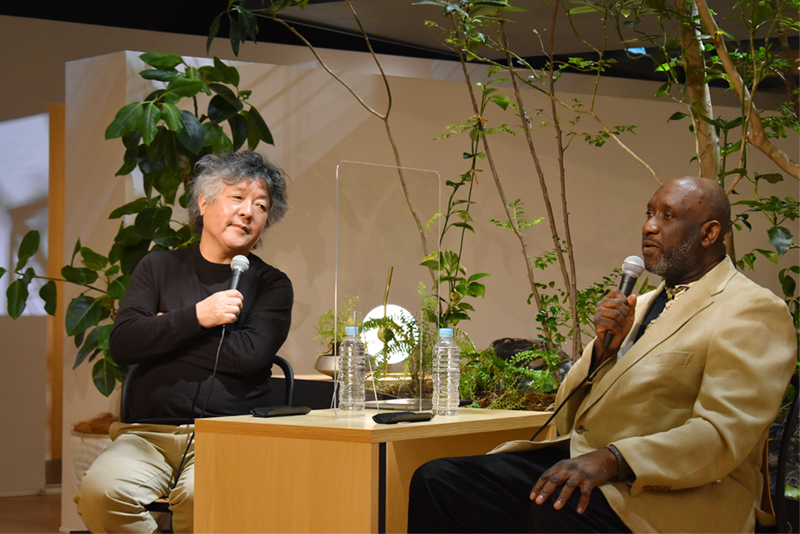
In this third installment of our three-part series (#03), we cover the discussion held in Part Three of the webinar. The theme was "What Makes a Community That Fosters Co-Creation?" featuring a conversation between Usubi Sako, President of Kyoto Seika University, and neuroscientist Kenichiro Mogi.
At the core of Serendipity lies "co-creation." It may seem obvious, but it's "co-creation," not "competition." Professor Sako, who effortlessly switches between English, French, Chinese, Bambara, and even Kansai dialect, explained its mechanisms from a global perspective. With this final installment of the series, the true nature of Serendipity, its full scope, and its future will undoubtedly become clear to our readers.

I fell in love with Japan. That's why I'm here now.
When Mr. Mogi asked, "Weren't you exceptionally good at studying since childhood?", Mr. Sako replied, "I did the necessary studying, plus more than enough playing." Though Mr. Sako specializes in spatial anthropology, he originally worked in architectural planning. "When you really delve into what academia is, no matter which angle you approach it from, you inevitably end up at anthropology," says Mr. Sako.
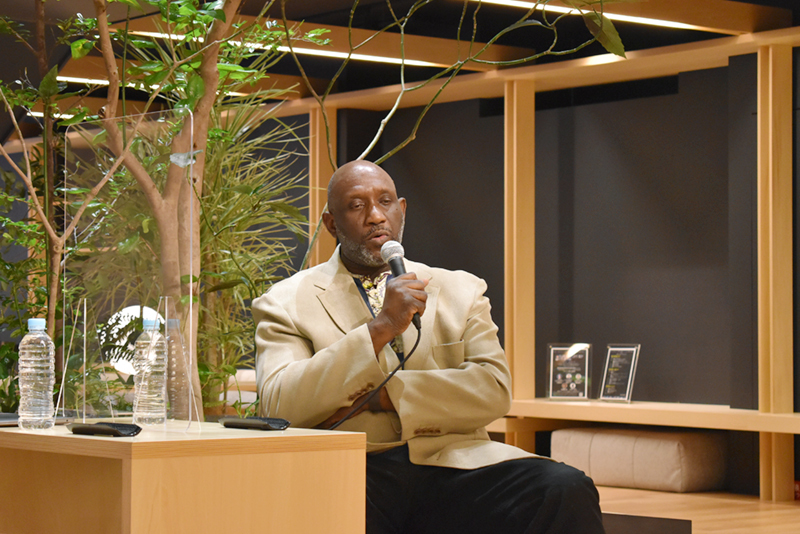
From that perspective, Kyoto within Japan, and the people who live there, hold a particular fascination for Sako. "Kyoto people are incredibly sensitive to space. This is true both from an architectural standpoint and in terms of interpersonal distance. Where does consideration end and rudeness begin? That razor-thin line is fascinating."
Take, for example, the traditional machiya townhouses unique to Kyoto. Beyond the semi-public space lies an incredibly private area, seemingly off-limits to strangers. Who is allowed in, and to what extent? Sako points out that this reflects the aesthetic sensibility of Kyoto residents.
What is Kyoto's potential?
Sako points out that people in Kyoto are not good at taking the lead. "Take uchimizu (water sprinkling) as an example. Subtle consideration for others is a unique Kyoto virtue. That's precisely why they tend to be passive in business. Harmony is valued above all. But that alone won't cut it in the global era. What is global? It's speaking out your own thoughts, which requires training. The training needed, I believe, is deepening your understanding of your own roots and then projecting that outward."
For example, foreigners who have fallen in love with Japan often explain the essence of tea with remarkable clarity. We're amazed when they speak Japanese fluently, handle chopsticks skillfully, and are deeply knowledgeable about Japanese culture. But to them, it's like asking, "Don't you people have any pride or interest in the very beauty of Japan?"
Meanwhile, terms like "trust business" and "trust economy" are gaining attention in the business world. What exactly is this "trust"? According to Mr. Sako, it is what Kyoto calls "kizukai" (consideration). "Indeed, in Kyoto, money certainly doesn't work, nor does status." Mr. Sako's homeland, the Republic of Mali, can be summed up as "a country where people inconvenience each other." He says this value system is also found in Japan, particularly in Kyoto. "People who can't rely on others are people others can't rely on. In that sense, I believe both the city and the people of Kyoto hold tremendous potential."
Ambiguity is the key to Serendipity
Mr. Sako points out that the essence of diversity lies in ambiguity. "When people in Kyoto say, 'Please do it in a nice way,' I had no idea what 'nice way' meant at first. But once you learn to understand that ambiguity, strangely enough, your world expands. You can start to venture deep into the innermost parts of the machiya."
Sako's observation continues: "To transform that ambiguity into business, negotiation is crucial. Japanese people tend to start by apologizing, right? That virtue doesn't translate overseas. What's important is asserting your own position. Only by making it clear what you absolutely won't budge on can negotiations succeed. For that, more than anything else, understanding your own position—that is, Japan's national character and culture—is crucial." What is serendipity? What exactly is needed to transform the "fallen grain" you've gathered into a "diamond"? Sako's insights seemed to hold a major clue.
Once again, for this final installment, I've deliberately condensed the content of a lecture lasting over an hour.
Having now identified the true nature of Serendipity through this three-part series, the only action needed by readers is to pick up what lies right before them.
【Related Links】
THE KYOTO ・Kyoto BAC Creative Director / THE KYOTO Editor-in-Chief ・Ryo Kagami's introduction site is here.
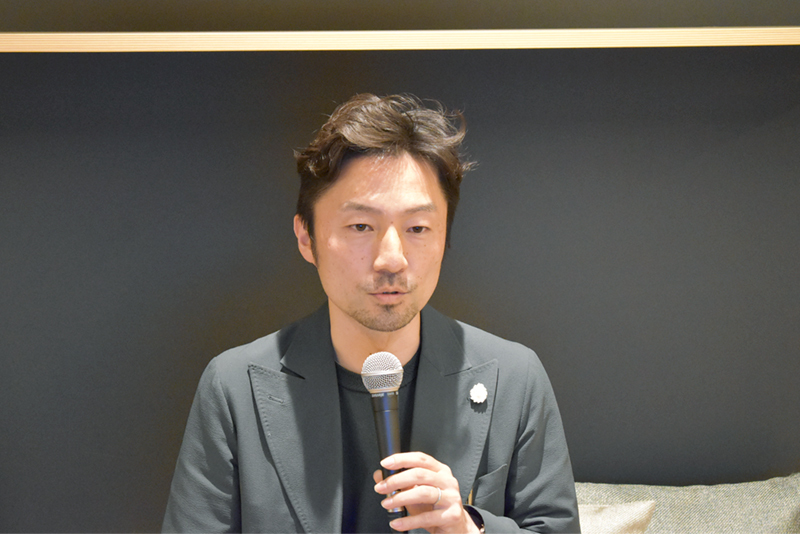
This series is edited from the content of the webinar titled "engawa Serendipity day," supervised by one of the organizers, Hiroaki Tanaka (Kyoto BAC), and presented from Web Dentsu Inc.'s unique perspective.
Was this article helpful?
Share this article


Newsletter registration is here
We select and publish important news every day
For inquiries about this article
Back Numbers
Author
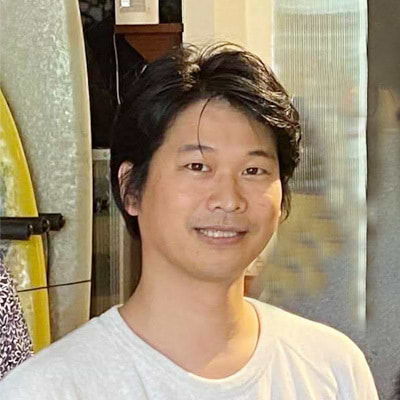
Hiroaki Tanaka
Dentsu Inc.
Kyoto BAC
Planning Producer
Planning Producer. After gaining experience across diverse business scales and sectors—including listed companies, sole proprietorships, and startups—joined Dentsu Inc. in 2012. Subsequently served in China, where as a Communication Planner, designed and planned branding and communication strategies while also tackling new business development based on client challenges.
