
Note: This website was automatically translated, so some terms or nuances may not be completely accurate.
 Put yourself in the other person's shoes! [2/3]
Let's scientifically examine the "vague sense of unease" of our times.

Junko Okamoto
Glocom
"I'm not good at speaking in front of people." "I get nervous and can't express my thoughts well." Doesn't everyone struggle with these concerns to some degree? In this series, we will explore the essence of communication by having Junko Okamoto, a communication strategy researcher and executive speech coach, reveal the secrets of effective speaking.
(Web Dentsu Inc. Editorial Department)
Isn't it time we stopped describing the times with vague "feelings"?
"Sense of stagnation," "anxiety about the future," "frustration"... These feelings, amplified by the pandemic and now everywhere, boil down to one thing: a vague sense of unease. The same goes for relationships. That fuzzy feeling of thinking, "If I say this much, will it be seen as power harassment? But I want to say something. Yet I can't." Using the word "feeling" to dismiss these universal emotions solves nothing. All we can really do is read the room even more carefully than before and refrain from unnecessary actions.
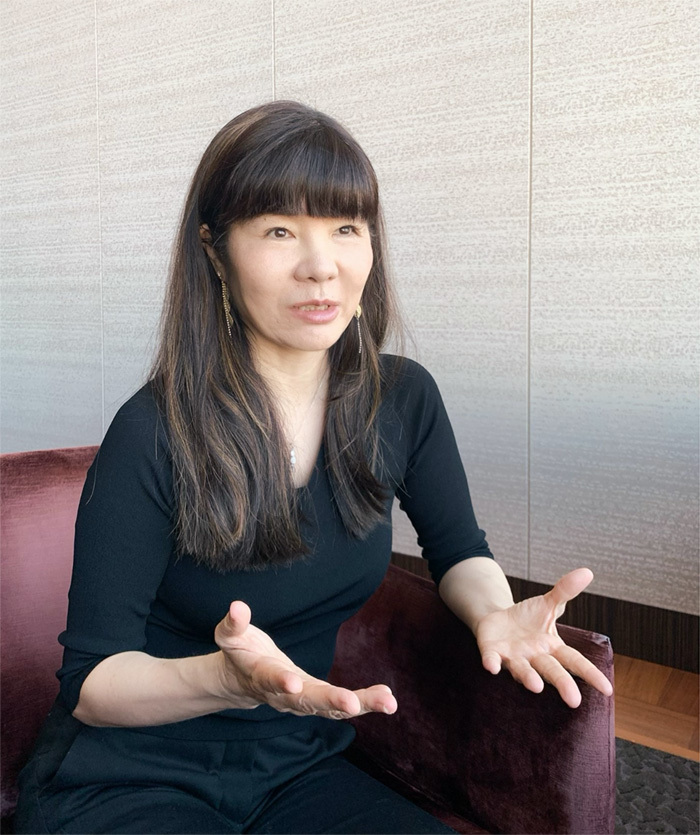
Let's break down that "fuzzy feeling."
For example:
〈Vague Uneasiness = Ignorance × Uncertainty × Restriction〉
How about defining it this way?
Not knowing how to put it into words. Not knowing how to express things vividly. Wanting to communicate, but failing to get your point across. That frustration stemming from such "ignorance" – we've all felt it, right? And then there's the "state of poor visibility" where you can't see the next step, meaning "opacity," which also clouds your feelings. And then there's the "degree of constraint" where things just don't go as planned.
At the root of this haze might lie Japan's cultural peculiarities. Japanese people have lived within what could be called "village societies." As long as you followed the "village rules," your own safety and that of your family was guaranteed. Communication with others didn't require explicit verbalization. The community functioned through things like unspoken understanding or reading between the lines. What does this mean? In short, it means a society rife with the delusion that "you can move people with just the air around you." Japanese-specific, pre-modern ways of thinking like "Well, this is just the way things are here" or "Don't make me spell it out for you, you're so slow to catch on" simply don't work globally. In fact, even among Japanese people themselves, communication with younger generations is becoming increasingly impossible.
I believe you are gradually grasping the meaning behind this series' title: "Speak from the other person's perspective!" Expectations like "Just read between the lines" or "Well, that's just how it's always been" essentially force others into a self-centered, "I-centric" communication style.
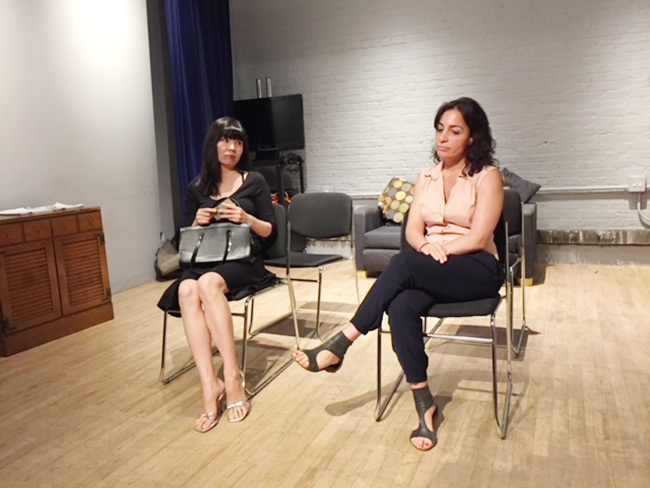
Science frees you from that fuzzy feeling
The key is to transform vague feelings like "moyamoya" from a "sensation" into a quantifiable "degree" of measurement. This directly connects to "scientifically analyzing speech." In marketing terms, it means approaching things quantitatively rather than qualitatively. Overseas, communication effectiveness is precisely measured numerically, establishing proven "formulas" and "equations."
For instance, while Japanese people might seem to have high "company loyalty" at first glance, data shows their "employee engagement" metrics are remarkably low globally. Be honest with yourself: if your boss told you, "Loving the company you work for is a given!" wouldn't your true feelings be more like, "Hmm... to be honest, I don't really love the company that much"?
Internal communication is essential for boosting engagement, yet its methods remain stuck in the "Stone Age." It's become a "traditional art form" passed down through generations without anyone really understanding why. These approaches lack scientific basis and are largely outdated. Rigid, hierarchical communication rooted in top-down authority, sports-inspired perseverance, and empty motivational rhetoric simply can't keep pace with our rapidly changing times.
We need to fundamentally update our communication norms. To do this, please leverage the "science of communication." In Japan, communication relies heavily on intuition and custom ("kanmunication"), but overseas, insights from anthropology, psychology, behavioral economics, neuroscience, theater studies, and other fields have been consolidated, building a solid body of academic knowledge.

Logically analyzing "emotion" and "intuition." First impressions, trust, likability, confidence... I want more to understand that all these things can actually be scientifically analyzed, and that many of the world's problems, and your own problems, can be solved through the power of communication
Junko Okamoto's website is here.
Was this article helpful?
Share this article


Newsletter registration is here
We select and publish important news every day
For inquiries about this article
Back Numbers
Author
Junko Okamoto
Glocom
President and CEO