Note: This website was automatically translated, so some terms or nuances may not be completely accurate.
 【Global】Accelerating Sustainability & Circular Economy [6/34]
Learning from Panasonic: Business Expansion Welcomed in China [CSV Forum Report 2]
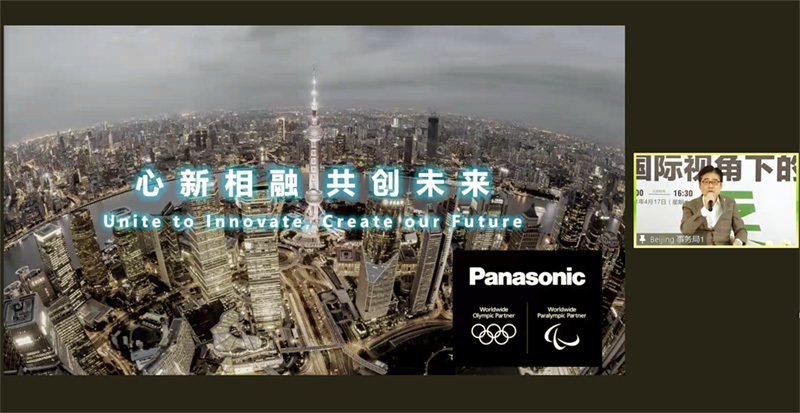
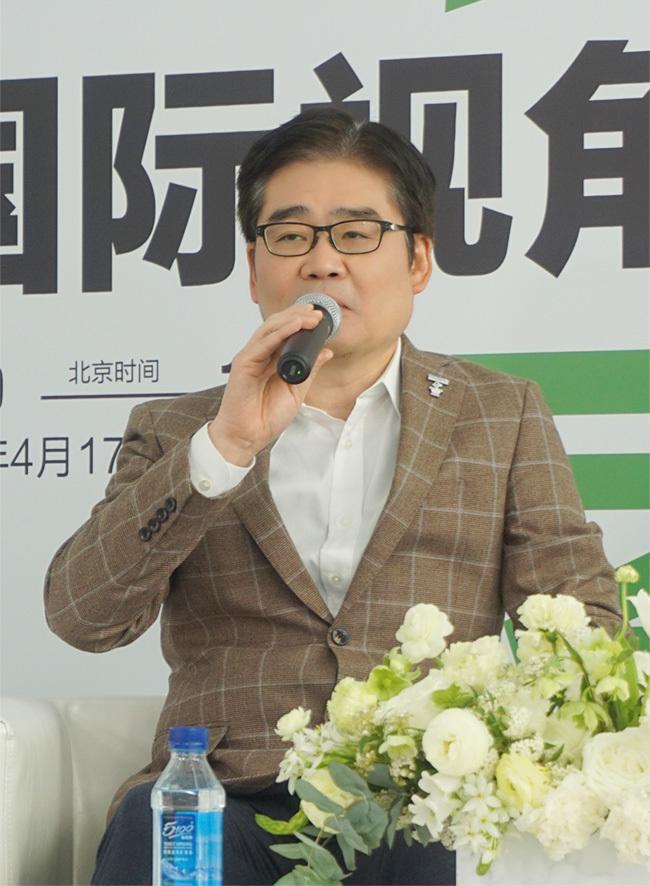
This article reports on the special edition CSV Forum event jointly held by Japan and China on April 17, 2021. Part 2 covers Panasonic's China operations, based on the presentation by Mr. Tetsuro Honma (Executive Vice President, Panasonic Corporation and President, China & Northeast Asia Company).
Part 1: Learning Global Management from Shiseido [CSV Forum Report 1 ]
Balancing the World's Factory with Businesses Welcomed in That Country
Mr. Honma of Panasonic stated that since the meeting between His Excellency Deng Xiaoping and Konosuke Matsushita in 1978, "the founder's strong belief in China's development—that the 21st century is Asia's era and China and Japan must be the two wheels of a cart—has permeated Panasonic's China operations." Konosuke Matsushita established welcoming businesses in each country as a fundamental principle for overseas operations, a philosophy deeply respected even in modern China.
However, despite the growing recognition of the Matsushita name, the company experienced about a decade of sluggish performance. The reasons were threefold: speed, management style, and cost competitiveness. To address these challenges and compete with Chinese private enterprises, the China and Northeast Asia Company was established in 2019.
Its defining feature is a system where all decisions—from product planning to sales—for goods sold within the region are made in-house using a China-style approach, without relying on Japan for personnel, materials, or capital. For exports, the company adopts a policy of specializing in design and manufacturing, following the product planning and sales directives of the export destination. This aims to fulfill the role of the world's factory while gaining acceptance in the world's largest market, China.
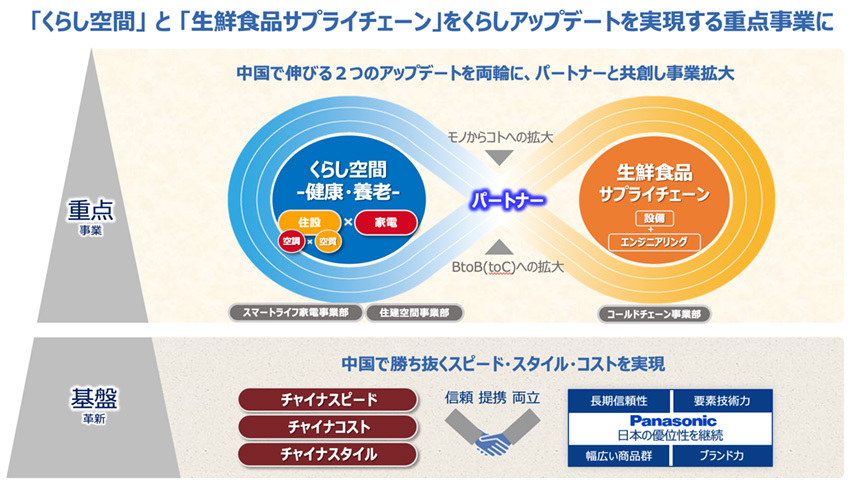
The China and Northeast Asia Company focuses on updating two business domains where Panasonic has strengths and is growing in China: "Living Spaces: Leveraging strengths in home appliances and housing equipment with a focus on health and elderly care," and "Fresh Food Supply Chain: Providing end-to-end refrigeration solutions amid demand for safe food." It holds the vision of being useful to China. Mr. Honma stated, "Building on Panasonic's strengths—long-term reliability, brand power, core technological capabilities, and a broad product portfolio—we aim to expand our business by collaborating with Chinese partners."
Cities Extending Healthy Lifespans and Low-Environmental-Impact Convenience Stores
Mr. Honma introduced two examples from the Living Space Business. The first is "Creating Towns Where Everyone Wants to Live, Extending Healthy Lifespans by 10 Years." In collaboration with a Chinese developer, Panasonic is constructing a health and senior living town spanning approximately 4 million square meters in Yixing City, Jiangsu Province. Panasonic's home equipment will be installed in 1,170 units, covering one-third of the vast land area, controlling air, water, and light to provide an optimal living environment. Furthermore, it provides a health space control platform that integrates health data and enables centralized management and operation via smartphone.
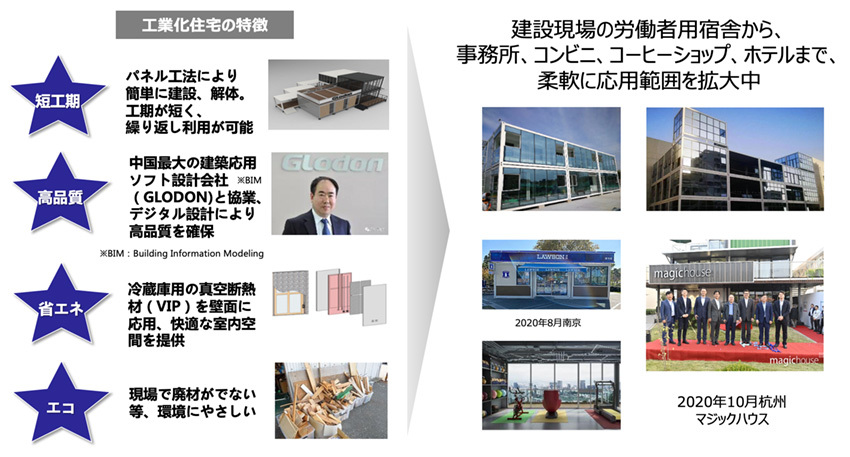
The second initiative involves industrialized housing that reduces environmental impact. Prefabricated units enable rapid construction and dismantling, allow reuse, and eliminate waste materials. Vacuum insulation applied to walls ensures energy efficiency and comfortable indoor spaces. To enable safe, high-quality, and speedy design, this is being advanced in collaboration with GLODON, China's largest CAD design company.
By enabling rapid deployment where needed, it responds to the ever-changing needs of people and communities—a capability also adopted by Lawson convenience stores. It is highly regarded not only for facilitating swift store openings but also for contributing to SDGs advancement.
Contactless technology and reduced food waste drive economic revitalization
Next, a case study on the fresh food supply chain business was presented.
Due to the impact of the COVID-19 pandemic, attention focused on contactless product handover with store staff and delivery personnel. Panasonic developed a refrigerated/heated smart locker. This was reported to have changed the breakfast habits of urban commuters.
In China, where many people eat breakfast outside, commuters can now order via app and pick up at refrigerated/heated smart lockers located near stations. For supermarkets and convenience stores, this improves operational efficiency during peak hours while allowing customers to receive warm breakfasts. Typically, a single convenience store clerk can barely handle 100 to 200 orders in the morning, but with smart lockers, they can process 400 to 500 orders, leading to increased sales. The system is gaining popularity due to its simple operation and order management capabilities, driving rapid expansion.
Furthermore, in China, where transportation often takes extended periods, food loss is said to reach 25%. Addressing this challenge, mobile pre-cooling containers—leveraging Japan's experience in maintaining freshness through pre-cooling crops at optimal temperatures at the source, followed by storage and transport—have improved the fresh food supply chain, significantly reducing waste. This also contributes to increased farmer income.
Panasonic China's ability to achieve both business growth and local social contribution exemplifies global CSV management. Its China operations grew 113% year-on-year in 2020, achieved through autonomous management enabling swift on-site decision-making without relying on Japan. Mr. Homma concluded by summarizing five characteristics of China:
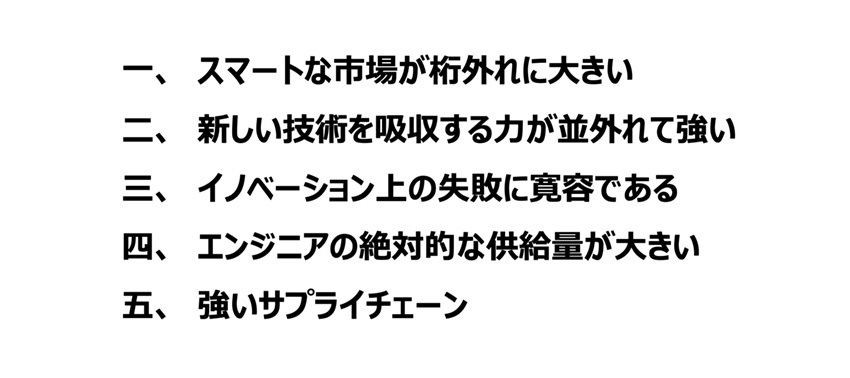
Mr. Honma concluded, "The success of our China operations hinges on how we leverage these five characteristics. A key mission is to share with the entire Panasonic Group practical examples of how to utilize technology to evolve our business in China—the world leader in the social implementation of smart technologies."
In the upcoming Part 3, we will cover speeches by young Chinese entrepreneurs and a panel discussion providing an overview of China's CSV initiatives and global diversity management.
(Continued in Part 3)

Was this article helpful?
Share this article


Newsletter registration is here
We select and publish important news every day
For inquiries about this article
Back Numbers

Author

Rie Tanaka
株式会社電通ライブ
シニアディレクター
![[SB 2026 Tokyo] What Is Required of Corporate Sustainability Communicationsのサムネイル](https://cdn.speedsize.com/e7df76a9-4406-40f5-bc97-57e7c2c2d99d/https://cdn.dentsu-ho.com/834def09-4013-422a-a14f-45c659fd7b82/gbc33_top.jpg/f_auto,w_3840)