
Note: This website was automatically translated, so some terms or nuances may not be completely accurate.
 Let's talk about gender. [1/4]
Tell us about gender!
For both companies and consumers, a gender perspective has become indispensable in today's era.
While communication addressing gender is praised, missteps can increasingly lead to criticism.
What can creatives do to confront gender and expand its possibilities?
To explore this, Dentsu Inc. communication planner Suwon Kwon (hereafter: Su) and copywriter Taiga Iwata (hereafter: Iwata) launched the "Gender Creative Unit."
These two young creators candidly share why gender matters to them and how they want to engage with it as creators.
Gender Issues We Want to Discuss Now
Su: We really hear the word "gender" a lot these days, don't we?
Iwata: It's covered more in the media, and awareness about gender is really growing, including among clients. But in terms of communication, I feel there are still many issues and challenges.
Sue: Lately, especially around "gender and communication," various problems have been surfacing. But honestly, it feels like no one has the answers or even hints on how to actually approach planning or perceive things. Wanting to find that was why I reached out to you, Iwata-kun – that's how this unit started.
Iwata: Exactly. Even looking at controversial cases, sometimes you can see why they're criticized, and other times you wonder, "Why?" That feeling of "there's no clear answer" really hits home. I'm not a gender expert, and whether as someone creating communication or just living my daily life, I struggle with it a lot. How about you, Sue?
Because it's everyone's story, beyond just men and women.
Sue: I guess I have a lot of worries as someone directly affected. Honestly, I've felt many times that I might be receiving unfair treatment because of my gender. For example, like what was talked about on social media, some taxi drivers treated me rudely. Or when I tried to sign a contract in my own name at a real estate company, they casually said, "Wouldn't it be better to use your husband's name?" At first, I didn't think much of it, but gradually, I started wondering, "Huh? Could this be because I'm a woman...?"
Well, that's what sparked my interest in gender issues and led me to start studying them.
Lately, I feel like gender issues are being discussed a lot in the context of communication. As someone who experiences this firsthand, but also as a creator, I started wondering if there was a way to change this situation.
Iwata: When we talk about gender, it often gets framed as "because you're a woman..." or "LGBTQ+ people..."—like it's just about specific "sexes." But as a man, I often think things are "weird." Ultimately, a society that makes assumptions based on gender feels stifling for everyone.

Sue: At first, I was only concerned about "women's issues" because I'm a woman. But really, men are also forced into all kinds of "masculine" expectations, right? Recently, I watched a YouTube video where a female comedian talked about "the difficulties men face," and it got a ton of empathy from men.
That made me realize this isn't just a women's issue—it's a much bigger story that affects everyone.
Iwata: Exactly. If you look at social media, people expressing discomfort with gender issues aren't just women. So I want people to see it as a much bigger theme, not just "gender is a women's issue." Without that awareness, I don't think future communication will work at all.
I want to keep facing gender head-on, not running away from it.
Sue: For me, the fundamental goal is to create a society where everyone can live more easily through projects that make people think "That's great!" Because such a society is also one where I can live more easily. On top of that, precisely because gender issues are such a hot topic in society right now, I hope we can study hard and become partners who can support our clients and run alongside them.
Iwata: To do that, I think we have to study seriously. Honestly, I thought I'd studied quite a bit myself, but I've had the experience of an ad I created backfiring. It was communication we'd discussed repeatedly with the client, so it was a huge shock. On the other hand, I've also had successes precisely because we confronted gender issues. It was rewarding to see people from all walks of life relate to it. That's exactly why I want to create even better examples.
Sue: When that backlash happened, Iwata-kun was really devastated, wasn't he...
Seeing how backlashes are increasing in the communications field, I'm really worried society might start moving toward corporate communications simply avoiding themes like "women" or "gender" altogether.
Iwata: Exactly. The image of "gender = backlash" has become so ingrained that we're already seeing situations where companies excessively avoid risk. If this continues, it will become difficult to have constructive discussions about gender at all. But I believe that to genuinely build a better society, we need to keep discussing gender openly.
Sue: That's why we titled this series "Let's Talk About Gender." We don't want to just talk one-sidedly, nor do we want to just keep listening. We want to have a conversation. We want to face it head-on without running away, and truly understand each other. And for those receiving the communication, we want to create something that offers new insights, gives them a push, or gives them courage.
Iwata: Persisting in dialogue is crucial. We should use not just what gets criticized, but also good examples—what makes them good and what lessons we can learn from them—as starting points for conversation.
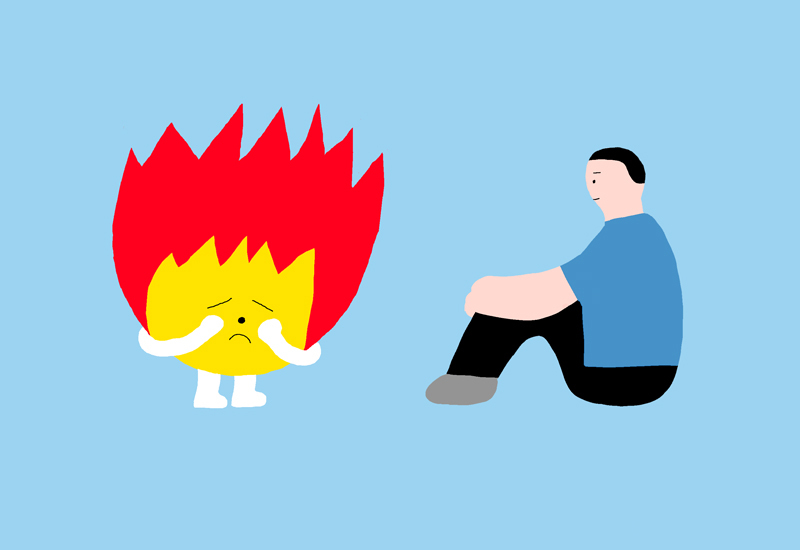
Is gender something we should fight over?
Sue: It feels like our current society has created a confrontational structure around gender.
There's side A making a claim, side B opposing it, and then the C's who stand by and watch.
In this structure, each side clashes with logic over their own sense of justice. But since the underlying value systems are fundamentally different, the conversation doesn't connect, and the battle never ends.
What's more, I think it's a huge problem that the people watching—the Cs—end up seeing gender as something "scary," "something to fight over," "something they don't want to get involved with."

So, continuing to fight probably won't lead to a wonderful future. Ultimately, it's about slowly engaging in dialogue, listening to each other, sharing our own perspectives, and even imagining and understanding the other person. Since we all live in the same world, if we can create a flow where we truly understand each other, I think it would lead to a happier society. It's a pretty idealistic view, though.
Iwata: I really resonate with that. Different notions of justice clash, and it feels like society isn't moving in a good direction yet. Ultimately, with everyone having different values, there's no single right answer. That's precisely why "good communication" is so important to overcome this conflict.
Sue: We want to find something in this series that can be a hint for creating that "good communication"!
Proving that "a society unconstrained by gender leads to greater happiness"
Iwata: You often hear that "gender is a gradient," right? It's not something you can simply divide into male and female. Thinking about it that way, I believe gender is something we should consider by engaging with each individual.
Sue: If humanity were simply classified as "male" or "female," that would be unbearable. From a marketing perspective too, it's no surprise that plans based on such crude binary classifications and arbitrary assumptions like "men must be like this" or "women must be like that" end up missing the mark. Our society is diversifying.
Iwata: Things like "new products for women" or "commercials with expressions men would like" were commonplace before, but we're entering an era where that approach just doesn't work anymore. If you only think about product concepts in terms of male or female, it becomes too broad to resonate with anyone, and the expressions can feel outdated.
Sue: That's why we want our activities to prove that "society becomes happier when we engage with each individual, free from gender constraints." But first, I wanted to think more deeply and study gender itself. That's why I approached this series with a "Please teach me!" attitude.
Iwata: I personally like so-called "masculine" fashion, and I don't mind treating the opposite sex to things. I don't seem to have a super flat gender ideology. I often wonder, "Is that a bad thing?"
Sue: It's okay for people to have different perspectives. What's problematic is forcing your views on others. Like saying "You're a man, so you should do this" or "You're a woman, so you should do that."
But communicating something to a broad audience—like in advertising—is a different issue. I feel like no one has a clear answer yet on "what's acceptable and what isn't." We debate it every week and still can't reach a conclusion. It's tough...
Iwata: It's tough... Precisely because we can't find an answer just the two of us, I want to share this dilemma with others too.
Sue: Exactly!!
In this series, we plan to explore hints for future communication by talking with people from various fields on the theme of "Gender and Communication."
To improve corporate communication, to improve each person's life, to improve this society.
Would you like to join us in thinking about gender together?
Illustration: Midori Manda
【If you enjoyed this article, you might also like these】
Do you know about the "Q+" in LGBTQ+? ~ Latest Survey Report [2021.06.03]
Unconscious Bias: Not Something to Eliminate, But Something to Recognize [2021.01.13]
Toward a world where coming out isn't necessary. The wish Netflix and Dentsu Inc. put into Coming Out Day [2020.11.11]
The Ultra-Real Challenges on the Ground Connect to Global Issues [2021.06.14]
Was this article helpful?
Share this article


Newsletter registration is here
We select and publish important news every day
For inquiries about this article
Author
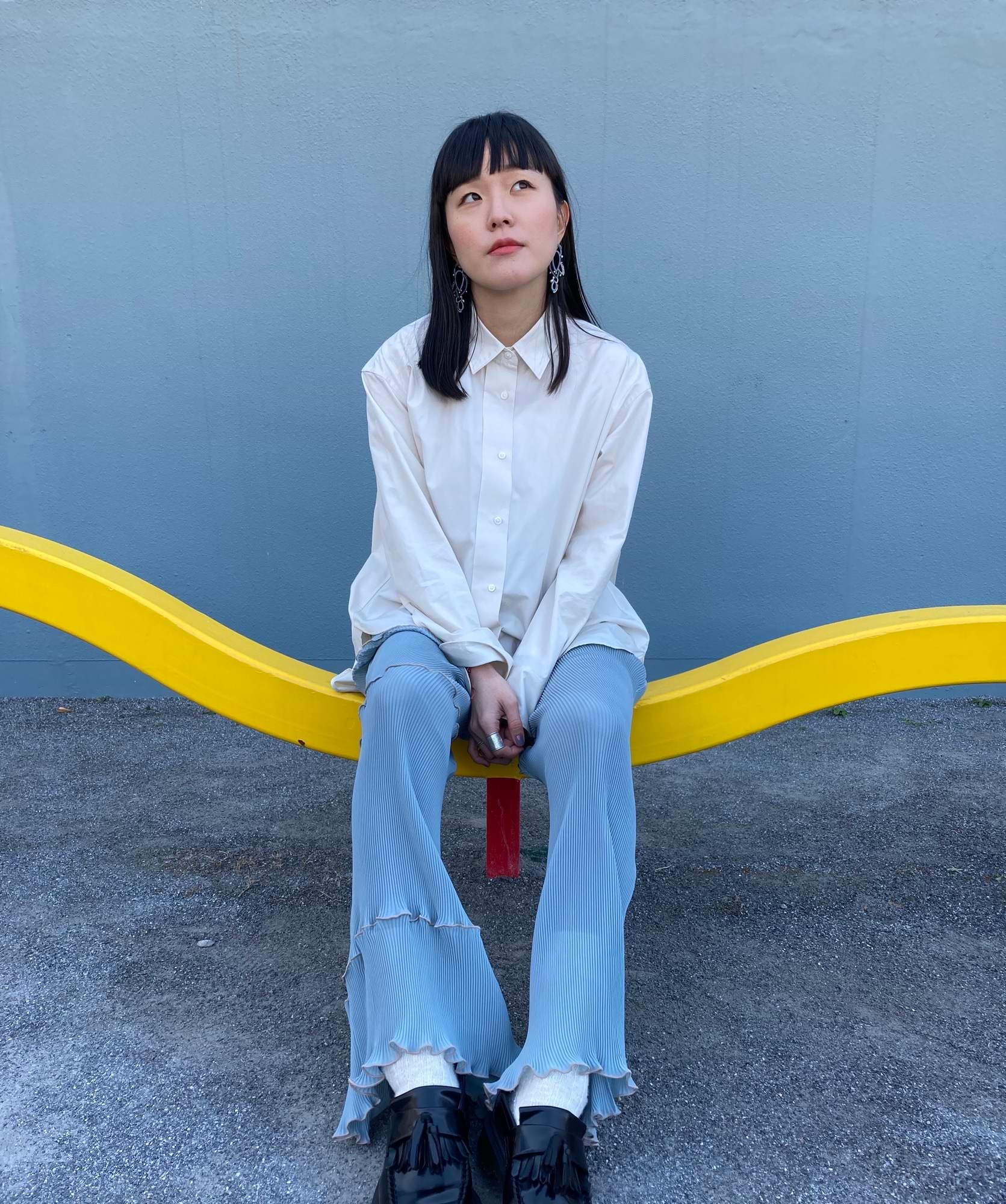
Kwon Su-yeon
Dentsu Inc.
Creative Planning Division 3 / Future Creative Center
Communication Planner
We plan with the belief that "individual happiness leads to collective happiness." After working in the Marketing Division 3 and CDC, I joined the Creative Planning Division 3 in 2021. My specialty is branding centered on digital communication. I handle a wide range of projects including corporate branding and product development. I have virtually no experience producing traditional TV commercials. Born and raised in South Korea, I've lived in Tokyo since age 18.

Yasuka Iwata
Dentsu Inc.
Creative Planning Division 1
Copywriter
At 17, I discovered philosophy. I awakened to ideas and culture. I majored in aesthetics at university and joined Dentsu Inc. in 2014. Since then, I've been solely a copywriter. Notable work includes Nissin "I want to hint at it," KANEBO "I HOPE.," KRAFT BOSS "Good job, me.", and ALFORTE "Make blue your ally." Winner of the ACC Grand Prix and Galaxy Award Grand Prix.