
Note: This website was automatically translated, so some terms or nuances may not be completely accurate.
 Let's talk about gender. [3/4]
Gender and Romance. We consulted Takayuki Kiyota of Momoyama Shōji.
This series features Dentsu Inc. creators confronting gender issues and exploring new relationships between gender and creativity through dialogue with individuals from various fields.
For the third installment, we spoke with Takayuki Kiyota, who works with the love story collection unit "Momoyama Shoji." Alongside his unit activities, Kiyota also shares his perspectives on "love and gender" through columns and radio, including works like "I Thought I Was Doing the Right Thing: An Introduction to Men's 'Failure Studies'" (Shobunsha) and "Goodbye, Us" (Stand Books). Dentsu Inc. communication planner Suyon (hereafter: Su) and copywriter Taiga Iwata (hereafter: Iwata) had a candid conversation with him.
Is it bad to be a man who wants to treat women?
Iwata: Today we're talking with Ms. Kiyota from Momoyama Shōji. When I encountered your books like "I Did It with Good Intentions" and "Goodbye, Us," I really resonated with how you engage with gender on a personal level, using relatable topics like "love."
Sue: 'I Thought I Was Doing the Right Thing' was full of "I get it! I know people like that!" moments.
Kiyota: Thank you. While I write books centered on gender, I haven't formally studied it. I always write while wrestling with these issues, so it's heartening to hear that people relate.
Iwata: It's relatively easy to think about gender at the societal level and point toward a "this is how it should be" direction. But when you try to think about gender at the individual level, feelings of "like/dislike" come up, and that's precisely why it gets difficult. That's why I found it interesting that you use "romance" as your entry point.
Sue: So today, I hope we can talk about gender starting from love stories.
Kiyota: Thank you.
Iwata: Right off the bat, it seems Kiyota-san has received a love advice request.
I find myself wanting to pay for meals with women, even if I have to force myself to do it. Am I unconsciously trying to financially dominate the opposite sex...? I don't mean to, but it scares me.
Mr. I (Male, 30s)
When I go on dates with men, I end up acting like "sashisuseso*" (a Japanese term for overly polite, submissive behavior). I'm usually interested in gender issues and study them. But when it comes to my own relationships, I end up playing the part of 'the kind of woman who's popular'...
Ms. S (30s, female)
※"Sashisuseso" is an abbreviation for: "Impressive! I didn't know that! Amazing! Great taste! Really?" It became a popular online dating technique for being popular at mixers.
Iwata: Most people understand that it's better to be liberated from "masculinity" and "femininity" and achieve equality. But when it comes to dating, they suddenly get bound by societal expectations of "masculinity" and "femininity."
Kiyota: In our book as Momoyama Shōji, Why Men Tend to Prioritize Male Friends Over Girlfriends (East Press), there's an episode about a woman who feels conflicted because, while she's liberal and feminist in her beliefs, she prefers feminine and conservative fashion. Indeed, we often get consultations where this kind of self-contradiction is a source of distress.
Sue: Is this contradiction just something we have to accept...? It's really frustrating.
Kiyota: Hmm, I wonder. For example, even if you have a side that prefers "feminine" things, as long as you don't impose that value on others, it doesn't seem like a particular problem...
Sue: Imposing them isn't good, right? But then I reflect... maybe by doing things like "sashi suse so," I was reinforcing men's belief that "getting complimented by women is a given." That might have ended up reproducing fixed ideas about "masculinity" and "femininity"...
Kiyota: Ah, I see. It's about whether something is okay for you personally, but what about its societal impact? Even if some men hold that belief that "getting compliments from women is a given," I think it's fundamentally an issue they themselves should challenge... It's complicated.
Personally, I feel the shackles of "masculinity" and "femininity" run deep, including in unconscious ways. I believe freeing ourselves from them allows both individuals to be more truly themselves. That's why I feel re-examining our gender perspectives is crucial for building better relationships.
Iwata: I see... Romance is fundamentally about human relationships, after all. But why are you, Kiyota-san, so deeply conscious of gender issues? In your writings, you're always reflecting on your past self, and as a fellow man, I can't help but feel humbled...
Starting with "Interest in Oneself"
Kiyota: Oh, no, no... The reason I'm always reflecting and introspecting is simply because I have so many stories of failure. I'm far from perfect. Anyway, when women talk about their love lives, there are just so many episodes that make you keenly aware of "how men mess up."
Iwata: Men's shortcomings?
Kiyota: Given the nature of love advice, men are almost always the source of the problems. So, while the stories do lean toward the negative, it's striking how similar they are—so much so that you wonder, "Is this the same guy?" even though they're supposedly about different men. Things like dumping minor hassles on others, not listening, refusing to apologize, or getting upset easily... I started to see these episodes could be broadly categorized.
This led me to question, "Isn't this less about individual personalities and more about socially constructed gender issues?" I positioned it as "The Study of Men's Failures" and explored causes and countermeasures in 'Even Though I Thought I Was Doing the Right Thing'.
Sue: I see. But Mr. Kiyota, you are a man yourself. Wouldn't the world as it is now be more comfortable for you...? Sorry for the mean question.
Kiyota: I generally fall within the category of "majority men," so I certainly receive tangible and intangible benefits and privileges from a male-dominated social structure. But through Momoyama Shōji's activities, hearing various relationship consultations made me feel a sense of dread: "If you get complacent about that, it could lead to something terrible." I have plenty of my own shortcomings too...
Thinking about gender is about thinking about myself, thinking about others, and I feel it connects to societal issues along that continuum. At its core, I suspect it stems from a desire to understand myself.
Iwata: That's an interesting perspective. Does studying gender help you see yourself?
Kiyota: I don't think it's possible to separate what's purely personal character or nature from what's influenced by gender. But who I am isn't something I've shaped entirely on my own; I'm massively influenced by others and society. In other words, what I've learned and experienced throughout my life has made me who I am today. Studying gender reveals moments where you see how your own ways of thinking and feeling were formed, and I find that incredibly fascinating.
Moreover, these patterns often manifest as discrimination or prejudice, or concretely hurt someone. That's why I think it's important to re-examine such aspects of myself and engage in unlearning—dismantling ingrained patterns.
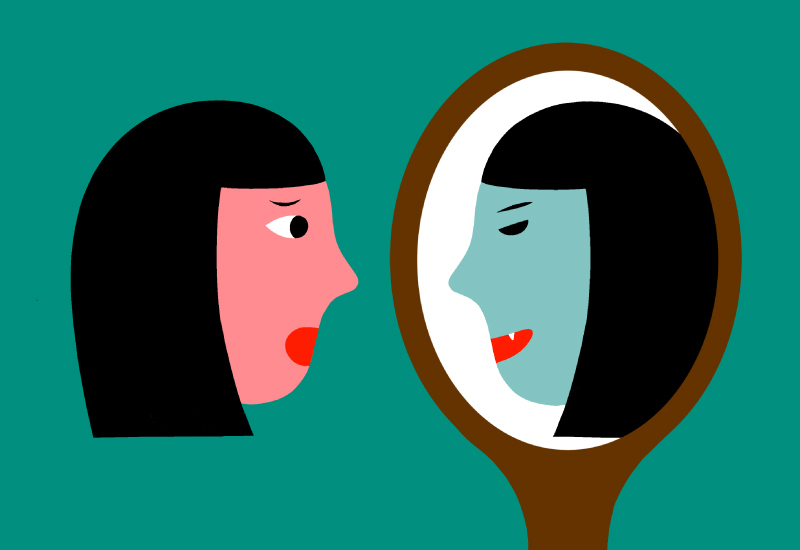
Iwata: So it's less about "learning about gender" and more about consciously "stripping away past experiences."
Kiyota: When I first heard the term "unlearning," I thought, "Ah, that makes sense!" Because when you want to learn new things or change yourself, past experiences, knowledge, and ingrained habits or thought patterns can often get in the way.
Sue: I see. I think it would be great if everyone, regardless of gender, could adopt this "unlearning" mindset. I feel like this isn't just about gender; it might also relate to differences in values based on country or culture.
Kiyota: When you think of it as "for society," it feels like a huge problem. But I think it's fine to start with "for knowing yourself." I hope that as these things accumulate, they'll lead to solving societal issues.
The three of us fantasized about "World Mirroring Week"
Kiyota: If we're talking on a societal scale, personally, I think holding a "World Mirroring Week" could lead to all sorts of discoveries.
Iwata: Mirroring Week?
Kiyota: For example, instead of "women-only cars," we'd have "men-only cars"; instead of "mother and child health handbook," we'd have "father and child health handbook"; instead of "actress," we'd have "actor." We call this technique "mirroring" – reversing the gender of words and concepts circulating in society to highlight the embedded biases and discrimination. The idea is to run this as a campaign. Like, imagine if a convenience store ATM said "Dad's Wallet," or if a train had ads for "Muscle-Building Esthetics." How would men feel about that...?
Sue: Ah, so it's about how society pressures men with expectations like "Men should earn money!" or "Men should be super muscular!"?
Kiyota: I think that kind of pressure actually exists in society, but this makes it feel even more intensely visible. Novels like Aoko Matsuda's short story "Sensibilities Unique to Men" (included in the Chuko Bunko edition of "When Women Die") and Michiko Nagitsuki's "Mirror World" (Kadokawa Shoten) depict precisely that kind of world. Seeing it firsthand might make men think, "So this is the world women live in..."
Sue: Conversely, women might also become aware of the previously hard-to-grasp difficulties men face.
Iwata:In the previous article, we received advice about reversing genders in the world of commercials. But reversing all genders in the world would be interesting too. For example, if there were a period where the gender ratio in politics or corporate executives were reversed, that would definitely be fascinating.
Sue: Definitely!
Iwata: There's a high chance something good would happen. My alma mater was originally an all-boys school, but when it became co-ed and more girls enrolled, the academic performance reportedly improved significantly.
Sue: That reminds me, there's research suggesting that in Sweden, increasing the number of female politicians actually improved the overall quality of politicians. Reversing things might lead to some discoveries.
(References) Besley, T., Folke, O., Persson, T. and Rickne, J. (2017) “Gender Quotas and the Crisis of the Mediocre Man: Theory and Evidence from Sweden,” American Economic Review, 107(8): 2204-2242.
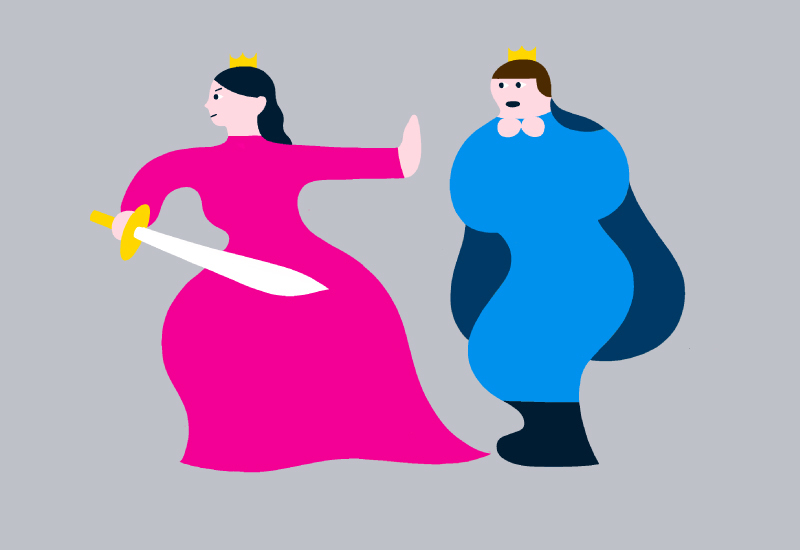
Communication Beyond Sulking
Iwata: Kiyota-san, what are your thoughts on current commercials from a gender perspective?
Kiyota: Having witnessed various ads sparking controversy, especially on social media, over the past few years, I imagine production teams are now incorporating more diverse perspectives when creating commercials. Still, I often see ads where biases or gender roles are subtly embedded, and honestly, there are moments when I think, "Hmm..."
I previously contributed to a book titled "They Say They Don't Watch TV: Reading Entertainment Content Through Feminism and Gender" (Seikyusha), where I wrote a piece critiquing popular variety shows from a gender perspective. It was packed with scenes that raised concerns—sexist remarks, appearance-based teasing, expressions mocking feminism, and even sexual harassment between men...
Sue: It's true, that kind of stuff is still prevalent. But I do feel like more companies and programs are becoming aware of it. The level of understanding might still vary, though.
Kiyota: Mr. Iwata and Ms. Sue are on the advertising production side. How do you two see the current situation?
Iwata: Well, in our previous article, we interviewed Mr . Sejiyama, who summarized key points to watch out for when making commercials. If you stick to those, you can probably avoid a lot of backlash...
Kiyota: I see. But I can understand that feeling. Honestly, when I write copy or speak like this and it becomes an article, I'm constantly haunted by anxiety and fear that unconscious discrimination or bias might be embedded in it. However, it's not just about thinking "if we do this, we can prevent backlash."
Sure, there are many points to consider, but within that, figuring out what to express and how to make it interesting—that's precisely where the creative work shines, isn't it? Though, I feel like I'm sounding a bit pretentious saying that...
Sue: So, how can corporate communication actually improve?
Kiyota: Hmm, I wonder. For example, in my case, I feel I learn a lot from the "voices of those directly involved" I see on Twitter. I mainly follow accounts interested in gender issues, and my timeline streams voices from people directly affected by various problems—housework, childcare, romance, relationships, politics, media, and so on. Because they're raw, unfiltered voices, they feel incredibly real. There are many moments where I think, "Oh, really...?" or "I didn't know that...," and they really hit home.
Sue: I see...
Kiyota: Of course, I think it's dangerous to feel like you understand just by reading tweets. But when you don't understand something, you have to learn or listen to others. I'm not sure if this is the right way to put it, but I feel Twitter is a place overflowing with "raw voices." You can also speak up as someone directly involved in something, and I think building that kind of communication is important.
Iwata: So the first step is not looking away and acknowledging the facts, right?
Kiyota: There are many voices saying things like, "It's become a stifling era," or "If you worry about every little thing, you'll end up unable to say anything." But on the other hand, when expressing something, an attitude like, "If I do it this way, I won't get angry, right?" is also a kind of sulking... I hope we can keep thinking while facing the real problems head-on.
Iwata: "Men prone to sulking" is also a typical male archetype featured in your book, I Did It for the Best.
Kiyota: For example, the 2021 drama "Towa Ko and Her Three Ex-Husbands," which became a hot topic, handled various themes, including gender, with such sensitivity while still being a wonderful, laugh-out-loud work. As someone who writes, even if only at the fringes, I found myself moved, thinking that's the kind of work I want to aim for.
Iwata: The female CEO protagonist and the character designs unconstrained by traditional gender views were really appealing, weren't they?
Sue: I absolutely loved that show too. So many people around me, regardless of gender, enjoyed it.
Hearing you talk just now, I can picture what the ideal expression should be: not just passive attempts like "This shows gender sensitivity, so it's good, right?", but expressions that go beyond that, showing us a new world and making us feel excited.
After finishing our conversation with Kiyota-san
Sue: Whew. We really branched out from love talk!
Iwata: Last time, I was feeling really fuzzy about how to think about gender as a man, but this cleared things up. I really felt that "interest in oneself" is a crucial perspective. When you discuss gender "for society's sake," it inevitably gets complicated, but if you work on eliminating your own biases, you might become a better version of yourself.
Sue: For me, romance and gender stuff still feel so muddled. "Masculinity" and "femininity" feel inseparable from love... I bet others struggle with this too. It comes up not just in romance, but when friends talk about marriage too. So muddled, muddled, muddled...
Iwata: Who should we talk to next...
Sue: I'd love to explore this from a completely different angle too!

In this series, we'll explore hints for future communication by talking with people from various fields on the theme of "gender and communication."
To improve corporate communication, individual lives, and society as a whole.
Would you like to join us in thinking about gender together?
Illustration: Midori Manda
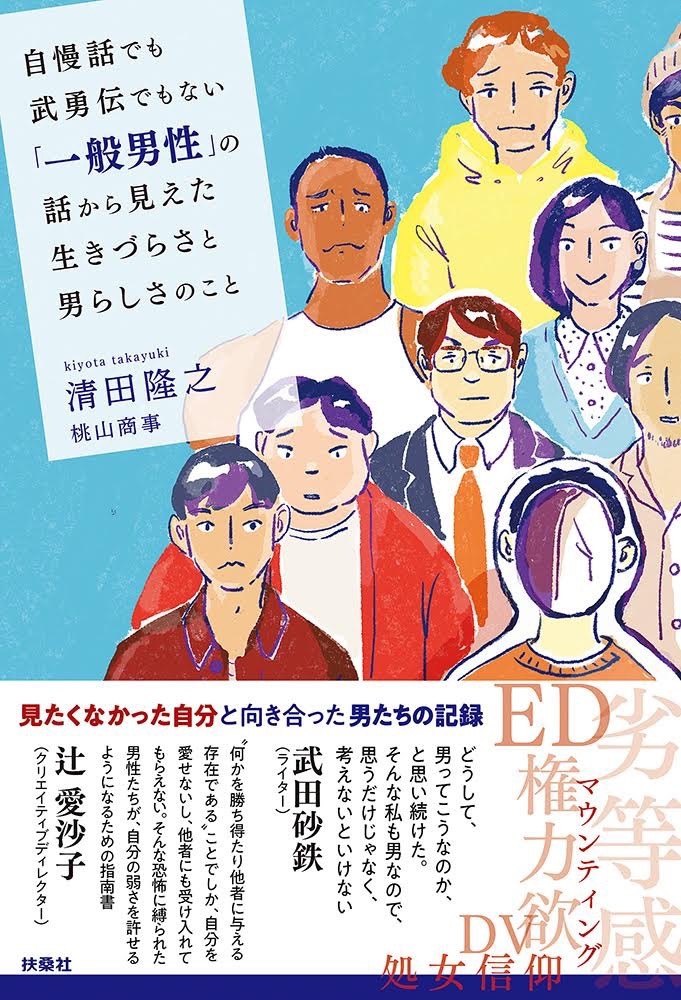
[Ms. Kiyota's new book is now on sale!]
You might also like these articles
・Unconscious biases aren't something to eliminate, but to recognize
・Changing perceptions of diversity with BTS ~ Book Review: "BTS On the Road" ~
・What does Kai Corporation hope to convey with "#FreedomToShave"? ~ Commemorative Discussion for the 74th Dentsu Inc. Advertising Awards SDGs Special Prize Win

Was this article helpful?
Share this article


Newsletter registration is here
We select and publish important news every day
For inquiries about this article
Back Numbers
Author

Takayuki Kiyota
Writer / Representative of Momoyama Trading
Born in Tokyo in 1980. Graduated from Waseda University's First Faculty of Letters. Contributes to a wide range of media on the theme of "Love and Gender." Serves as a responder for the Asahi Shimbun be's life advice column "Nayami no Rutsubo" (Cauldron of Worries). Books published under Momoyama Shōji include All About Love Beyond Being Popular or Loved and Why Men Tend to Prioritize Male Friends Over Girlfriends (both East Press). Solo works include I Did It for the Best: An Introduction to Men's "Failure Studies" (Shobunsha) and Goodbye, Us (Stand Books). His new book, "The Difficulty of Living and Masculinity Seen Through 'Ordinary Men's' Stories: Neither Boasting Nor Heroic Tales" (Fusosha), was released in December 2021. Twitter→@momoyama_radio
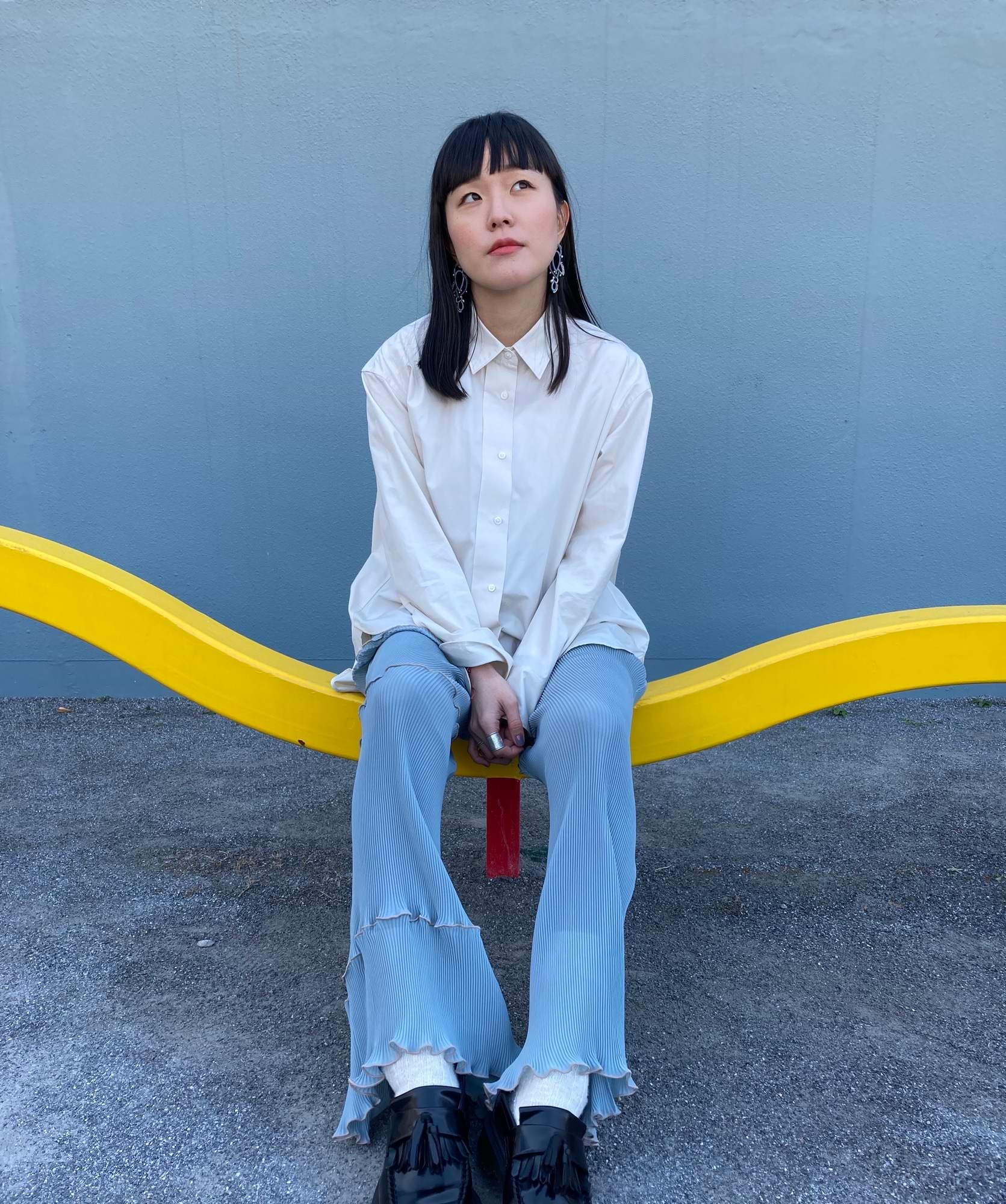
Kwon Su-yeon
Dentsu Inc.
Creative Planning Division 3 / Future Creative Center
Communication Planner
We plan with the belief that "individual happiness leads to collective happiness." After working in the Marketing Division 3 and CDC, I joined the Creative Planning Division 3 in 2021. My specialty is branding centered on digital communication. I handle a wide range of projects including corporate branding and product development. I have virtually no experience producing traditional TV commercials. Born and raised in South Korea, I've lived in Tokyo since age 18.

Yasuka Iwata
Dentsu Inc.
Creative Planning Division 1
Copywriter
At 17, I discovered philosophy. I awakened to ideas and culture. I majored in aesthetics at university and joined Dentsu Inc. in 2014. Since then, I've been solely a copywriter. Notable work includes Nissin "I want to hint at it," KANEBO "I HOPE.," KRAFT BOSS "Good job, me.", and ALFORTE "Make blue your ally." Winner of the ACC Grand Prix and Galaxy Award Grand Prix.