Note: This website was automatically translated, so some terms or nuances may not be completely accurate.
 【Global】Accelerating Sustainability & Circular Economy [15/34]
South Korea's Sustainability Trends: "High Focus on Diversity" and "Gen Z Embracing Sustainability with Enjoyment"
─Trend ③ from the 16-Country Sustainable Lifestyle Awareness Survey─
In July 2021, the Global Business Center and DENTSU SOKEN INC. jointly conducted the "Sustainable Lifestyle Awareness Survey 2021" targeting 12 countries (Japan, Germany, UK, USA, China, India, Indonesia, Malaysia, Philippines, Singapore, Thailand, Vietnam). An additional survey was conducted in October targeting 4 countries (Brazil, Australia, South Korea, Sweden).
Following the previous survey, this report presents the second part of the sustainability trends in South Korea, focusing on the current state of discussions around diversity and gender, based on the combined findings from the Sustainable Lifestyle Awareness Survey across 16 countries.
<Table of Contents>
▼Topics on Diversity and Gender Inequality Gain Attention in Korean Society
▼Gen Z Embracing Diversity with Enjoyment
Topics on Diversity and Gender Inequality Are the Focus of Attention in Korean Society
In recent years, topics related to "diversity and gender inequality" are covered almost daily in the media and on social networking services (SNS) in South Korea.
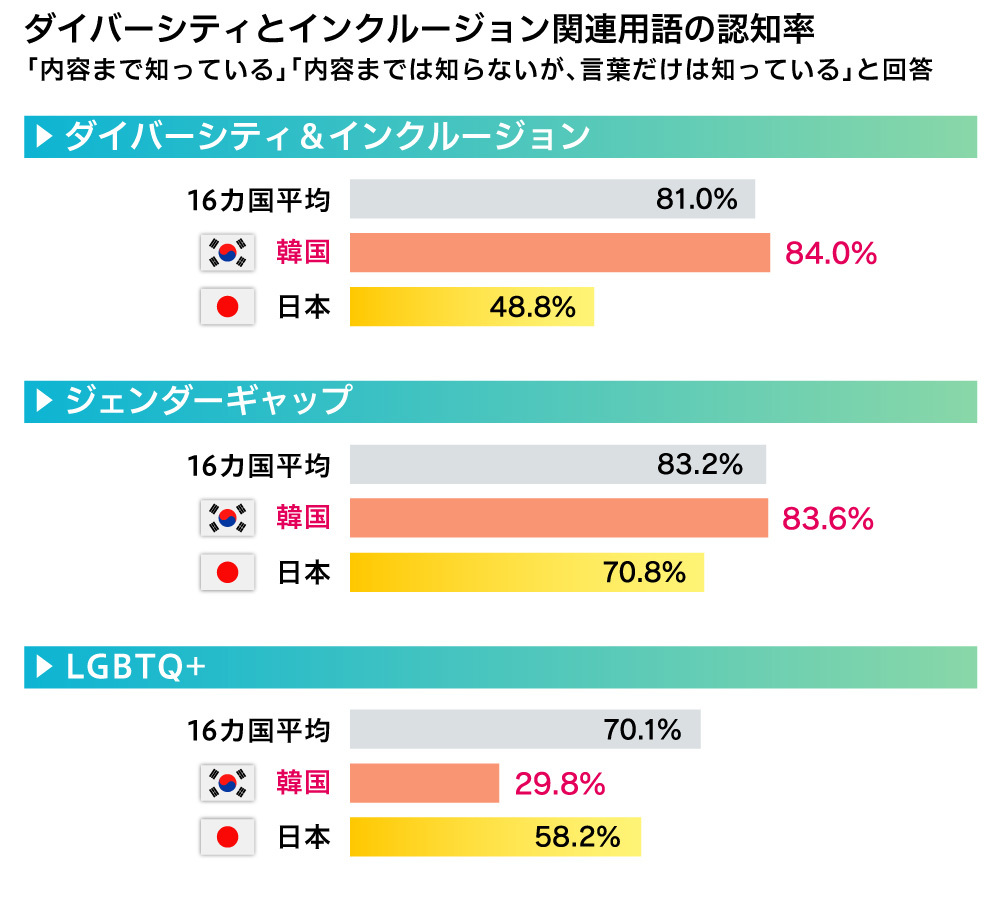
While awareness of "Diversity & Inclusion" stands at 84.0% and "Gender Gap" at 83.6% in Korea, awareness of "LGBTQ+" was the lowest among 16 countries at 29.8%. This is likely because Korean media primarily uses the term "sexual minorities" rather than "LGBTQ+".
Regarding social issues of concern, among Generation Z, "air pollution" (50.8%) was followed by "natural disasters" (49.2%), "racial discrimination" (42.9%), and "gender gap" (38.1%). Notably, nearly 40% cited "gender gap," a higher result than other generations.
According to a 2021 study by South Korea's Ministry of Gender Equality and Family titled "Analysis of Gender Perceptions and Future Outlooks Regarding the Life Course of Youth (※)," "over 70% of women aged 19-34 perceive women as being discriminated against in society," while "over 50% of men in the same age group perceive men as being discriminated against in society," clearly showing a difference in perspective.
Recent gender disparities stem not from legal or physical rights like voting or education, as in the past, but from social customs. Consequently, it remains difficult for society to recognize that "even in today's competitive society, women have not substantively gained equal rights with men."
Even among men, there are voices stating that "gender stereotypes feel like discrimination." Online gender debates often lead to hypersensitive reactions, prompting South Korea to exercise extreme caution—for instance, using the term "gender equality" instead of "discrimination against women."
※Reference: Ministry of Gender Equality and Family, "Analysis of Gender Perceptions and Future Outlooks Regarding the Life Course of Youth"
http://www.mogef.go.kr/kor/skin/doc.html?fn=3d144f8d4b6d445bbb97f4e3f9b66d7f.hwp&rs=/rsfiles/202203/
Recently, issues such as "Cultural Barriers Faced by Foreign Spouses Married to Koreans" and "Overcoming Discriminatory Perceptions of Foreign Workers and How to Foster Inclusion in Korean Society" have been highlighted as social problems.
Regarding evaluations of national and social systems, while over half assessed progress in "tolerance toward multiculturalism" (62.6%) and "correcting gender inequality and poverty issues" (53.2%), responses to the question "Do these exist in your immediate surroundings?" showed low percentages: "LGBTQ+" at 6.3%, "impoverished households" at 16%, and "people experiencing opportunity inequality due to gender, race, nationality, or religion" at 16%.
This trend is similar in both South Korea and Japan. It may indicate that while people have knowledge about these issues, they perceive them as distant problems with little personal relevance.

Generation Z: Embracing Diversity While Learning
However, Generation Z is closing the distance between themselves and "diversity & inclusion," which tends to be perceived as a distant issue.
The Seoul Queer Culture Festival (SQCF), held annually in Seoul, is a multi-faceted event with the vision of "creating a space where not only sexual minorities, but all people with diverse identities can mix equally."
First held in 2000 under the name "Queer Culture Festival - Rainbow 2000," it has continued for over 20 years and has now grown into Asia's largest festival. Featuring parades, food stalls, film screenings, and sales of support merchandise, it bridges the gap with those previously uninterested in LGBTQ+ issues by presenting itself as an enjoyable festival.
However, conflicts still occur between festival participants and opposing groups. After Seoul City revoked the festival organizing committee's permit, the Seoul Metropolitan Human Rights Commission overturned this revocation, stating it was "a discriminatory measure against sexual minorities without reasonable grounds that infringed upon their freedoms." Nevertheless, compared to the past when it was considered taboo, I feel Korean society is changing for the better by openly showcasing diverse voices regarding LGBTQ+ issues.
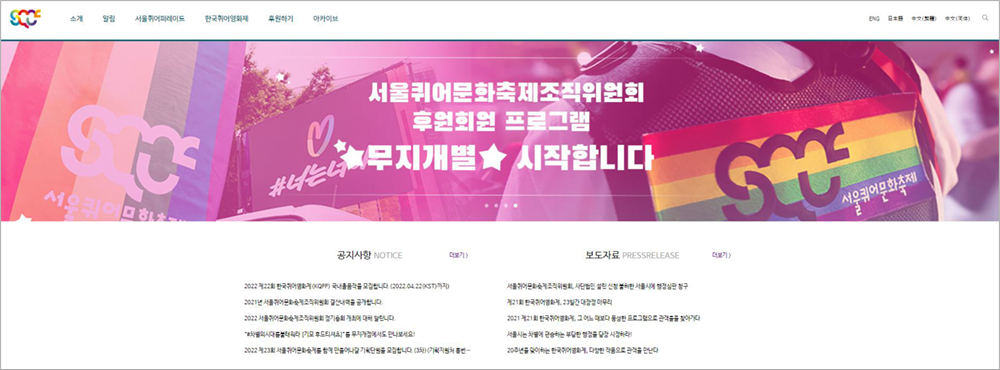
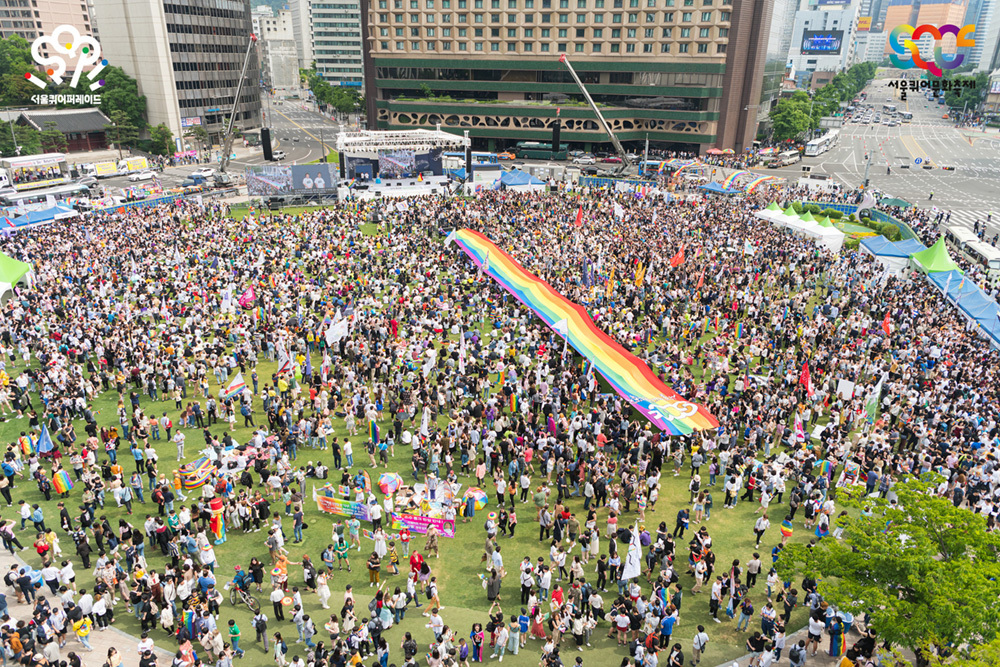

SEOUL QUEER CULTURE FESTIVAL ORGANIZING COMMITTEE ( https://www.sqcf.org/ )
Korean influencer Jonathan is also drawing attention. Jonathan began living in Korea as a refugee from the Democratic Republic of the Congo at age 7, received his education in Korean public schools, and went on to university.
He unexpectedly broke through after appearing on a terrestrial TV variety show. While showcasing his unique, witty expressions on variety programs, he also shares real-life stories of foreigners living in Korea through his YouTube channel.
For example, he humorously breaks down unconscious biases we hold, covering topics like "How do Black people living in Korea apply makeup?", "The pain of being mistaken for being fluent in English based on appearance", and "The one-sided expectation that Black people are good singers". His fluent Korean with an accent makes the content feel even more real and entertaining. I believe young people can naturally realize what's wrong and what biases they held while laughing at Jonathan's YouTube videos, allowing them to naturally develop the right attitude toward different cultures.
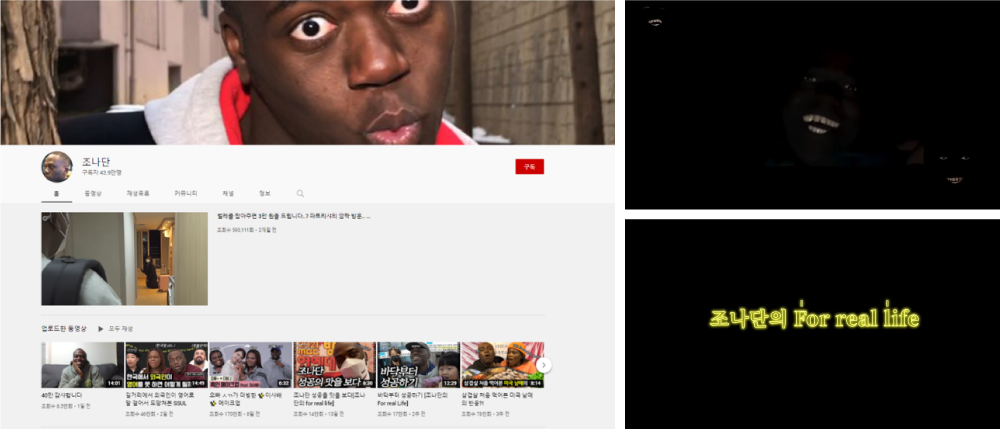
In this way, we can learn a lot from Jonathan, who isn't afraid to tackle controversial topics and presents them with witty expressions.
Furthermore, the "social activity participation rate" revealed that younger generations are more actively engaged in social activities. The percentage of people actively engaged in social activities like donations and petitions (combining leaders and members) was 19.1% for Baby Boomers (aged 57-69 in this survey), 20.9% for Generation X (41-56), 26.2% for Millennials (25-40), and 33.3% for Generation Z (18-24).
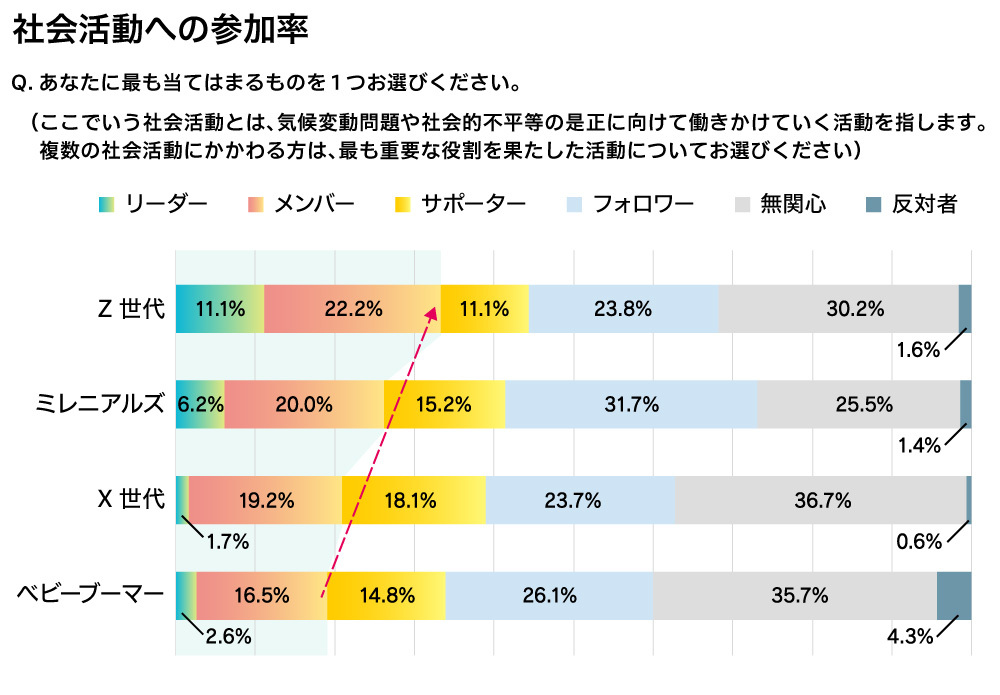
Rather than dismissing "correcting social inequality as unprofitable," brands can become supported by Generation Z by listening to consumers' voices—seen as essential for building a better world—and aligning perspectives.
Even when people have knowledge or interest, issues of social inequality can feel distant and unrelated. However, in Korea, open and active discussions from various perspectives are fostering empathy and making these issues feel more immediate. "Not fearing debate" may be essential for promoting sustainable lifestyles.
[Survey Overview]
Title: "Sustainable Lifestyle Awareness Survey 2021"
Survey Method: Internet survey
Conducted by: Dentsu Inc., DENTSU SOKEN INC.
Survey Period: July 8–20, 2021
Countries Surveyed: 12 countries (Japan, Germany, United Kingdom, United States, China, India, Indonesia, Malaysia, Philippines, Singapore, Thailand, Vietnam)
Sample Size: 4,800 people
Eligibility Criteria: Men and women aged 18–69; Men and women aged 18–44 in the six ASEAN countries
Title: "SLS2021 Supplementary Survey ① October"
Survey Method: Internet survey
Conducted by: Dentsu Inc.
Survey Period: October 17–30, 2021
Target Countries: Sweden, Brazil, Australia, South Korea
Sample Size: 2,000 people
Eligibility: Men and women aged 18–69
If you enjoyed this article, you might also like:
・Changing Perspectives on Diversity with BTS: A Book Review of "BTS On the Road"

Was this article helpful?
Share this article


Newsletter registration is here
We select and publish important news every day
For inquiries about this article
Back Numbers
Author
Park Bong-kyung
Dentsu Inc.
Global Business Center
New Business Producer