Note: This website was automatically translated, so some terms or nuances may not be completely accurate.
 Web3 and the Law [1/3]
Signs of Web3 and Proper Market Formation

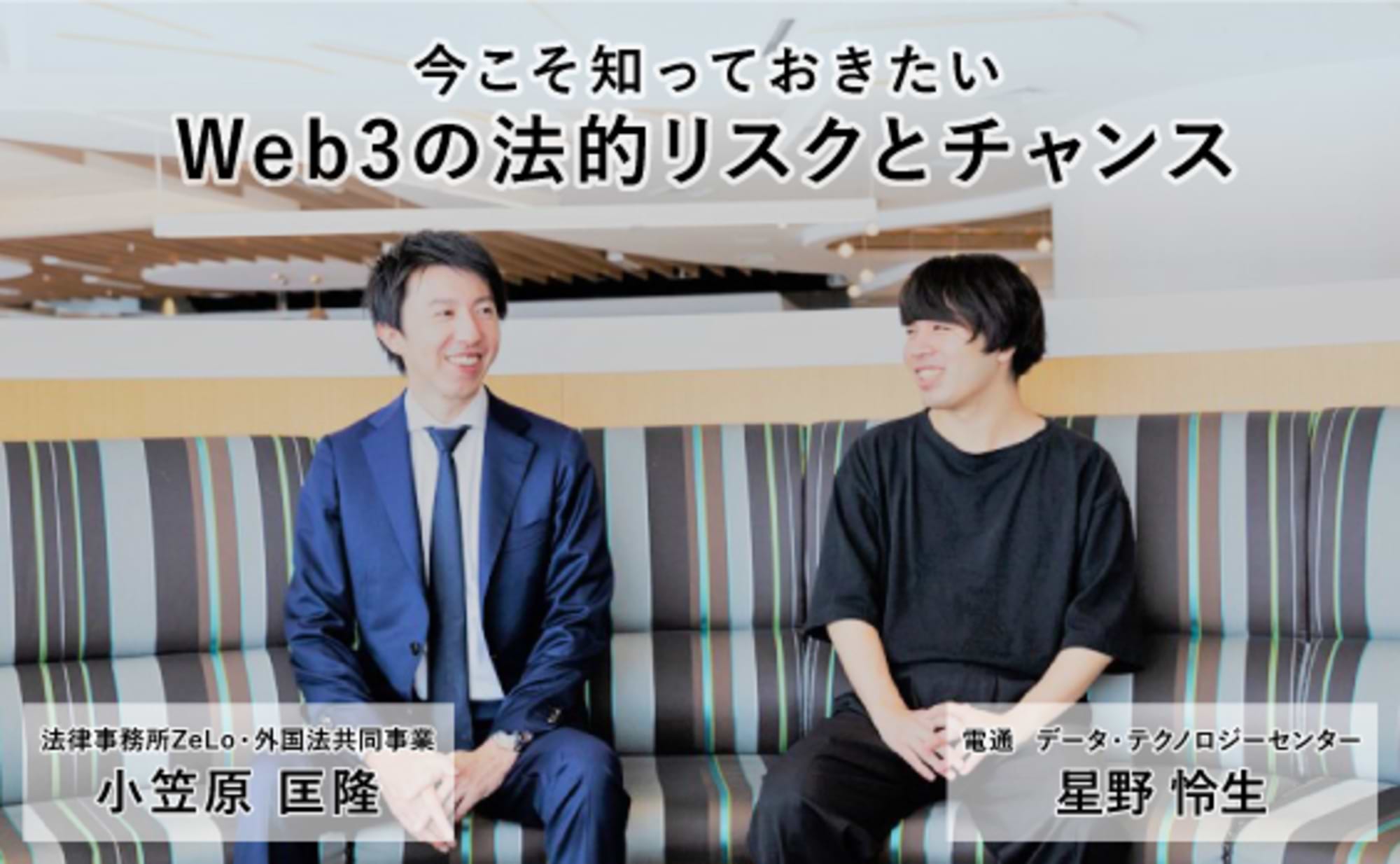
Masataka Ogasawara
ZeLo Law Firm・Foreign Legal Joint Venture

Reo Hoshino
Dentsu Inc.
Web3, a new technology trend encompassing blockchain and NFTs, is attracting significant attention.
While its application across various industries is being actively explored, the sheer number of relevant laws and the unclear interpretation of these within the current regulatory framework can act as a barrier to entry. Furthermore, businesses may unknowingly incur legal risks during the process of developing Web3-based ventures.
Therefore, Dentsu Inc. aims to contribute to the appropriate market formation of Web3 by deepening the correct understanding of legal issues through study sessions and other initiatives conducted in collaboration with the law firm ZeLo and its foreign legal joint venture, which specialize in blockchain and NFT areas.
This series will share knowledge with readers interested in Web3 areas like NFTs, focusing on the content of these study sessions. The first installment features a dialogue between Masataka Ogasawara, Managing Attorney at ZeLo, and Rei Hoshino of Dentsu Inc.

*The discussion was conducted with COVID-19 infection control measures in place.
Why We're Tackling Web3 and Law Now
Hoshino: I'm Rei Hoshino, responsible for business development in the Web3 domain at Dentsu Inc.'s Data Technology Center. In recent years, as terms like NFTs and Web3 have become trending topics, we've seen a sharp increase in client inquiries. Given the breadth of business areas where Web3 can be applied, it's predicted to become a significantly large market in the future. Indeed, the market has already expanded considerably in areas like DeFi in finance, DAOs as organizational models, DIDs as identifiers, and dApps as applications.
However, as this market forms, one of the difficult challenges that companies and society must overcome is navigating the legal landscape. As we support our clients' business growth, we want to take the lead in understanding legal issues and contribute to appropriate market development. That's why we asked the law firm ZeLo to conduct this study session.
Ogasawara: Thank you. I have long been involved in the blockchain industry, serving as a legal advisor to the Japan Blockchain Association (JBA) and collaborating on regulatory revisions with the Financial Services Agency. In April 2022, I also joined the Ministry of Economy, Trade and Industry's "Startup New Market Creation Task Force." I aim to work with government agencies and companies to shape regulatory frameworks for the rapidly growing NFT space.
Since we primarily receive consultations when legal issues arise, holding a study session at Dentsu Inc.—where we can directly address business challenges even before legal issues become apparent—and being able to discuss them is a significant step forward.
Hoshino: To put it simply, the motivation behind organizing this study session was that in recent years, the adoption of technology in the market and legal frameworks have become inextricably linked. I felt that now is precisely the moment for this, especially regarding NFTs and Web3. I explore and research the cutting edge of all kinds of technology daily. What I've observed is that recent technological advancements have reached areas not anticipated by existing laws, and legal considerations now inevitably accompany the emergence of these markets. Furthermore, I believe that if these aren't properly designed in the market's early stages, it can significantly hinder the market's growth rate.
For example, regarding crypto assets, Initial Coin Offerings (ICOs) became popular around 2017. At that time, laws were underdeveloped, and fraud ran rampant. This led to strengthened regulations, and I recognize that crypto assets entered a winter period. To prevent this from repeating, I want to start by advocating within our company, however modestly, to ensure appropriate market formation during this renewed surge of interest. That's why I planned this study session.
Ogasawara: Indeed, government agencies have begun intensely debating regulations for NFTs, especially since their surge around 2021. Most recently, in late March 2022, the Liberal Democratic Party published a "NFT White Paper (Draft)" outlining Japan's NFT strategy, which also addresses legal regulations. Currently, when conducting general NFT-related business, NFTs are not classified as virtual currencies. Therefore, they do not fall under existing regulations for virtual currency exchange businesses (such as the Payment Services Act).
However, new markets and technologies inherently create gray areas due to their unfamiliarity. When enthusiasm peaks, fraudulent cases may emerge, or overly aggressive business models might be adopted, potentially leading to tighter regulations. Therefore, I believe it's crucial to empower market formation from the legal side by establishing appropriate regulations, i.e., rules.
Hoshino: I agree. Incidentally, Web3 technology itself is quite complex. I feel that legal frameworks are particularly challenging in this area because clarifying the issues requires a proper understanding of the underlying technology. How are laws being established in this regard?
Ogasawara: When creating regulations involving laws like the Financial Instruments and Exchange Act or the Payment Services Act, we follow a process that incorporates opinions from experts knowledgeable in the specialized fields. At ZeLo Law Firm, we handle a large number of clients involved in cutting-edge technology businesses. To deepen our understanding of technology, we actively share information internally on a daily basis.
Hoshino: It's not just the complexity of the technology itself; the relevant laws also span a very broad range, right? Furthermore, in the Web3 space, I imagine there are many cases where multiple laws intersect like a multiplication problem, raising complex issues. If one specializes in just one law, there's a risk of overlooking issues related to other laws. How do law firms typically handle this situation?
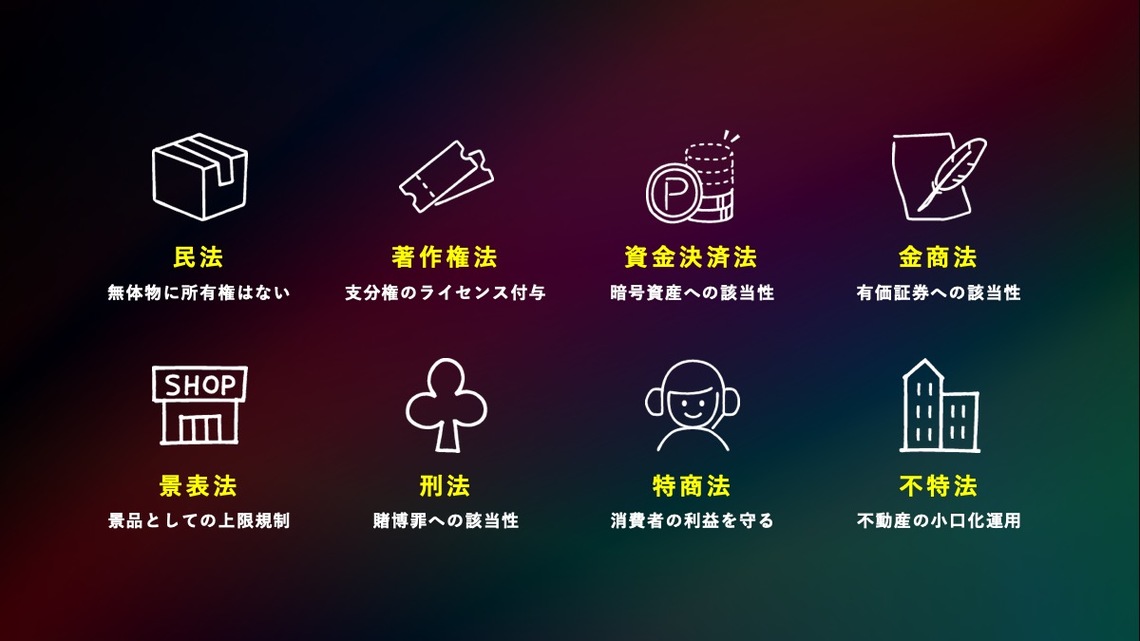
Ogasawara: The legal fields involved include civil law, the Payment Services Act, the Financial Instruments and Exchange Act, criminal law, the Act Against Unjustifiable Premiums and Misleading Representations, copyright law, and various others. The fact that the relevant laws change depending on what you're dealing with is perhaps one of the major characteristics of Web3.
It's also common for the relevant laws not to be clearly defined. For example, a business randomly distributing NFTs might raise issues related to gambling or prize regulations. If it involves art, questions arise about how to handle the rights to that art, bringing in laws like the Copyright Act. Regarding true Web3, even before discussing which laws apply, there are more fundamental questions, such as what constitutes the subject of legal regulation. Therefore, at ZeLo Law Firm, rather than responding to each law individually, we understand the law based on the business model itself, establishing a system capable of addressing a wide range of issues.
How to Align Legal Discussions
Hoshino: As discussed, Web3 is gaining momentum, and we should thoroughly engage with legal discussions at this stage—though these discussions are extremely complex. At the same time, I believe there's another significant hurdle in actually implementing this realistically. Incidentally, have law firms seen an increase in consultations regarding NFTs, a particularly booming area within Web3 since 2021?
Ogasawara: We're seeing a significant increase in consultations regarding business designs involving NFTs and Web3. It reminds me of the ICO bubble around 2017, when inquiries came in year-round. While some consultations happen at the initial brainstorming stage, most come when the plan has reached a reasonably concrete stage.
Hoshino: We're also seeing more client inquiries, but we often start by explaining what NFTs even are. The level of detail in these consultations seems somewhat different. In such cases, we first thoroughly explain what NFTs and Web3 are, then explore what kind of future they aim for and how NFTs and Web3 can be leveraged to achieve it. If legal expertise isn't integrated at this stage, the project can be derailed at the end due to legal violations, making implementation impossible. Recent consultations have made me strongly feel how crucial it is to address this.
Ogasawara: Observing the broader landscape, we frequently see cases where legal considerations are insufficient, or where there's a misunderstanding that Web3, being decentralized, isn't subject to legal constraints. Alternatively, even when there is legal awareness, internal legal departments might lack the expertise, or clients haven't connected with law firms knowledgeable about Web3, leading to projects moving forward with ambiguities.
Hoshino: We hope to reduce precisely such situations through our collaboration with the law firm ZeLo. Precisely because Dentsu Inc. is in a position to interact with clients on a daily basis, even if we aren't specialists, we feel we can contribute to some extent by being able to at least raise alerts regarding legal issues. If we inadvertently encourage businesses operating in gray areas, it could lead to increasingly stringent regulations, potentially hindering market growth. This is an undesirable outcome for both individual companies and the economy as a whole.
Ogasawara: I also believe support for properly shaping the market is extremely important. By involving external experts to define boundaries during planning and design—establishing what is acceptable both commercially and legally—we can foster a market that doesn't stifle the emergence of innovative businesses.
Hoshino: At the study sessions, we learned about legal issues specific to industries like finance, art, real estate, and games. However, I see a challenge on the business side: companies often don't clearly understand which laws their desired activities might fall under. When planning projects, they might unknowingly end up in areas like gaming regulations or product giveaway rules. Relying on just one perspective when considering legal compliance risks overlooking major pitfalls. So, through this series and other channels, I want to start communicating that diverse legal issues exist.
Ogasawara: Exactly. Precisely because there are no clear regulations, collectively defining boundaries for acceptable practices is crucial for an industry in its infancy. While this strays from the series' focus, we also need to examine how to seamlessly integrate contracts formed under current business practices with the "thing" envisioned in the Web3 world—finding a smooth compromise is essential right now.
Web3 Opportunities and Risks
Ogasawara: So far, we've focused on the legal aspects, taking a somewhat cautious, risk-oriented approach. But I believe Web3 holds equally significant opportunities. How do you envision Web3 evolving?
Hoshino: Web3 allows us to define evaluation metrics, including incentives, and create organizations (DAOs = Decentralized Autonomous Organizations) among those who agree to them. Viewed this way, it can be seen as infrastructure for designing economies incentivized by actions one believes to be correct. Going forward, I expect we'll see more and more new economies emerge, formed by people who share common values.
Simultaneously, if we focus solely on the functional aspects of Web3, its trustless nature—the characteristic where trust is inherently secured within the system without requiring third-party trust or custody—will likely accelerate developments aimed at simply increasing economic liquidity and returning data ownership to individuals.
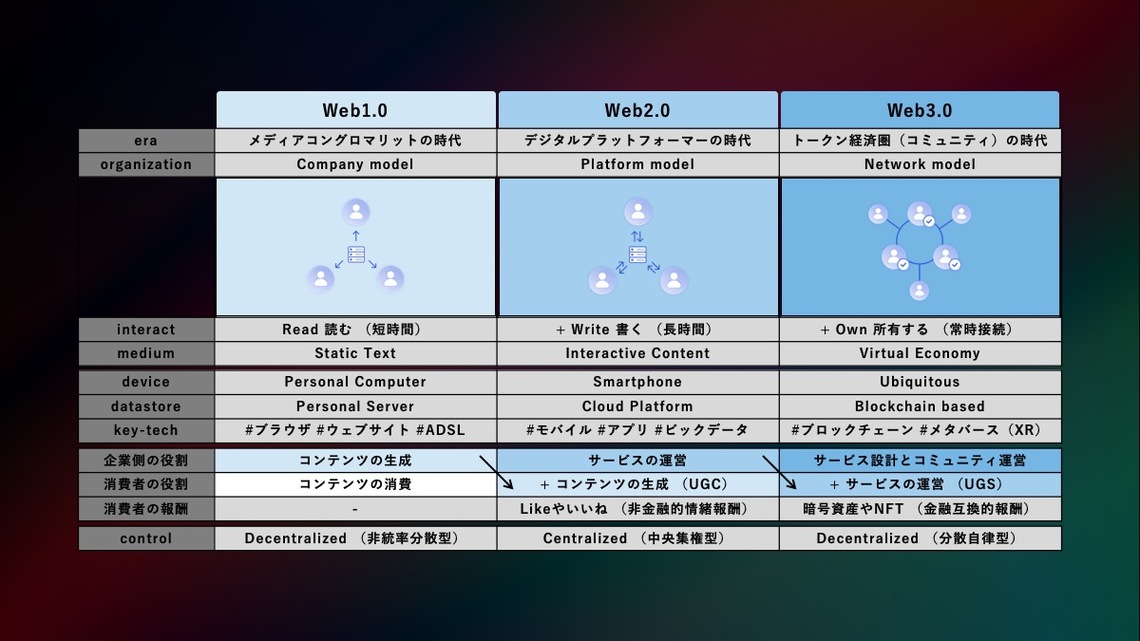
Ogasawara: I agree. Traditional businesses were born from the collaboration of innovators and capitalists. This is capitalism based on the joint-stock company model. However, Web3's major innovation lies in how people who resonate with compelling ideas gather to form economic ecosystems, and how these mechanisms can be embodied as systems. This holds the potential for a new economic form where capital does not necessarily equate to rights.
However, I believe the essence of Web3 lies in decentralizing the management and value of various things. Rather than every sector being replaced by Web3, I think it will permeate and specialize in areas that align with its core principle: decentralizing power and value on the internet.
If the core of Web3 adopts a decentralized governance structure, it could conflict with the existing startup ecosystem based on equity financing. I believe peripheral businesses built around Web3's foundation (like GameFi) will develop based on the existing startup ecosystem.
Hoshino: When discussing decentralization or distribution, it's often perceived as contrasting with the centralized operations of current large corporations. However, I believe a major point of discussion going forward will be how large corporations maintain their traditional businesses while also navigating Web3. Ultimately, for anything to achieve mass adoption, the involvement of major players is essential. Therefore, I believe how large corporations align with Web3 will be a key topic over the next year or two. Dentsu Inc. aims to support them in this challenge.
In future articles, we'll delve into more specific legal points, so if you're interested in Web3, be sure to check them out.
If you enjoyed this article, you might also like:
・NFTs Revolutionizing Fan Experiences in Entertainment: From Supporting Your Favorite Artists to the Metaverse
・How will human identity change within the metaverse?
・"Sign DX": Enabling Fans and Celebrities to Share Moving Moments

Was this article helpful?
Share this article


Newsletter registration is here
We select and publish important news every day
For inquiries about this article
Author
Masataka Ogasawara
ZeLo Law Firm・Foreign Legal Joint Venture
Lead Attorney
Reo Hoshino
Dentsu Inc.
Data & Technology Center