
Note: This website was automatically translated, so some terms or nuances may not be completely accurate.
 Start SDG actions from within your organization [4/4]
Every employee chooses "what they can do" and takes action ~ Panasonic Group's Corporate Citizenship Activities
Rika Fukuda
Panasonic Holdings Corporation
This series introduces successful corporate internal communication and workplace activities aimed at achieving the SDGs and realizing a sustainable society. The fourth installment features the Panasonic Group's initiatives.
As a comprehensive electronics manufacturer, the Panasonic Group provides a wide range of products and services, including home appliances and information and communication equipment. Alongside its business activities, the group places significant emphasis on corporate citizenship initiatives.
To ensure its diverse workforce of over 240,000 employees understands and takes action on corporate citizenship activities, what kind of internal communication does it implement? We spoke with Rika Fukuda, Head of the CSR and Corporate Citizenship Activities Office, focusing on initiatives like "Sustainable Seafood" and the "Everyone's 'AKARI' Action."
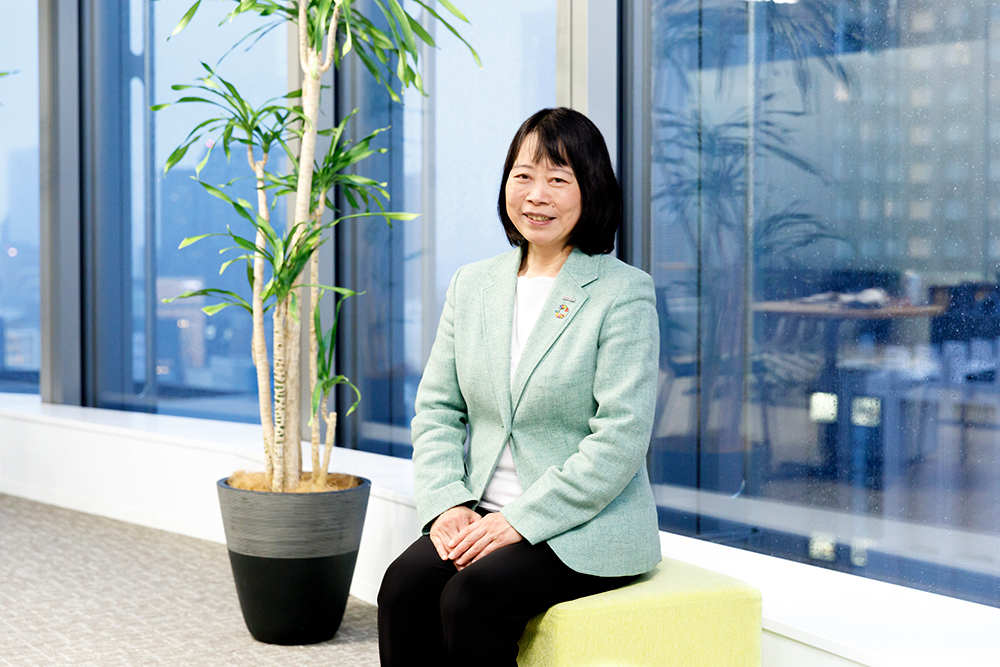
Rika Fukuda: Appointed Head of CSR and Corporate Citizenship Activities in 2014. Leads various initiatives centered on key themes: poverty alleviation, the environment, and human resource development (learning support).
Balancing Business Operations and Corporate Citizenship Initiatives
──First, could you explain the reasons and background behind the Panasonic Group's commitment to corporate citizenship activities?
Fukuda: Our company began as a venture started in 1918 by founder Konosuke Matsushita and his family of three. Today, we are a large global enterprise with over 240,000 employees, more than half of whom are based overseas.
However, our management philosophy has remained fundamentally unchanged since our founding: "To contribute to the improvement of people's lives and the development of society through our business." To achieve this, we believe it is essential to pursue two key pillars: business activities that contribute to society through our core products and services, and corporate citizenship activities that contribute to society as a corporate citizen through approaches separate from our core business.
So, what should we do in our corporate citizenship activities? While we have undertaken various initiatives over the years, around 2015, as we prepared to formulate a mid-term plan coinciding with our 100th anniversary in 2018, we engaged in extensive internal discussions to define the "core" of our activities. One key guiding principle in determining this core was the SDGs, which had just been adopted at that time. Given our status as a global company, we felt it was vital to focus on global social issues.
Furthermore, reflecting on our history, we reaffirmed internally that our founder believed "poverty is an evil" and established "overcoming poverty" as our mission as producers. We also recognized that our current president views "environmental issues as the greatest challenge of the 21st century." Based on this background, we selected "Eradicating Poverty" and "Environmental Activities" as the key themes for our corporate citizenship activities. Furthermore, we decided to place emphasis on "human resource development (learning support)" as the foundation for solving these challenges.
We want people to know that even small actions can contribute to society.
──Please tell us about one of your corporate citizenship activities related to "environmental initiatives": the sustainable seafood initiative.
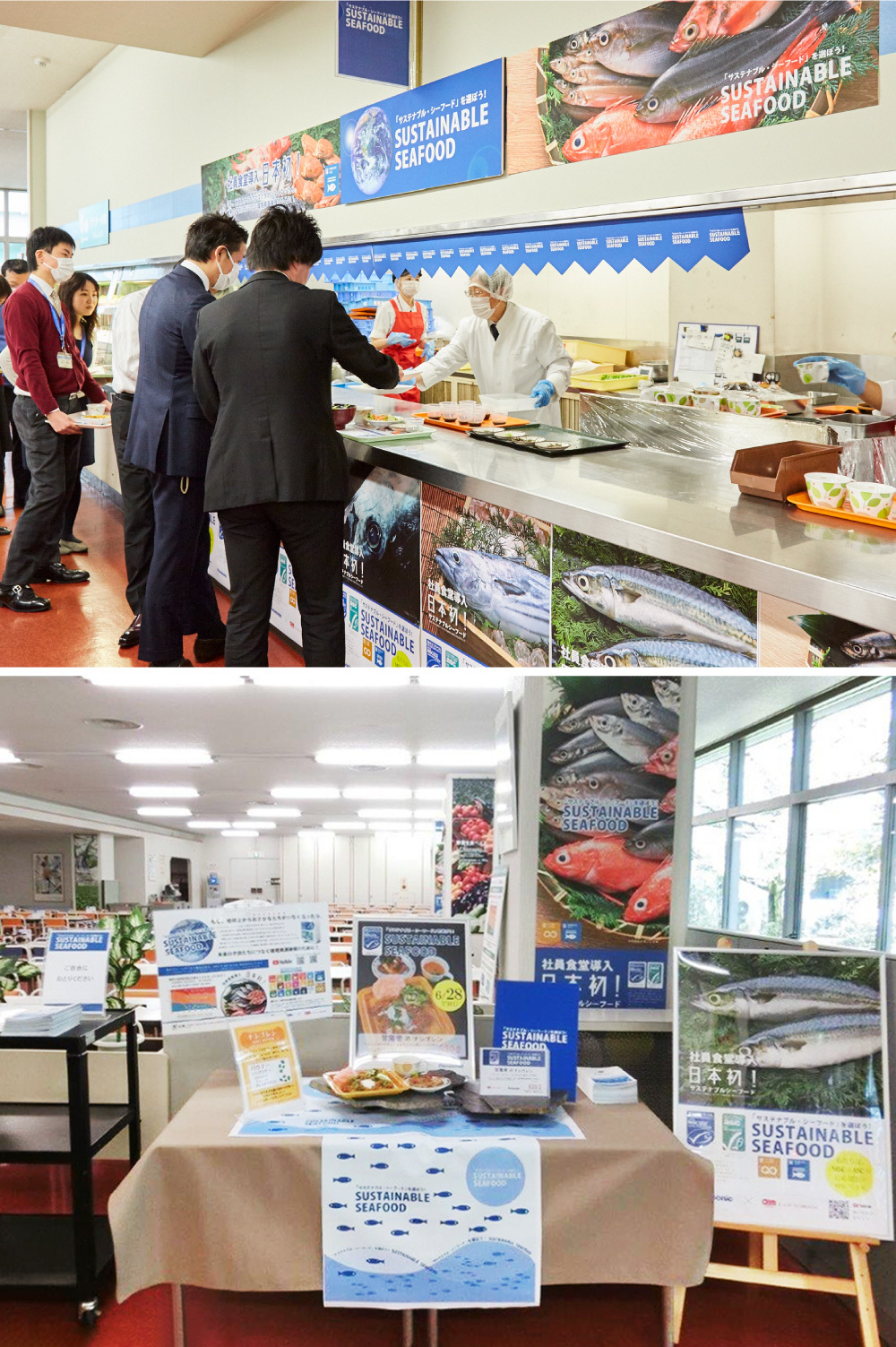
Fukuda: Sustainable Seafood refers to seafood products certified by either the MSC (Marine Stewardship Council) certification, which signifies wild-caught seafood from fisheries that are sustainable for both marine resources and the environment, or the ASC (Aquaculture Stewardship Council) certification, which signifies farmed seafood produced with minimal environmental and social impacts. In 2018, we became the first company in Japan to continuously introduce Sustainable Seafood in our employee cafeterias.
This initiative stems from our company's over 20-year support for the World Wide Fund for Nature Japan (WWF Japan), a public interest incorporated foundation dedicated to environmental conservation globally and domestically, specifically its efforts to protect ocean biodiversity. As part of this support, we have been assisting the oyster farming industry in Minamisanriku Town, Miyagi Prefecture, since 2014. This town suffered severe damage from the Great East Japan Earthquake.
Even before the disaster, Minamisanriku faced productivity challenges due to overcrowded farming slowing oyster growth. After losing all their facilities to the tsunami, the fishermen of the Oyster Production Association decided, "Simply rebuilding as before won't suffice," and drastically reduced the number of rafts used for farming. Naturally, there were concerns that fewer rafts would mean lower income.
However, once implemented, the improved growth environment allowed oysters to mature into delicious oysters in a shorter cycle than before. This resulted in reduced labor hours and increased income. Furthermore, in March 2016, Minamisanriku Town's oysters became the first in Japan to obtain ASC certification (*).
Knowing this background, we started an initiative to introduce sustainable seafood into our employee cafeteria to show more support. Now, we regularly hold "Sustainable Seafood Days" in the cafeteria, serving not only Minamisanriku oysters but also other sustainable seafood like shrimp and salmon.
The goal of this initiative is, first, to let employees know that "eating can be a small way to contribute to society." We also hope it will lead to changes in their daily awareness and actions—beyond just the cafeteria—such as purchasing sustainable seafood in their personal lives, asking at supermarkets, "Do you have any certified products?" and ultimately changing their consumption habits.
*ASC Certification: An international certification system for aquaculture managed by the Aquaculture Stewardship Council (ASC). It requires preventing environmental pollution and overuse of resources, as well as building honest relationships with workers and local communities.
──What did you do to raise awareness of this initiative among your employees?
Fukuda: Initially, even when observing the cafeteria, many people asked, "What is sustainable seafood?" Moreover, menus featuring sustainable seafood are priced higher than others. That's precisely why we felt a thorough explanation was necessary. We focused on raising awareness about the importance of sustainable seafood and the MSC/ASC certifications by displaying materials explaining the critical state of our oceans and distributing resources provided by the MSC (Marine Stewardship Council). Of course, if it doesn't taste good, employees won't choose it, so we worked closely with the general affairs department and the catering company to refine the menu.
We also did some straightforward things like putting up banners in the cafeteria and making announcements like, "Today is Sustainable Seafood Day, so please give it a try!" We also utilize our email newsletter as a means to communicate about our corporate citizenship activities. With approximately 60,000 subscribers, we shared information there as well. Word-of-mouth among employees has been incredibly powerful. The term "Sustainable Seafood" (Sasushi) is now so ingrained within the company that you hear it being used by employees everywhere.
Fukuda: Furthermore, we've worked to spread our sustainable seafood initiative beyond our own company to other businesses. While this isn't unique to this activity, we've advanced our corporate citizenship activities with a three-year mid-term goal: Year 1 was about expanding the activities ourselves, Year 2 was about laying the groundwork for broader expansion, and Year 3 was about making the activities self-sustaining.
This approach worked best for our sustainable seafood initiative. In the first one to two years, we held seminars on introducing sustainable seafood and, when other companies asked, "How do we do this?", we went out of our way to explain it to them—so much so that we might have been seen as meddlesome (laughs).
Furthermore, introducing sustainable seafood into employee cafeterias requires the cooperation of catering companies that source certified seafood. Therefore, we actively shared our know-how not only with companies wanting to adopt it but also with the catering companies operating the cafeterias. Thanks to these efforts, the initiative has now spread to places we didn't even know about.
Currently, we've introduced sustainable seafood at 56 of our approximately 100 employee cafeterias nationwide. While the pandemic brought periods of progress and setbacks, we plan to continue gradually expanding to more locations.
──Please also tell us about the "Everyone's 'AKARI' Action," one of your corporate citizenship activities related to "Eradicating Poverty."
Fukuda: From 2013 to 2018, we implemented a project to donate 100,000 solar lanterns to 30 countries in Asia, Africa, and elsewhere, aiming to improve living standards in areas without electricity. While that initiative has concluded, one of its successor activities is the "Everyone's 'AKARI' Action." This project allows public participation, using recycled goods donated from both inside and outside the company to deliver our solar lanterns to unelectrified areas. Launched in 2018, we have donated a cumulative total of approximately 13,500 solar lanterns to 14 countries to date.
──What approaches do you take to engage employees in this initiative?
Fukuda: We collect unused items from employees by placing recycling boxes at each business unit and location. We also directly purchase items through our recycling donation service and deliver them as solar lanterns to off-grid areas. Furthermore, we've created a system allowing employees to donate their cafeteria points, part of our employee benefits program.
Employees use these points to select and utilize welfare benefits tailored to their career or life plans. However, they sometimes end up with leftover points. Since these points have an expiration date, it's a shame to let them go unused. So, before they expire, we send out emails and newsletters asking, "Do you have leftover cafeteria points? Even small amounts are welcome—please donate them!" We make every effort to get the message noticed, like making it stand out, and everyone puts in a lot of heartfelt effort (laughs).
In fact, back in fiscal year 2019 before COVID, we distributed flyers at each location asking for donations. In just one year, we collected about 6 million yen, which allowed us to purchase 1,000 solar lanterns. The fact that such a large amount could be raised just by each person donating their leftover points really shows that "there's strength in numbers." We hope that even those who feel too busy to do anything can see that they can contribute through a small action like "donating leftover points."
Furthermore, when we recruited internal volunteers to serve as special correspondents to observe how solar lanterns are used locally, we consistently had more applicants than spots available. We believe it's crucial not only to get employees to take action but also to provide clear feedback on the impact their actions have made – showing them the tangible results and connections their efforts create.
Actively creating "opportunities for hands-on experience" to expand initiatives
──While the Panasonic Group offers many corporate citizenship activities that employees can easily participate in, it also has a pro bono program where working professionals contribute their expertise and skills for six months or more. What does this program entail?
Fukuda: Since 2011, we've been running the "Panasonic NPO/NGO Support Pro Bono Program" as a "new form of volunteering" to support NPOs/NGOs tackling social issues. We assist a variety of organizations, including grantees of the "Panasonic NPO/NGO Support Fund for SDGs," which strengthens NPO/NGO organizational foundations, and groups supporting recovery efforts after the Great East Japan Earthquake and Kumamoto Earthquake.
The support provided is diverse, ranging from marketing research and mid-term planning to website reconstruction and sales material creation. Often, NPOs/NGOs prioritize addressing immediate, pressing issues, leaving little capacity for operational management and administration.
Our employees leverage the skills and experience they've developed in their work to support these organizations, helping strengthen their capacity to expand their initiatives. Another feature of the pro bono program is that teams engage in activities for six months or longer, creating opportunities for employees who don't usually interact to connect.
──Could you tell us what you do to promote the pro bono program internally?
Fukuda: We recruit for the pro bono program in the same way as for our sustainable seafood initiatives and the "Everyone's 'AKARI' Action" campaign. We post information on the internal intranet, send out newsletters, and hold information sessions.
Furthermore, after the pro bono program concludes with tangible deliverables, we hold a results presentation session. Participants often share positive feedback, such as increased awareness of social issues, insights applicable to their own work, and a newfound sense of pride in the company.
Particularly moving for many employees is the opportunity to see their work make a difference and bring joy to others, especially since some roles rarely involve direct client feedback. Our results presentations attract around 100 viewers, and some attendees subsequently apply for future opportunities. Hearing firsthand accounts from participants really conveys the passion and gives others that push to think, "Maybe I should try it too." We definitely want to keep actively creating opportunities like this where people can connect with real experiences.
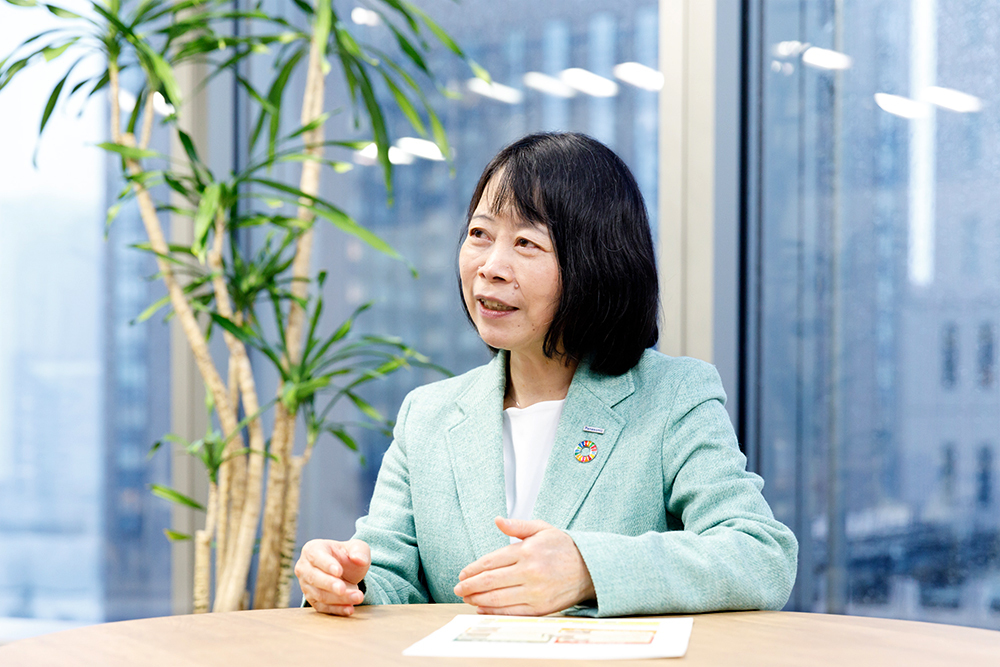
──Finally, could you share your outlook for the future?
Fukuda: Our company conducts an annual survey on corporate citizenship activities. Currently, about 100,000 employees respond. When asked what they need to participate in these activities, the most common response is "I want information."
Based on these results, we are currently focusing our efforts on information dissemination using tools like email newsletters. We intend to continue striving to ensure this information reaches employees effectively. Furthermore, I feel it's essential to improve the internal environment to make it easier for employees to participate in corporate citizenship activities.
For example, regarding work styles, eliminating core hours could allow activities during weekday daytime hours. Creating a more flexible work environment and making it easier to utilize should encourage those who previously couldn't participate to take action. We also plan to explore information dissemination targeted at workplace managers.
Furthermore, while the Panasonic Group currently consists of eight operating companies, we want to tackle corporate citizenship activities as a unified group and build significant momentum together. For this, the awareness of each individual employee is crucial. Recently, we've seen new hires and mid-career hires who learn about our corporate citizenship activities and apply specifically because of them, indicating a growing number of highly engaged individuals.
That said, not all employees are yet aware of our corporate citizenship activities, and even among those who are aware, many have not yet taken action. Therefore, "how to lower the barriers to participation" remains an ongoing consideration. We don't expect every employee to commit to long-term activities; rather, we hope each person will consider what they can do and take action accordingly.
 TeamSDGs collaborates with various stakeholders involved in the SDGs to disseminate information about the SDGs and plan and develop solutions.

Was this article helpful?
Share this article


Newsletter registration is here
We select and publish important news every day
For inquiries about this article
Back Numbers
Author
Rika Fukuda
Panasonic Holdings Corporation
Director of CSR and Corporate Citizenship Activities