
Note: This website was automatically translated, so some terms or nuances may not be completely accurate.
 Start SDG actions from within your organization [3/4]
Be Pioneers in Realizing a Sustainable Society! ~ The PR Department's Challenge to Instill Asahi Kasei's DNA in Diverse Employees

Kusukami Terumi
Asahi Kasei Corporation
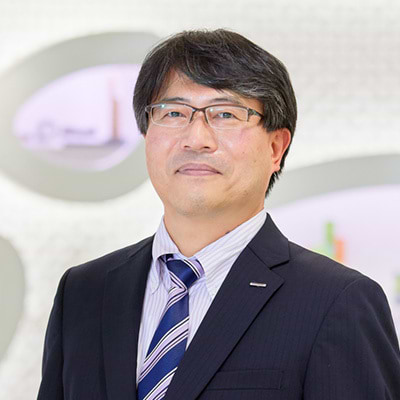
Sugita Akira
Asahi Kasei Corporation

Mio Iwatsuki
Asahi Kasei Corporation
This series introduces successful corporate internal communication and employee engagement initiatives aimed at achieving the SDGs and realizing a sustainable society. Part 3 features the efforts of Asahi Kasei's Public Relations Department.
Asahi Kasei operates production, sales, and R&D bases in over 20 countries worldwide, employing 46,751 people (as of March 2022). It conducts diverse businesses across three domains: Materials, Housing, and Healthcare. Actively pursuing M&A, it is a comprehensive chemical manufacturer encompassing various group companies.
The company upholds the group mission: "Contributing to the lives and livelihoods of people around the world." For its sustainability direction toward 2050, it has set forth two goals: "Realizing a carbon-neutral and sustainable world" and "Realizing vibrant lives in the new normal."
How does internal communication function as diverse talent globally advances diverse businesses? We spoke with Terumi Kusunoki, Akira Sugata, and Mio Iwatsuki from the Public Relations Department, focusing on the 100th-anniversary initiatives implemented in 2022.
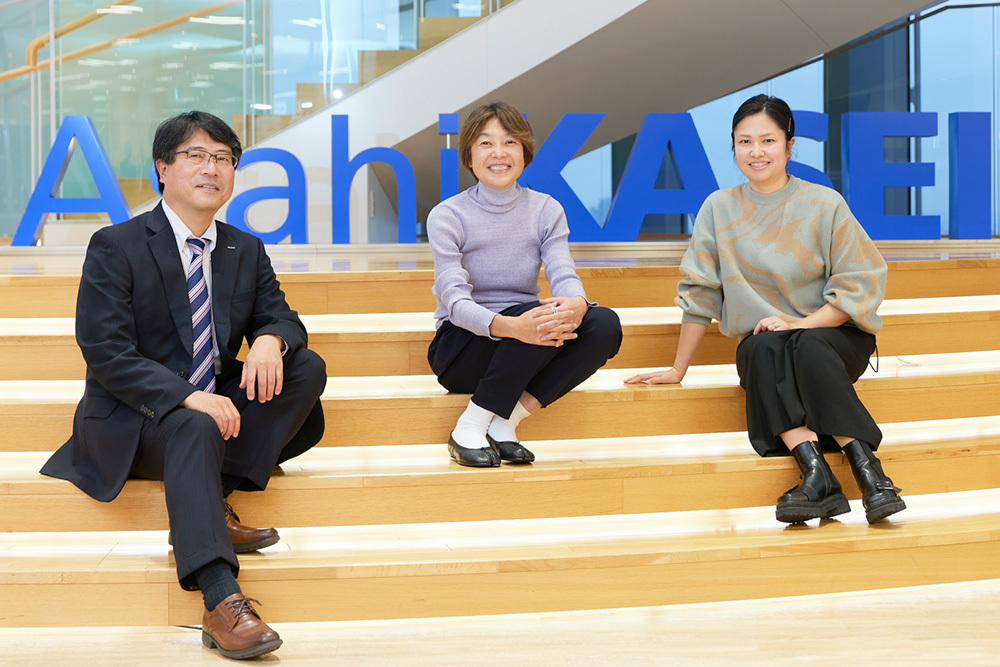
From left: Akio Sugata, Terumi Kusunoki, and Mio Iwatuki from Asahi Kasei's Public Relations Department.
Reexamining Asahi Kasei's DNA Through the 100th Anniversary Initiatives
──First, could you explain the Public Relations Department's responsibilities?
Kusunoki: Our work broadly falls into several areas: media relations, advertising and promotion, brand management, social contribution activities including sports communications, and internal communications. While some business units have their own PR functions, we handle communications for the entire group, not individual products.
──In May 2022, Asahi Kasei celebrated its 100th anniversary. Could you outline the 100th-anniversary initiatives and the PR Department's role?
Kusunoki: The 100th anniversary initiative had three pillars: hosting online events for employees worldwide, compiling the company history, and creating a 100th anniversary website. The PR Department led the event pillar, collaborating closely with other departments. While we initially considered in-person events gathering people from inside and outside the company, the pandemic forced significant changes. Ultimately, we aimed to create an event that would allow us to reflect on our history, reaffirm our purpose and aspirations, and take a strong first step toward the next 100 years.
──Could you tell us about your work, including the 100th-anniversary projects?
Kusunoki: With M&A and other factors, Asahi Kasei's globalization accelerated dramatically over the past decade, creating centrifugal forces. While this autonomy is a positive trait characteristic of Asahi Kasei, it's essential that the core remains connected across the entire group. The Public Relations Department, while considering management's intentions, collaborates with various departments to devise and implement strategies on how to connect employees—the company's vital stakeholders. Simultaneously, we focus on external communications to foster trust in Asahi Kasei and expectations for its future. For the 100th anniversary initiatives, I oversaw the entire public relations segment.
Suda: From January 2019 to June 2022, I was assigned to the Corporate History Compilation Office within the General Affairs Department, where I worked on compiling the company history and producing and managing the 100th anniversary website. After that, I returned to the Public Relations Department. Currently, I am primarily focused on developing an information dissemination guide, as well as working on tasks such as creating an archival repository of historical materials.
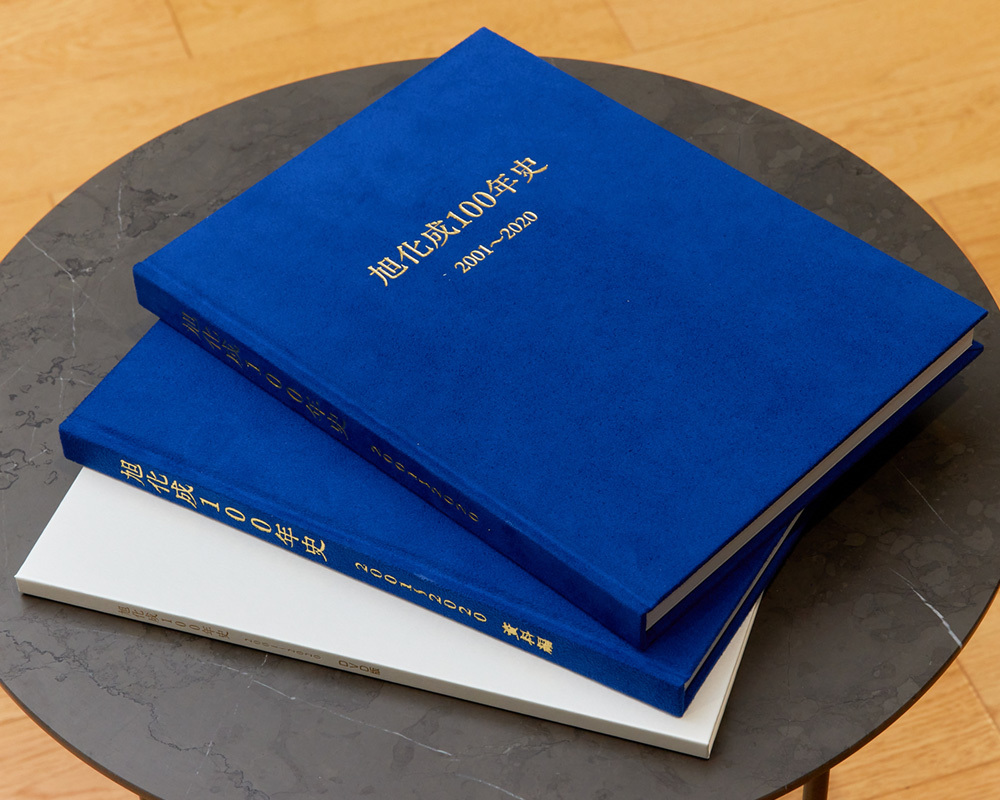
As a sequel to "Asahi Kasei: 80 Years of History," we compiled "Asahi Kasei: 100 Years of History 2001-2020" as an objective management history documenting the group's evolution. Alongside the "Main Text," we produced a "Reference Volume" compiling data from the founding to the 100th anniversary, and a "DVD Edition" containing digital versions of these materials.
Iwatsuki: I belong to the Brand Communication Office within the Corporate Communications Department. The office has three teams: Internal, External, and Social Contribution Activities. Until the end of May 2022, I worked in the Internal Team, involved in producing the bi-monthly internal newsletter, managing the intranet, and sending out email newsletters. I also served as the execution leader for an online event targeting all employees as part of the 100th Anniversary Project. Currently, I work in the External Team, handling external communications such as producing corporate advertisements, managing various brand tools, and operating the website and social media.
──Could you elaborate a bit more on the core concept driving the entire 100th Anniversary initiative?
Kusunoki: Asahi Kasei has numerous group companies, each with different fields and cultures. However, every company operates under the group mission: "We contribute to the lives and livelihoods of people around the world." We wanted to create an opportunity for all employees to unite under this group mission.
For 100 years since our founding, we have adapted our business to address the social challenges of each era, introducing various products to the world. For example, in 1922, the year of our founding, daily necessities were not yet widely available. Guided by our founder's vision to "provide the best living materials abundantly and affordably so people can achieve a better life," we developed crop fertilizers and artificial silk for clothing. Furthermore, we entered the food business, launched Saran Wrap as lifestyles changed, provided housing, engaged in electronics, and tackled the healthcare field. We anticipated societal challenges and worked toward realizing a sustainable society. In this process, we actively incorporated technology from overseas and built global markets.
The DNA of Asahi Kasei, in a word, is a spirit of challenge. However, that resolve may have weakened somewhat today. Even in the mid-term management plan launched in April 2022, we added the subtitle "Be a Trailblazer." For our 100th anniversary initiatives, we wanted to reaffirm our commitment to pioneering the future as trailblazers.
──How did you embody that vision?
Sugata: For the Asahi Kasei 100-Year History, we created a book to properly document the Asahi Kasei Group's history at this milestone. We aimed to comprehensively review the history without excessive embellishment, simply recording the facts. However, the content inevitably became rather dry. Therefore, we also created "The Asahi Kasei Book: Weaving DNA" for employees.
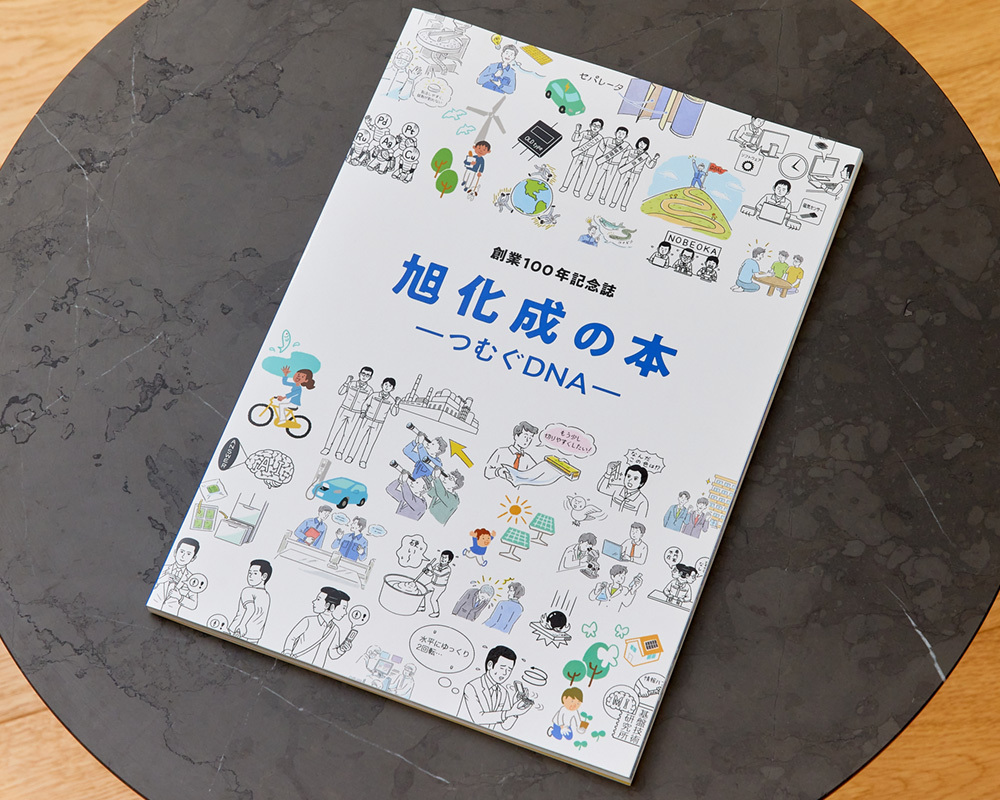
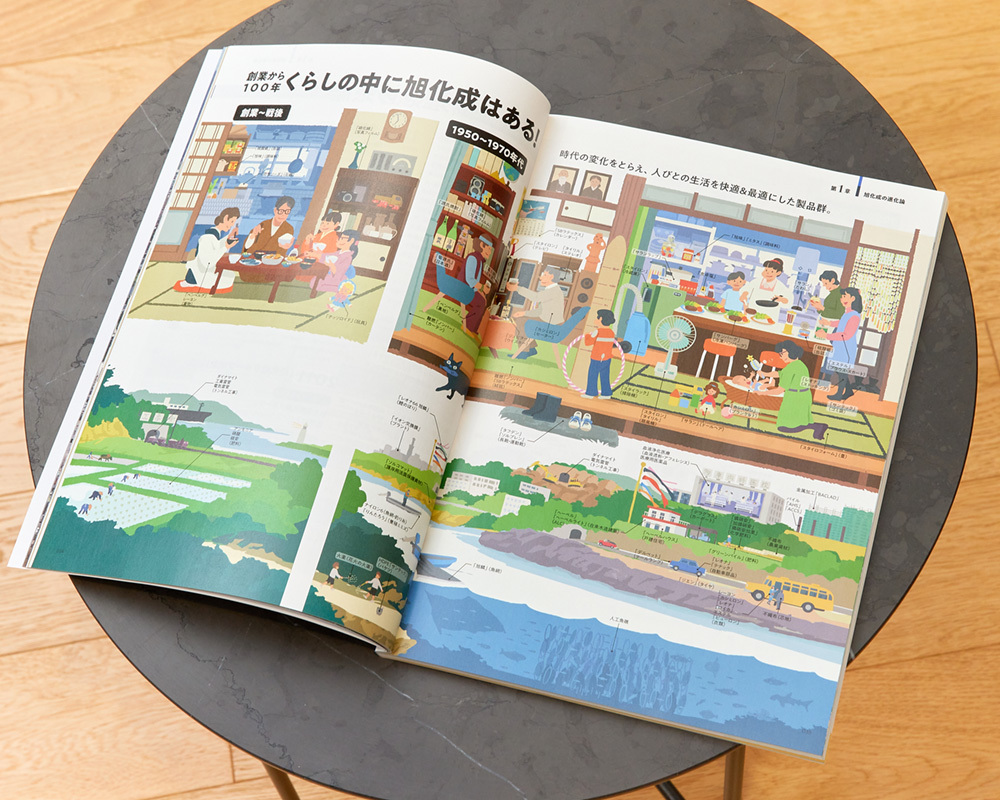
Sugata: This booklet focused on conveying Asahi Kasei's DNA as clearly as possible, using many photos and illustrations. The content includes the personal histories of figures like founder Noboru Noguchi and Teru Miyazaki, known as the architect of the company's revival. We also compiled stories about pivotal turning points that drove the company's change and expansion, along with products launched over the century and their development narratives, gathering information from various people.
Building on this, we created the 100th Anniversary website. Unable to hold external events due to the pandemic, we launched the site a year before the centennial to build excitement primarily within the company. While it also summarizes Asahi Kasei's history, the highlight is "100 Stories," which showcases the company's initiatives across each era.
To create these 100 stories, we solicited episodes from employees worldwide that they wanted to pass on to the future. We hoped that including behind-the-scenes stories would help people understand Asahi Kasei's history and inspire them to think about the future.
──What kind of response did you receive?
Suda: We distributed the booklet "The Book of Asahi Kasei: Weaving DNA" to all employees in Japan. We also created English and Chinese versions and distributed the data overseas. It received very positive feedback, being described as extremely interesting and easy to understand.
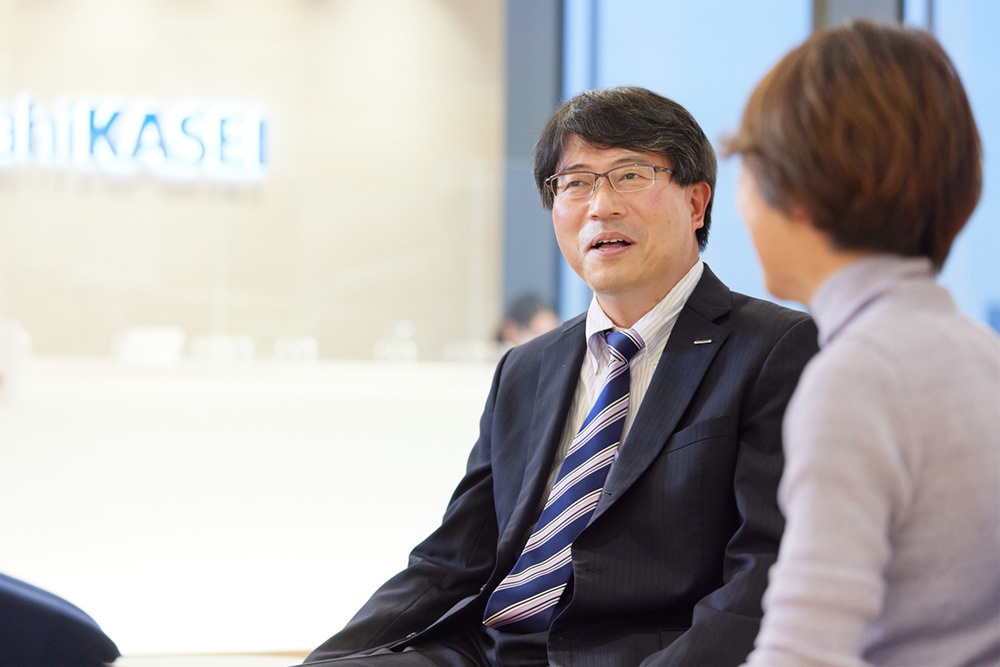
How can we leverage Asahi Kasei's unique qualities for the future? A global online event sparking imagination
──I understand a global online event was also held as part of the 100th anniversary initiatives. What was its content?
Iwatsuki: Titled "IMAGINATION SHAPES THE FUTURE," we streamed 10 video programs online worldwide over two and a half hours. We wanted to create content that wouldn't just make the 100th anniversary a pure celebration, but would stimulate each employee's imagination about what we should value for the next 100 years.
However, since interests vary, we wanted the content to be conceived from a completely different angle, not as an extension of Asahi Kasei's work. For example, in one segment, "AK Talk," we invited information studies researcher Dominic Chen as MC to conduct a relay-style interview with three external experts. We spoke with Asa Ito, Professor of Liberal Arts Research and Education at Tokyo Institute of Technology; Usbi Sako, Director of the University Research Institute (former President) at Kyoto Seika University, originally from Mali; and Natsumi Wada, an interpreter. We discussed what "altruism" means, how individuals engage and create domains, and the cruelty and preciousness inherent in "curiosity." All three had no prior connection with Asahi Kasei, offering many fresh and stimulating insights.
The "AK Talk" also featured a talk session with our Honorary Fellow, Akira Yoshino, and design strategist Eisuke Tachikawa. By overlaying Tachikawa's concept of "evolutionary thinking" with the case of Yoshino, who won the 2019 Nobel Prize in Chemistry, we explored how innovation can be fostered.
──How was the response?
Iwatsuki: During the streaming period from May 25 to June 10, we had access from approximately 10,000 users—about a quarter of our group employees—across 36 countries worldwide. "AK Talk" in particular generated significant response, with various comments like, "It gave me a chance to think about Asahi Kasei from a perspective I'd never considered before," and "It moved me so much it brought tears to my eyes."

Kusunoki: A major factor in the success of the 100th-anniversary project was that the president and management didn't dictate "do it this way" for the planning. Instead, they trusted us and gave us considerable autonomy. Regarding the online event content, they also encouraged us by saying "let's try it" in response to our proposals. I believe this is part of Asahi Kasei's DNA.
When we ask new employees why they chose Asahi Kasei, 70-80% cite "the people." They find it appealing that employees are open-minded, understand each other, and show mutual respect. This is reflected in our "san-zuke culture" (using the honorific "-san" for everyone), and I feel it's precisely this corporate culture that enabled us to reach our 100th anniversary.
We want to achieve global internal communication by collaborating with each department
──In your day-to-day PR department work, what kind of internal communications do you handle regarding SDGs and sustainability?
Iwatsuki: The PR Department produces our company newsletter. We feature a series called "Our Sustainability" that introduces initiatives from various departments. Additionally, while not limited to sustainability, we actively spotlight employees who contribute significantly to the company through consistent effort, not just those with spectacular achievements. One such series is "BORDER." It focuses on one young or mid-career employee, drawing out their thoughts and the ingenuity and effort they apply when facing the "barriers" in their work that everyone experiences. This project won an award in 2021 (the Grand Prize in the Series/Permanent Project category at the 2021 Internal Newsletter Awards). It is also highly regarded internally.
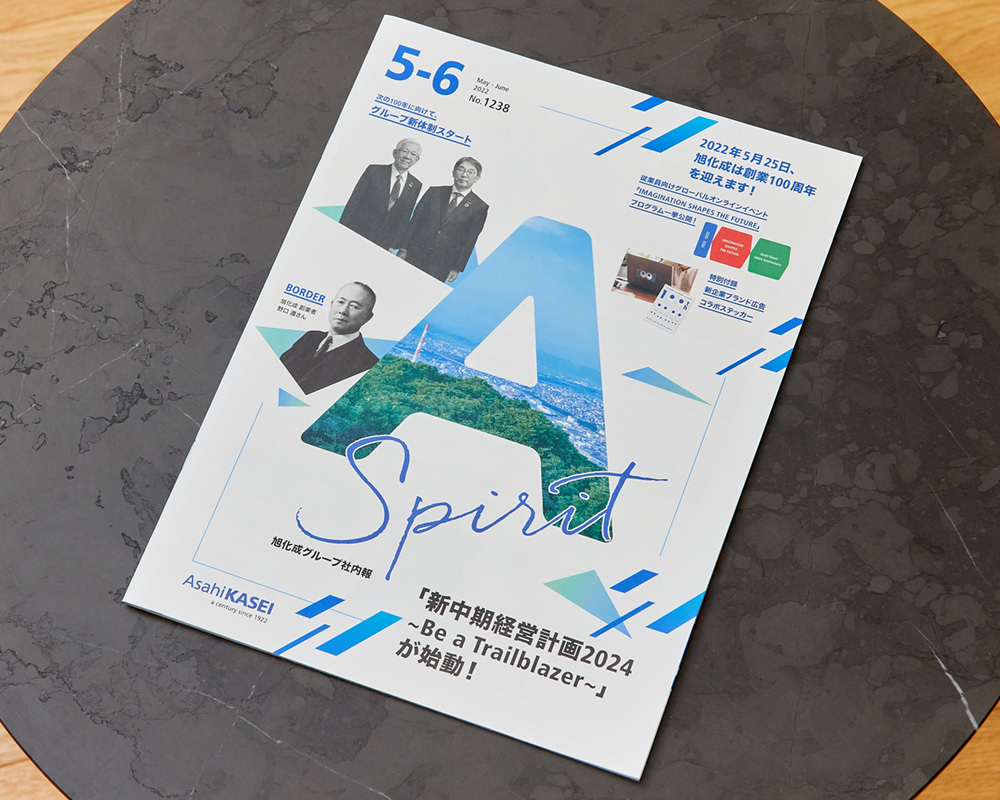
The printed version of the internal newsletter, "A-Spirit," distributed nationwide.
Kusunoki: The internal newsletter is a valuable tool for internal communication now, as remote work has become widespread during the pandemic and opportunities for employees to meet face-to-face have decreased. However, information sent one-way from Japan doesn't always reach employees in other countries. That's why we also gather various information from overseas. We're experimenting to foster a greater sense of global unity.
──Asahi Kasei has outlined two sustainability directions for 2050: "Realizing a Carbon-Neutral and Sustainable World" and "Realizing Vibrant Living in the New Normal." Has management requested greater dissemination of information about SDGs, carbon neutrality, and similar topics to employees through PR?
Kusunoki: The management team, including the president, places great importance on the company newsletter and wants to use it to communicate the company's major direction. Other internal communication tools include group emails, social media, pamphlets, posters, the intranet, and events. On the intranet, the president's messages are sometimes posted several times a month.

──What kind of internal communication would you like to achieve as the PR department going forward?
Kusunoki: We want to create a new platform that connects globally. Additionally, we aim to hold hybrid, interactive events—both in-person and online—that connect simultaneously worldwide, something we couldn't achieve during the 100th-anniversary initiatives. We want to foster initiatives that help employees worldwide feel more united. And we'd be delighted if each employee broadens their perspective and gains new insights.
Sugita: I'm currently developing guidelines for communicating information related to the environment and human rights. As society advances toward achieving the SDGs, we need to reexamine our expressions when sharing information. I want to deepen communication using clear and appropriate language. Also, having worked on compiling our company history for the 100th anniversary, I recognized the importance of archives. Based on that, I want to shape communication that leverages Asahi Kasei's history.
Iwatsuki: While I currently handle external communications, I feel the boundary between internal and external communication is becoming increasingly blurred. For example, last year, when President Kudo spoke at an international business event session about the importance of research and development, we received feedback from R&D members expressing great pride. This really brought home how external messaging connects internally. Currently, I set aside time every two weeks for intensive discussions with the internal communications team to exchange ideas. Moving forward, I want to break down the barriers between internal and external communications and operate in an integrated manner.
Another crucial point is that internal communication is not solely the responsibility of the PR department. While this may seem obvious, initiatives to invigorate internal communication are continuously emerging not only from HR but also from each business division, employing various real and digital innovations. Within this context, the PR department aims to maintain an overarching perspective, envisioning the ideal state of internal communication across the entire company and establishing the environment to achieve it. Ultimately, our ideal is for the Asahi Kasei Group's identity—its "essence" and "strengths"—to take root among all employees and be embodied spontaneously and simultaneously in various places through communication and daily work.
 Team SDGs collaborates with various stakeholders involved in the SDGs to disseminate information about the SDGs and plan and develop solutions.

Was this article helpful?
Share this article


Newsletter registration is here
We select and publish important news every day
For inquiries about this article
Back Numbers

Author
Kusukami Terumi
Asahi Kasei Corporation
Public Relations Department
Department Manager
Sugita Akira
Asahi Kasei Corporation
Public Relations Department
Section Chief
Mio Iwatsuki
Asahi Kasei Corporation
Public Relations Department, Brand Communications Office
Acting Section Chief