
Note: This website was automatically translated, so some terms or nuances may not be completely accurate.
 A Half-Step Ahead Future: Viewed Through the Eyes of Asia's Generation Z [1/2]
What do young people in Asia envision as the "Next Generation of Friendship"?
By 2025, it is said that one-quarter of Asia's population will be Gen Z, a generation also attracting attention as one with significant purchasing power. Against this backdrop, Dentsu Youth Research Department (hereafter Dentsu Wakamon), in collaboration with Dentsu Global Business Center and members of Dentsu Group's overseas offices, conducted the "Next Generation" survey targeting students in their teens and twenties across seven Asian markets (Japan, Taiwan, Indonesia, Thailand, Vietnam, Philippines, Malaysia) to explore Generation Z's emerging values. (Press release here )
This series explores insights into Asia's Generation Z based on workshop results with local university students. We introduce the values and trends Generation Z considers as future hypotheses, focusing on commonalities and differences across markets.
This installment's theme is "The Future Form of Friendship" as envisioned by young people. With diverse friendship models emerging during the pandemic, understanding this shift offers hints for achieving more flexible communication with Generation Z.
<TABLE of Contents>
▼What is Dentsu Inc. Wakamon?
▼The "Next Generation of Friendship" as Seen by Asian Youth
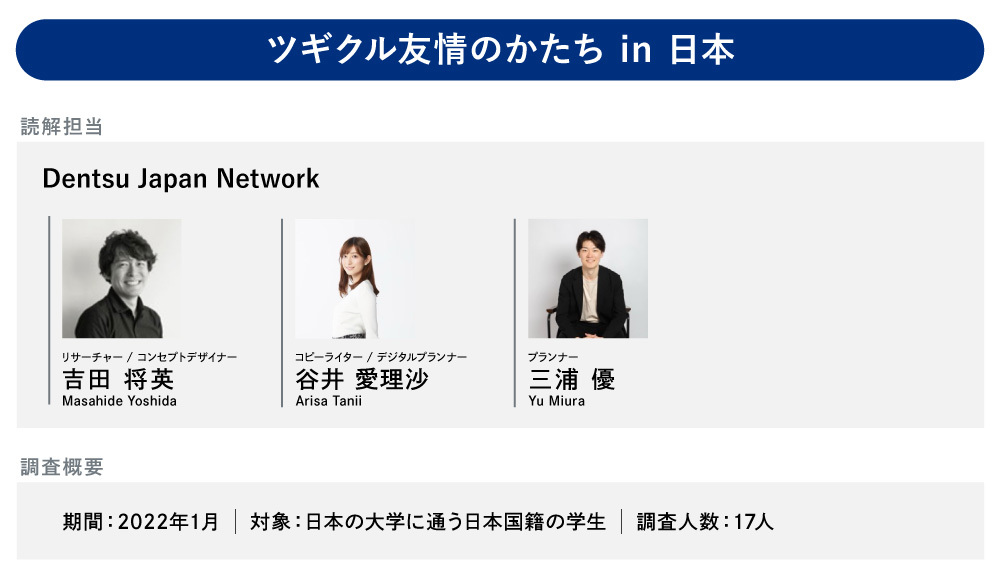
▼The Next Generation of Friendship in Japan
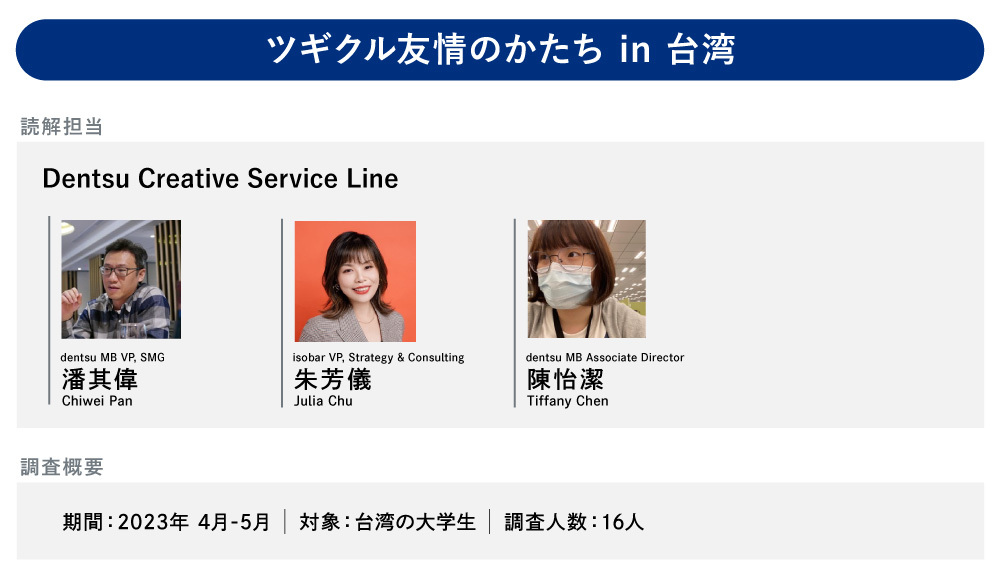
▼The Next Generation of Friendship in Taiwan
▼The Next Generation of Friendship in Indonesia
▼The Next Generation of Friendship in Vietnam
▼Future Hypotheses Emerging from Next Generation Friendship Across Asia
What is Dentsu Inc. Wakamon?
Dentsu Inc. Wakamon is a special-mission unit within Dentsu Inc. that researches the realities of teens and young adults in their teens and twenties, primarily high school and university students. It handles everything from planning to creative development to help companies, society, and people build better relationships with young people.
Dentsu Inc. engages with youth because they walk half a step ahead of their time, becoming the first to "become new." Their sensibilities and perspectives possess a resilient flexibility, offering hints for society's future direction. We believe we must not overlook the brilliance of these hints.
Guided by this conviction, Dentsu Inc. Wakamon regularly holds workshops titled "Tsugikuru" with students across Japan. These sessions focus on constructing future hypotheses around themes like "The Next Shape of [Subject]" (past Tsugikuru workshop articles can be found here ).
The Shape of Friendship Next: As Seen by Asian Youth
This time, we introduce four markets (Japan, Taiwan, Indonesia, Vietnam) from among seven Asian markets that exhibit particularly distinctive characteristics. We examine how the form of "friendship" is changing for students in each market and explore future hypotheses based on these changes.
Friendships Born Naturally from Shared Environments
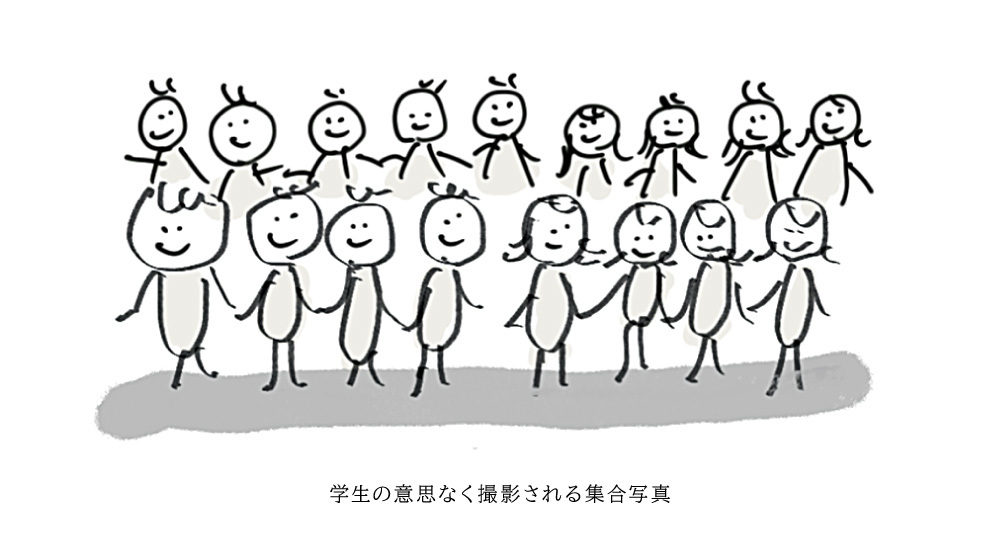
In Japan until now, friendships were largely formed based on shared environments—being in the same class or living nearby. As a result, even without specific reasons like "I like this person's this trait!", spending time together naturally led to relationships where people were always together.
Why was this the case?
Japanese people value the concept of "wa" (harmony), prioritizing group cohesion. Even in friendships, blending in with the group was considered preferable to standing out as an individual. How much one had shared joys and hardships within an organization became a key measure of friendship.
The Next Form of Friendship: From "Regulars" to "Occasionals"
Changes in living environments due to the pandemic have broadened individual choices, making the definition of "friends" more diverse and subjective. As the frequency of in-person meetings decreased, relationships have shifted from the traditional "frequently meeting companions" to connections chosen flexibly based on purpose. The spread of online platforms has made it easier to form communities tailored to personal goals, transcending race, age, and gender. Going forward, the definition of friends is expected to shift from "members you can meet anytime" to " " – people you gather with based on specific purposes.
We have invested enormous effort to maintain friendships
Until now, it was common to prioritize friendships formed during student days based on shared living environments, investing significant time and effort to sustain these bonds.
Why was that?
In Taiwan, the number of friends is linked to personal status. To avoid being "alone," people deeply engaged with each other through various SNS and communication channels to cultivate friendships. The number of friends was valued as a form of personal status.
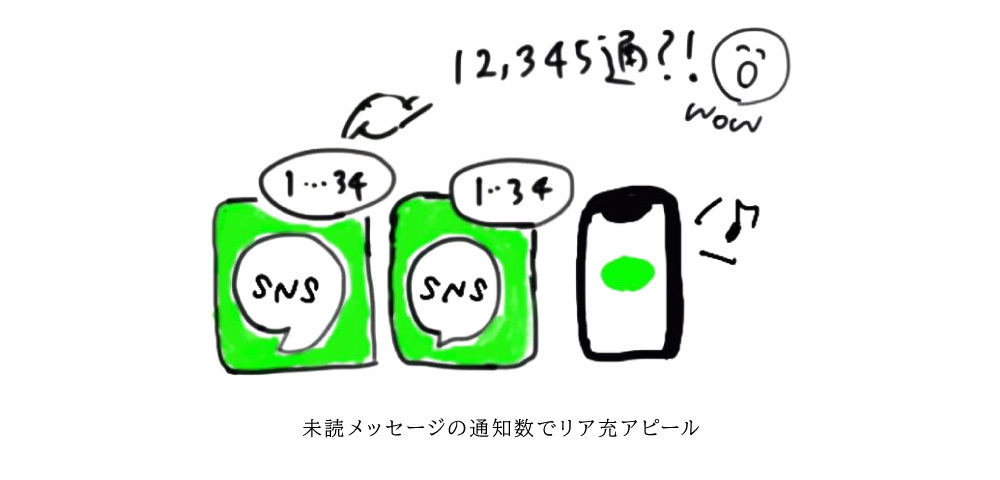
The next generation of friendship shifts from "highly sticky, deep relationships" to "light, casual care"
In today's Taiwan, SNS has become the primary means of communication, and young people form diverse social communities. As a result, time spent with specific friends has decreased, and people increasingly contact each other intentionally only when needed or when there is a common topic.
Friendships are maintained through light exchanges via social media stories and messages, in a non-face-to-face, non-intrusive manner. After the pandemic, there's a noticeable trend toward valuing stress-free relationships that prioritize self-care over highly dependent friendships ( ), and this trend is likely to continue.
The Limits of Offline-Centric Friendships
Traditionally, friendships were primarily built offline, with fewer people making friends online. Offline friendships tended to be limited to physically close locations, the same school, or the same neighborhood, often leading to shallower discussions and a lack of diversity. Consequently, people are beginning to feel the limitations of offline-centric consumption.
Why was this the case?
While parents' generation doesn't forbid online friendships, they are reluctant to value them highly. They consider offline friendships the most acceptable and rational.
The next generation of friendship: The potential for newly emerging, multi-layered friendships
Friendships based on shared virtual values often stem from common interests in entertainment like artists or movies. Fans, in particular, deeply immerse themselves in what they love, making these friendships more passionate than offline ones. In Indonesia especially, K-POP fans are incredibly enthusiastic, and communication among fans on SNS is said to be fervent.
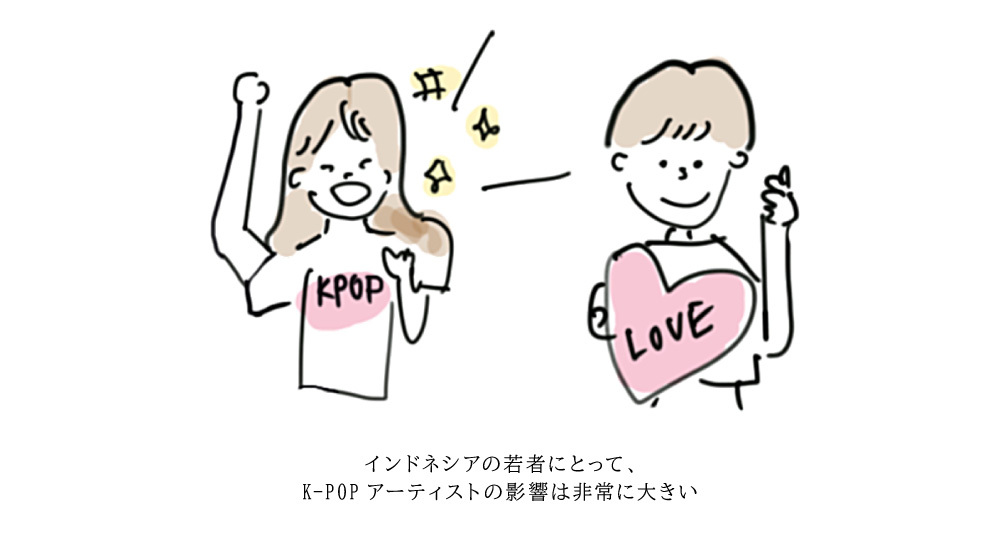
On the other hand, friendships formed through shared experiences like school or community activities tend to develop stable, deep bonds. Going forward, especially within fandom communities, we anticipate friendships becoming more multi-layered through relationships that blend virtual and real-world elements.
Friendships arise from peers sharing the same interests and environment
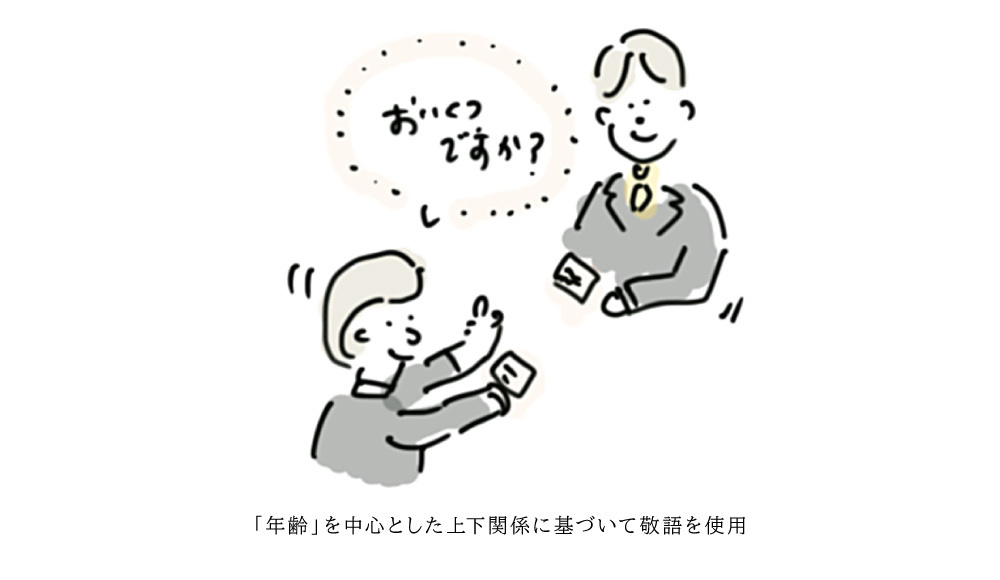
In Vietnam's hierarchical culture, elders do not view younger people as friends but rather as those to be taught, making friendships across age gaps rare. The saying "Giàu vì bạn, sang vì vợ" (Wealth comes from friends, elegance from one's wife) reflects a tendency to choose friends carefully.
Why is that?
Hierarchy is crucial in Vietnamese culture; without knowing someone's age, you cannot use the correct pronouns. Vietnam values strong bonds with close people, including family, so building a deep relationship is necessary before becoming friends with others.
The emerging form of friendship: "Career-building" friends
Regardless of age, there's a growing tendency to build friendships on equal footing with people who share common interests, environments, and values. For example, students increasingly join youth-oriented communities, fostering friendships within a shared purpose of gaining professional experience and shaping future careers. Friendships blossoming across social hierarchies are also becoming more common. Going forward, flexible friendships will expand— —where shared hobbies or interests form the basis, regardless of age or gender.
Future Hypotheses Emerging from "Tsugikuru" Across Asian Countries
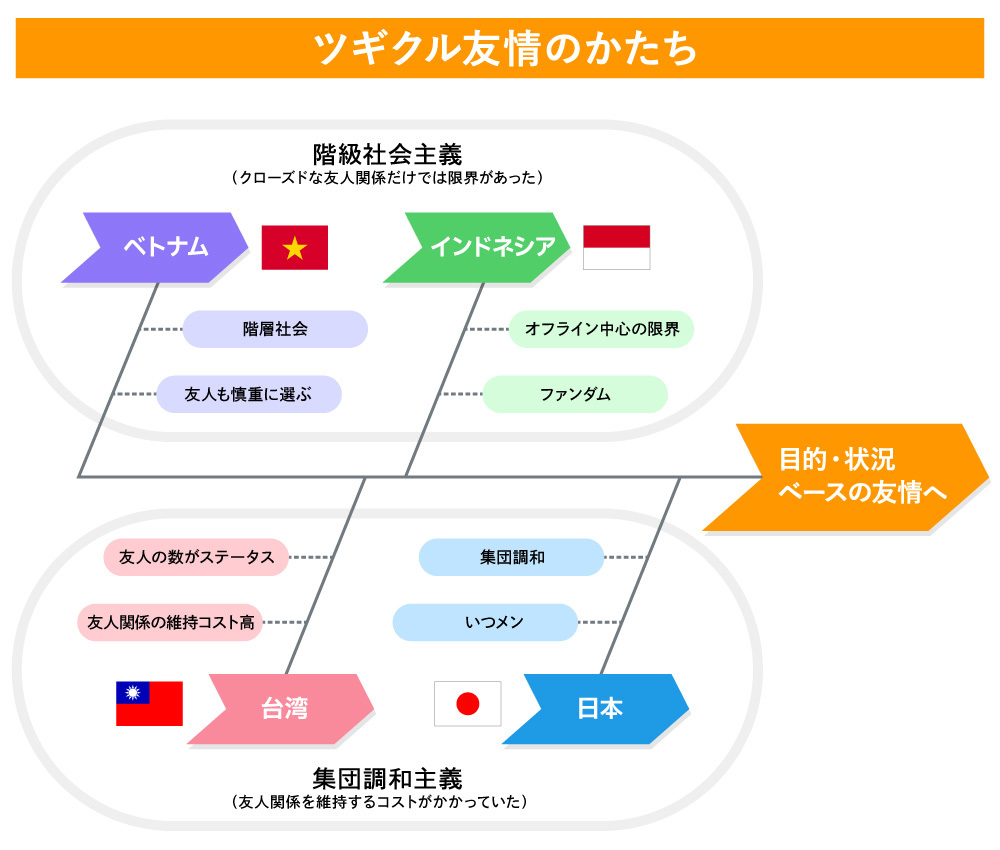
Looking at the "Tsugikuru" of students across Asian countries, while there are gradations, a common new perspective on friendship, unconstrained by traditional norms, is evident. The pandemic has liberalized the foundational social tool of online communication and reset societal norms, leading to increasingly similar value systems among young people across nations. As digital technology advances, global boundaries are blurring—a trend further evidenced by this "new form of friendship."
The next generation of friendship is not limited to real-world connections; it can be described as purpose- and situation-based friendships formed around flexible criteria like "shared hobbies or goals." While free and flexible relationships are increasing, it's also true that new concerns like "not knowing how to interact" are emerging. Against this backdrop, the importance of marketing aimed at supporting identity formation and connections is growing. I believe experiential consumption, community marketing, and co-creation marketing will gain even more attention.
Next time, we plan to introduce "The Next Wave of Health."

Was this article helpful?
Share this article


Newsletter registration is here
We select and publish important news every day
For inquiries about this article
Author

Yamamoto Asako
Dentsu Inc.
Marketing Division 1
Planner
