Note: This website was automatically translated, so some terms or nuances may not be completely accurate.
 The ideas sparked by purpose will transform marketing going forward. [2/2]
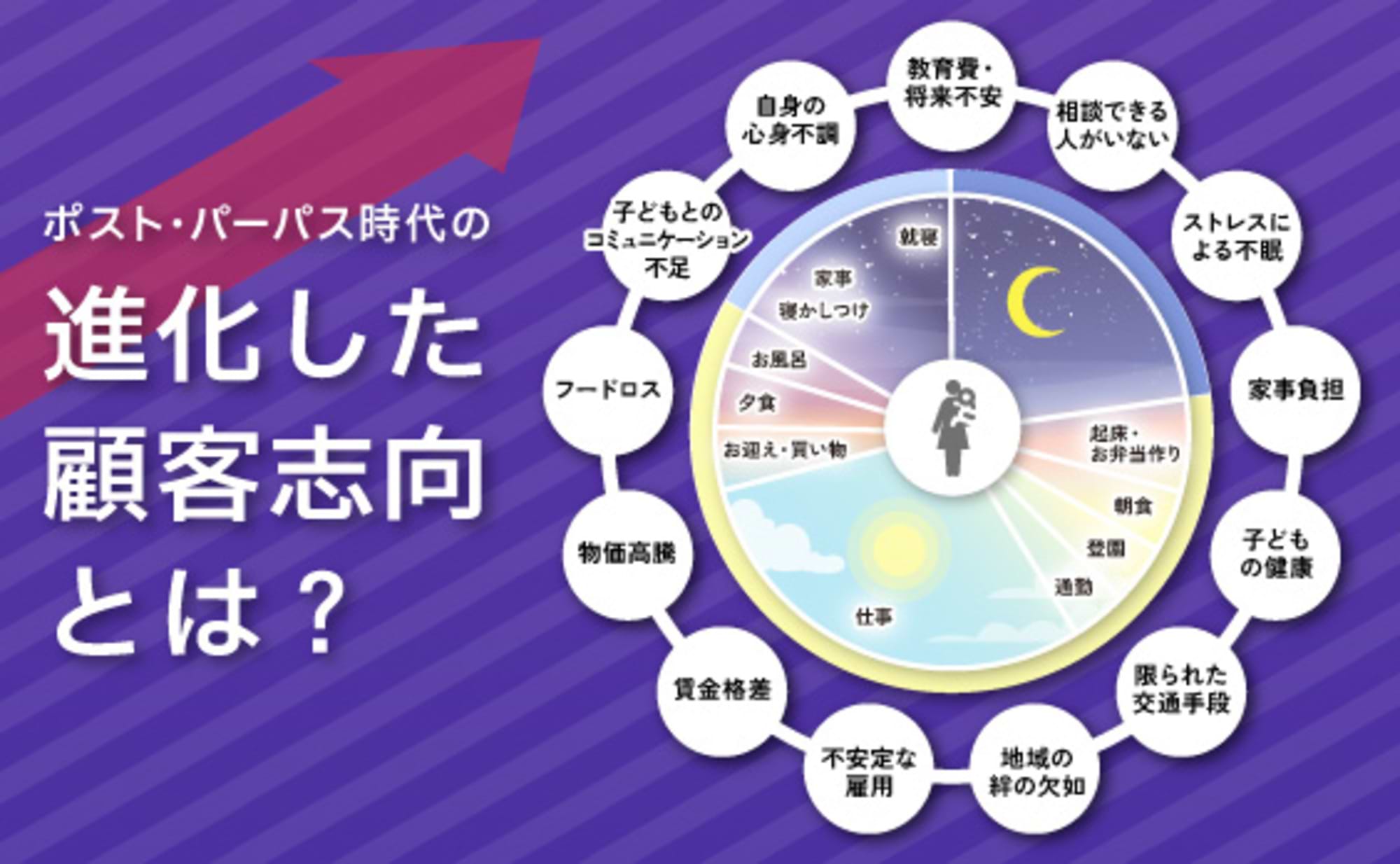
"Evolved Customer Focus." Where society's touchpoints become frontiers.
"Consumer needs have already been fully tapped."
"Trying to differentiate risks falling into 'differentiation for differentiation's sake'"
"We don't understand what truly resonates with people."
"We offer 'value' but fail to deliver 'excitement'"
Have you ever felt this way? Breaking through the deadlock of conventional marketing requires new perspectives and ideas.
Examples of Purpose Branding(※) reveal novel ideas previously unseen. I believe these concepts hold broad applicability across various marketing scenarios, regardless of whether a specific purpose exists. The "evolved customer orientation" I proposed as a hypothesis in Part 1 is one such example. This time, while exploring that concept, I'll introduce a tentative framework of ideas that could be useful in daily operations.
The Frontier of Customer-Centricity Lies at the Point of Contact with "Society"
By incorporating a "society" perspective into conventional marketing thinking, we can contribute to customer happiness in a more profound way than before. I call this "evolved customer orientation."
Incorporating a "society" perspective into marketing itself is not new. Sustainable marketing, which considers the environment and human rights from the standpoint of corporate social responsibility and sustainability, is one example. However, the "evolved customer-centric approach" explained here has a different purpose. It is a purely marketing-driven concept aimed at maximizing the value provided to customers.
Incorporating the "society" perspective into the processes of customer understanding and problem discovery allows us to identify previously overlooked customer challenges and shift our viewpoint. It could be said that the frontier of customer orientation lies precisely at the points of contact with "society."
From here, we will explain how to shift perspectives for each of the following: ① Customer Understanding, ② Issue Discovery, and ③ Value Creation.
① Customer Understanding: Viewing with a "Wide-Angle Lens"
From "Consumers" to "Individuals Living in This Society"
The need to view target demographics and customers "not as 'consumers' but as 'people living their lives'" has long been pointed out. This is because consumption awareness and behavior are inseparable from an individual's values and lifestyle. Taking this further by incorporating a "society" perspective—viewing them "not just as 'consumers' or 'people living their lives,' but as 'individuals living within this society'"—is the fundamental stance of "evolved customer orientation."
It is an attempt to understand each person as a whole human being, encompassing the characteristics and values of their surrounding community, their relationship with social issues, and their thoughts and beliefs regarding societal themes. It's like adding a "wide-angle lens" to the existing analysis of individuals as members of society.
Everyone lives side-by-side with some social issue, grappling with it. This perspective has often been dismissed in marketing as too distant from consumption awareness and behavior. However, numerous purpose-driven branding examples from Europe and the US reveal that understanding the reality of customers' lives—both positive and negative aspects—holds the key to creating the next wave of customer value, differentiating brands, and sparking exciting customer experiences.
So, how can we achieve such customer understanding within our daily marketing work? One approach is to slightly alter the framework of the personas we've been creating.
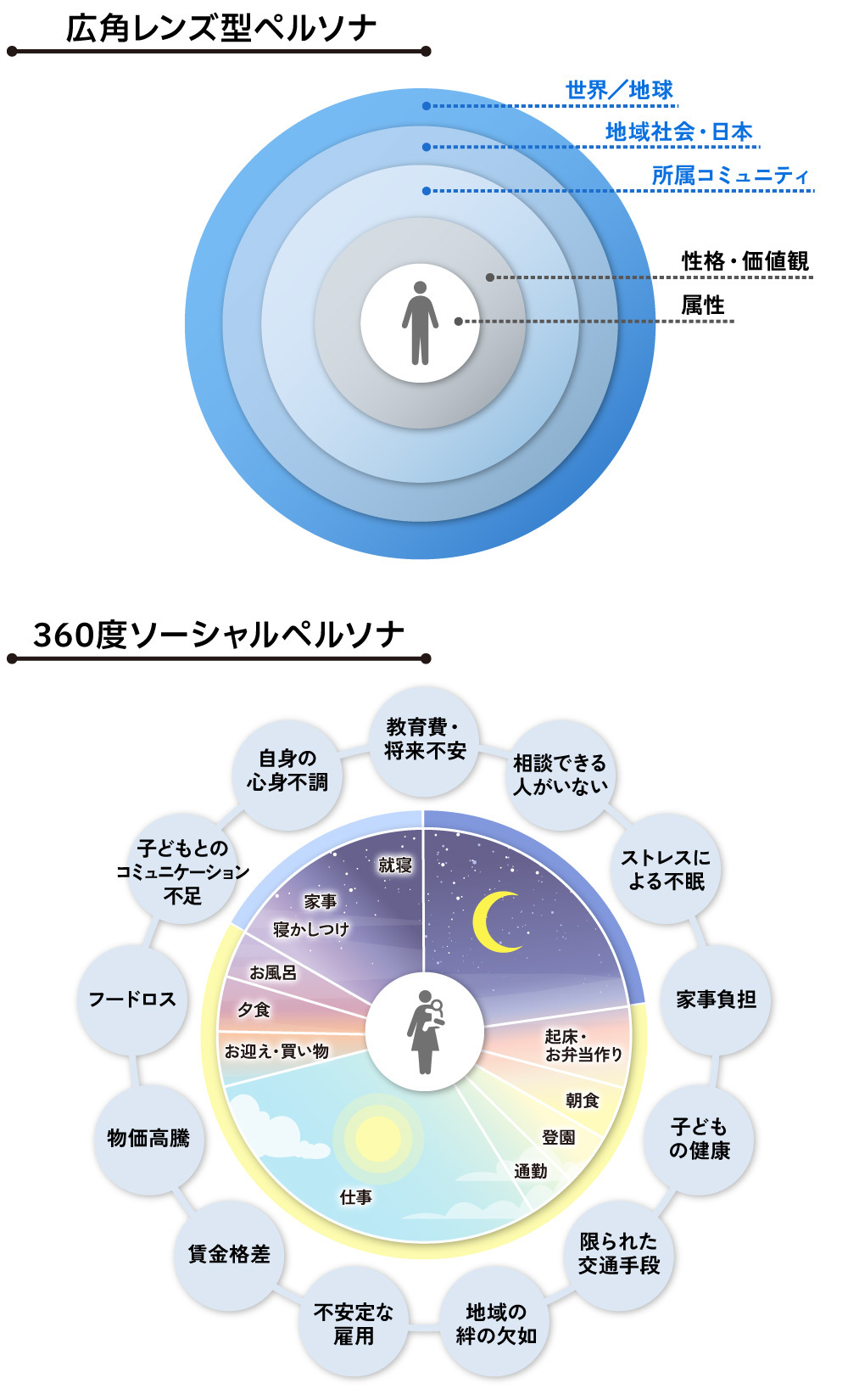
This diagram is merely one example. The "Wide-Angle Lens Persona" goes beyond the attributes typically depicted in personas, aiming to delve deeper into the individual's connections with their communities, their values, their stance on social issues, and even their concerns. The "360° HUMAN Persona" involves considering how a single individual navigates multiple social roles and identifying their points of contact with society in each context. Crucially, this requires leveraging new methodologies—not mere imagination—to uncover insights through qualitative research and discovery.
② Issue Discovery: Treading into the remaining "unhappiness" zone.
Shifting from "customer satisfaction" pain points to "happiness" pain points
As achieving dramatic differentiation at the level of a product's basic functions or core value becomes increasingly difficult, competition between brands may shift toward how well they can enhance the customer experience. However, not every brand necessarily creates the happy customer experience envisioned by the company.
While innovation and added value are crucial for enhancing customer experience, another approach involves identifying why current experiences fall short of true happiness—the pain points of happiness—and eliminating them. This is the concept of "stepping into the remaining 'unhappiness' zone."
For example, consider personal care products used in the bathroom. Even if you're highly satisfied with the product's functionality, seeing your reflection in the mirror doesn't necessarily make you feel happy, does it? (I certainly feel that way...) Or, even if you're satisfied with the functionality of a laundry detergent, if you're the sole person handling household chores, the laundry experience might just be filled with gloom. Other examples might include: A young athlete might love a certain sports drink brand, yet instead of feeling refreshed after drinking it, they might be choking down the drink while feeling crushed by the pressure from others to win. These are the "unhappiness" zones we're talking about here.
Here, if brands tackle societal issues where customers are directly affected (like the pervasive societal beauty standards, unconscious biases around gendered household chores, or athletes' lack of mental health support in the earlier examples), they could eliminate customers' "happiness pain points" and imbue their products with the ultimate emotional benefit... This could become the ultimate customer-centric approach moving forward. In fact, all the examples above are borrowed from actual purpose-driven branding cases, each of which is said to have yielded marketing results.
The social issues within a person's "5-meter radius" influence their brand experience... and such examples likely abound in daily life beyond these. For instance, haven't you ever found yourself unable to truly enjoy even the most delicious beer because you weren't in a happy mood? Of course, this is just one example. Companies could simply dismiss such areas as beyond their scope. However, if we instead view them as "unfulfilled happiness zones" left untapped for enhancing brand customer experience, that mindset itself represents "evolved customer-centricity." What was traditionally seen as social contribution activities and customer experience improvement may increasingly become two sides of the same coin.
On the other hand, some voices say, "Companies just need to make good products. Anything beyond that is meddling." To avoid truly becoming "meddling" by delving deeper into people's hearts and lives, and to ensure we never hurt anyone's feelings, planning and executing concrete actions for this approach requires the utmost sincerity, capability, and a determination not to stop at mere appearances.
So, how should we approach daily marketing tasks? Perhaps a good starting point is to consider the customer journey not through the lens of "satisfaction," but through the lens of "happiness."
③ Value Creation: Consider a "Seamless Value Chain."
From "the customer's heart" to "spreading seamlessly into society" through laddering.
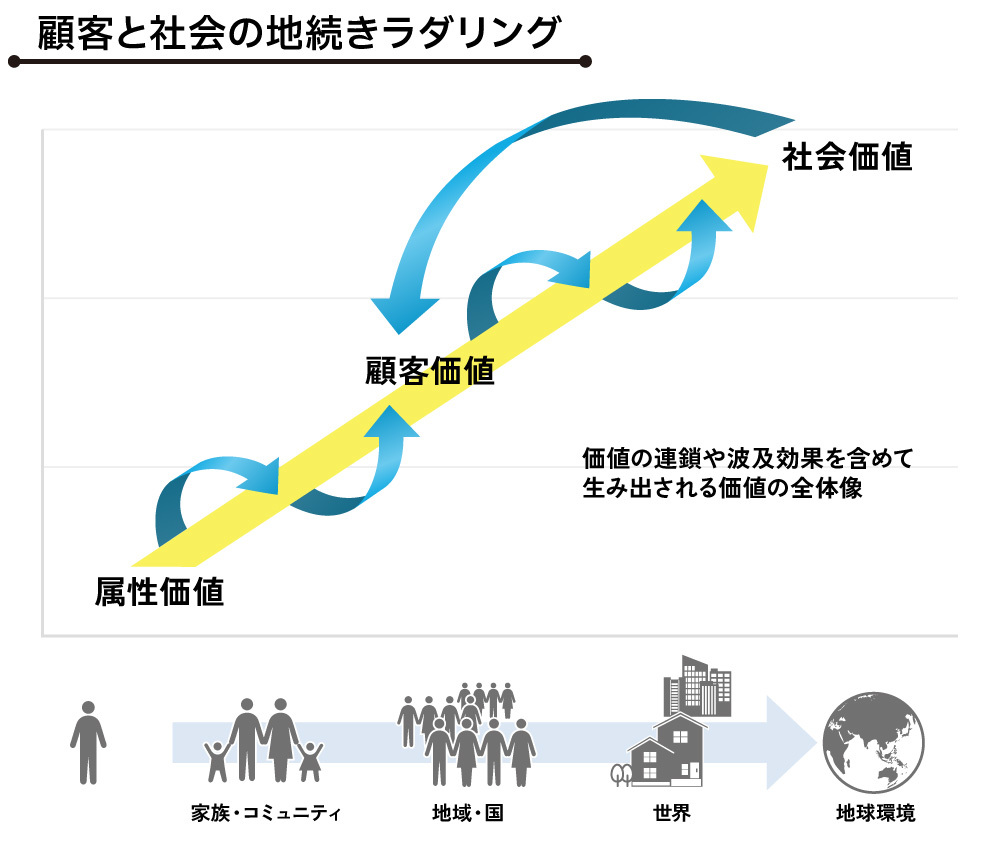
Customer challenges and societal challenges are often interconnected in a "continuous" relationship. A clear example: reducing the number of rinses for laundry detergent connects to the societal value of water conservation and the customer value of time savings. This, in turn, creates value for both customers and society by making life easier for busy parents juggling work and childcare. Viewing the current state through this broader lens also leads to "evolved customer-centricity." The social value created as a byproduct can sometimes become a "new value experience" for customers. "Huh, it even helps solve social issues? That's pretty clever." Naturally, the concept of a "continuous value chain" is also effective when considering a brand's long-term strategy.
In daily operations, instead of relying solely on traditional laddering that focuses on probing customers' minds, challenging yourself with the "continuous laddering" concept shown in this diagram is one approach.
Marketing is getting harder, but more interesting
"What is the social significance of a marketer?"
While pursuing the theme of purpose, I sometimes find myself pondering this question. The answer will vary from person to person, but I believe it lies in "identifying people's challenges and providing appropriate solutions (through products and other brand activities). And ensuring these activities are sustainable by adding economic rationality to them." Among these, the part about "identifying people's challenges" is particularly crucial. I believe the passion and skill marketers possess for understanding people and identifying their challenges are invaluable to society.
When considering the concept of "evolved customer orientation," what challenges should be identified? I believe it all depends on the "view of humanity" held by the brand (and its marketing team) and the brand's "humanity" (its purpose and character). That is precisely what defines the brand's individuality.
The above is merely one hypothesis I've considered. I hope it sparks discussion among you all.
The ideas sparked by purpose will transform marketing going forward.
In the "post-purpose" era, marketing seems poised to become both more challenging and more fascinating than ever before.
*Here, purpose branding refers to a branding approach that starts with purpose to gain empathy and strengthen relationships with society and customers. It is adopted not only for corporate brands but also at the level of business brands like products and services.
It spread primarily in Europe and the US, driven by a growing number of consumers—especially socially conscious Millennials and Gen Z—questioning the raison d'être of companies and brands from a societal perspective. This shift began to influence product and brand choices.

Was this article helpful?
Share this article


Newsletter registration is here
We select and publish important news every day
For inquiries about this article
Author

Yumiko Umezu
Dentsu Inc.
Third Marketing Bureau
Marketing Consultant