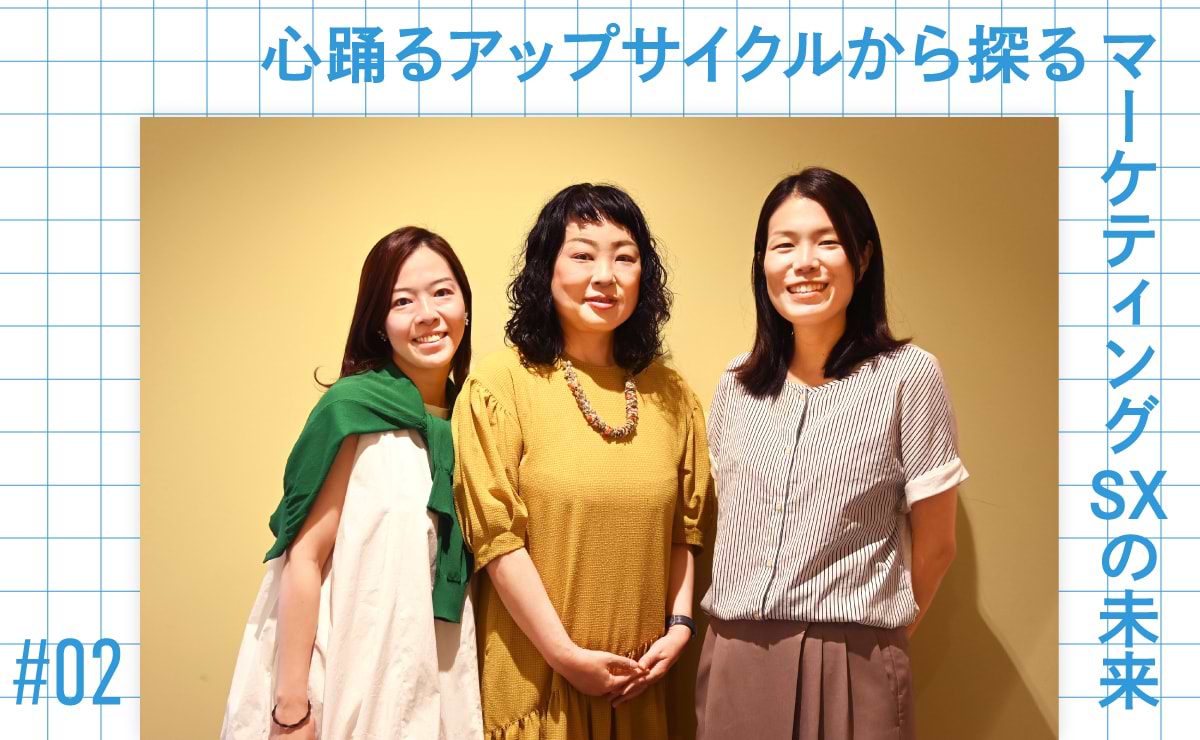
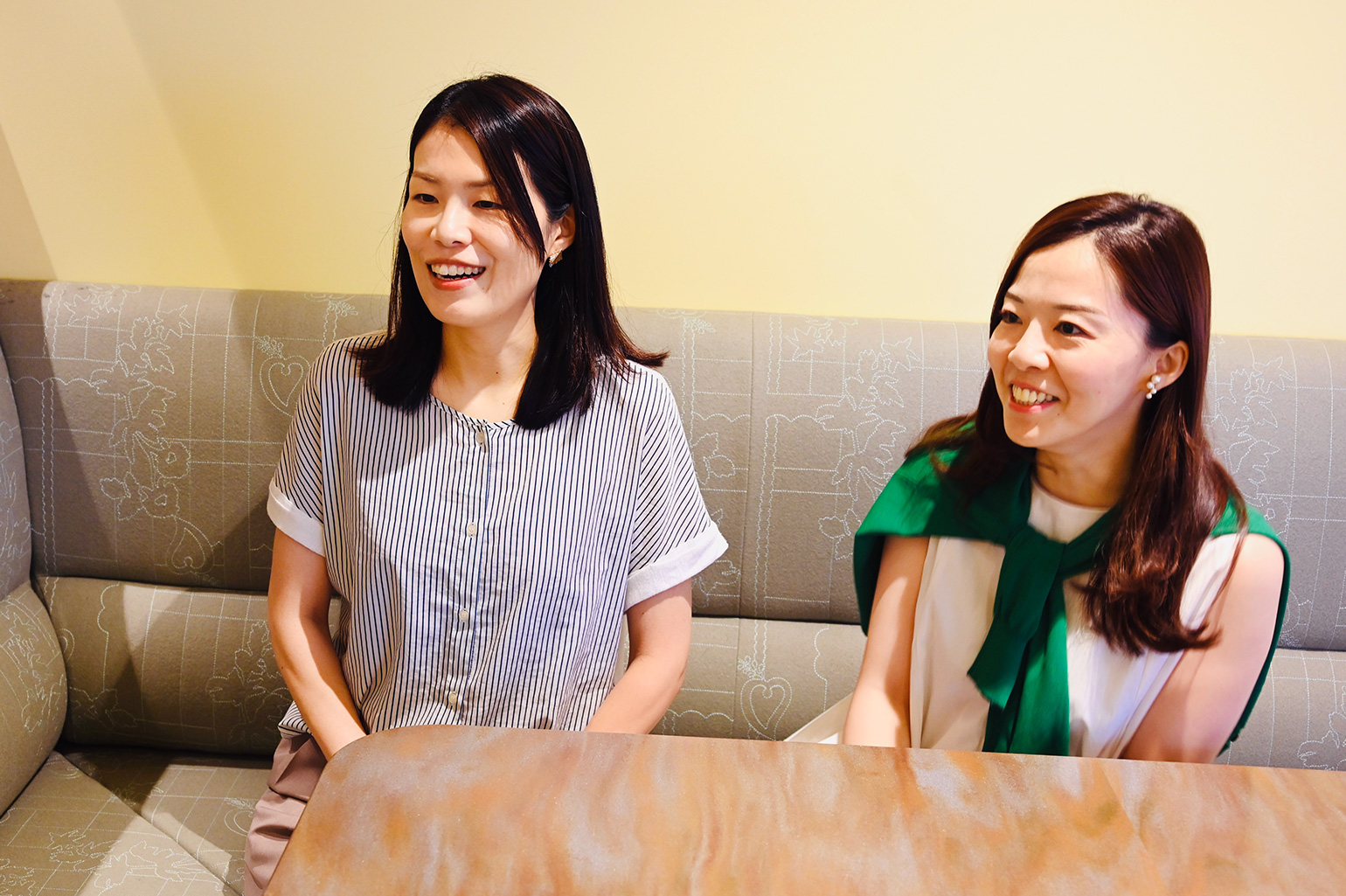
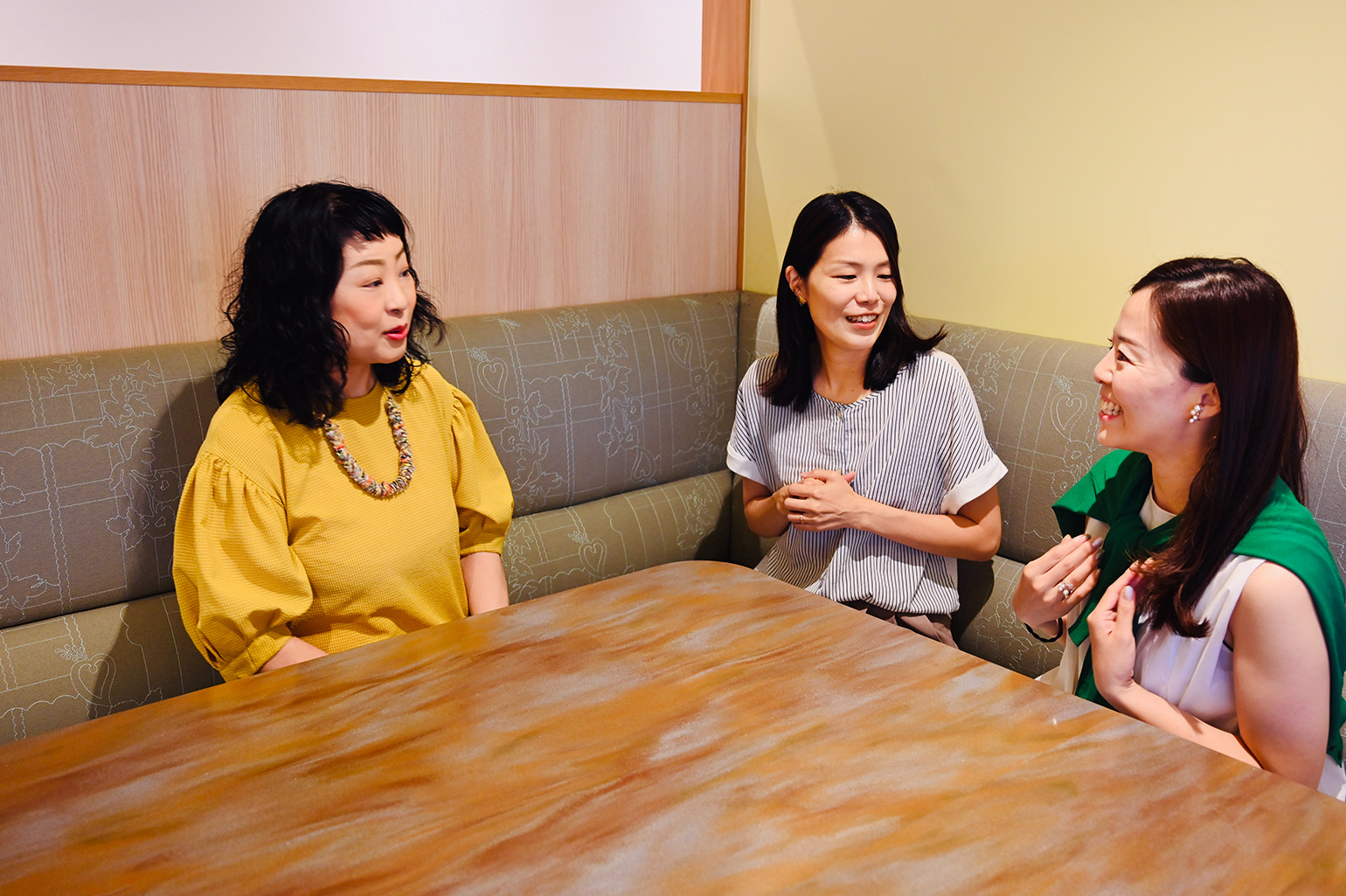
(From left) Dentsu Inc.: Yurika Mori, Dentsu Live Inc.: Mineko Hotta, Dentsu Inc.: Ai Sakamoto
This series explores the wonderful relationship between marketing and sustainability through a team approach. This time, Ai Sakamoto and Yurika Mori from the CR Team in Dentsu Inc.'s Sustainability Consulting Office spoke with Mineko Hotta, Head of Circular Economy at Dentsu Live Inc., about the potential of "upcycling" – a term we hear often these days – and how to enhance brand value in sustainable products.
We're all familiar with the world of reuse, like recycling milk cartons or newspapers. But it turns out, "upcycling" opens up an even more wonderful and exciting world.
So, what exactly are these "heart-racing upcycled" things and experiences? ⁉
What's the Difference Between "Upcycling" and "Recycling"?
Mori: I've been hearing the term "upcycling" a lot lately, but how is it different from recycling? What kinds of upcycled products are out there? Since many people don't fully understand it, this time we're talking to Mr. Hotta, an expert in the circular economy.
First off, could you explain what "upcycling" is?
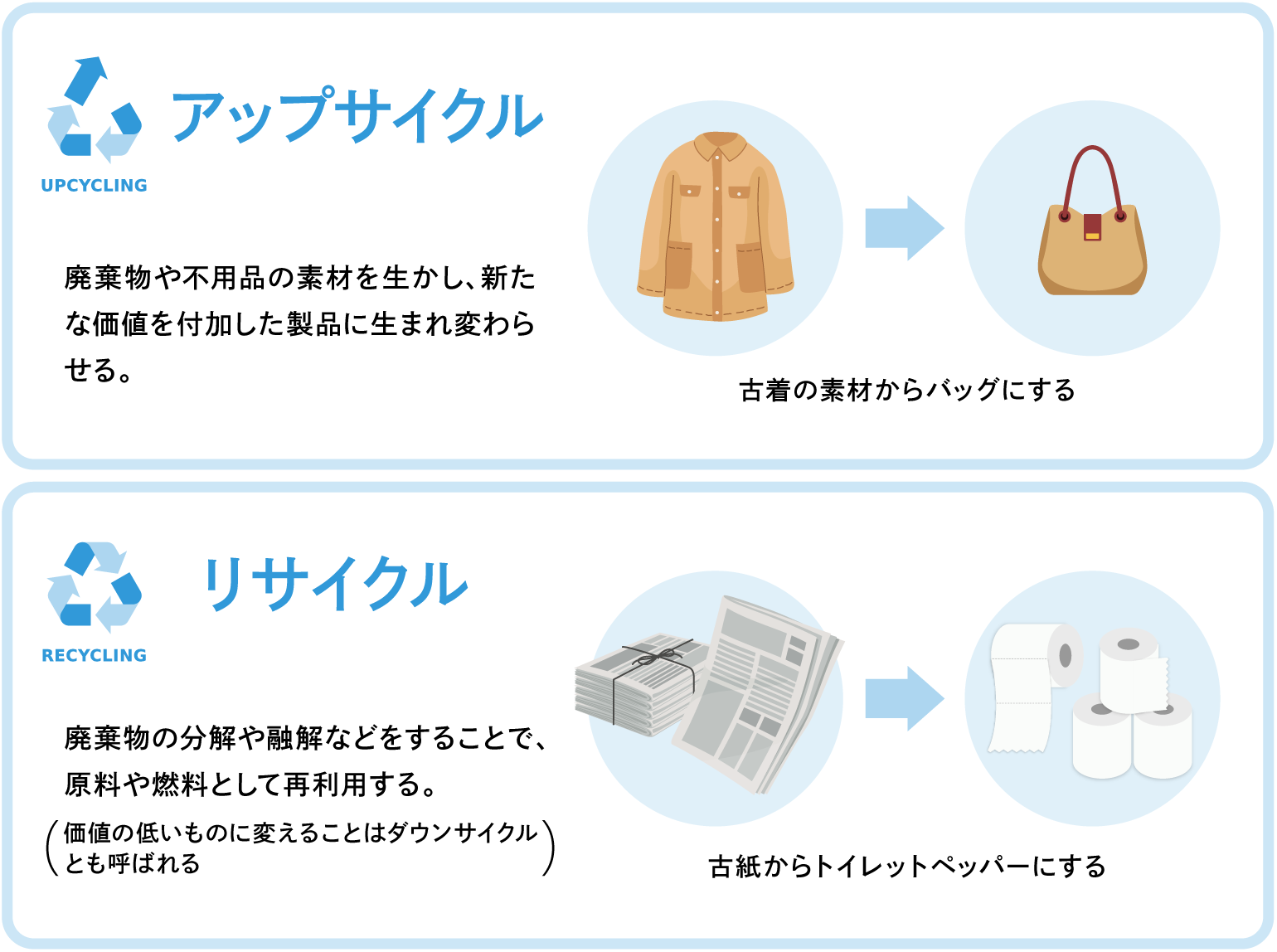
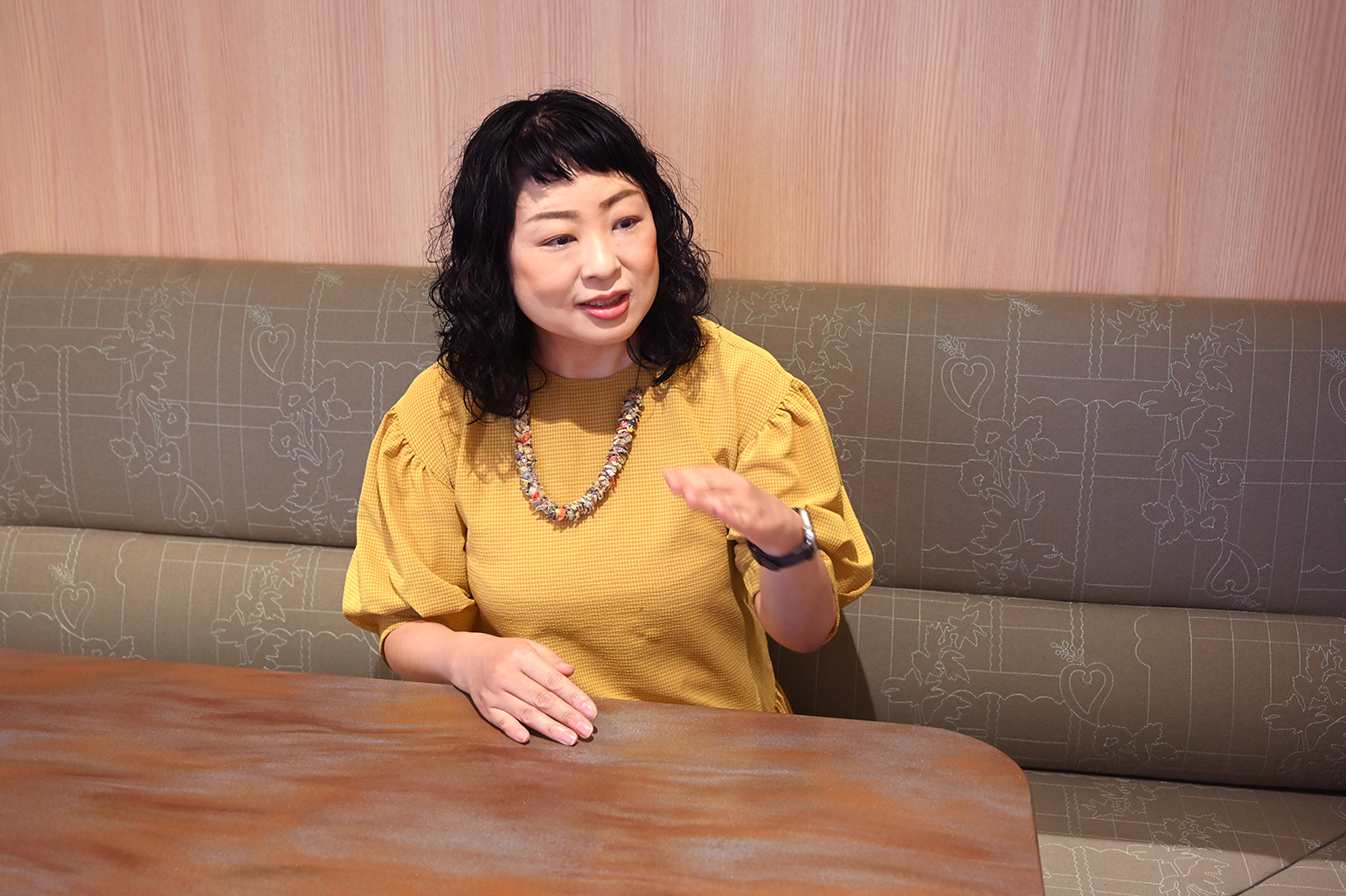
Hotta: "Recycling" refers to the process of collecting waste and reprocessing it into a form that can be reused as the original raw material. There are many familiar examples, like recycling newspapers or milk cartons. The goal is to reduce waste and contribute to the circulation of resources.
Upcycling, on the other hand, shares the same goal of reducing waste and contributing to resource circulation as recycling. However, it differs in that it creates something with added value for the customer—essentially "up"grading the value. Think of it as "creative reuse" where design and ideas are added to items destined for disposal, transforming them into higher-quality, higher-value products.
Both are key methods for achieving a circular economy—an economic society that circulates resources without assuming waste as a given.
Sakamoto: For upcycling, it's crucial that the buyer perceives it as "valuable." I love beer and once tried "COEDO Beniaka" (COEDO Brewery), a beer made using irregularly shaped sweet potatoes. Being able to drink a beer made from Kawagoe sweet potatoes was incredibly valuable to me—that's upcycling in action.
The Secret to Successful Upcycling
Mori: While there are many types of upcycled products, are there any unique characteristics or strengths common to successful brands?
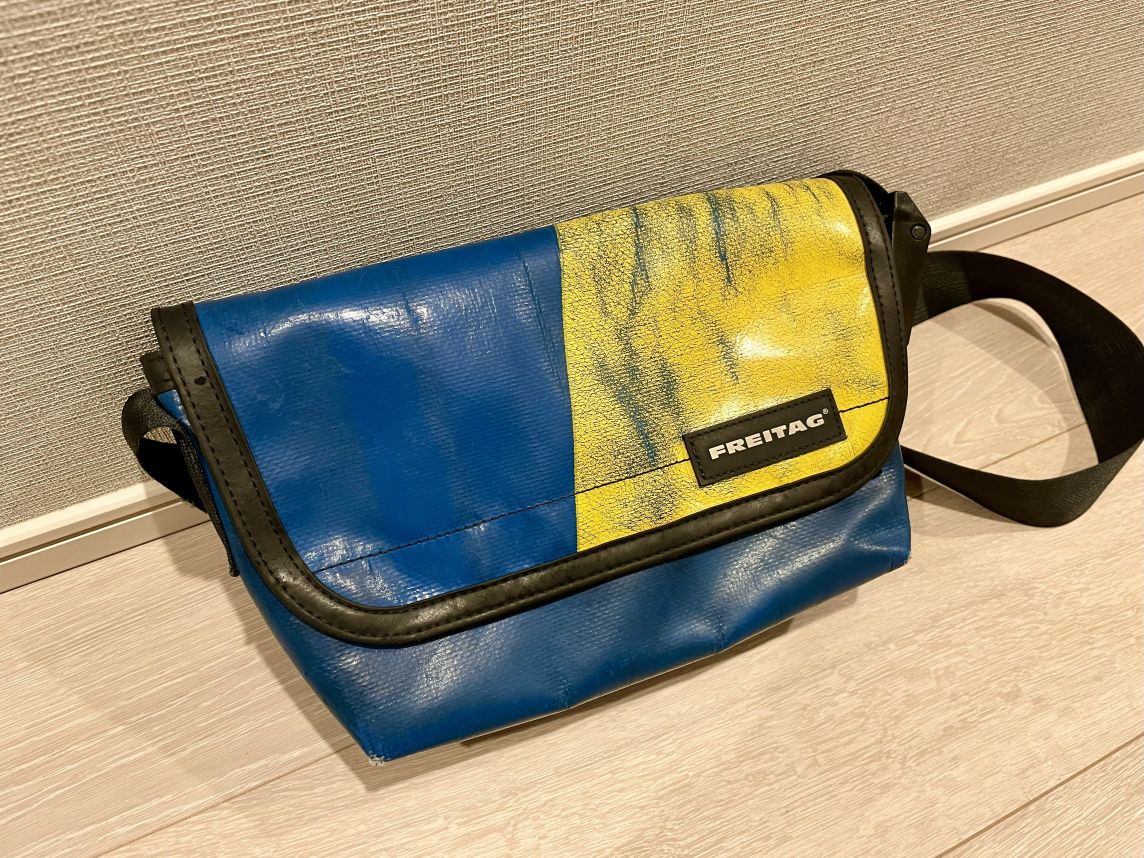
Hotta: When it comes to famous upcycling brands, "FREITAG" comes to mind. It's a Swiss brand that repurposes truck tarps and other materials to make bags and small accessories, and it's popular worldwide.
Sakamoto: Come to think of it, a friend of mine has one of those signature FREITAG messenger bags! Beyond the unique patterns of the tarpaulin material, another feature is that the way the material is cut and the degree of wear create one-of-a-kind designs. It seems like it would be fun to choose one.
Hotta: I actually feel "FREITAG" excels functionally too—it has unisex appeal, timeless simplicity, and the durability inherent to truck tarps. It's not just attractive because it's upcycled; it embodies the concept of creating attractive things through upcycling techniques.
My friend's "FREITAG". He says its toughness is great—he doesn't mind setting it on the ground during golf or tennis.
Sakamoto: While brands like "FREITAG" exist, upcycled products remain relatively scarce in everyday life, and purchase opportunities seem limited. What factors hinder their wider adoption?
Hotta: There are various reasons, but sourcing materials is a major hurdle. The "B-to-C" resource circulation model, where we collect discarded materials from general customers for upcycling, has the advantage of customer participation. However, it increases the difficulty of ensuring stable material supply and consistent quality. Recently, we've been exploring whether we can create a model based on "B-to-B" material supply while still allowing customer participation.
Mori: The ability to procure materials stably also impacts costs, right? In reality, many upcycled products seem to be priced higher than average. As an upcycling brand, it becomes essential to focus on how to make customers feel they're getting value beyond the price.
When upcycling feels personal, wallets tend to loosen up⁉
Sakamoto: What kind of upcycled products might spark interest in our daily lives and make us want to buy them? We discussed this together.
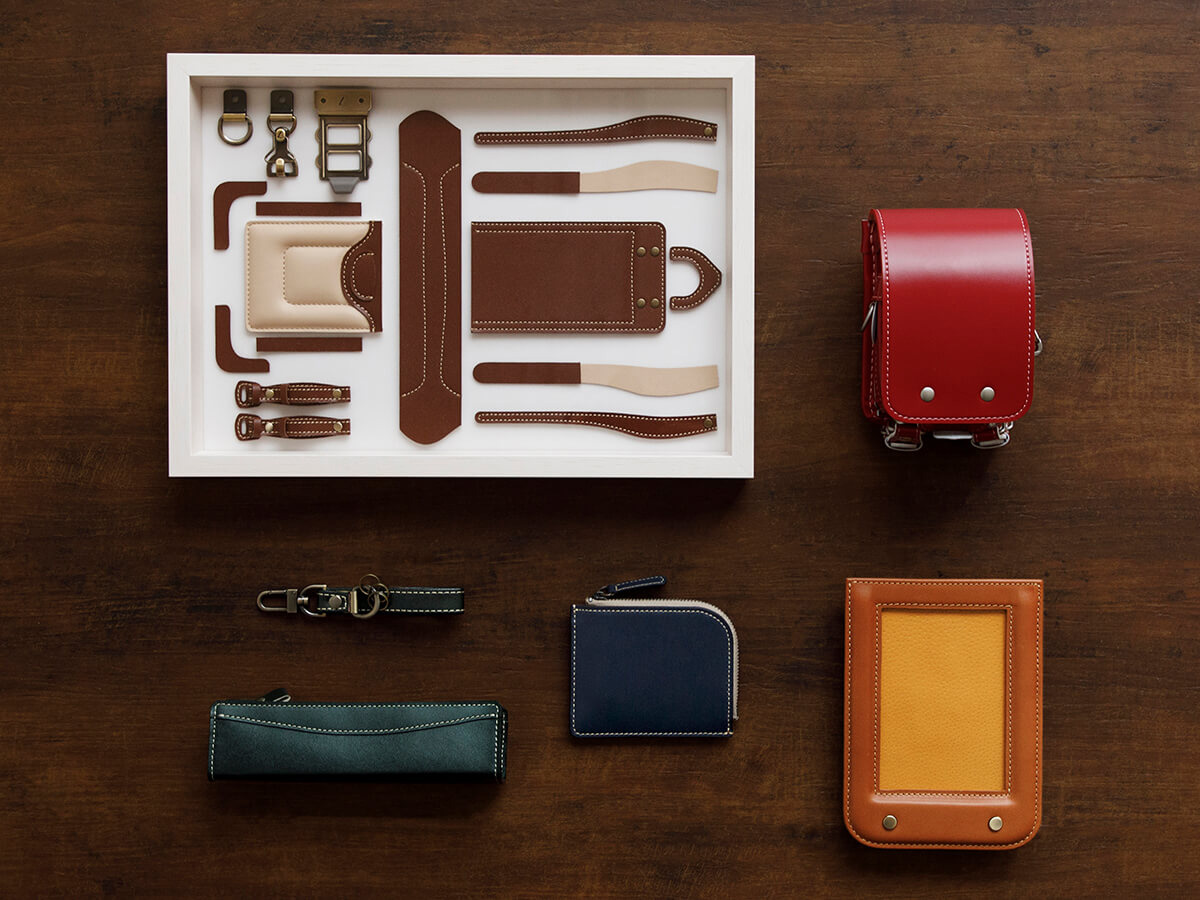
CR member Sakurai has a sixth-grade child and expressed interest in Tsuchiya Kaban's "backpack upcycling (remake)" initiative.
Tsuchiya Kaban's School Bag Remake
Sakamoto: If you remake a school backpack into leather goods after graduation, as a parent, seeing those leather items would probably remind you of your child growing up. I thought it was really emotional and wonderful that it upcycles not just the material, but the memories too.
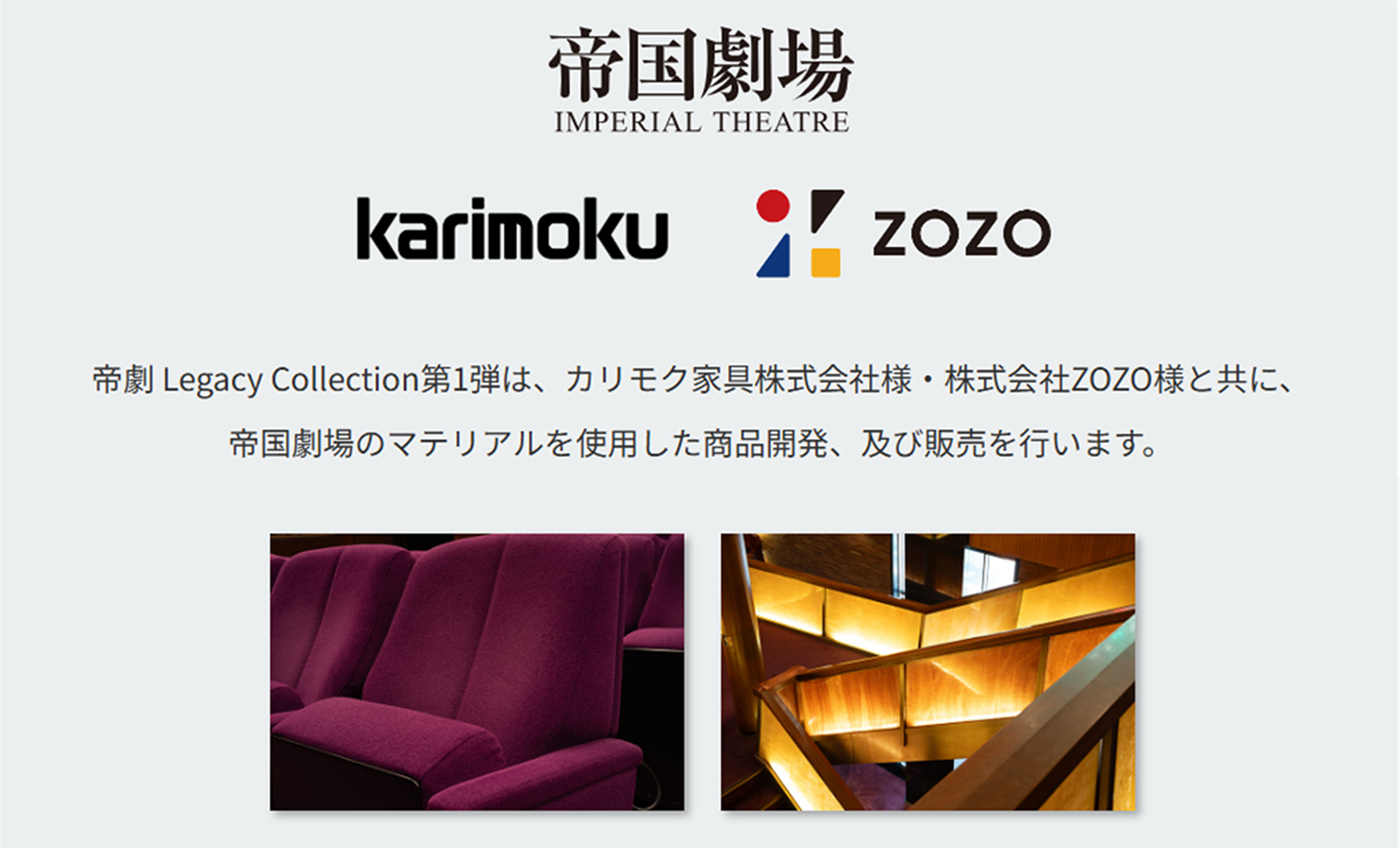
Mori: I absolutely love the Imperial Theatre. When they renovated the theatre, I was thrilled by their legacy upcycling efforts—like turning seats into sofas for sale! Instead of simply discarding them, passing them on to fans in a valuable form means the Imperial Theatre's history continues to be woven. I think that's the ultimate upcycling.
"Teigeki Legacy Collection" A product development project utilizing theater materials following the Imperial Theatre's closing. A portion of proceeds is donated to support "passing on to the next generation and creating a sustainable performing arts environment." ※From the Teigeki Legacy Collection website
Hotta: These are truly upcycling projects where people can feel a personal connection to the value. When something you hold dear is reborn into something new, or when you yourself are involved in the upcycling process, it makes it easier to feel that "sense of specialness" and "storytelling."
Mori: When you can connect even the invisible value residing in an object—like memories or stories—it becomes a truly special upcycling experience for that person.
Hotta: While it's important to recognize upcycling's value as a "social cause" through material reuse, many people might not find it particularly interesting on its own. Adding elements that make it "personal" helps it feel more relatable and can inspire the desire to buy or use it, even if it's a bit pricier.
Sakamoto: I recently tried making small items using scrap wood, and because I made them myself, I felt more attached and cherished them more. That was truly an upcycling experience that felt personal.
Upcycling DIY Using Scrap Materials
Mori: The craft beer I found at the Osaka-Kansai Expo used underutilized ingredients from Osaka. It makes you want to try it, whether you're a local or not, thinking, "Well, I'm in Osaka anyway." Speaking of beer, at the Escon Field HOKKAIDO stadium, they have a brewery inside implementing a "Broken Bat to Craft Beer Project." This kind of upcycling seems like it would be a special experience for fans too.
Upcycled beer made with Osaka ingredients, served at the Osaka-Kansai Expo.
Sakamoto: Incorporating processes that make people feel personally invested, or elements that foster family or community attachment, might just make upcycling a way to boost brand engagement.
<Summary> ・Upcycling itself can easily become the goal, but the key perspective is how to add design and ideas so consumers perceive "greater value."
・Successful use of upcycling as a technique can lead to creating unique stories and product branding unmatched by other brands.
・Beyond the "social aspect" of reusing materials, adding personal value like a sense of exclusivity or narrative to upcycling can encourage consumers to buy even if it's a bit pricier.
The journey to discover exciting sustainability continues.
This time, we focused on upcycling and spoke with Ms. Hotta. There's no single answer for "heart-racing upcycling"; what matters is how to create value that makes customers think, "I want to buy/use this."
Furthermore, storytelling is essential—it's not just about the material, but also about upcycling the intangible value that resides within the object. To create value from discarded materials right before our eyes, it's crucial to design a concept that highlights the unique appeal only achievable through upcycling, and to communicate it in a way that resonates with the target audience. We look forward to exploring this together.
After working as a product designer for a major electronics manufacturer, he oversaw product design and UX design at a telecommunications company. He then served as a manager for product branding, marketing, and PR targeting the Japanese market at a global manufacturer. After joining Dentsu Inc., he was seconded to Dentsu Live Inc. in 2025 and is currently active primarily in the circular economy field. He has received numerous awards, including the iF Design Award, Red Dot Design Award, and Good Design Award. Certified Human-Centered Design Specialist by HCD-Net, Certified Ergonomics Specialist by the Japan Ergonomics Society. Good Design Award judge from 2022 to 2025.
As a copywriter and planner, I handle a wide range of areas from mass media to digital and global campaigns. I completed my MBA in the UK in 2014. After a creative assignment at BWM Dentsu Sydney in Australia, I am currently part of the Sustainability Consulting Office. My expertise lies in brand development, UI/UX design, and integrated communication planning.
Bringing new meaning and appeal to the “future challenges” facing society and businesses. Drawing on his experience as an advertising copywriter and in the field of business design, he currently works across disciplines—using words and creativity as his starting point—to develop management and environmental visions, narratives, business development, communication, and internal activation, with a focus on sustainability. While carefully assessing the unique risks of expression inherent in sustainability, he aims to translate social issues into values that inspire both companies and people to take action.He loves whiskey and the theater.

 The Good Relationship Between Marketing and Sustainability [2/3]




![[SB 2026 Tokyo] What Is Required of Corporate Sustainability Communicationsのサムネイル](https://cdn.speedsize.com/e7df76a9-4406-40f5-bc97-57e7c2c2d99d/https://cdn.dentsu-ho.com/834def09-4013-422a-a14f-45c659fd7b82/gbc33_top.jpg/f_auto,w_3840)