For 125 years since its founding, Nisshin Seifun has supported Japan's flour milling industry.
Boasting the top share in commercial flour and expanding its technology overseas, the company's milestone challenge was not merely a commemorative project. It was an initiative that delved into the essence of management: redefining its "desired future state" with an eye on future growth.
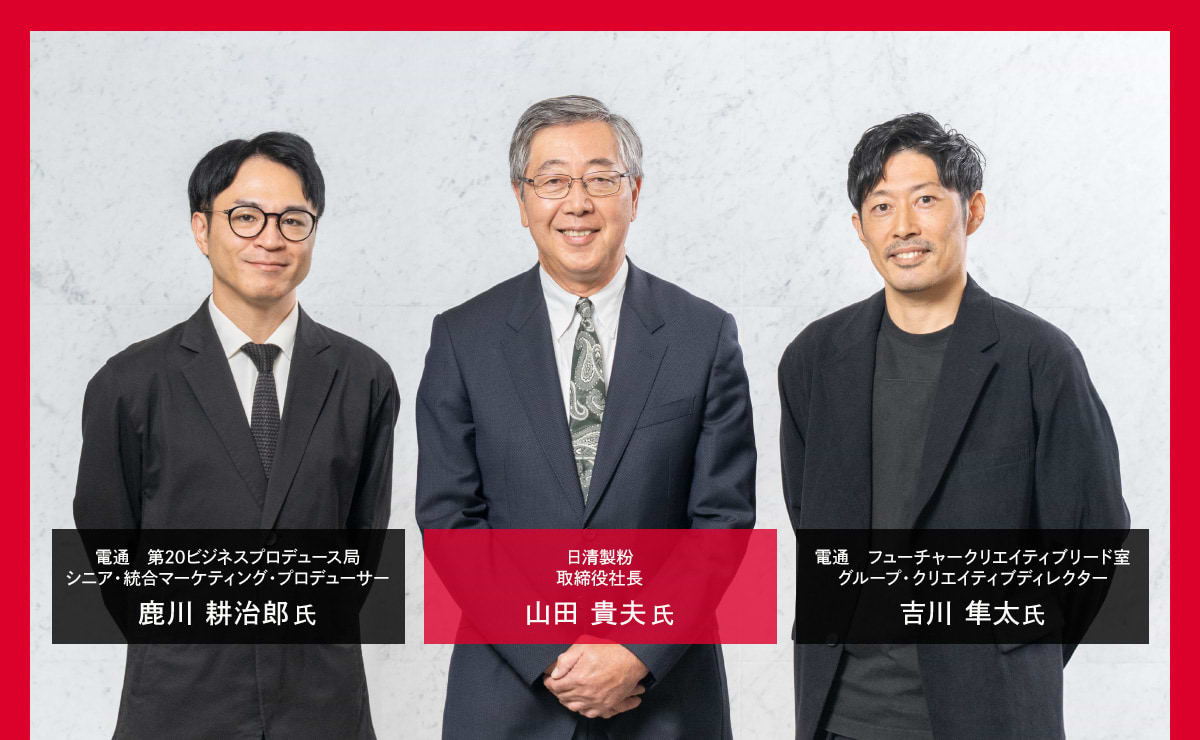
dentsu Japan (part of the domestic Dentsu Group), acting as a partner, conducted "co-creation creative sessions" with Nisshin Seifun's management to conceptualize, articulate, and visualize this future vision. This process gave birth to a new business concept: the "Food Culture Creation Company." The background, transformation process, and future outlook were discussed by Takao Yamada, President and Representative Director of Nisshin Seifun, and key personnel from Dentsu Inc.
Interviewer: Ken Matsui, Publisher, Nikkei Business
※This content is reprinted from a PR article published in the Nikkei Business Digital Edition SPECIAL on November 14, 2025. https://special.nikkeibp.co.jp/atclh/ONB/25/dc1_dentsu1114/ ※Information contained herein is current as of November 14, 2025.
Revisiting Our "Desired Future State" in a Milestone Year
Matsui: Nisshin Seifun holds approximately 40% of the domestic market share for commercial-use flour. In 2025, marking its 125th anniversary, the company completed its Mizushima Plant in Okayama Prefecture, integrating DX technologies.
Yamada: Marking this completion, Nisshin Seifun announced its future vision. Under the new concept, "We want to respond to that aspiration with flour," we aim to become a globally expanding "Food Culture Creation Company."
Matsui: Could you share the background behind exploring this "desired future state" when formulating the vision?
Yamada: The core of our business is the manufacturing and sales of commercial-use flour. Flour is indispensable to people's lives, and the responsibility to ensure its stable supply is immense. At the same time, the domestic market faces challenges like population decline and aging, making it difficult to continue with traditional approaches. Therefore, we saw this milestone as an opportunity to re-examine our direction, incorporating external perspectives.
Nisshin Seifun President Takao Yamada
Matsui: What compelled your company, with its overwhelming market share and brand recognition, to pursue transformation?
Yamada: As the market environment changes, we cannot continue with the same approach to flour and our business model. Furthermore, for sustainable growth, we need to spread the technology and food culture cultivated domestically to the world. This required significant transformation. That said, our mission remains unchanged: to support Japanese food culture based on stable supply. We intend to continue cherishing the essence of the flour business while stepping forward with new challenges.
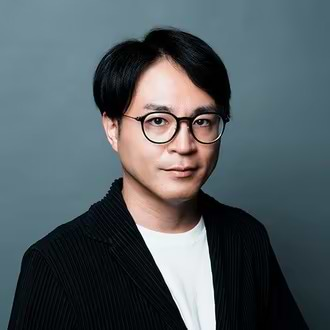
Kojiro Shikagawa, Senior Integrated Marketing Producer, Dentsu Inc. Business Producers Division 20
Matsui: Could you explain how dentsu Japan came to accompany this challenge?
Shikagawa: In 2023, Nisshin Seifun Group Headquarters consulted us about developing a new business concept and defining their "aspirational vision." We subsequently handled their advertising production. This led to a deeper understanding of the entire group, and it was the core company, Nisshin Seifun, that approached us with the " " initiative. Flour milling is the group's founding business, so we approached it with a sense of heightened responsibility, thinking, "The moment has finally come."
The term "Food Culture Creation" born from dialogue with management
Matsui: Please tell us about the "Co-Creative Creative Session" conducted to generate Nisshin Seifun's future vision.
Yoshikawa: In a nutshell, it was a co-creation brainstorming session designed to spark a chemical reaction between the creators and the client. The goal was to use creative methodologies to facilitate dialogue between President Yamada, other executives, and members of dentsu Japan. This approach aimed to draw out Nisshin Seifun's true sentiments and uncover new possibilities for the future.
Matsui: How was it conducted specifically?
Yoshikawa: The session was structured in three parts. First, we conducted a "future interview" with executives under the premise of a "Nisshin Seifun press conference in 2035." By setting the scenario far in the future, we aimed to remove practical barriers and draw out their true aspirations and will for the future.The second session involved presenting concept keyword proposals and refining the language through discussion. The third session incorporated visuals, combining words and images to synthesize everyone's thoughts. Based on the words and images generated on the spot, we clarified the "desired future state."
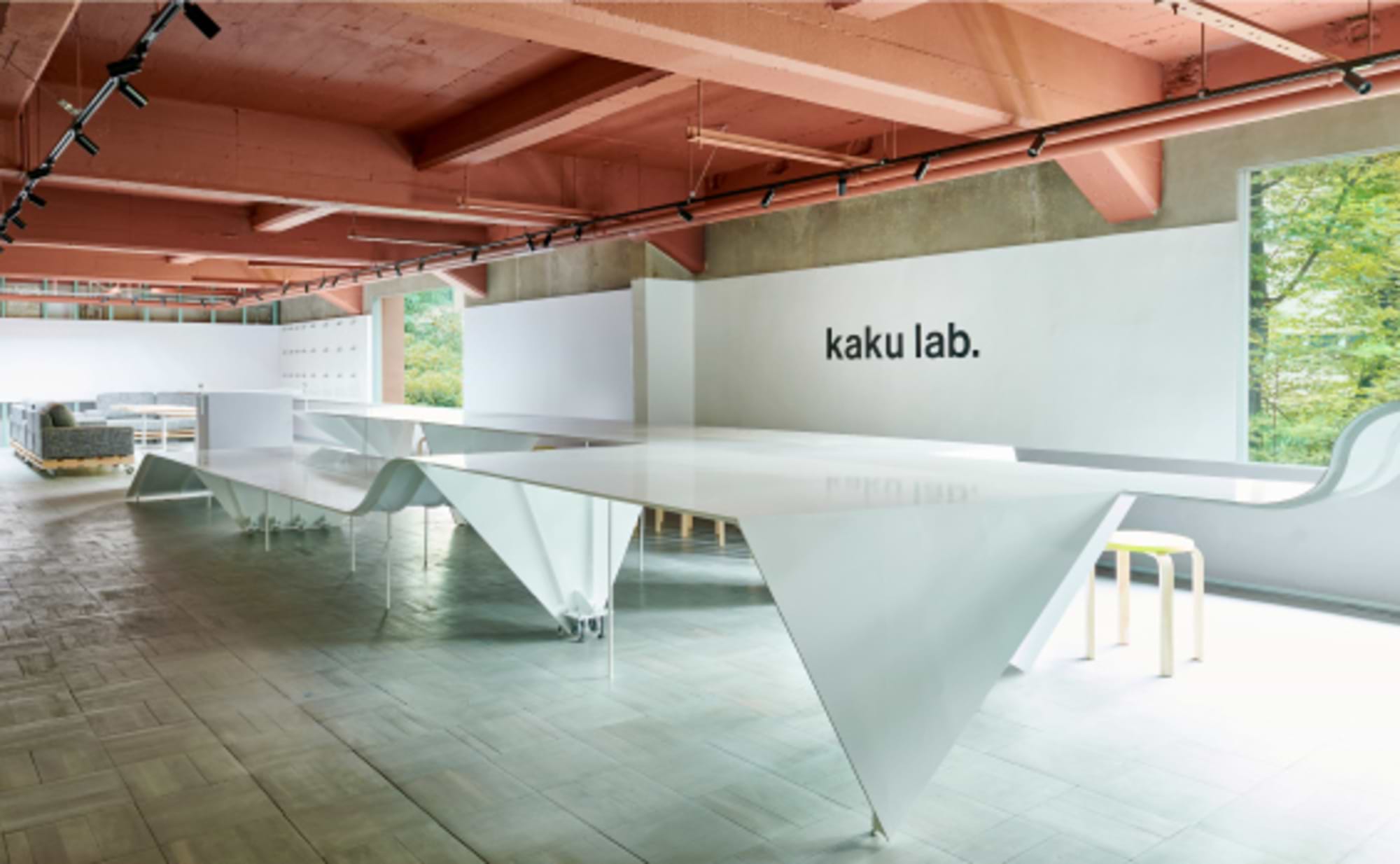
Scene from the "Co-Creative Creative Session." Discussion content was immediately visualized through language and imagery to consolidate ideas.
Yamada: We've had opportunities to exchange opinions with consulting firms before, but this approach was completely different. Through dialogue with Dentsu Inc., thoughts we weren't consciously aware of naturally became words, leading to new insights. As we spoke, we also reaffirmed our 125-year history of creating new flour products and food culture as a cohesive story.
Matsui: Did you discover anything new through discussions with management?
Yoshikawa: Initially, we understood the Mizushima Factory as a "symbol of efficiency and DX." But we realized the underlying aim was to spread Japanese-quality flour and food culture worldwide.Just as we've reimagined overseas ramen and pasta as part of Japanese culture, we will now spread and reshape Japanese food culture abroad. This strong conviction crystallized into the phrase "Food Culture Creation Company." This wasn't something we proposed; it emerged naturally from the management team's own discussions.
Matsui: How has the internal response been?
Yamada: When we unveiled the vision movie produced by Dentsu Inc. at the Mizushima Factory completion event, it resonated deeply with many. Seeing various flours and foods featured in the video, employees seemed proud, thinking, "We've created so much value."
Vision Movie produced through the " "
Strengths of dentsu Japan as a Business Partner
Matsui: Did your perception of Dentsu Japan change through this initiative?
Yamada: When I thought of Dentsu Inc., the impression of a creative collective was still very strong. However, during the actual sessions, they went beyond just developing words and delved into discussions about the core business value of the milling industry and where to place the starting point for business. Through this co-creation, I revised my perception to recognize them as a trustworthy business partner that transcends the boundaries of an advertising agency.
Matsui: Could you share dentsu Japan's approach when tackling management challenges?
Shikagawa: In today's era, simply advertising and selling products doesn't lead to business growth. It's essential to deeply understand the client's vision and strategy itself. To achieve this, we thoroughly study their "history and DNA" and the "current management's aspirations." Naturally, we also read the "Nisshin Seifun 100-Year History" repeatedly.
Yoshikawa:I prioritize two things. One is "creating chaos." While consultants typically emphasize "collection, organization, and analysis," we value "chaos, exploration, and discovery." Our co-creation creative sessions were designed precisely to generate this chaos. The other is storytelling. The ability to gather fragmented comments and weave them into a coherent narrative or message is a core strength of Dentsu Inc.
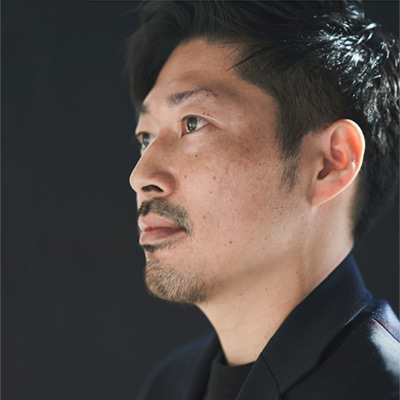
Dentsu Inc. Future Creative Lead Office Group Creative Director Hayata Yoshikawa
Matsui: And that led to the new concept: "We want to respond to that desire with flour."
Shikagawa: Responding to the desire to create deliciousness, health, and food culture using flour as the material. We believed this accumulation connects to the frozen noodles and Neapolitan pizza popularized by Nisshin Seifun, and also links to their current focus, "Amuria."
Yamada: Amuria is a flour rich in dietary fiber, with approximately 80% of that fiber being fermentable dietary fiber*. By promoting diverse products like bread and noodles made with this ingredient, we aim to contribute to health through everyday meals. This is also part of our practice in creating new food culture.
Yoshikawa: Actually, during the session, there was another concept proposal: "Freedom comes from having no fixed form." This concept is expressed in the vision movie. Flour itself isn't edible, but through ingredients, techniques, and encounters with people, it creates culture and spreads across borders. I find it deeply meaningful that this story has taken shape as a visual narrative.
*Fermentable dietary fiber supports the growth of gut bacteria.
Expanding the value of flour by creating new food cultures
Matsui: Please share your outlook for the future.
Yamada: While the domestic market won't see significant growth, new food cultures are continuously emerging. By engaging with these, we aim to enhance Nisshin Seifun's value. Overseas, interest in Japanese cuisine is high, and restaurant chains are expanding. We will support this trend while growing our business globally. This vision-building serves as the foundation for that. To firmly establish it both domestically and internationally, we will continue our communications efforts.
Shikagawa: Speaking with President Yamada, I strongly felt that "flour is both the infrastructure of food and possesses the power to create food culture." "Food Culture Creation" is precisely the term that expresses this, while also pointing to Nisshin Seifun's very raison d'être and business strategy. Going forward, I want to expand this concept into our talent strategy and work styles, and continue to support you wholeheartedly.
Yoshikawa: Even flour, often seen as a commodity, transforms into a growth industry the moment it's redefined as "a material that creates food culture." We're delighted to be part of such a visionary story. We look forward to seeing what food culture Nisshin Seifun will create next, and we'll support you in building the engine to make it happen.
Yamada: Precisely because flour is a raw material, it has vast potential. Even a simple ingredient can be elevated through creativity into "food culture," generating value. We, too, look forward to continuing our collaboration with Dentsu Inc. to create new value.
After the Interview
Ken Matsui, Publisher, Nikkei Business
In its milestone 125th year, Nisshin Seifun incorporated the third-party perspective of Dentsu Japan. rediscover its latent strengths and chart a course for its next phase of growth. This approach itself is innovative, and from the new perspective of "food culture creation," expanding the possibilities for the flour milling industry. dentsu Japan's BX (Business Transformation) support This co-creation, which made a substantial contribution to Nisshin Seifun's business expansion, a valuable initiative for both companies.
After working in Media and Marketing departments, now in the Creative Department.
Specializes in branding areas aimed at enhancing corporate value, including management reform, cultural transformation, inner activation, and brand communication.
Recipient of over 100 domestic and international awards, including Cannes Lions, D&AD, ACC, Galaxy Awards, and Japan Marketing Grand Prix.
2022 JAAA Creator of the Year Medalist.
After graduating from Musashino Art University, worked as a designer before attending the University of Tokyo Graduate School and joining Dentsu Inc. Moved through marketing, campaign, and creative departments to become a Business Producer. Leveraging strengths in data-driven left-brain thinking and vision-driven right-brain thinking, launches and supports projects essential for business growth across all fields. Numerous awards and speaking engagements.