
Note: This website was automatically translated, so some terms or nuances may not be completely accurate.
 Active Learning: How About This? Research Institute ~ 10th Anniversary Relay Column [5/9]
The Relationship Between How to Fly and Active Learning
Hidetoshi Kurashige
Creative Project Base Co., Ltd.
Combining education and creativity to make Japan’s unique educational system more engaging.
The "Active Learning: What About This? Research Institute" was established within Dentsu Inc. by a group of copywriters, art directors, creative directors, marketers, and others. To commemorate its 10th anniversary, we present a series of relay columns in which each member shares their discoveries and the changes they have observed through their involvement in education.
First, let’s travel back in time to the morning 10 years ago when the decision to establish this research institute was made
I’m no longer an employee at Dentsu Inc., so I don’t know the exact schedule from back then, but it was probably a Monday in early September 2015. The decision to establish this research institute was made that morning, before everyone had arrived at the office.
At 7:30 a.m., I called the executive secretary from my desk. “It only needs to be a moment—is there any time today when Executive O is available?”
I received a reply saying 10 minutes starting at 8:00 AM was okay, so I printed out a single A4 page I’d typed up in Word and headed to the executive’s office. With that paper in front of me, I broached the subject.
“I’d like to launch an educational research institute,” I said.
“Advertising is meaningless if it isn’t seen. That’s why this industry has accumulated skills that can instantly amplify the viewer’s curiosity. We also have a habit of formulating numerous hypotheses to address client challenges, then testing, implementing, and resolving them.”
“I believe the diverse insights accumulated in the advertising industry can make a significant contribution to the trend of ‘active learning,’ which aims to create an educational environment where there isn’t just one correct answer,” I explained.
And there is another great asset at Dentsu Inc. that can be applied to education: the so-called “Creative Test,” a selection exam used to determine who is assigned to the Creative Division. To cite examples from questions I actually took: “If a week were to become eight days, what would you do with that extra day? Write 800 characters.” “You had a fight with your girlfriend or boyfriend. Apologize using only a drawing.”“You woke up this morning to find you’ve turned into a snake. List three good things and three bad things.” There are infinite possible answers, and the test assesses both creativity and objectivity. This approach can be applied to what modern school education needs. I had been paying attention to it because it’s interesting and there’s a clear need for it.
“Sure.” Executive O replied immediately. However, he added, “If you’d be willing to include a single line in the mission statement stating that ‘the advertising industry is entering an era where we not only solve clients’ problems but also help identify those problems together’…” Since that was exactly what we wanted as well, we replied, “Yes, absolutely, please do.”
After a month and a half of preparation, on October 15, 2015, the “Active Learning: What About This? Research Institute” was born.
The members were all employees who had some kind of connection to education—whether they had graduated from a college of education, coached a weekend youth baseball team, developed board games, or conducted workshops for children.
As for my own connection to education, while I was assisting with Dentsu Inc.’s social contribution initiative, “Advertising Elementary School,” as part of my job, I had also personally launched an educational research project. It was called “Collecting Legendary Lessons.” Fascinated by the appeal of the creative tests mentioned earlier—where there is no single correct answer—I set out to collect equally engaging and educational lessons and problems from all eras and cultures, and analyze them independently.
I compiled lists covering the past and present, Japan and abroad, schools, corporate training, home education, and even education in fiction. I even went on field trips to discover educational principles that piqued my curiosity. Applying those rules, I had just launched a project called “Weird Homework,” which creates problems that are “fun, make you want to try them, and lead to learning before you know it.”
I had actually planned to launch “Weird Homework, Inc.” as a side hustle on the weekends, but when I mentioned it to people around me, some expressed interest in joining me. After much deliberation, I decided to take the plunge and do it as a company! So, first thing Monday morning, I rushed into the executive office.
So, in my case, it’s “Weird Homework.” As for the other members, they’re gradually creating programs based on their own interests and backgrounds, then proposing them to the world with the question, “What do you think of this?” That’s how we started.
When we were founded, some media outlets wrote about it as if Dentsu Inc. were entering the education business, but in reality, it’s more like this. So, it’s completely different.
Three “What About This?” proposals that have recently generated a lot of buzz
It’s been 10 years since that morning. The seeds that I and the other members planted have sprouted in abundance and borne all kinds of fruit.
The fun part about starting something on your own initiative—rather than because someone told you to—is that as the project grows and its branches extend, they naturally branch out in original directions (it’s like organic farming).
In my case, aside from “Weird Homework” and “Legendary Class Collection” (published in 2022), there’s “Kodo-kan 2,” which revived a legendary domain school in Saga Prefecture; the “Gyakujuku” lecture series at Waseda University’s adult education program;“7 Lessons in Creative Thinking,” “Wind Direction Lab,” “Proactive Training for Teachers, by Teachers” (abbreviated as “Sen-3”) with Showa Women’s University, and “If You Do It, It Will Happen Class” at Yonezawa Citizens’ University—all sorts of projects have emerged that I could never have imagined when this institute first started 10 years ago.
Furthermore, when you include classes at elementary, junior high, high schools, and universities, as well as corporate training, workshops, and lectures, the number is quite substantial. I am truly grateful for the requests I’ve received from those outside the field of education.
I just casually wrote “outsider” there, but actually, that seems to be the key. It is precisely because I am an outsider that I notice certain things. It is precisely because I am an outsider that I can say certain things.
Since this is a special 10th-anniversary column, I’d like to share three proposals that generated a significant response when this “outsider” suggested, “How about this?”
No. 1: A Suggestion Regarding the Definition of Active Learning
To be honest, I’ve always had my doubts about the term “active learning” itself. I used to wonder: Is there any form of learning that isn’t active? However, if education has become rigid due to various circumstances, then we do need to make learning active again. If that’s the case, I’d like to help with that.
That much is fine, but the problem lies in the Japanese translation of “active learning.” It’s defined as “proactive, interactive, and deep learning”—but what do you all think of that?
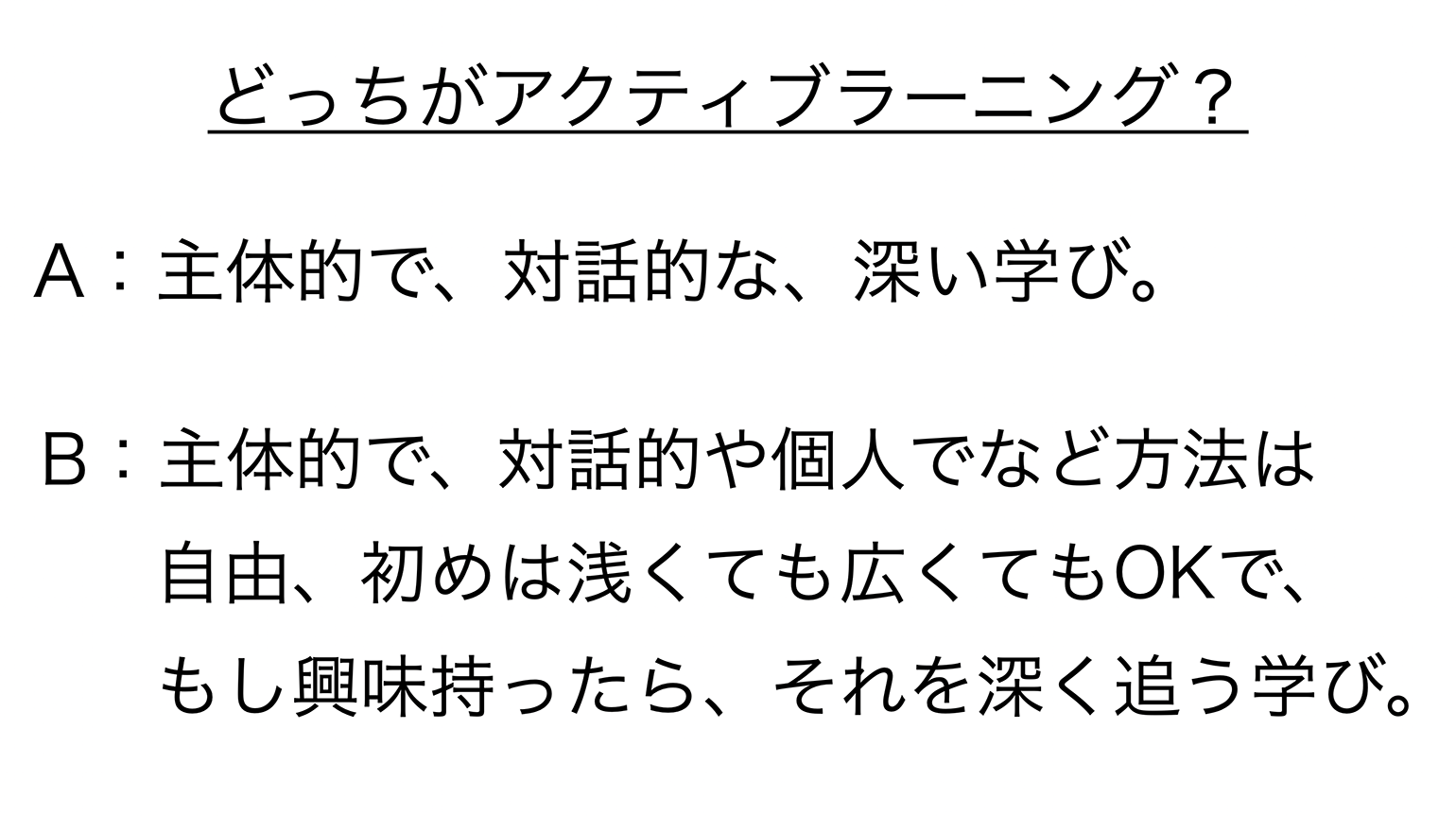
It might be hard for school teachers to say this, but from my perspective as an outsider with a background in the business world, it feels a bit off.
"Self-directed" is spot on. Of course, I have no objections.
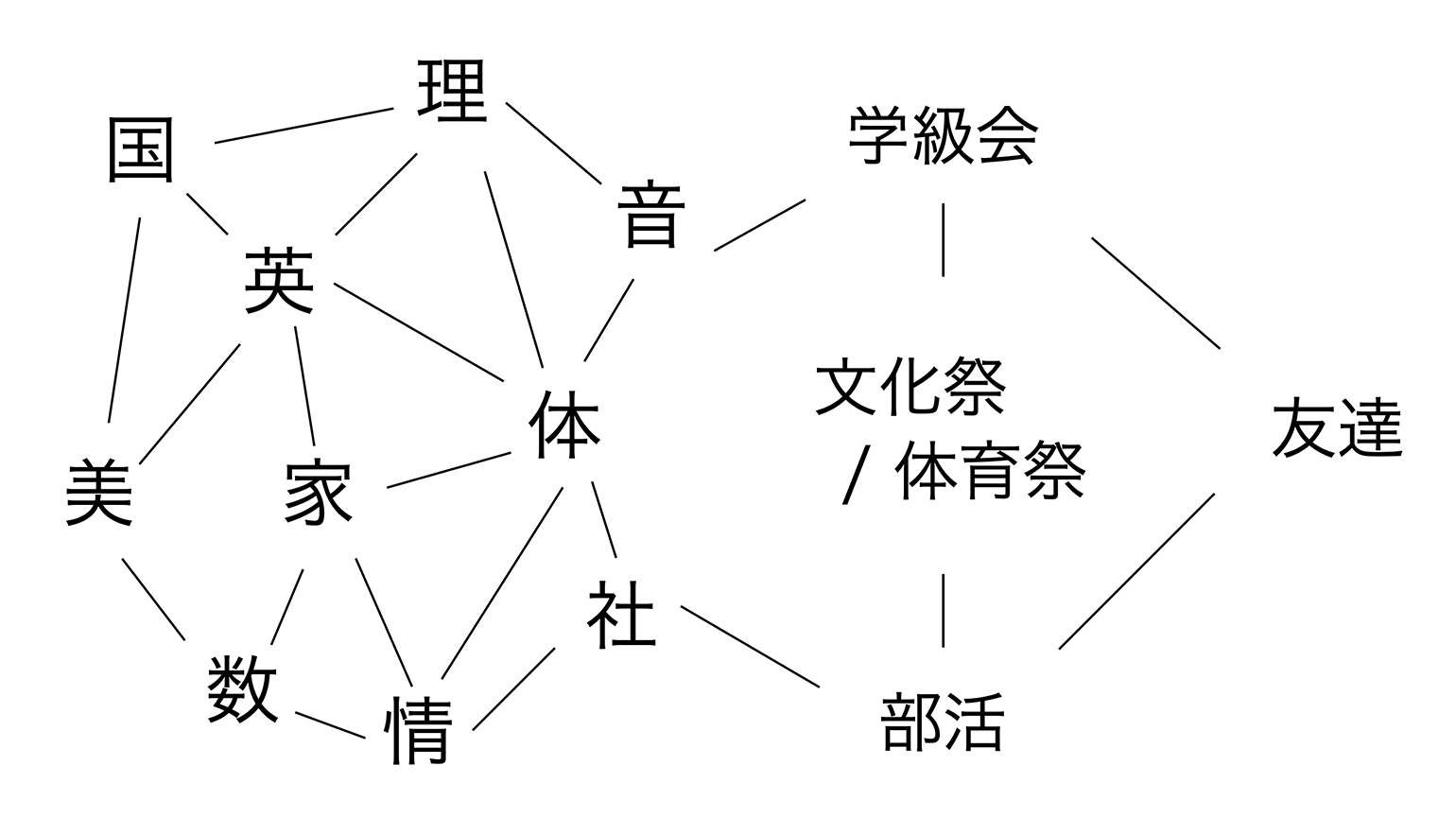
But does it really need to be “interactive”? Just listening to the teacher in a lecture while your mind is actively processing the information—even without actual dialogue—isn’t that super active? (Reading and watching videos are the same, right?)
I also take issue with the final point, “deep learning.” Learning broadly and shallowly—I think that’s incredibly important. Above all, it’s fun. It’s like a restaurant buffet. You pile a little bit of this and that onto your plate (and end up overeating). While doing that, if you eventually come across something that really grabs you, that’s when you dive in and study it deeply. Because you’re interested, it naturally becomes deeper. You might even keep learning even if someone told you to stop. Isn’t that what “active” really means?
If we decide that it has to be interactive or it has to be deep, we lose our sense of agency and end up being “not active.”
The slide shown above is one I projected and used to pose a question during a recent lecture at a study group with over 150 attendees. Representatives from the Ministry of Education were also present. Now, I wonder which one you education professionals felt was more “active” (I’ll leave that to your imagination).
At another event, I gave a talk with this title:
“Are you an adult who engages in self-directed, interactive, and deep learning?”
How many adults today are actually engaging in self-directed, interactive, and deep learning? When I pose that question, the room falls silent as if someone had poured water over it. It’s not right to tell children to do something that even adults aren’t capable of, is it?
So, I suggested, “Why not go with Option B, which is easier for us to lead by example?” I pointed out that in both the business world and the creative industry, the people who are doing great work are all following Option B. At that, the teachers’ faces lit up a little, and their pens started moving again—actively taking notes.
Part 2: Learning in the VUCA Era: “What About This?”
People often say that we live in a VUCA era—an era where the future is unpredictable. That’s why the “right answers” of the past no longer apply.
I can’t help but wonder: has there ever been an era where the future was clear, since the Earth was born? It’s always been VUCA, isn’t it? But anyway, assuming it is VUCA, what should we do about it? Not many people seem to have an answer to that.
So people say, “It’s active learning,” or “Inquiry-based learning is important,” or “We need to help students find answers on their own.” But the reality is, teachers (and even non-teachers) haven’t received that kind of education themselves, so they say they can’t teach it. Or they just cite methods and examples from overseas. In other words, they aren’t thinking for themselves… It’s just imitation, so it doesn’t work…
So, let’s ask this question here.
Q. In this VUCA world, what can teachers—or adults—do for children?
What’s your answer? It doesn’t matter what the government or the OECD says. After all, even experts can’t predict the future. And there isn’t just one right answer. In other words, there are no wrong answers either.
As you’ve been reading, have you come up with your own answer?
Here’s how I answer:
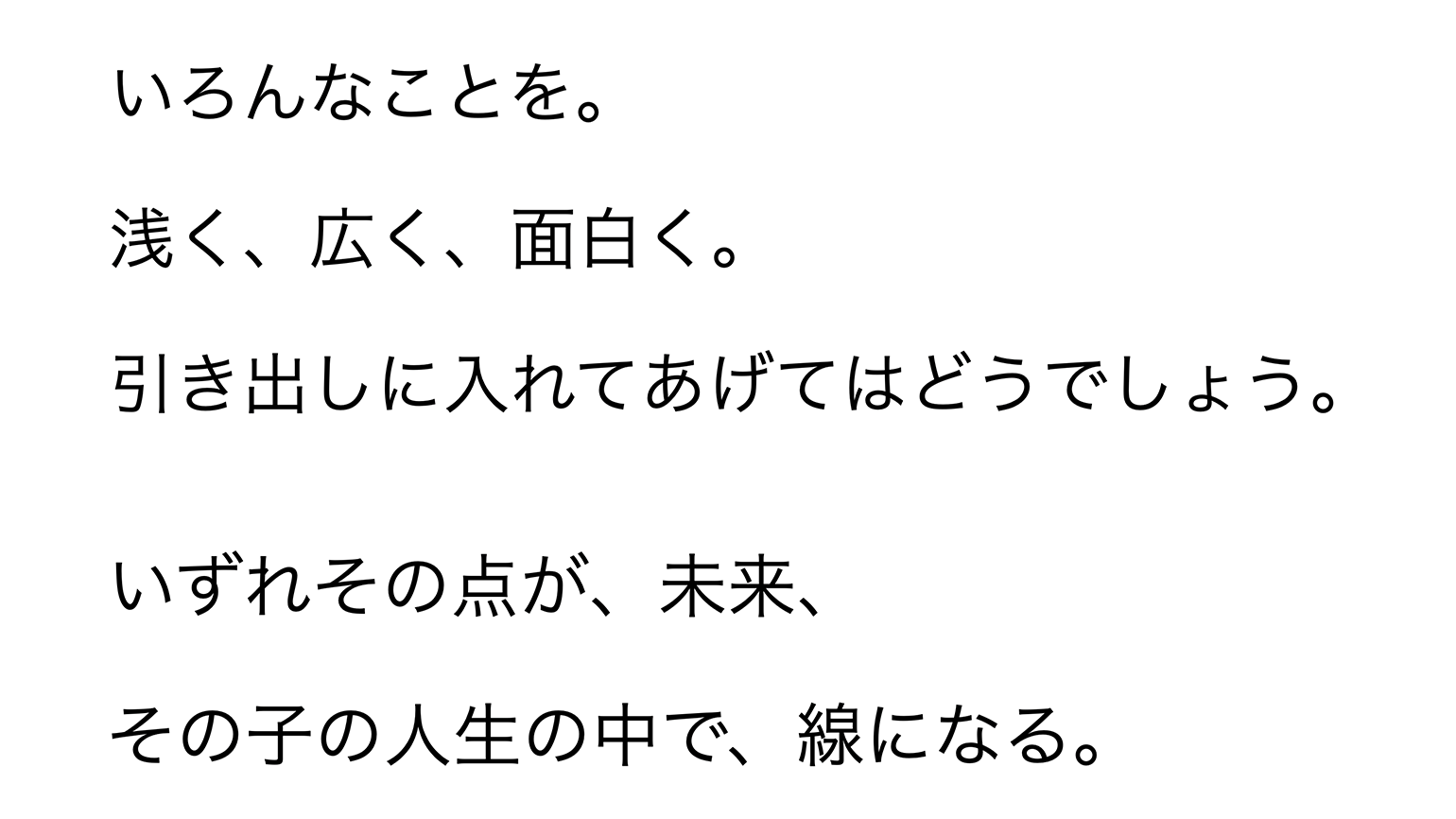
All sorts of things. In an engaging way. Isn’t it about helping children fill the drawers of their minds and hearts?
We don’t know what the future holds. But in each child’s life, the dots that adults have given them will connect to form lines, depending on the situation at the time. In other words, each child will come up with their own answer.
That’s why I say: shallow, broad, and fun.
Steve Jobs, whom you all love, said the same thing, didn’t he? “Connecting the dots.” That dots connect in unexpected ways to form a line, and something new is born.
For me personally, what I learned in school is still with me today. Every subject, every school activity, and all the experiences I shared with friends. Whether those connections formed naturally or I made them intentionally, they’ve shaped my current job and who I am today. Isn’t it the same for you?
Actually, what you learn in school is incredibly useful once you enter the workforce. That’s why, whenever I speak to young people, I always tell them: “If you want to turn your passions into a career, you should definitely stick with your schoolwork.” I explain that knowledge connects like the stars in a constellation. That’s why I’m so grateful to my teachers—especially those who taught me in such an engaging and broad-ranging way that it really stuck with me.
Is what’s needed to fly through the sky actually important for the society of the future!?
The third and final point is something a “magician” taught me: “How about this?”
I believe that all of humanity is made up of magicians. Cooking delicious meals. Developing amazing technologies. Coming up with world-first projects. All professionals are magicians. And teachers possess the magic to bestow wisdom upon children. It’s incredible.
In my recent lectures, I’ve been sharing stories like this, and at the end, I quote a line from a senior wizard whom I personally admire. He is the eternal boy in green clothes: Peter Pan.
One night, Peter Pan invites Wendy and her brother to come to Neverland, doesn’t he? “How?” “We’ll fly,” he says.
Then he explains how to fly. Here’s a question.
Q. What do you need to fly? Tinker Bell’s magic dust, and one more thing—what is it?
Even though everyone must have seen the movie at least once as a child, only one person out of 1,000 (an American) has gotten the answer right so far. Do you know the answer?
Here’s the answer.
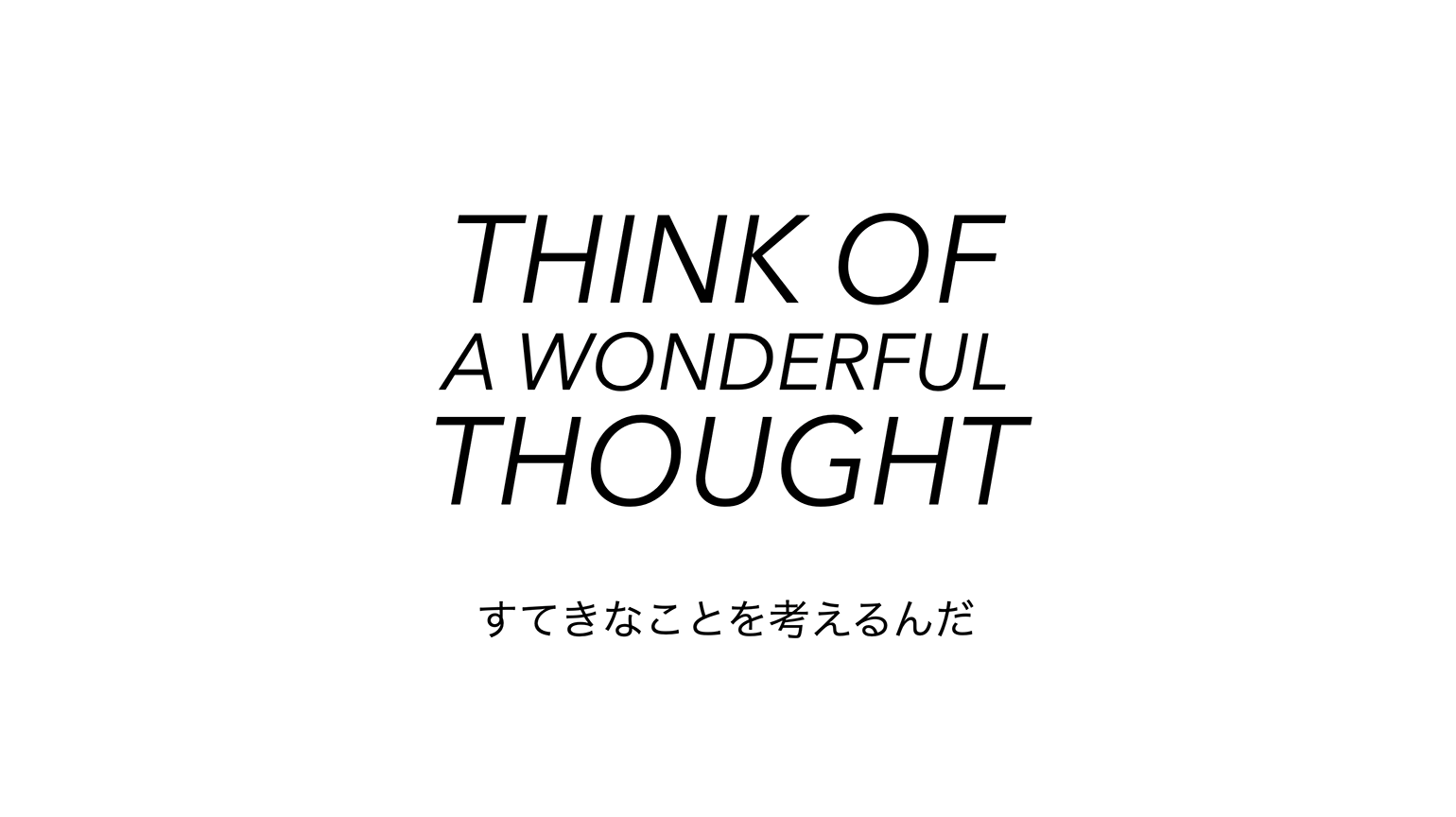
This line. I believe it’s a profound proposal for the future of Japan—no, for the future of humanity.
To all you adults out there: Are you thinking about wonderful things?
Are you writing wonderful things in your proposals? Are you talking about wonderful things in meetings? Have you included wonderful ideas in your life plans?
Whenever I talk about this, I get a huge response from teachers. I hear it’s written in the principal’s office at an elementary school in Hiroshima. At a junior high school in Aomori, they even posted it in the restrooms.
Right now, I believe our ability to think of wonderful things is being put to the test.
Envisioning things like, “It would be wonderful if we did this project,” “It would be wonderful if this came true,” or “It would be wonderful if society became like this.” In other words, we’re being asked to come up with our own “What if…?” ideas.
Let’s all think of lots of wonderful things together. I want to fly through the sky—more freely, higher than ever.
Having spent the past 10 years working alongside so many people, I feel this more strongly than ever.
The next “What about this?”—let’s do it together.
Active Learning “What About This?” Research Institute Website
https://www.konnano-dodaro.jp/
Related series:Active Learning "How About This?" Reports
Was this article helpful?
Share this article


Newsletter registration is here
We select and publish important news every day
For inquiries about this article
Back Numbers
Author
Hidetoshi Kurashige
Creative Project Base Co., Ltd.
Representative Director/Creative Project Director