Note: This website was automatically translated, so some terms or nuances may not be completely accurate.
 Active Learning: How About This? Research Institute ~ 10th Anniversary Relay Column [4/9]
Are you mixing things up with the “unfamiliar”?
Combining education and creativity to make Japan’s unique educational system more engaging.
The "Active Learning: What About This? Research Institute" was established within Dentsu Inc. by a group of copywriters, art directors, creative directors, marketers, and others. To commemorate its 10th anniversary, we will present a series of relay columns in which each member shares their discoveries and the changes they have observed through their involvement in education.
I am Akie Sekijima from DENTSU SOKEN INC., a member of the “Active Learning: What About This? Research Institute.” While working as a systems engineer at an IT company, I have been engaged in work that combines education and technology to solve problems.
In this article, I’ll share my personal perspective on “blending with the unfamiliar”—an experience I gained through encounters with creative colleagues—and “the necessity of remaining unique” to thrive positively in this rapidly changing era. For those of us living in the age of AI, how we engage with different values is a crucial theme not only for children but for adults as well.
The Gap Between Society and Education I Observed While Balancing IT and Parenting
I started my current job after applying for an internal entrepreneurship program at DENTSU SOKEN INC. in 2010. Amid rapid advancements in IT, I was acutely aware every day that the type of talent companies sought was changing dramatically. At the time, I was raising two children in elementary and junior high school and had begun to question the very nature of learning at school and cram schools.
At the time, iTunes was just becoming popular, making it possible for individuals to listen to their favorite music on personal devices. However, it was an era when even the cloud was viewed with skepticism, and smartphones and tablets were on the verge of becoming mainstream.
In my proposal, I suggested an “ecosystem where children could freely access educational content from various devices based on their learning progress and individual learning styles.” Many children struggle with rote memorization and text-based learning. I believed that by diversifying learning methods through IT and enabling more efficient learning, the time saved could be dedicated to a variety of new experiences.
I still remember some executives asking, “Isn’t analog education sufficient?” Nevertheless, there were also executives who said, “I don’t really understand it, but let’s just give it a try.” Encouraged by those words, we conducted repeated pilot tests at public cram schools and private schools in Ama Town, Shimane Prefecture.
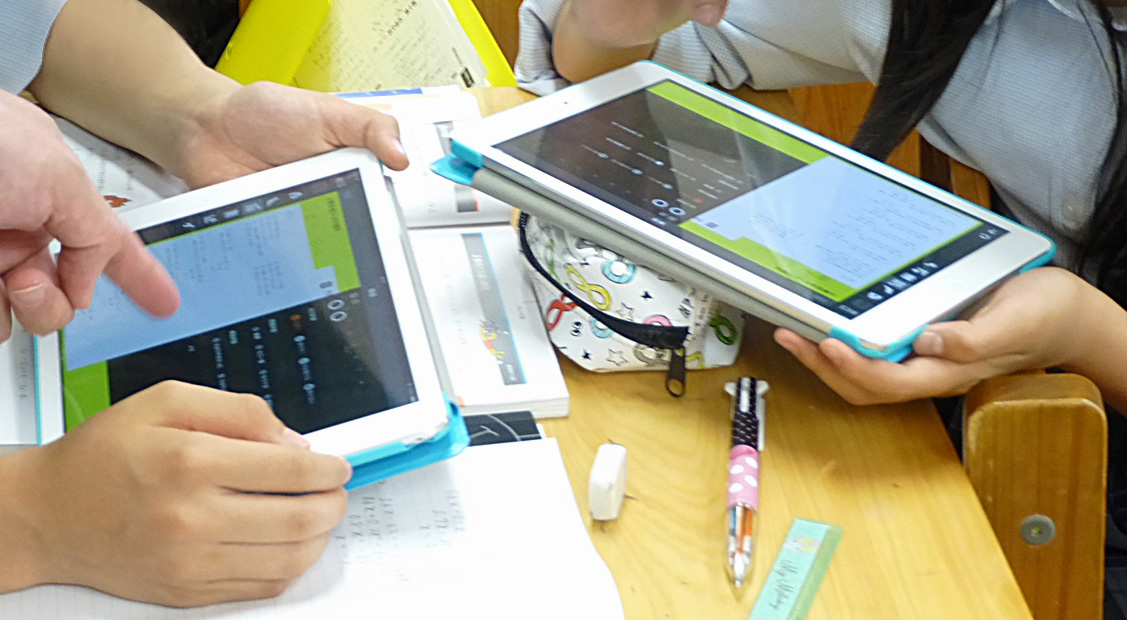
There, we distributed tablets equipped with an app capable of delivering digitally optimized learning materials tailored to each student’s individual progress and level of understanding. This was the implementation of our adaptive learning platform concept, enabling students to learn anytime, anywhere, while allowing us to monitor their progress. We also combined this with ongoing support via social media. We observed clear changes in the students’ motivation and comprehension.
Related articles:
・No Bookstores, No Cram Schools! “Adaptive Learning” Tried on a Remote Island in Shimane Prefecture
・Ritsumeikan Moriyama Junior and Senior High School and Inolabo Launch Adaptive Learning
IT can support existing education more efficiently and effectively. I felt a tangible sense of accomplishment that convinced me of this. At that time, I believed that expanding adaptive learning was a meaningful contribution I could make as a working mother involved in IT.
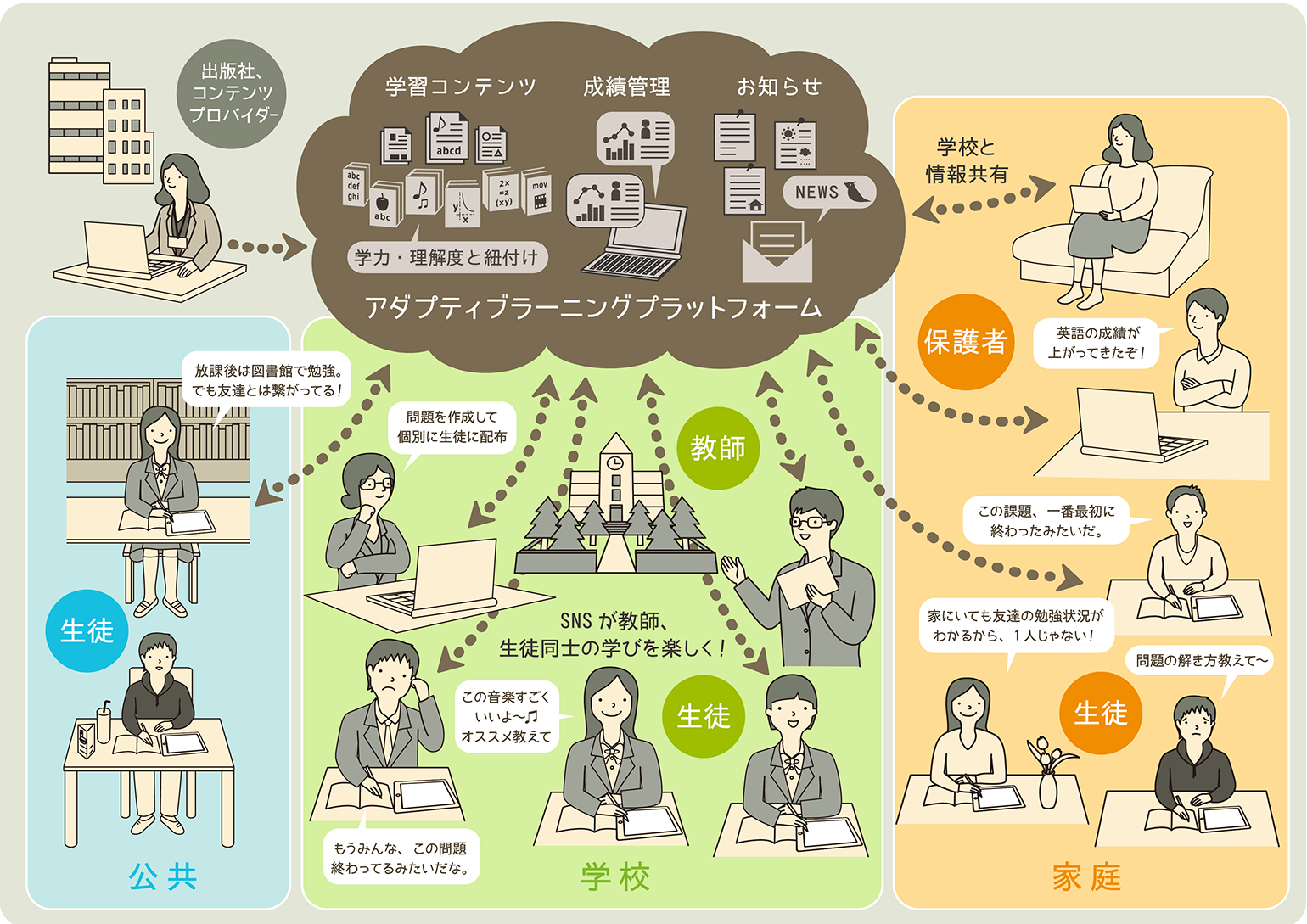
An ecosystem that enables access to a variety of digital educational content from anywhere, realizing individually optimized learning
Around 2014, the Ministry of Education, Culture, Sports, Science and Technology (MEXT) began using the term “active learning,” and discussions on how to achieve self-directed learning gained momentum. The goal was to incorporate active participation—such as speaking, writing, and presenting—into education, aiming to cultivate critical thinking, judgment, and expressive skills rather than merely memorizing facts. It certainly seemed as though the educational landscape was beginning to change.
A Sense of Unease and the Budding of Curiosity
In 2016, I was seconded to Dentsu Inc., where I met the members of the “Active Learning: What About This? Research Institute.” It was a group centered around professionals whose work revolves around expression—copywriters, art directors, and planners. They approached education from a creative perspective, interpreting, breaking down, and reconstructing it. To be honest, it felt like a completely different world to me.
What surprised me most was that, even though we were all dealing with the same theme of education, the landscape we saw was different. While I tried to build things from the ground up based on systems, efficiency, and reproducibility, they started by framing the questions. The starting point of our thinking was different. The level of detail we focused on during discussions, the way we constructed structures, and the paths we took toward the “right answer” were all different. That difference felt less like a mere difference in methodology and more like a difference in the very way we viewed the world.
I remember feeling very bewildered by that difference. I wondered if what I had built up over the years wouldn’t hold water here. There were many moments when I felt that way. It wasn’t that I couldn’t keep up with the discussion. It was just that I lost sight of what I should use as my foundation for thinking. The axis that I thought I had within me began to waver little by little.
At that moment, I suddenly recalled an art class from middle school. For an assignment to draw a white cube, a classmate had rendered the solid in a pale orange and was praised by the teacher. To me, it looked nothing but white. I couldn’t understand why it was pale orange, or why that was being praised. That small sense of bewilderment I felt back then suddenly came flooding back.
I had a similar feeling during meetings with the research institute members. Why did everyone think that way? Why did they think that particular expression was good? Even though we were all discussing education, our focus and the way we framed questions differed. The structure of our materials and the goals we set were also different. I fell silent and began to define the scope of my role, responding only within those boundaries.
At the same time, as I interacted with the members, a small spark of curiosity began to grow. The very act of trying to understand those differences gradually became interesting. I began to question my own assumptions and reexamine things from a different perspective. When I did that, the scenery I had previously taken for granted began to look slightly different. The unfamiliar shifted from being “scary” to “intriguing.”
When mixed with the unfamiliar, uniqueness stands out
Around the mid-2010s, I began hearing the terms “design thinking” and “art thinking” frequently. This sparked a feeling within me: “I don’t want to fall into the trap of thinking I’ve easily grasped these concepts.”Throughout my long life, I had never had the opportunity to engage directly with art or the visual arts. Encountering the creative members at the research institute gave me the push I needed. I thought, “I want to immerse myself in a world I’ve never experienced before to discover new possibilities and insights,” so in 2018, at the age of 50, I decided to enroll in the Department of Design and Information at an art university.
The fact that I could obtain a teaching license in “Information” at an art university was one of the reasons I chose it (currently, this university no longer offers the “Information” teaching license). In schools, there were discussions about making “Information” a subject on the National Center Test for University Admissions, and textbooks were completely overhauled. The subject matter was so vast that it was impossible for classroom teachers alone to cover it all, and there was a growing consensus that collaboration with professionals from the corporate sector was necessary.
Additionally, I found it unique and intriguing that I could earn a teaching license in “Information” not as an extension of the sciences, but within the realm of the right brain—which was another reason I chose the art university. I also had a desire to “learn how to convey ‘Information’ by utilizing technology.” At the time, even in my professional field, the focus had shifted from system development itself to the visualization and utilization of data. The desire to express things from the user’s perspective, rather than the logic of the creator, drove me forward.
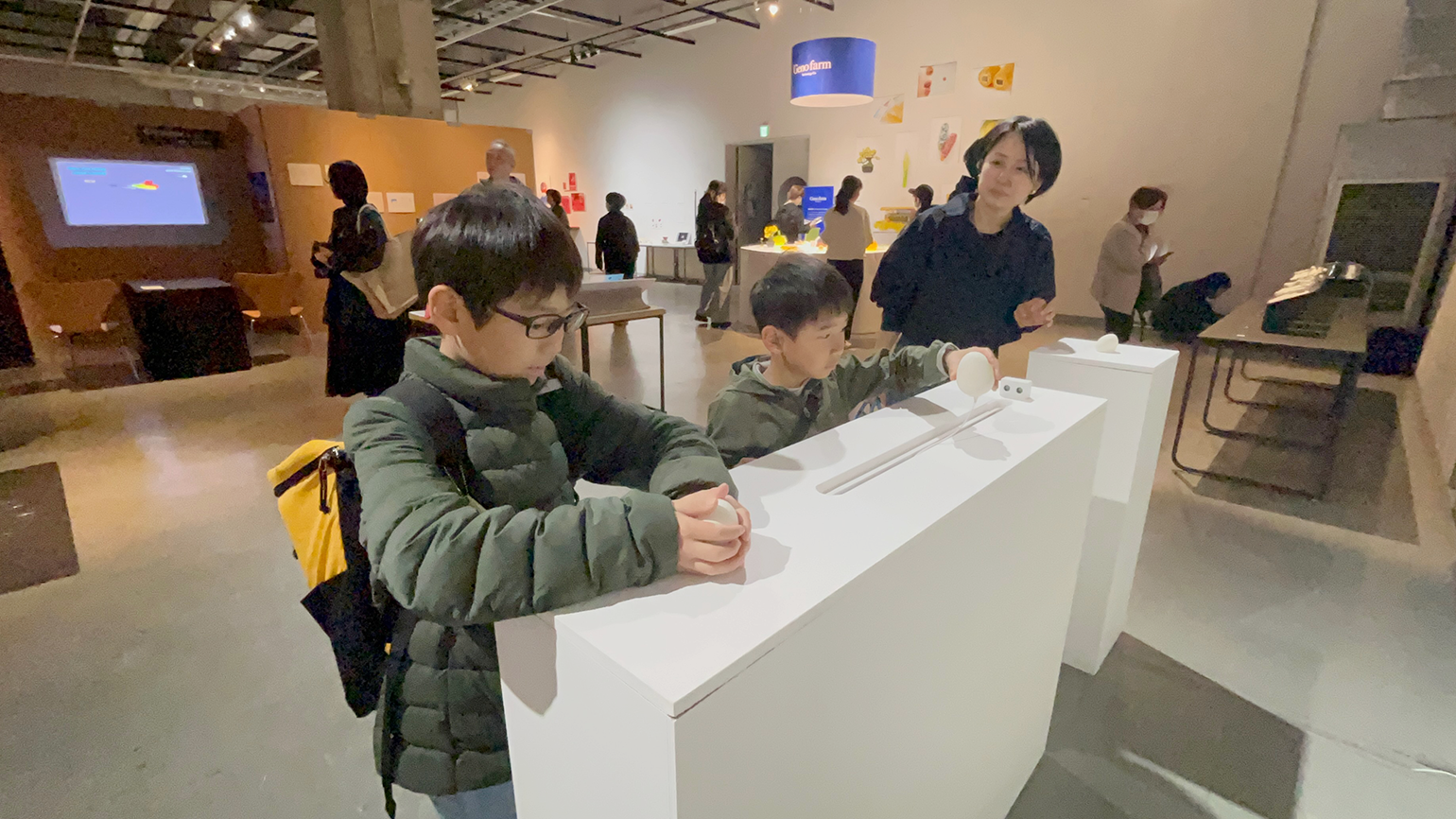
What really shocked me once I started studying was a course called “Foundations of Form,” which was common to all departments. In that class, several white objects were placed in the center of the room. About 15 of us would surround them, and one by one, we’d pick one up and describe our impressions in a single word: heavy, cold, rough, soft. Even for the same object, the words that came out were surprisingly diverse.
Afterward, we were asked to choose one of those objects and express it on canvas under the rules of not using white and not drawing its shape. Depicting a white object without using white. Conveying an image without drawing its form. It was two full days of continuously searching within myself for what I felt and what I wanted to convey.During the presentations, some works clearly conveyed the artist’s unique personality even though they bore no resemblance to the original object. Their expressions were refined within a sense of security where they were accepted without judgment. I was deeply moved by that diversity and freedom, and I felt that it would be wonderful if such classes were widely implemented in elementary and middle school education.
Around the same time, something memorable happened in a required course in my department, the Department of Design Systems and Information.
The assignment for that class was to use Processing, a visual programming language, to create something using only circles, triangles, and squares—conveying meaning through size, color, and movement alone. For example, we were asked to express the impact and movement of a parachute opening in a few seconds of animation. There was no single “correct” answer.
Many students experimented and managed to create something within the time limit. However, a teacher who was taking the course to obtain an additional “Information” teaching license at the school’s request said, “I ran out of time while I was still thinking about what to make,” without producing anything.
I saw myself in that person from years ago. It must have been agonizing to be in an unfamiliar environment where I couldn’t utilize my expertise. Still, I feel it’s a shame they couldn’t enjoy such a valuable opportunity. Rather than focusing on quality, the most important thing is to simply try expressing yourself—to experiment and enjoy the process. Unless you actively engage with the experience, even the best opportunities will slip through your fingers.
“Different” doesn’t simply mean the existence of diverse values. It’s about whether you choose to stand at that intersection yourself. I felt that this attitude is what truly matters. And “uniqueness” isn’t something that lies dormant within you from the start; it’s something that stands out when mixed with what is different.
Precisely because we live in an era where AI and technology are evolving rapidly and many jobs are being automated, what remains for us is the ability to “feel, interpret, and combine.”
More than knowledge itself, it is how we engage with different values and areas of expertise. The accumulation of these experiences will highlight our uniqueness and lead to the strength to walk our own path in life. By continuing to blend with the unfamiliar, our uniqueness is born.

*iTunes is a trademark of Apple Inc., registered in the U.S. and other countries.
Active Learning: "How About This?" Research Institute Website
https://www.konnano-dodaro.jp/
Related series:Active Learning "How About This?" Report
Was this article helpful?
Share this article


Newsletter registration is here
We select and publish important news every day
For inquiries about this article
Back Numbers

Author
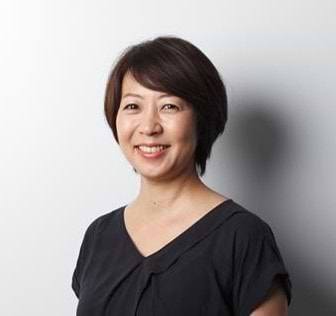
Seki-shima Akie
Dentsu International Information Services, Inc.
プロジェクトクリエイション室
Senior Producer