"Even when we try to promote biodiversity, it’s difficult to gain the public’s empathy or participation." Many companies and local governments share this concern.
Biodiversity is not merely about protecting endangered species; it is also about how to pass on the richness of nature—which supports human lives and society—to future generations.
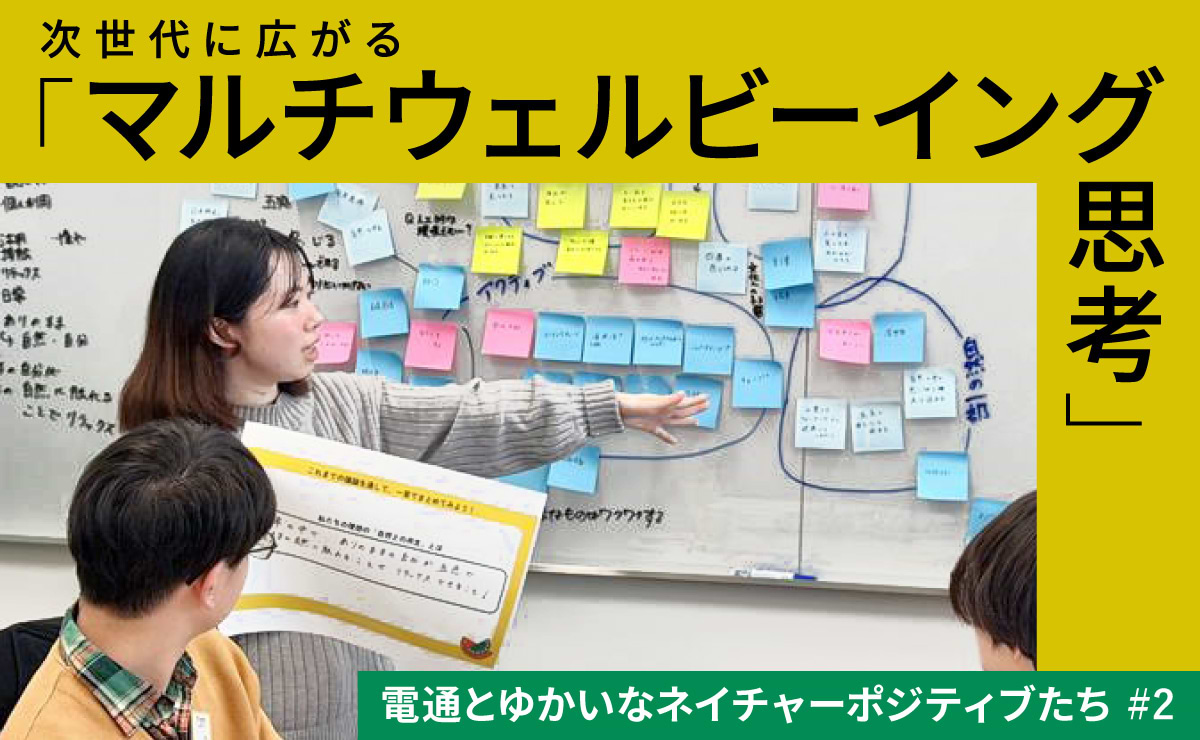
To explore signs of future values regarding nature, we conducted a quantitative survey and workshops with university students through “Updemy®,” a project jointly led by ODK Solutions and Dentsu Inc. to create engagement opportunities with students.
What emerged was a new set of values that views nature not merely as a source of relaxation or a venue for leisure, but as something that encompasses relationships and a sense of shared connection. In this article, we explore these emerging trends through a dialogue between Yuka Sawai, Yurika Mori, and Ryutaro Kurisaka of Dentsu Inc.’s Sustainability Consulting Office, and present four questions to help reframe corporate activities through a multi-well-being lens.Naoki Tanaka of the same office was also involved in the planning and implementation of this survey.
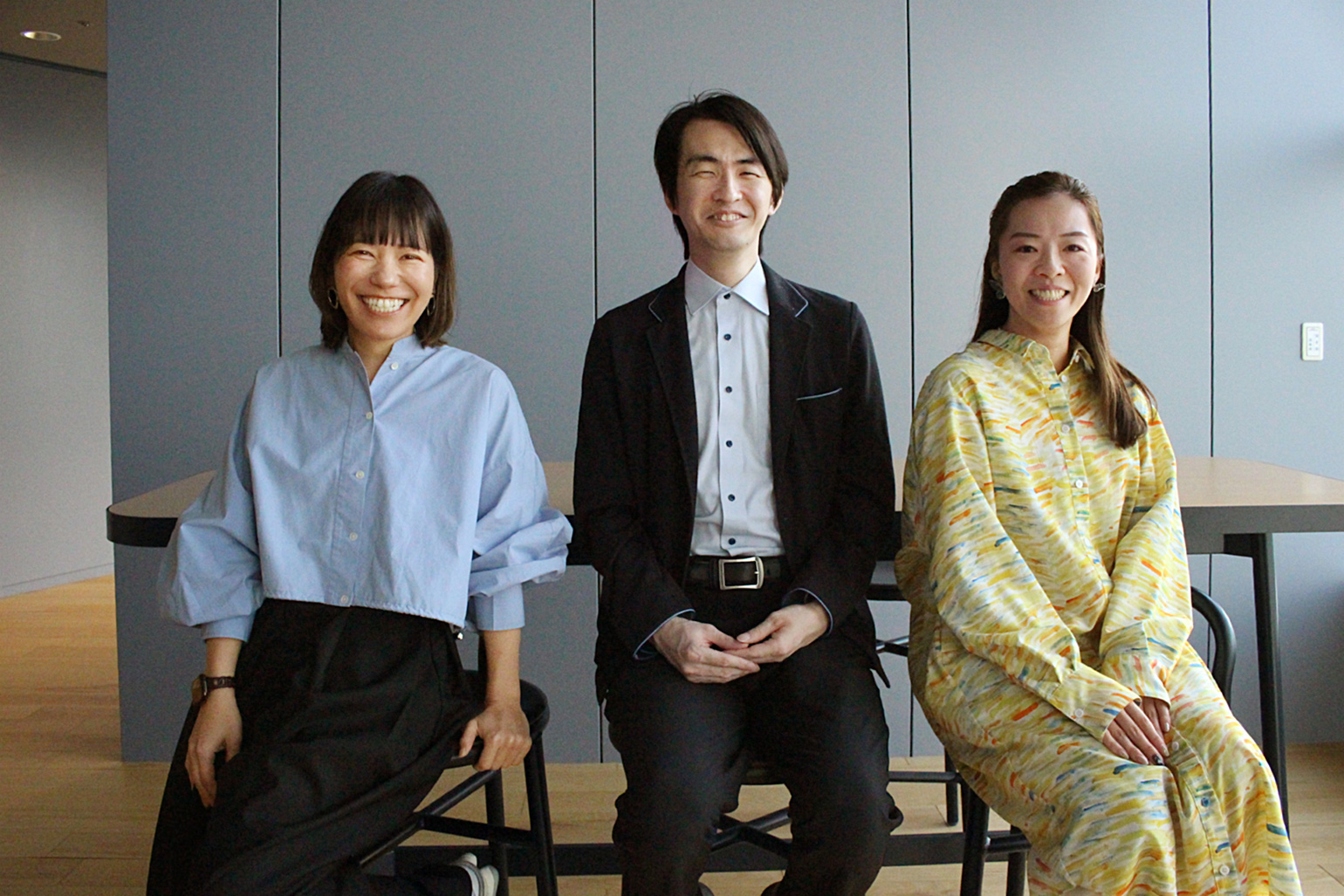
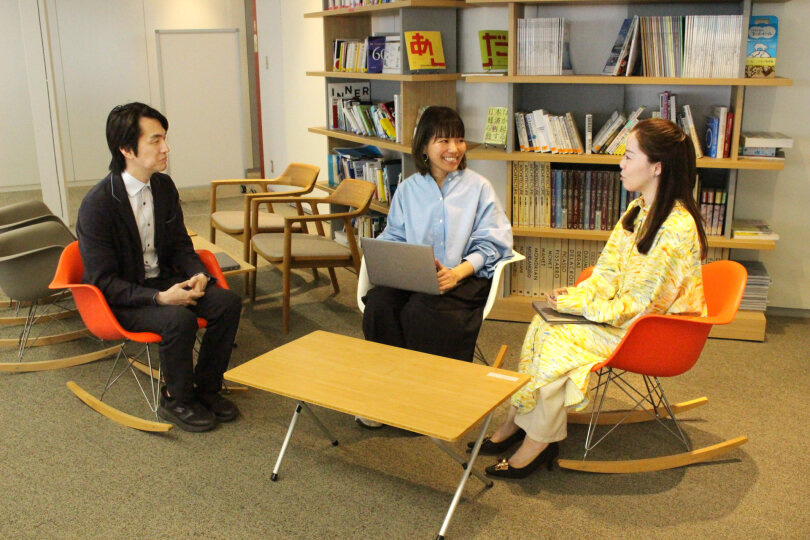
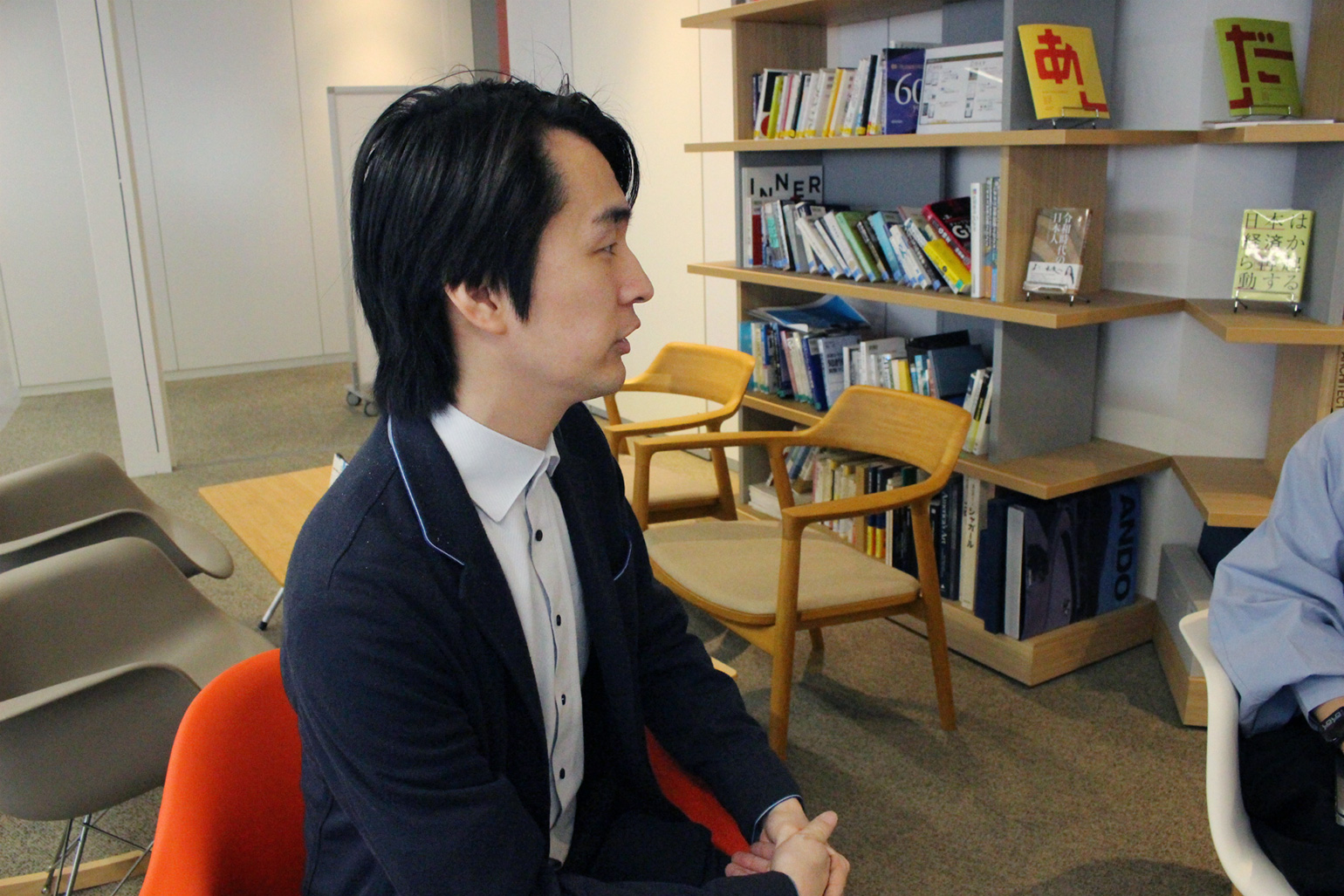
(From left) Yuka Sawai, Ryutaro Kurisaka, and Yurika Mori of Dentsu Inc.
Do Young People Love Nature!? Signs That “Natureing” Is Gaining Popularity
Sawai: What surprised me about this survey was that coexistence with nature was by no means a distant concept for college students. I found that they have a more positive interest in coexisting with nature than I had expected.
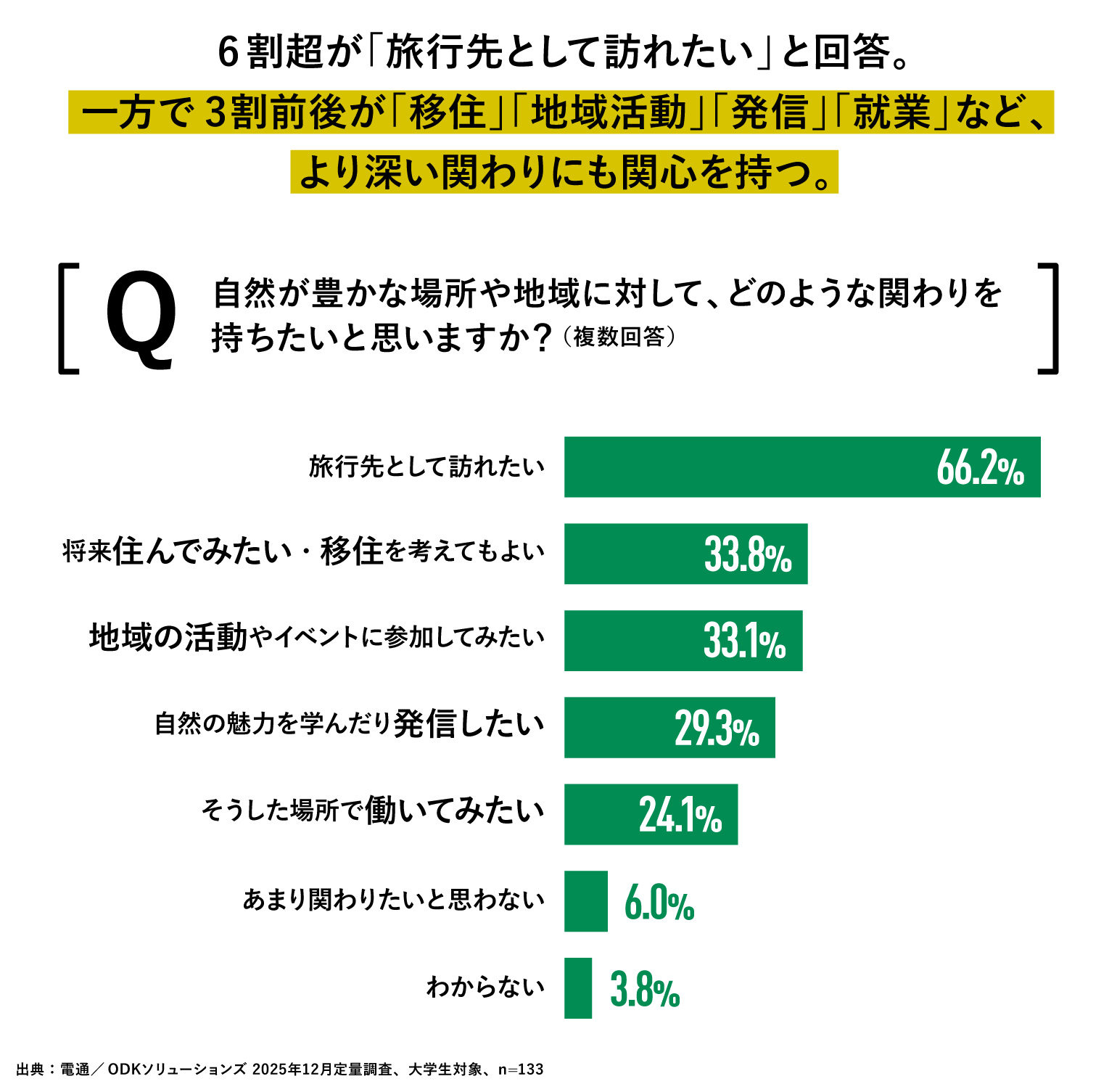
Mori: While we expected to see responses related to leisure activities—such as interest in travel destinations or a desire to participate in and share events—what was particularly interesting was the finding that quite a few people are even hoping for lifestyle changes, saying they “might consider moving” or “would like to work there” simply because nature is close by.
Kurisaka: I feel like more young people are actually drawn to a “slow life” spent living in harmony with nature, and with the expansion of fully remote work environments, that lifestyle has become more realistic than ever before. Recently, even among my own circle of friends, I’ve seen cases of people leaving the city to move to areas rich in nature.
Mori: There were even people who went out of their way to hike up mountains just to shut off their phones, or who grew tired of constantly scrolling and traveled all the way to the great outdoors overseas. I feel that today’s college students have a stronger reaction to wanting to break free from the algorithms that permeate daily life than the Millennial generation and older.
While the effects associated with “nature” include refreshment and relaxation—things that help reset you to a neutral state—there was a sense of proactivity in everyone’s comments, such as wanting to be cheered up or seeking out personal transformation. It’s less about going to heal fatigue and more about going to recharge.
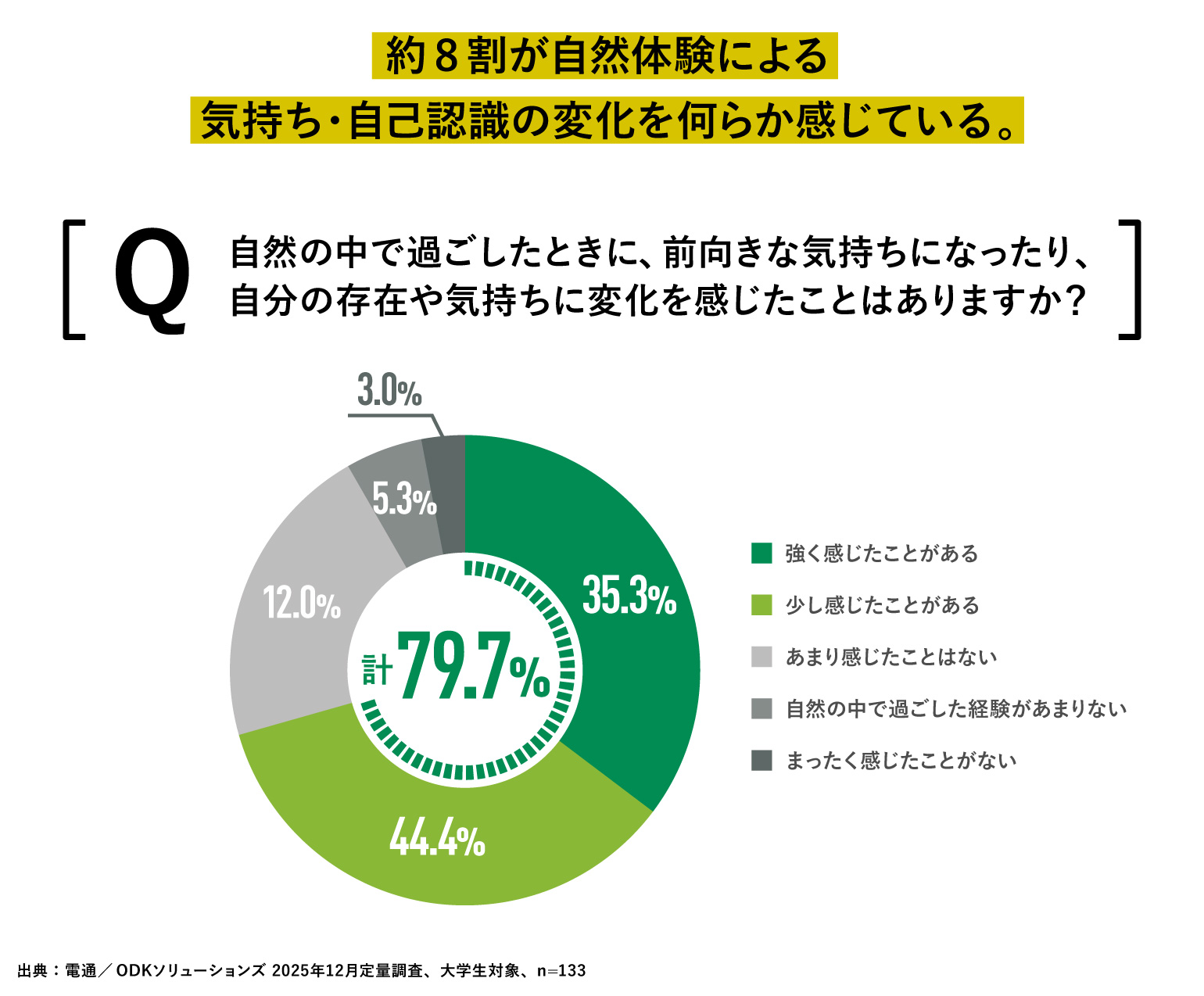
Kurisaka: Looking at the actual data, we can see that many people are experiencing some kind of positive change while in nature. Experiences in nature seem to go beyond mere refreshment; they also serve as opportunities to reflect on oneself and shift one’s mindset.
Sawai: Originally, “natureing” referred to nature observation and nature experiences, but perhaps it will expand into a new way of engaging with nature that includes the sense of positively realigning oneself.
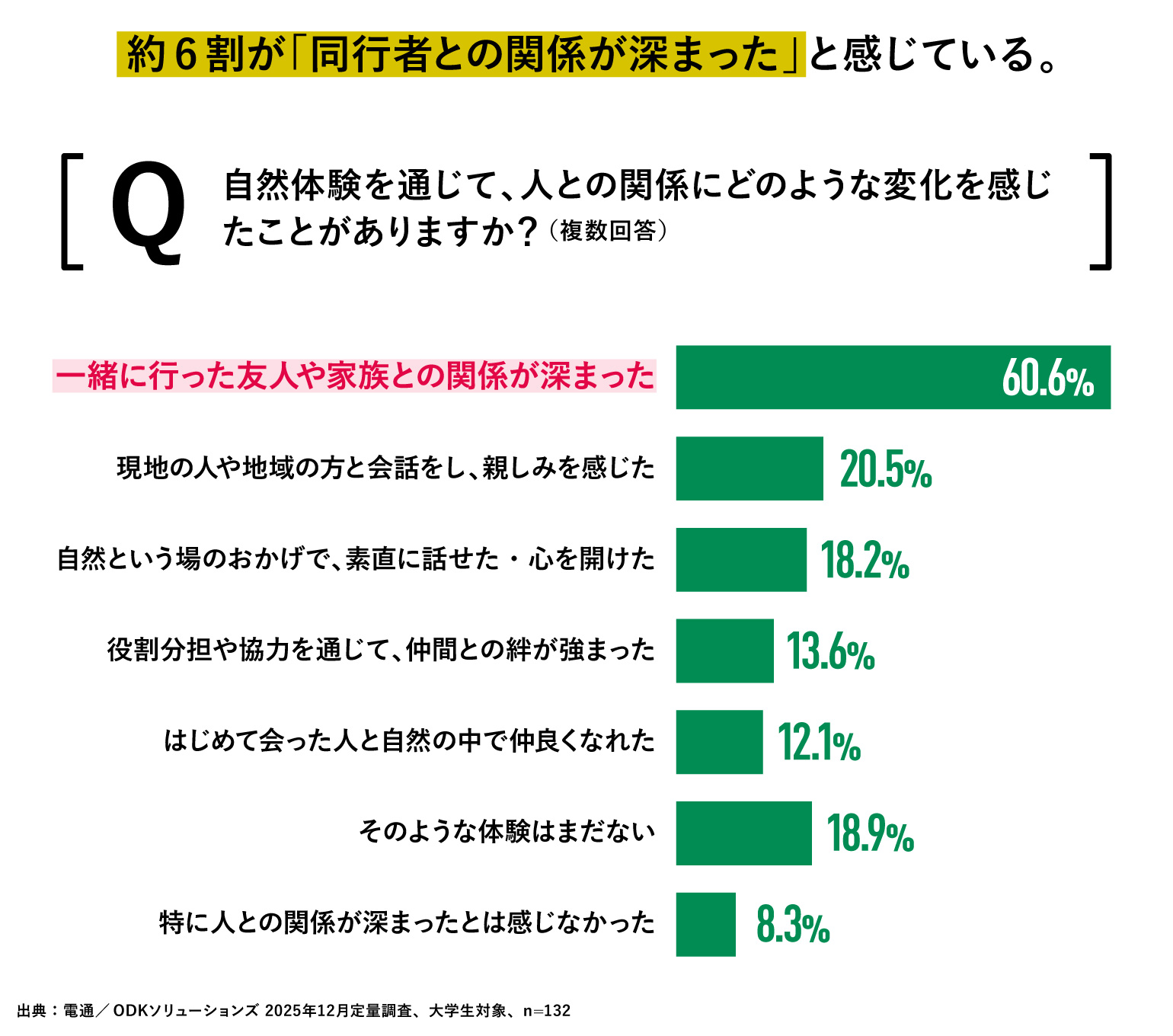
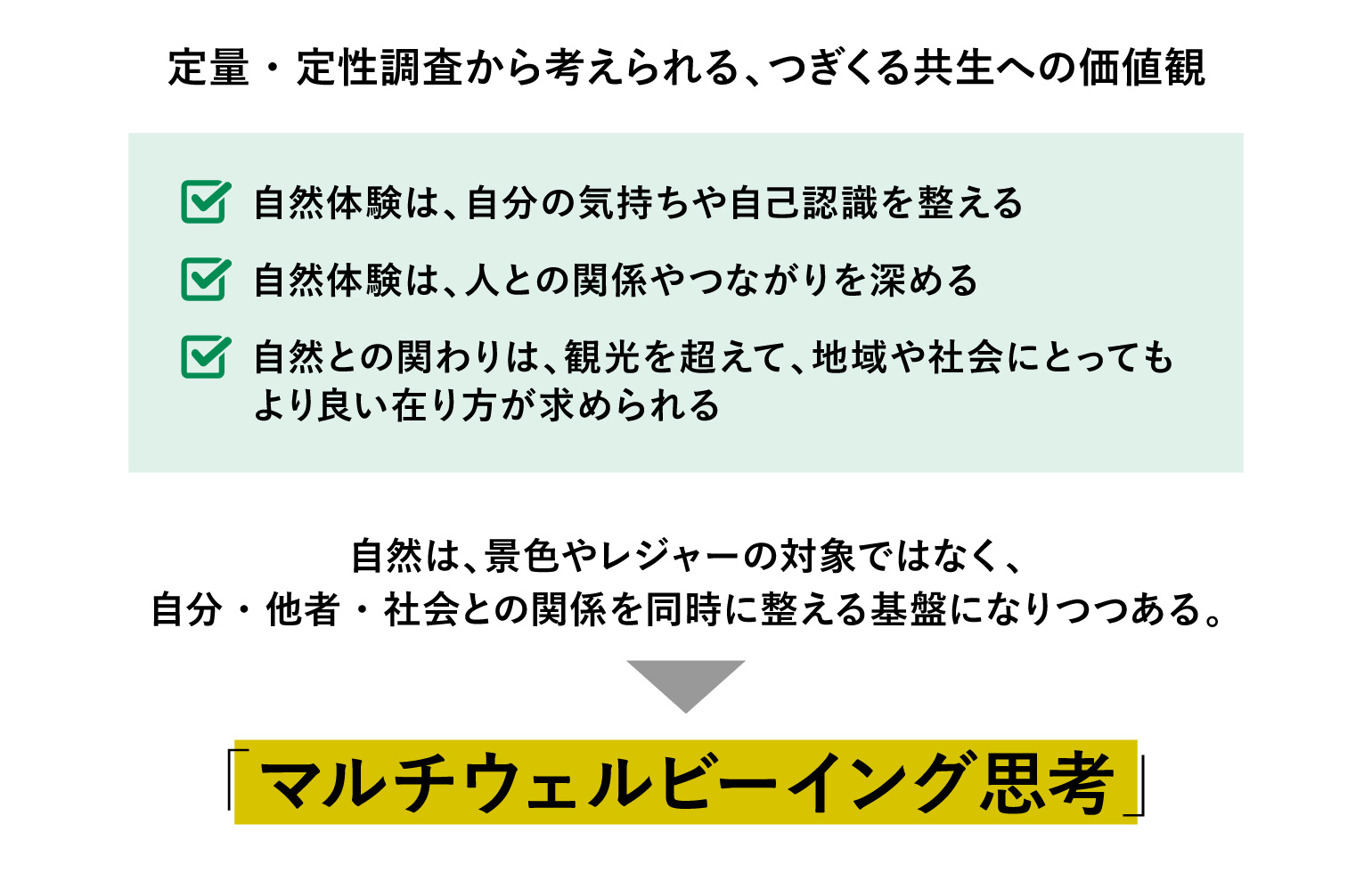
The “Power to Strengthen Relationships” Created by Nature, Experienced by About 60%
Sawai: What I find particularly noteworthy is that nature experiences are perceived not merely as a source of personal healing, but also as a means of deepening relationships with others.
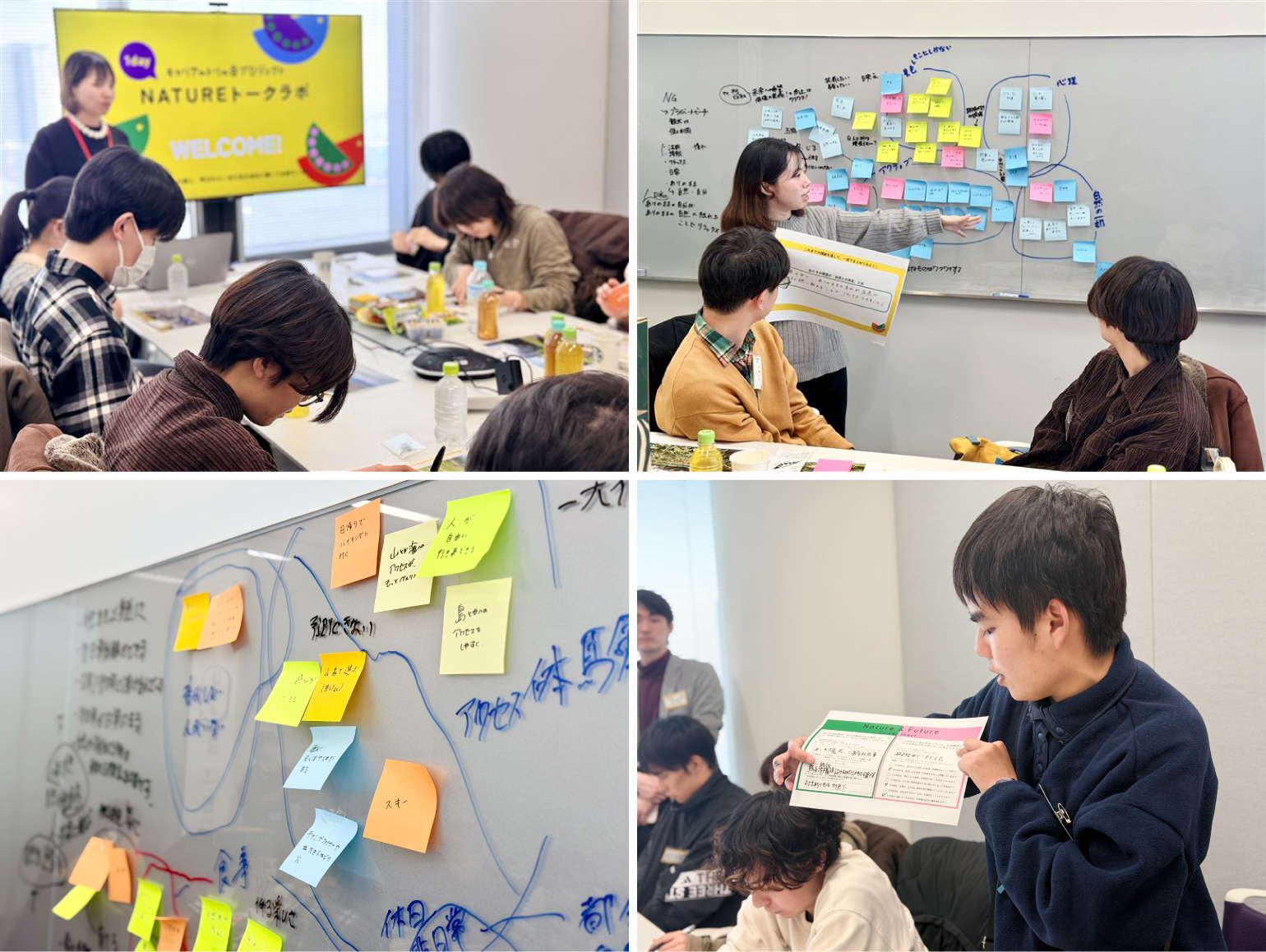
Kurisaka: In fact, during our workshops, participants reported that when they went hiking as part of a club activity, conversations naturally arose even with people they don’t usually talk to, and sharing the same experience created a sense of accomplishment and unity. It seems many people experienced the team-building effects of being in nature firsthand. It’s probably because nature, in its raw state, brings out our true selves that we’re able to build such positive relationships.
Mori: That’s exactly what well-being is all about. Of course, it’s about the fulfillment of the individual’s mind and body, but within the natural environment that provides that fulfillment, it also enhances “relational well-being”—the sense of connection with others or the world around us.
Guilt over a private beach? Why we choose “sharing” over “exclusivity”
Mori: What I found interesting during the workshop was the comment, “I don’t like private beaches.” While private beaches are marketed for their sense of exclusivity and exclusivity, there seems to be a negative sentiment about outsiders occupying nature for tourism purposes. This might be influenced by SDG education, but I sensed that they have a strong “empathy for social issues” and are highly attuned to whether unfairness is occurring.
Kurisaka: I feel that the younger generation is less concerned with “as long as I’m having fun” and more concerned with how their experience affects those around them and nature itself. Perhaps more people are beginning to view nature as something we should all cherish and engage with together.
Sawai: Until now, the prevailing mindset was to view nature as a “place for my own enjoyment,” but from now on, the value of experiencing nature may extend to “how we coexist with that place or region.”
Mori: Nature belongs to everyone. Or rather, it belongs to the living creatures of that land. The idea that sharing feels better than possessing is a very modern and fair way of thinking, isn’t it?
Nature: From “Experience” to “Lifelong Learning”
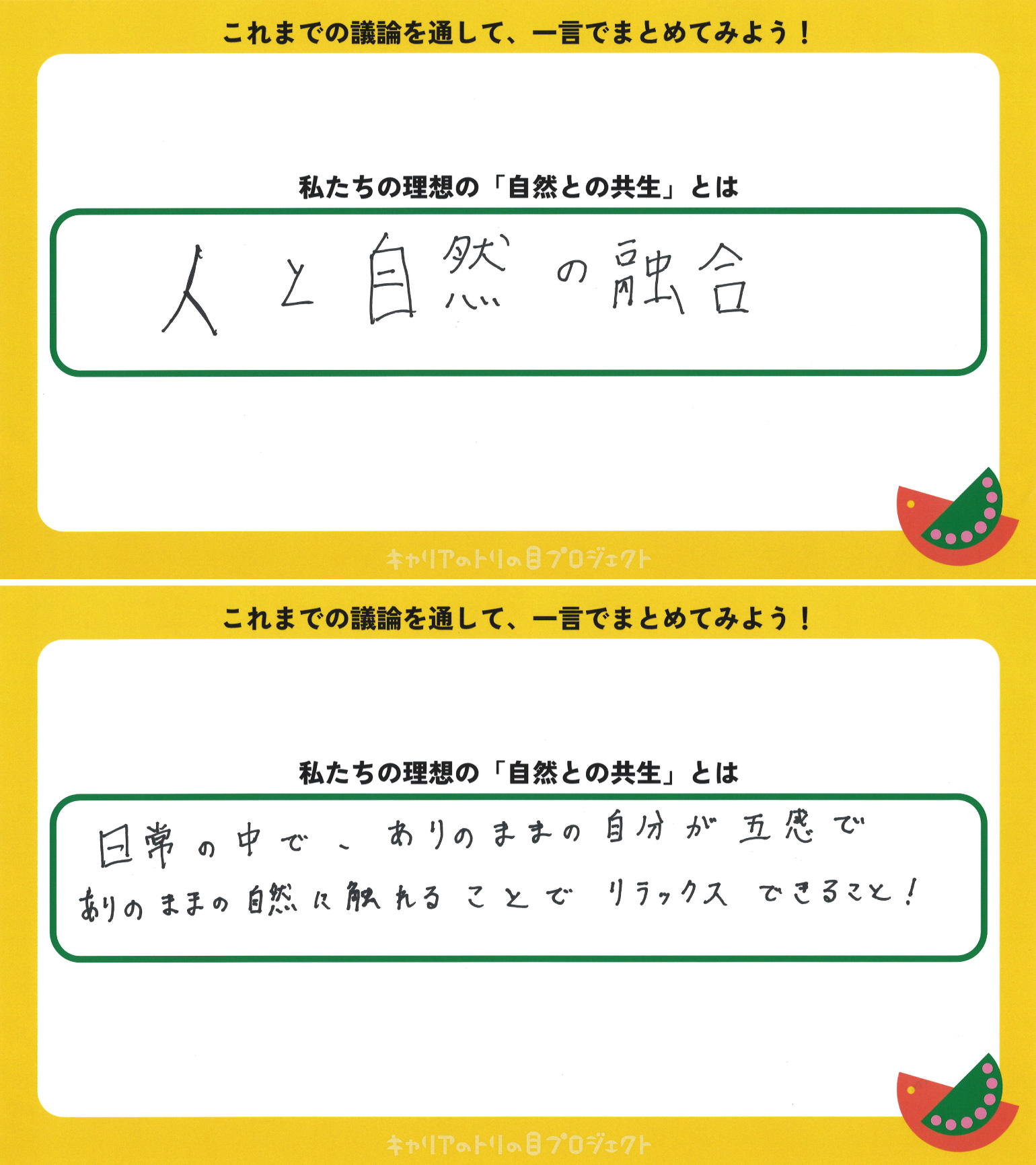
Kurisaka: Through the workshop, the students reached the following conclusions regarding their ideal way of coexisting with nature.
Team A: “The fusion of people and nature”
Team B: “Being able to relax in daily life by letting my true self connect with nature as it is through all five senses!”
Sawai: What struck me during the discussion was that the students didn’t view nature as something merely to be gazed at, but as something they could engage with by immersing themselves in it. There was a “scope for engagement” (room to grow in how they interact) that included actions like touching, eating, and cultivating right there on the spot.
Mori: The appeal of nature lies in the fact that it doesn’t end with just the “fun” of the moment. By feeling the preciousness of life through food, or by encountering animals and natural resources unique to the area, the experience quietly accumulates within you. I think the students were also discovering that kind of cumulative value.
Kurisaka: In other words, what the next generation was seeking wasn’t a passive appreciation of nature, but rather an “experience” where they could gain real insights and realizations through active engagement.
“Multi-Wellbeing Thinking”: A Keyword for Future Coexistence with Nature
Mori: What became clear this time was a sense of valuing a state where multiple forms of “good”—encompassing not just oneself, but others, the local community, and relationships—overlap, rather than simply seeking “what is good for oneself.” We have named this “Multi-Wellbeing Thinking.”
Sawai: When considering coexistence with nature, I believe we need to look beyond just the benefits to the individual and consider the positive chain reactions that will follow.
Kurisaka: In fact, during the workshops, we heard many participants express concern not just about whether something is “good for me,” but also whether it is “good for the surrounding environment and society.” Precisely because this is a generation with a strong aversion to failure, I feel they place a high priority on choices that don’t leave them feeling guilty and that have a positive ripple effect on those around them.
Mori: It’s important to keep these values in mind when it comes to branding as well. In fact, there were some eye-opening comments, such as, “Companies that aren’t engaged in sustainability seem to have poor workplace environments,” and “If I don’t see any sustainability-related activities, I wonder if the company is one that shies away from new things.”
Four Questions for Re-examining Corporate Nature-Related Activities Through a Multi-Wellbeing Lens
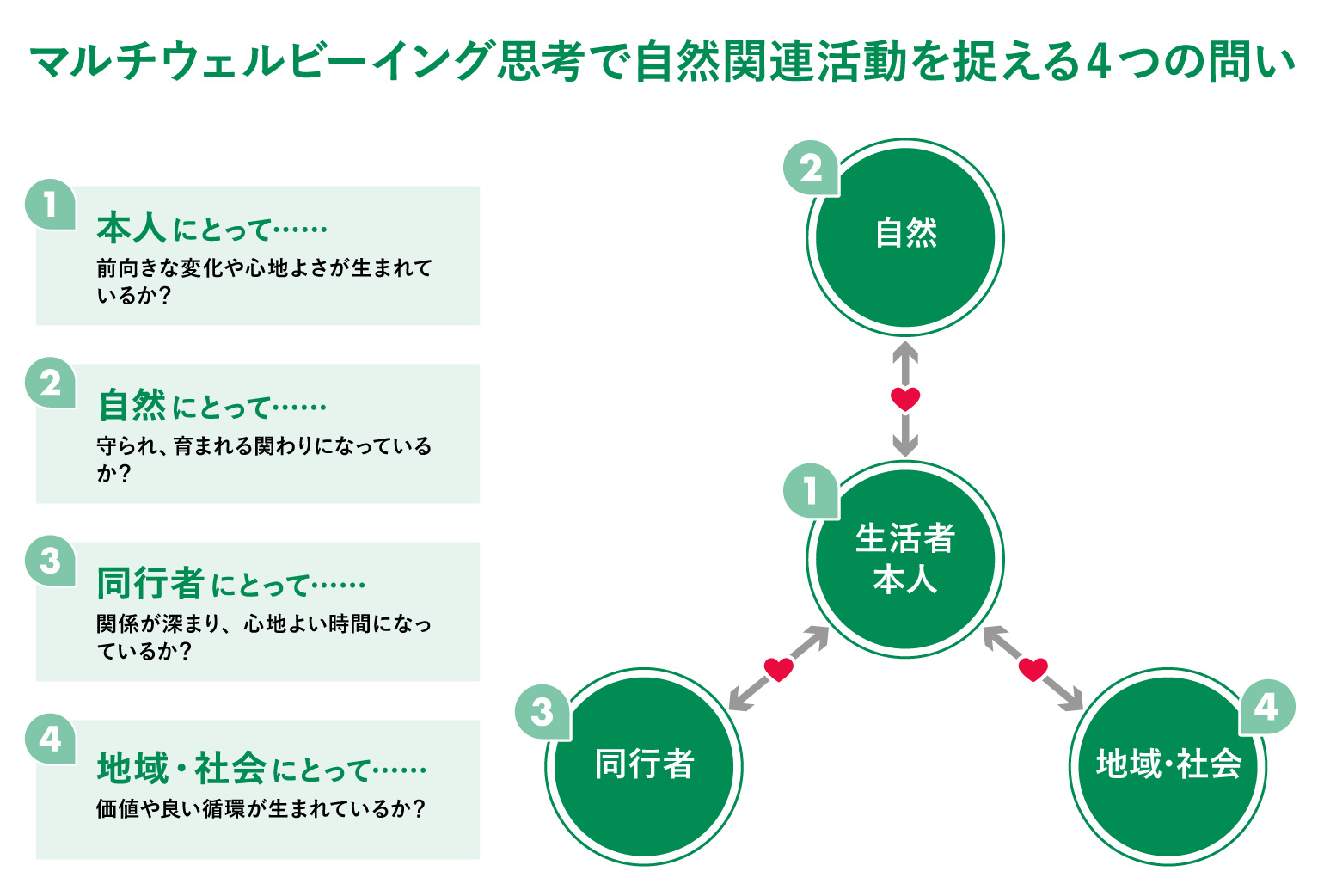
Sawai: That’s why I came up with four checkpoints for designing experiences through a multi-wellbeing lens, rather than simply treating nature-related activities as “good deeds.” I believe it’s crucial for future coexistence with nature to examine whether positive changes and cycles are emerging from four perspectives: the individual, nature, fellow participants, and the local community and society.
Mori: This perspective leads to the idea that we incorporate these elements not by forcing nature-based activities into a social context, but because doing so improves the participant’s experience. It seems applicable not only to nature-related activities but also to experience design that communicates how products and services contribute to nature.
Kurisaka: From the participant’s perspective, wouldn’t an experience that allows them to feel not only a sense of personal fulfillment from “doing something good,” but also a connection with others and changes in their surroundings, ultimately be more memorable?
Sawai: Coexistence with nature isn’t about making sacrifices for nature’s sake; perhaps it can be reframed as a positive experience for oneself, for others, and for society. From that perspective, I believe nature-related activities can also serve as an opportunity for companies to bridge the gap with consumers and foster engagement. This survey gave me hope for the future of coexistence with nature.
[Survey Cooperation] “Updemy®”
“Updemy®” is a collaborative project between ODK Solutions—whose core business is supporting the digital transformation (DX) of university admissions and securities back-office operations—and Dentsu Inc. Leveraging a network of over 300,000 university students and partnering with companies, we provide students with meaningful social experience opportunities while offering companies new touchpoints and venues for building relationships with students.
[Contact Information] Dentsu Inc. Sustainability Consulting Office sus.consult@dentsu.co.jp Dentsu Inc. Sustainability Consulting Office is a value-creation group that views sustainability as a prerequisite for growth and redefines corporate value through engagement with society. Starting from the values and aspirations within a company, we support the enhancement of medium- to long-term corporate value by reconnecting these to themes and activities that garner societal interest.
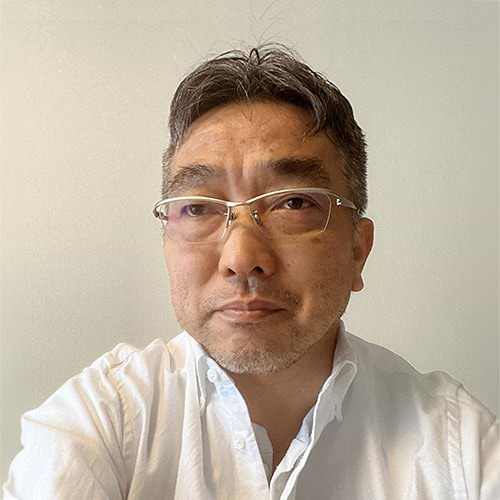
After working at an HR-focused creative agency, I joined Dentsu Inc. As a business producer, I handled the beverage, food, AI, and cosmetics industries, focusing on brand management while also engaging in advertising production, new product development, and business launches. After welcoming a rescue cat into my family, my awareness of social issues grew, leading me to the Sustainability Consulting Office. In my current role, I work across various sustainability domains, primarily focusing on biodiversity. I love cats, beer, and camping.
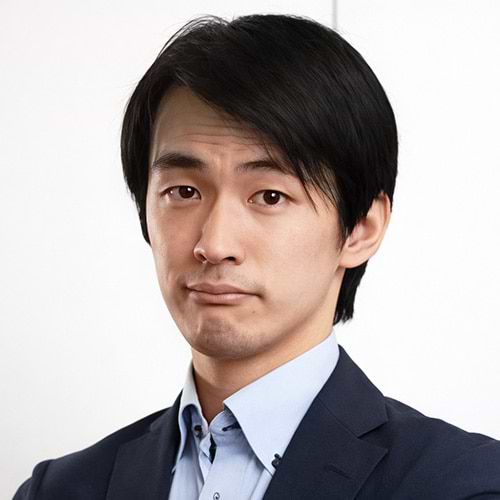
Bringing new meaning and appeal to the “future challenges” facing society and businesses. Drawing on his experience as an advertising copywriter and in the field of business design, he currently works across disciplines—using words and creativity as his starting point—to develop management and environmental visions, narratives, business development, communication, and internal activation, with a focus on sustainability. While carefully assessing the unique risks of expression inherent in sustainability, he aims to translate social issues into values that inspire both companies and people to take action.He loves whiskey and the theater.
I was previously in charge of regional newspapers nationwide and 47CLUB Inc. at the Media Services / Newspaper Division. In 2020, I was seconded to Dentsu Digital Inc., where I engaged in planning and promotion design centered on purchasing within the e-commerce and retail media sectors. After returning to my original department, I worked in the BX (Brand Experience) sector and am currently involved in the field of sustainability. I specialize in projects that capture the trends and insights of today’s youth to identify fundamental challenges.
After working at an environmental consulting firm, I joined Dentsu Inc. Leveraging Dentsu Inc.’s unique expertise in creative, production, and marketing, as well as our proprietary networks—including non-profit organizations and a network of 300,000 students—I am responsible for consulting and business development support in the sustainability sector.

 Dentsu Inc. and the Fun Nature Positives [2/2]