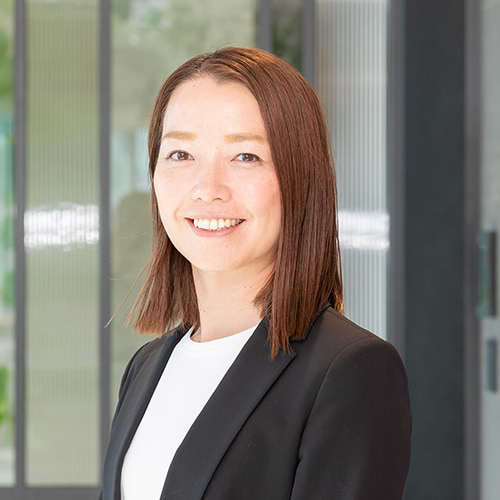
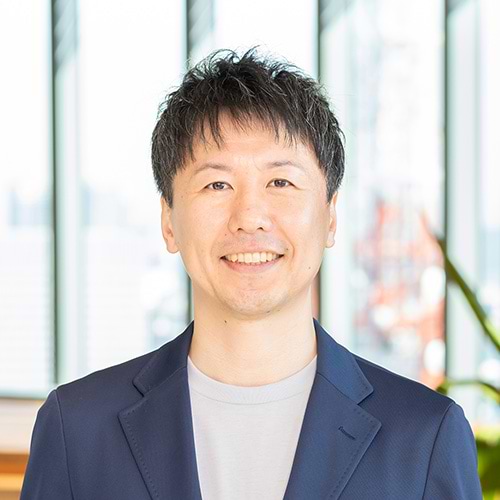
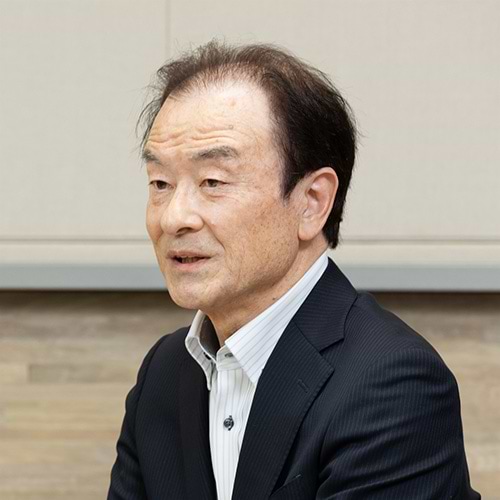
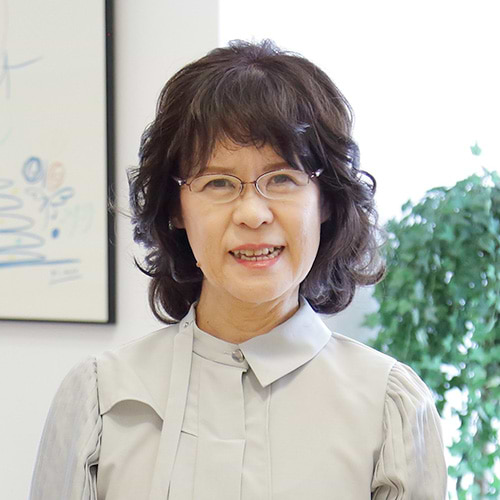
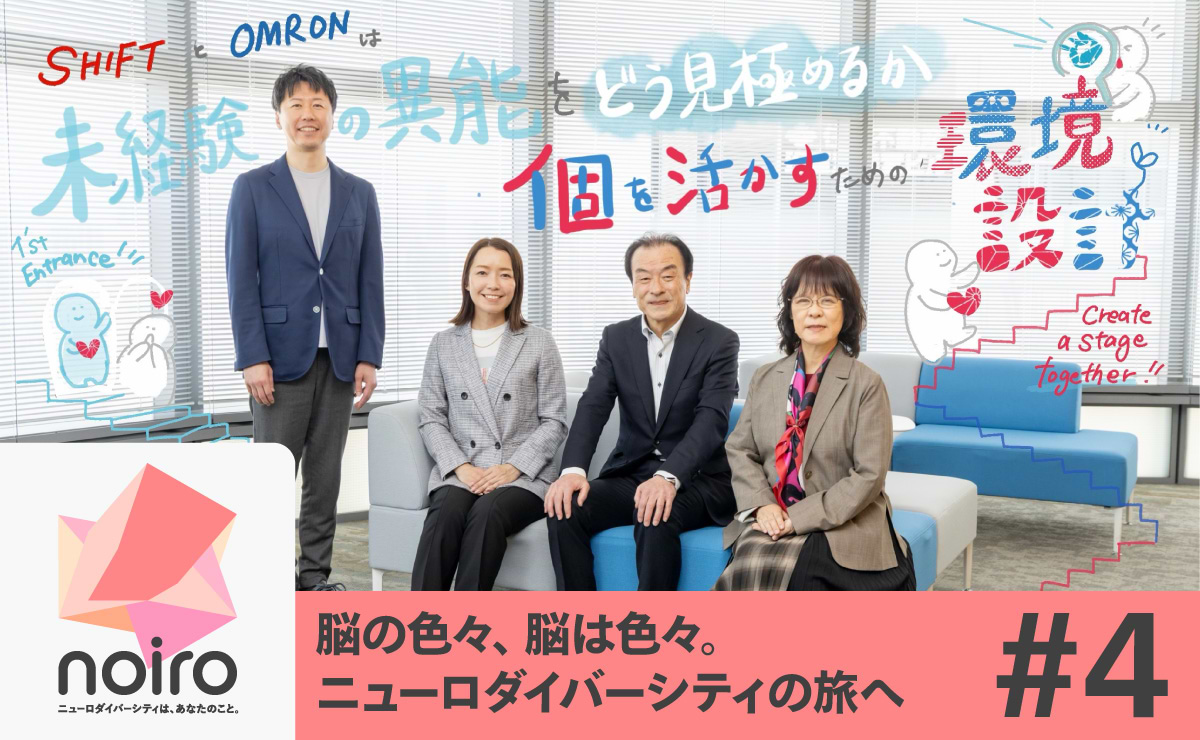
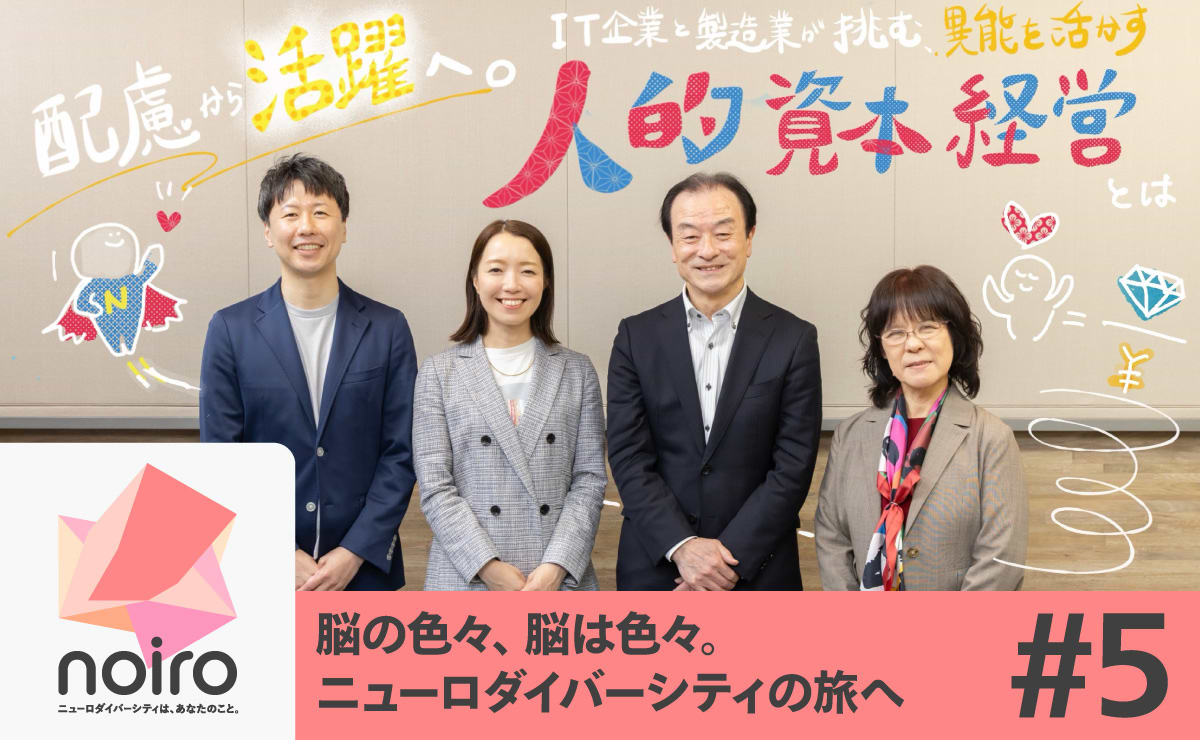
(From left) Masashi Oizumi, Group Leader promoting the employment and active participation of people with disabilities in SHIFT’s Business Support Department; Ai Kitagawa, Department Manager of the same department; Isao Miyaji of the Diversity & Inclusion Promotion Section, Planning Office, Global Human Resources & General Affairs Headquarters at Omron (at the time of the interview in March 2026); and Yukari Arai of DENTSU SOKEN INC.’s Consulting Division(noiro members) Photo-scribing: Dentsu Inc. Graphic Recording Institute —Representatives Chiharu Kai and Tomoko Nakano
The “noiro” neurodiversity project was launched in 2021 by a group of volunteers within the Dentsu Group. In this two-part series, we take an in-depth look at the realities of companies implementing neurodiversity as part of their growth strategies.
In the previous installment, we focused on “creating systems that leverage individual strengths,” including SHIFT’s unique evaluation system, which has built an environment where diverse talent can thrive by starting with “task decomposition” and “standardization.”
For this installment, we invited Isao Miyaji (*) from Omron—who has been steadily advancing neurodiversity initiatives “on the ground”—along with Ai Kitagawa and Masashi Oizumi from SHIFT, for a roundtable discussion moderated by noiro members Hidemitsu Kitamoto (Dentsu Inc.) and Yukari Arai (DENTSU SOKEN INC.).
*Mr. Miyaji’s department and job responsibilities are as of the time of the interview in March 2026.
We will explore how each company is expanding its neurodiversity initiatives company-wide, including their approaches to designing systems and building organizations to support this, as well as the challenges involved in implementation. Furthermore, drawing on case studies, we will discuss how to go beyond treating diversity as merely “individual support” and instead embed it as a company-wide system.
*What is Neurodiversity? A term combining “neuro” (brain/nerves) and “diversity.”It is a concept that views differences in the brain, nervous system, and the various individual characteristics stemming from them as forms of diversity; it promotes mutual respect and seeks to leverage these differences within society. It views neurodivergent development—such as autism spectrum disorder (ASD) and attention-deficit/hyperactivity disorder (ADHD)—not as disabilities, a lack of ability, or a matter of superiority or inferiority, but as natural differences inherent to each individual.This concept applies not only to neurodivergent individuals but to everyone. It was proposed in the 1990s by Australian sociologist Judy Singer, and since the 2010s, initiatives—primarily among IT companies overseas—have spread to leverage the characteristics exhibited by people with neurodivergent traits, such as high concentration and creative thinking.
Implementing Neurodiversity Through a “Job-Based” Approach: How Omron Practices Diversity in Hiring and Provides Opportunities
Kitamoto: In the previous article, we saw the value of creating systems that bring out individual strengths through SHIFT’s case study. From here, I’d like to hear about Omron’s initiatives.
What struck me about SHIFT’s approach was how they conduct their own certification exams based on tasks that have been broken down into minute details, enabling people with the necessary “aptitudes” to perform at their best. On the other hand, I understand that Omron has established a dedicated “neurodiversity recruitment” pathway as part of its efforts. What specific philosophy do you follow when it comes to hiring and staffing?
Miyaji: At Omron, these efforts have largely been built up on a “workplace-by-workplace” basis.
Ever since we established a sheltered workshop in 1972, we have valued the philosophy of having people with disabilities play a central role in our core business operations. Rather than assigning them only auxiliary tasks, we strive to create value for our business by adapting work processes and environments so that they can contribute while leveraging their individual strengths.
On the other hand, we faced a challenge with our traditional comprehensive recruitment selection process—which centered on online tests and interviews—where individuals with developmental disabilities often struggled to demonstrate their true capabilities, leading to cases where they were not hired. Therefore, starting in 2018, with the goal of expanding hiring for individuals with developmental disabilities, we established a new pathway called “Neurodiversity Recruitment” and created a system that allows applicants to choose the recruitment process that best suits them.
Under this recruitment program, we post job-specific openings tailored to the needs of each department and assess skills and aptitude through a 2- to 3-week internship. We proceed with hiring only after confirming a good match between the candidate’s skills and the workplace through actual work experience.
Currently, we are focusing our efforts on the engineering departments, but we have also begun expanding the program to select planning departments.
Kitamoto: I see. So the “Neurodiversity Hiring” pathway is positioned not as a program specifically for hiring people with disabilities, but rather as a role-based hiring track within our general management track. In that case, do you ask whether applicants have a disability certificate?
Miyaji: Currently, we’re primarily targeting individuals with developmental disabilities, but we do not require a disability certificate. What we prioritize is the candidate’s ability to understand their own characteristics and articulate the environmental adjustments and reasonable accommodations they need. Based on that premise, we aim to hire in a way that allows each individual to maximize their potential.
Previously, hiring for people with disabilities was merely a category used to provide reasonable accommodations during the hiring process; the actual duties and roles after joining the company were fundamentally no different from those of general management positions (generalists hired under the “membership-based” model). In contrast, “job-based” neurodiversity hiring is based on the concept of clearly defining the skills required according to each department’s needs and hiring talent suited to those specific roles.
Moving Away from the “Average Score” Approach: Mutual Understanding to Transform the Workplace into an Organization Where Everyone Feels a Sense of Conviction
Kitamoto: When hiring is based on mutual understanding achieved through internships and similar programs, is it indeed less likely that a mismatch will occur?
Miyaji: In the past, the specific characteristics of individuals with developmental disabilities weren’t fully communicated upon hiring, which sometimes led to misunderstandings on the front lines and raised concerns from the teams.
Since the receiving team was interacting with the new employee without fully understanding their strengths and weaknesses, they would try to correct areas where the employee struggled or assign tasks that weren’t suitable—which ultimately created a situation that was highly stressful for both parties.
However, when we understand their characteristics in advance, make the necessary environmental adjustments, and then design their work accordingly, the work flows smoothly, and evaluations improve significantly. Based on this experience, I feel it’s crucial to conduct hiring and placement based on mutual understanding.
Kitamoto: I see. If roles, required skills, and individual traits are clearly defined, both the employee and the receiving team can proceed with the work based on mutual understanding. Does this mean that, as a result, evaluation criteria become aligned, leading to a system that feels more fair and acceptable to the entire organization?
Miyaji: That’s right. As we’ve implemented these initiatives on the ground, we’ve come to realize that while we used to seek “well-rounded, average talent,” combining individual strengths while acknowledging their respective strengths and weaknesses actually leads to better results than before.
At the same time, we’re facing challenges regarding how to tailor compensation and benefits to each individual. If we shift away from the company-wide, one-size-fits-all approach we’ve used in the past toward an evaluation system based on individual strengths and contributions—and since the roles required for each job differ—the question becomes how to ensure that the system remains fair and convincing to everyone. Going forward, it will be crucial to determine how to expand this way of thinking across the entire company.
Furthermore, I believe this theme is not something that can be resolved by the HR department alone; it is closely tied to the very nature of our business. As the business changes, so do the types of talent and roles required, and evaluations and compensation will change accordingly. I think we need to approach this with that premise in mind.
Omron’s Neurodiversity Hiring
HR Is “the Business Itself”: The Essence of Human Capital Management—Maximizing Individual Potential
Arai: Moving forward, I’d like to ask about the perspective of human capital management. At Omron, you’ve established an indicator called “human creativity,” which visualizes the value of people by dividing the value added—calculated as sales minus variable costs—by personnel expenses, and you disclose this as non-financial information, correct? I find it very impressive how clearly you demonstrate the relationship between investment in people and results.
How does this approach to human capital relate to the neurodiversity initiatives we’ve been discussing?
Miyaji: If you look only at the formula for the “Human Creativity” metric, it might seem that the number would increase simply by cutting labor costs, but that is not the essence of it. Rather, it is a metric designed to view labor costs as an investment and to measure how much value is generated from that investment. We place a strong emphasis on increasing investment in our people while generating results that exceed that investment.
Omron’s “Human Creativity”
Arai: The concept of viewing labor costs as an investment rather than an expense resonates with what SHIFT discussed last time, and I sense a common thread here. You’re working hard to devise ways—including reforming work processes and environments, as well as revising evaluation approaches—to make it easier for individuals to perform to their full potential based on their unique characteristics. At the same time, I also felt a similarity in your commitment to taking responsibility as a company for ensuring that each individual’s strengths are fully utilized.
Kitamoto: I understand that it is precisely because of this premise that your approach to neurodiversity has led to a design philosophy of “adapting the work to the person” rather than “adapting the person to the work.”
I get the impression that you’re taking the issue of how to help individuals realize their full potential very seriously. How does SHIFT view this approach taken by Omron?
Kitagawa: You’re absolutely right. Hiring talent is an investment in business growth, and that premise doesn’t change based on factors like disability or gender. I believe that genuinely focusing on how to enable each individual to thrive ultimately leads to the growth of the entire organization.
Kitamoto: I certainly feel that it’s not just about policies and systems—the underlying philosophy itself is also extremely important.
Miyaji: That’s right. Furthermore, Japan’s manufacturing sector is currently facing the need for major transformation. As we shift from an era of generating profits through mass production—as we have done in the past—toward creating new value and innovation, organizations based on diversity are becoming essential.
We’re moving away from the old mindset of “making sure everyone can do the same thing” toward an approach that builds on each individual’s unique skills and characteristics, combining them appropriately to get the work done.
That is precisely why the role of the HR department must also evolve. “Investing in people”—identifying the necessary talent, placing them appropriately, and nurturing their growth—is, at its core, a business function itself and should be handled closer to the front lines. I feel that creating a state where this mindset operates spontaneously within the company is the ideal for the future.
“Employee-Led” Career Planning Bridges the “Gap” on the Front Lines and Accelerates Investment in People
Kitamoto: Having listened to your discussions so far, I’ve noticed many shared perspectives, but as colleagues who both understand the realities on the ground, I imagine there are some points that give us pause. I’d really like to hear your thoughts on this—what do you think?
Miyaji: Our top leadership has emphasized that diversity and inclusion are the driving forces behind corporate growth. However, investing in people is different from capital investment in that it’s difficult to measure short-term effects, and the return on investment isn’t always immediately apparent.
Given that, how does SHIFT foster buy-in among employees and management while moving forward with these initiatives?
Kitagawa: I believe fostering a sense of buy-in is a crucial point. When it comes to helping employees demonstrate their performance as quickly as possible, the company provides systems such as policies and certification programs to offer support with a certain degree of consistency.
On the other hand, since new hires come from diverse backgrounds, their individual growth rates and processes vary. Therefore, we take a medium- to long-term perspective when evaluating individual growth.
Kitamoto: So your approach is to establish an environment where employees can demonstrate their performance early on through these systems, while also viewing each person’s growth from a long-term perspective.
I imagine these initiatives are already being implemented company-wide with a certain level of tangible results, but I also sense that we’re in a phase where we’re building on small success stories to expand them across the entire organization.
Mr. Miyaji, as you’ve been driving these initiatives forward, have you noticed any tangible changes within the company?
Miyaji: I feel that attitudes on the front lines have become much more positive as we’ve seen the people we’ve actually hired settle in and thrive by leveraging their individual strengths. Departments are now volunteering to welcome diverse talent, and understanding on the front lines is gradually improving. However, in departments with no prior experience in this area, there are still voices asking, “Will this really work?” so the reality is that there are still varying levels of enthusiasm.
With that in mind, what will become even more important going forward is for individuals themselves to proactively chart their own career paths—defining “what strengths they possess” and “in what roles they will add value.” Once their career direction is clear, it becomes easier for them to deepen their learning, and it also becomes easier for the company to provide training and opportunities tailored to those career paths.
I believe that once such a virtuous cycle is established, the effectiveness of investment in human resources will increase, leading to improved results for the organization as a whole. Moreover, this is by no means limited to neurodiversity; it is a theme common to all employees. I believe that expanding this cycle throughout the entire organization is the next step.
“Continuous change” is the key to sustainability. Long-term careers for diverse talent, shaped by AI and regional partnerships
Kitamoto: So far, we’ve discussed how to expand opportunities for our talent to thrive, but I think it’s also crucial to consider how to ensure the “sustainability” of these initiatives. As the very nature of work is undergoing significant changes—driven in part by the evolution of AI—what are your thoughts on the sustainability of these efforts?
Kitagawa: I believe it is crucial to be able to accept “the constant evolution of roles” as a given. An individual’s characteristics and strengths are not fixed; the roles required of them will change in response to shifts in business and the environment. In this context, I believe that our ability to continuously redesign roles to align with individual characteristics will ultimately lead to sustained employment and the reproducibility of success.
I believe AI is what will drive that change forward. While technological innovation has historically served to supplement labor-intensive tasks, it is equally important to utilize AI in a way that allows it to coexist with people.
For example, I believe AI will enable us to allocate tasks, conduct evaluations, and place the right people in the right positions with greater precision than ever before.
Miyaji: Assuming that the use of AI will continue to expand, I see three main perspectives.
The first is operational efficiency; the second is the creation of new jobs through AI; and the third is its use for reasonable accommodations and environmental adjustments. Regarding the second point, while it is still in its early stages of development, data creation tasks such as annotation (*) are areas where individuals with developmental characteristics can easily demonstrate their strengths, and I sense the potential for this to expand in the future.
However, our fundamental philosophy is that AI is ultimately just a tool, and that human communication and relationships of trust form the foundation. With that in mind, I believe it is crucial to determine how we will utilize it effectively.
*Annotation: The process of adding information—such as “correct answers” or “tags”—to data (e.g., images, audio, text) to enable AI to learn. In the field of AI, this process facilitates machine learning.
Oizumi: In my workplace, we are also effectively utilizing AI as a communication aid.
For example, there was an assistant manager with certain developmental characteristics who was struggling with communication in a managerial role. By working with AI to organize their messaging in advance, interactions within the entire team became smoother, leading to positive changes in both relationships and performance.
On the other hand, we cannot deny concerns that advancements in AI may alter the very tasks we have traditionally performed or even cause certain roles to disappear. That is precisely why I feel that, as users of AI, we need to create new tasks and transform the nature of our work. Along with this, we must also reevaluate our performance evaluation systems; I believe we are currently at a major turning point.
Miyaji: In the manufacturing industry as well, we feel anxiety about how the skills required—and the jobs themselves—will change as technology evolves. In fact, in departments dealing with cutting-edge technologies, there is a possibility that certain development projects themselves may disappear, and there is a shared awareness of the challenges this poses in terms of job security.
Arai: Are you taking any specific steps to address these challenges?
Miyaji: As countermeasures, we’re taking two approaches: broadening the range of skills even at the internship stage, and fostering regional collaboration on neurodiversity.
When multiple companies that practice neurodiversity hiring collaborate, it creates the possibility that even if a candidate isn’t a good fit for one company, they can still thrive at another. Furthermore, as the number of options increases, it opens up paths for people who previously lacked opportunities. I believe it will become increasingly important to create an environment where talent can thrive beyond the boundaries of individual companies.
Kitagawa: I imagine the participating companies are at different stages and have different backgrounds, but do they share common challenges?
Miyaji: That’s right. When it comes to employing people with developmental disabilities, every company faces the challenge of fostering understanding within the organization, and I feel we’re still in the early stages of expanding these efforts.
On the other hand, when companies come together, there’s the benefit of being able to share real-world examples. This initiative serves as a forum where HR professionals can continuously exchange information and share insights.
Arai: By collaborating at the regional level, I sense great potential for this initiative to lead to broader outcomes—such as promoting neurodiversity, fostering respect for diversity in the broadest sense, revitalizing the workforce, and even creating new business opportunities.
It may start with supportive initiatives between companies, but it would be wonderful if it evolved into a broader effort that generates new value and innovation.
Creating a future where everyone can thrive. Neurodiversity is “nothing out of the ordinary.”
Kitamoto: What struck me most in everyone’s remarks today was the commonality in the ultimate goals shared by SHIFT—an IT company that has experienced rapid growth—with its approach of “systematizing processes to identify and develop people suited to the job,” and Omron—a long-established manufacturing company—with its approach of “designing work processes based on the premise that employees will demonstrate their abilities.” Although at first glance their industries, histories, and trajectories appear different, their ultimate objectives are aligned.
How do we engage with talent that traditional recruitment methods have failed to capture? That question may be essential for the future of human capital management. Finally, please share a message for our readers.
Miyaji: Neurodiversity is by no means a special initiative. It’s simply a matter of carefully putting into practice what we should naturally be doing when people work together. I hope you’ll cherish that sense of purpose.
Oizumi: Everyone has their strengths and weaknesses, and those strengths can vary greatly depending on the environment. That’s precisely why it’s crucial to create “systems” that bring out each person’s potential. I believe that by approaching this from that perspective, the outlook will change as well.
Kitagawa: From the perspective of making the most of each individual, neurodiversity isn’t a special initiative. Rather, it should become an even more natural way of thinking in the years to come. I hope we can help shape a future that expands in a more positive direction, including the evolution of AI.
Arai: Listening to today’s discussion, I was keenly struck by just how deep and multifaceted the concepts and initiatives surrounding neurodiversity really are. That said, I don’t think it’s something that can’t be done simply because circumstances and perspectives differ from company to company. Even with each company’s unique situation, I felt there are commonalities in the fundamental philosophy and in what “people” are capable of. I believe that’s precisely why SHIFT and Omron have been able to successfully advance their current initiatives.
Kitamoto: Both companies are focused on “changing the design of work and the environment” rather than “changing people.” While their starting points may differ, they seem to be aiming for the same summit. The experiences shared by everyone here—how they’ve overcome concerns and preconceptions through various approaches to advance neurodiversity—I believe will inspire our readers and others who plan to undertake similar initiatives in the future.
What will the future landscape look like once neurodiversity is fully integrated?
The Color of SHIFT “A society (or organization) where differences function not as ‘accommodations’ but as ‘value’”
Omron’s Color “A society where everyone lives freely while naturally harmonizing with one another”
Yukari Arai (noiro member)’s color “A society where people with different operating systems can understand one another”
*In this series, the term “disability” is used at the request of the guests.
Human Resources Division, Corporate Human Resources Department, Business Support Section
General Manager
After more than 10 years in corporate sales, as a career advisor, and in HR recruitment consulting at a comprehensive human resources services firm, he moved into service development. He joined SHIFT in October 2018. Following roles as an HRBP and leading the launch of the “second-career” recruitment program, he currently oversees the SHIFT Group’s employment initiatives for people with disabilities. He assumed the position of outside director at Infinic in November 2025.
Masashi Oizumi
SHIFT, Inc.
Human Resources Division, Corporate Human Resources Department, Business Support Section
Group Leader
After working in marketing and recruitment support at a recruitment advertising and human resources services company, he was responsible for employment support for people with disabilities and promoting local employment in the education and welfare sectors. He joined SHIFT in 2021. Currently, as the head of a group promoting the employment of people with disabilities, he is responsible for organizational management and process design for a team of over 150 members. His motto is a quote from Napoleon: “A leader is someone who instills hope.”
Isao Miyaji
After working at Omron in system development, planning, and as president of a software subsidiary, he served as president of a subsidiary for people with disabilities and was in charge of promoting the active participation of people with disabilities in the headquarters’ human resources department before retiring in March 2026. He is currently working to promote the widespread adoption of D&I through lectures at universities and speeches at companies, while also serving as a Kyoto Prefecture Advisor on Employment Practices for People with Disabilities and leading “ND Kyoto,” a council that promotes neurodiversity hiring among Kyoto-based companies.
Yukari Arai
DENTSU SOKEN INC.
Consulting Division, Strategic Consulting Unit
Group Manager
After working at a major telecommunications equipment manufacturer, he has held his current position since 2003. He is engaged in a wide range of consulting activities, including business reform, new business creation, and the development of technical talent for industrial equipment manufacturers and automotive OEMs. He also participates as a leader in DENTSU SOKEN INC.’s Neurodiversity promotion activities.
Specially Appointed Professor (Visiting) at the Dentsu Japan × Tohoku University Joint Research Institute for Diversity Work Models
After joining Dentsu Inc., she engaged in strategic PR, creative work, and content development for corporations, local governments, and numerous educational and cognitive development brands. In 2011, she participated in the founding of the Dentsu Diversity Lab. Since her college days, she has studied early childhood and elementary education and has worked with children with mental disabilities and developmental disabilities who possess exceptional talents. In 2020, she established “Scop,” a next-generation education company formed as a joint venture between Dentsu Inc. and TBS.Currently, at the Dentsu Inc. Future Business Research Institute, she primarily works on projects related to next-generation education, edutainment, and the space sector. She leads the neurodiversity project [noiro], which explores “future ways of working.” She is a certified childcare worker. Her authored and co-authored works include *The LEGO Book Museum* (Fusosha) and *Work That Creates Hope: Social Design* (Senden Kaigi), among others.

 The brain's many facets, the brain's many forms. Embark on a journey of neurodiversity. [5/5]