Category
Theme

Note: This website was automatically translated, so some terms or nuances may not be completely accurate.

The Evolution of Personal Media and the Reappraisal of Blog Value: Part 1

Motohiko Tokuriki

Motohiko Tokuriki

Agile Media Network Co., Ltd.

Masato Kogure

Masato Kogure

Netafull

Naoki Ochiai

Naoki Ochiai

Dentsu Inc.

The value of blogs is being reevaluated. Their sheer volume—something Twitter or Facebook lacks—and their ability to permanently store information make them a "stock-type content" format that's hard to achieve on SNS. This is bringing blogs back into the spotlight. Furthermore, the phenomenon where blog content spreads via SNS, creating new trends, has become firmly established. Blogs and bloggers are being rediscovered by many individuals and companies. Masato Kogure, blogger at Netafull; Motohiko Tokuriki of Agile Media Network; and Naoki Ochiai of Dentsu Inc. iPR Bureau discussed the current state and future potential of this trend.

People who want to write solid, long-form content are returning to blogs

Ochiai: Over the past few years, various SNS platforms like Twitter, Facebook, Line, and Instagram have rapidly gained popularity. Amidst this landscape, how do you perceive the blog medium evolving?

Kogure: While blogs faded into the background, overshadowed by SNS, I feel they started gaining attention again around 2013. The reason is that "people who want to write substantial, long-form content" and "people who want to archive their content" have returned to blogging. Those who want to write diary-like musings or short posts tend to stay on Twitter or Facebook, while blogs are increasingly used by people who primarily want to "leave behind well-organized information." At the same time, I think more people now view blogs as tools for self-realization. There are more people who "want to publish a book" or "want to connect it to their work."

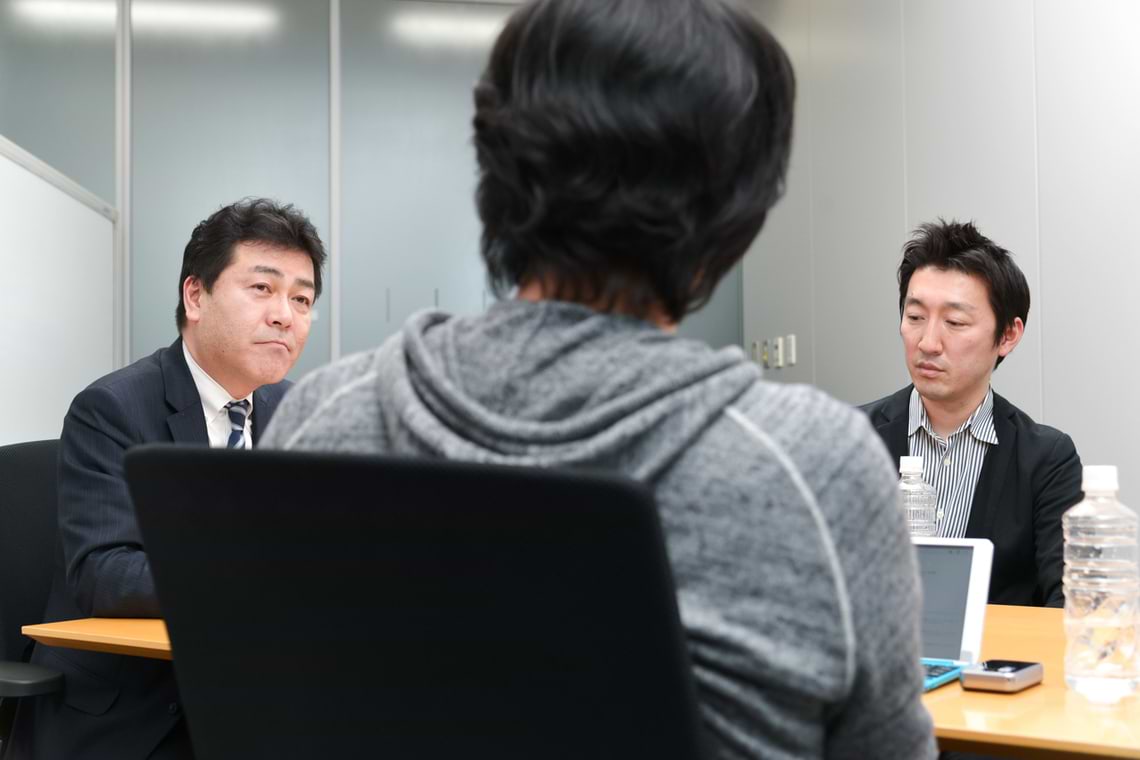
(左から)電通iPR局の落合直樹さん、ブロガーのコグレマサトさん、アジャイルメディア・ネットワークの徳力基彦さん。コグレさんは後姿のみの登場となります。
(From left) Naoki Ochiai of Dentsu Inc. iPR Bureau, blogger Masato Kogure, and Motohiko Tokuriki of Agile Media Network. Kogure appears only from behind.

Tokuriki: Back in the day, everyone—people wanting to write diaries, preserve valuable information, or connect with work—all used blogs indiscriminately. Only recently has a clear division emerged: Twitter for those wanting to casually post short messages, Facebook for connecting with friends, and blogs for archiving substantial information. With this variety of communication tools now available, I think blogs have found a clearer position—or been redefined, if you will. They've taken on a different role than in the early days and are making their presence felt.

Ochiai: I agree. Though I hear some people say things like "blogs are a generation behind" or "they're a thing of the past"...

Tokuriki: I suspect it stems from the perception that "newer web services are cooler." Many people have this impression of services constantly emerging and replacing each other. But that's simply because we were in a phase where things that didn't exist before were being created. Now that a full range of communication services is available, I think we've moved from an era where the spotlight shifted yearly to one of choice and combination. Among the many communication services, blogs are an old, time-honored tool. They might not be cool or trendy, but I think they've become established as a tool that, in a way, is just expected to be there, like email.

By linking with SNS, blogs have evolved into "personal media"

Ochiai: While blogs seemed to lose some prominence with the rise of SNS, they've recently regained a stronger presence by linking with SNS. This shift is significant, right?

Tokuriki: Yes. In the early days, bloggers had to diligently manage everything themselves—creating the blog, writing posts, and encouraging regular visits. But once linking with SNS became possible, blog content started getting shared and spreading rapidly. This created an environment where blogs are easier to read, and blogs are being recognized anew as a form of media.

In Japan, many people, including marketing professionals, still tend to view blogs as personal hobby logs. Yet today, it's no longer unusual for blog posts to become trending topics on social media, just like corporate media articles. What I personally find noteworthy is how blogs function as word-of-mouth content precisely because they strongly reflect the writer's intentions and feelings. Word-of-mouth is a tricky area for mass media, which demands neutrality. Yet it's fascinating that personal media, positioned at the opposite end of the spectrum, is driving this growth in word-of-mouth content.

Kogure: Recently, we've seen more cases where personal media influence mass media. Take one online media outlet, for example. Their editor-in-chief mentioned in an interview that they "even for articles not primarily about the iPhone, we deliberately include the word 'iPhone' in the title to boost attention." I suspect that in the past, mass media or corporate media outlets wouldn't have done this kind of title writing so focused on page views. Influenced by blogs and summary articles, production methods are changing, and the line between mass media/corporate media and personal media is becoming increasingly blurred. I truly feel we've entered an era where companies and individuals stand on the same playing field.

Bloggers as Enka Singers!? The Unique Appeal of Blogs That Moves People and Companies

Ochiai: Kogure-san's blog "Netafull" gets over a million monthly page views. Have there been cases where Netafull sparked buzz around companies or products?

Kogure: Surprisingly, yes (laughs). For instance, I happened to find an ultra-cheap bread maker on Amazon that could make mochi, reviewed it, and the product sold out. Another time, I attached a cheap keyboard costing around ¥5,000 to an iPad and introduced it as a "cute little keyboard," and it flew off the shelves. But what really stands out was the whole "Evernote" thing. When Evernote was just starting overseas, I teamed up with blogger Masaki Ishitani to introduce it, saying "This is awesome!" It seems we played a part in building excitement for it in Japan.

Then, someone from the US headquarters came to Japan wondering, "Why is this huge in Japan when it barely got any coverage there?!" We met, and I explained how the blog sparked the boom. This apparently led to them establishing a Japanese subsidiary. Both Masaki and I were appointed ambassadors, and Evernote spread widely in Japan. I think it's a symbolic event showing how even a personal blog can create such a movement.

Ochiai: Why does it move people and companies this much?

Kogure: I think it's because there's a story there. Bloggers are like enka singers, in a way. The content of their articles changes based on their current job, position, family situation, and so on. They're living beings that grow alongside their readers. That human touch, that drama-like quality, is probably what draws people and companies in.

Tokuriki: Exactly. It's great because you can clearly see the writer's values and true feelings. Unlike neutral mass media, they're completely subjective—in a way, biased. I think blogs and bloggers possess a charm unique to personal media.

( Continued in Part 2 )

Was this article helpful?

Share this article

Author

Motohiko Tokuriki

Motohiko Tokuriki

Agile Media Network Co., Ltd.

Director, CMO, Blogger

After working at NTT and IT consulting firms, he joined Agile Media Network as a founding blogger in 2006. Focusing on the "ambassador-centric approach," he led educational initiatives on corporate social media utilization. He became President and CEO in February 2009 and assumed his current position in March 2014. He contributed commentary to the book Ambassador Marketing. Beyond blogging, he contributes to multiple writing and speaking engagements, including a column series in Nikkei MJ. Individually, he serves as Chair of the Case Sharing Committee for the WOM Marketing Council and as a Government Public Relations Advisor, among other diverse activities. His authored books include "Digital Workstyle" and "Alpha Blogger."

Masato Kogure

Masato Kogure

Netafull

Evernote Blog Ambassador / ScanSnap Ambassador. Manager of Netafull, a blog that expands on things and topics that catch your interest. Alpha Blogger 2004/2006, Winner of the 5th Web Creation Awards Web Person Unit Award. Urawa Reds Supporter. Father of two children. Evernote Ambassador, ScanSnap Ambassador, Alberta, Canada Social Media Tourism Ambassador, Honorary Citizen of Calgary. Author of 'Get Started with Evernote: Complete Guide to Basics & Practical Tips', 'Get Started with LINE: Official Guide to Basics & Practical Tips', '100 Access-Boosting Techniques Guaranteed to Work for Pro Bloggers: Secrets to Running a Blog Loved by Fans and Search Engines', "Let's Start! Ingress: A Guide to Google's AR Territory Game for Walking Around Town with Your Smartphone" (Co-authored: Impress Japan), "Mastering Online Speed Reading: Effortlessly Gather the Information You Need!" The Master of Internet Speed Reading" (Seishun Publishing), "LINE Business Success Techniques: Boost Sales 150% with LINE@!", "Twitter: 140 Characters Change the World" (Co-authored: Mynavi), "The Art of Word-of-Mouth Marketing" (Co-authored: Nikkei BP), etc. <a href="http://netafull.net/" target="_blank">Netafullhttp://netafull.net/</a>

Naoki Ochiai

Naoki Ochiai

Dentsu Inc.

Business Production Bureau

Born in 1963. After joining Dentsu Inc., he served as a Marketing Division Planner, Planning Director, Sales Division Account Planning Department Manager, and Sales Division Manager before assuming his current position. Certified PR Planner by the Japan Public Relations Association (Public Interest Incorporated Association).

Also read

The Evolution of Personal Media and the Reappraisal of Blog Value: Part 1