Category
Theme

Note: This website was automatically translated, so some terms or nuances may not be completely accurate.

Dialogue in the Dark's New Challenge!

Shimura Shinsuke

Shimura Shinsuke

Dialogue in the Dark

~ Toward a Legacy for 2020 and Beyond ~

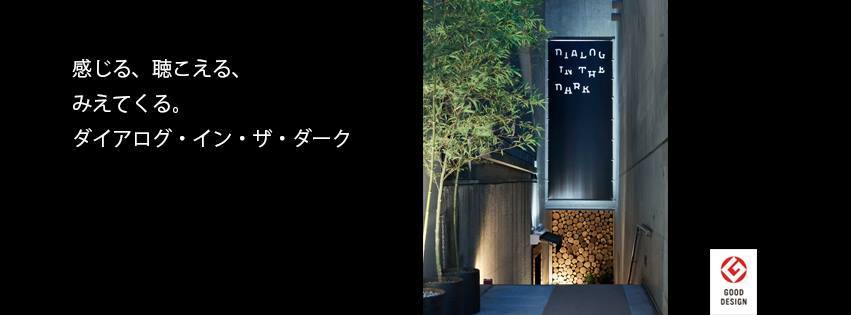
感じる、聴こえる、みえてくる。ダイアログ・イン・ザ・ダーク

Social entertainment in complete darkness: Dialogue in the Dark. Until a few years ago, it was even used in Dentsu Inc. new employee training.

Born in Germany in 1988, it has already been experienced by over 8 million people in 39 countries. First held in Japan in 1999. After 10 years of annual short-term events, it became a permanent installation in Tokyo's Gaienmae in 2009, attracting 190,000 visitors in Japan.

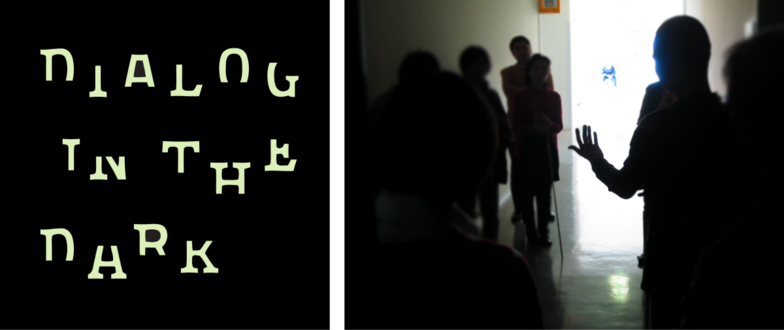
ダイアログ・イン・ザ・ダーク01

In this visually-centric society, participants find themselves unable to move freely in the pitch-black darkness that blocks their most vital sensory input. They are guided by visually impaired attendants who rely less on sight in daily life. In this environment where no one uses their eyes, the usual "helper-helped" dynamic reverses. By calling out to each other, cooperating, and helping one another, teamwork emerges naturally, revealing a rich, equal diversity.

The darkness is designed to allow participants to enjoy everyday experiences like forests or cities without sight. There's even a café in pitch blackness, where participants pay by feeling coins with their hands, then enjoy the aroma and taste of their drinks while conversing. These dark-themed activities change seasonally, uniquely in Japan.

For example, during New Year's, participants share their annual resolutions in the dark, grind ink, and write their first brushstrokes of the year. At Christmas, they create cards wishing happiness for others, experiencing opportunities to improve not just themselves but society. Focusing on senses other than sight also sharpens the five senses.

Since 2013, the collaborative project " The House of Dialogue " with Sekisui House has been open in Osaka.

「対話のある家」積水ハウス

Here, participants become a family, returning to the house in the dark with a "I'm home," greeted by a "Welcome back." They take off their shoes and enter the house. Then, for example, while playing in the garden, a voice from the house calls out, "Snack's ready!" They gather around a low table to eat tea and sweets while engaging in dialogue. These experiences provide an opportunity to reflect on the true meaning of home and family.

Additionally, corporate training sessions ( Dialogue Business Workshops ) are held in this darkness.

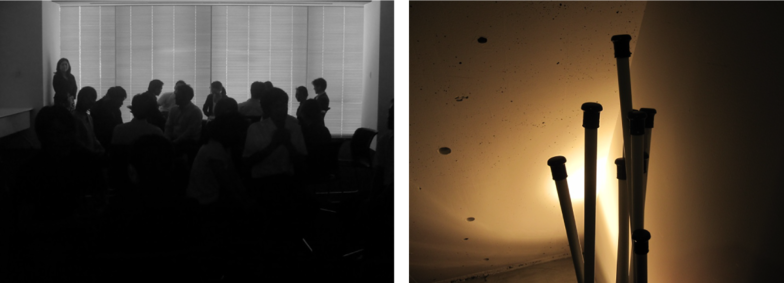
ダイアログ・イン・ザ・ダーク02

Over 500 leading companies have already adopted this as a training program. In the darkness, participants physically experience and understand accepting diversity, developing unprecedented leadership, team building, and communication. It also deepens understanding of essential corporate concepts like diversity and inclusion.

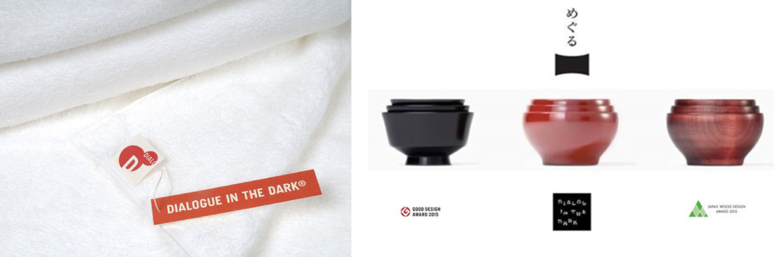
Furthermore, product development utilizing the exceptional sensory abilities of visually impaired individuals who rely on non-visual perception is advancing. For example, in a collaboration with a towel manufacturer in Imabari, attendants tasted the "feel" and "wiping sensation" without using their eyes, leading to the development of higher-quality towels. This initiative, which pioneered new possibilities for product creation by effectively utilizing the positive assets of visually impaired individuals, received the Good Design Award.

ダイアログ・イン・ザ・ダーク03

The lacquerware " Meguru," created through collaboration between Aizu lacquerware artisans and Attend, is contributing to the revival of traditional culture beyond just earthquake recovery.

Furthermore, in previous Olympic and Paralympic host countries, this initiative has been implemented as an official cultural event bridging the Olympics and Paralympics. It is also gaining attention in Japan ahead of the Tokyo 2020 Games.

Following this project, "Dialogue in Silence" also launched this year. This time, participants can enjoy dialogue beyond language in a space where they can see but not hear. This Attend is led by individuals with hearing impairments.

Additionally, we are currently preparing the "Dialogue Museum," where multiple diversity and inclusion experiences are available, including "Dialogue with Time," where seniors aged 70 and above serve as attendants, fostering intergenerational communication while engaging in dialogue with time and life itself. Interested parties are welcome to contact us via the inquiry form.

Was this article helpful?

Share this article

Author

Shimura Shinsuke

Shimura Shinsuke

Dialogue in the Dark

Japan National Team

After serving as a consulting firm fellow, he has led the Japanese implementation of Dialogue in the Dark (DID) since 1999. He first encountered DID through a 1993 newspaper article, was deeply moved, and wrote to its German founder, Heinecke, securing permission to bring it to Japan. He created new employment opportunities for visually impaired individuals and introduced DID to society as a form of social entertainment where people can enjoy and converse on equal terms. To date, approximately 190,000 people have experienced it. Authored: <a href="http://bookclub.kodansha.co.jp/product?isbn=9784062883061" target="_blank">"Society Changes from Darkness: The Challenge of Dialogue in the Dark Japan"</a> (Kodansha Gendai Shinsho)

Also read