Note: This website was automatically translated, so some terms or nuances may not be completely accurate.
 Planner's Retrospective Talk: What's Been & What's Next [1/3]
The history of planning is a "continuous process of integration."
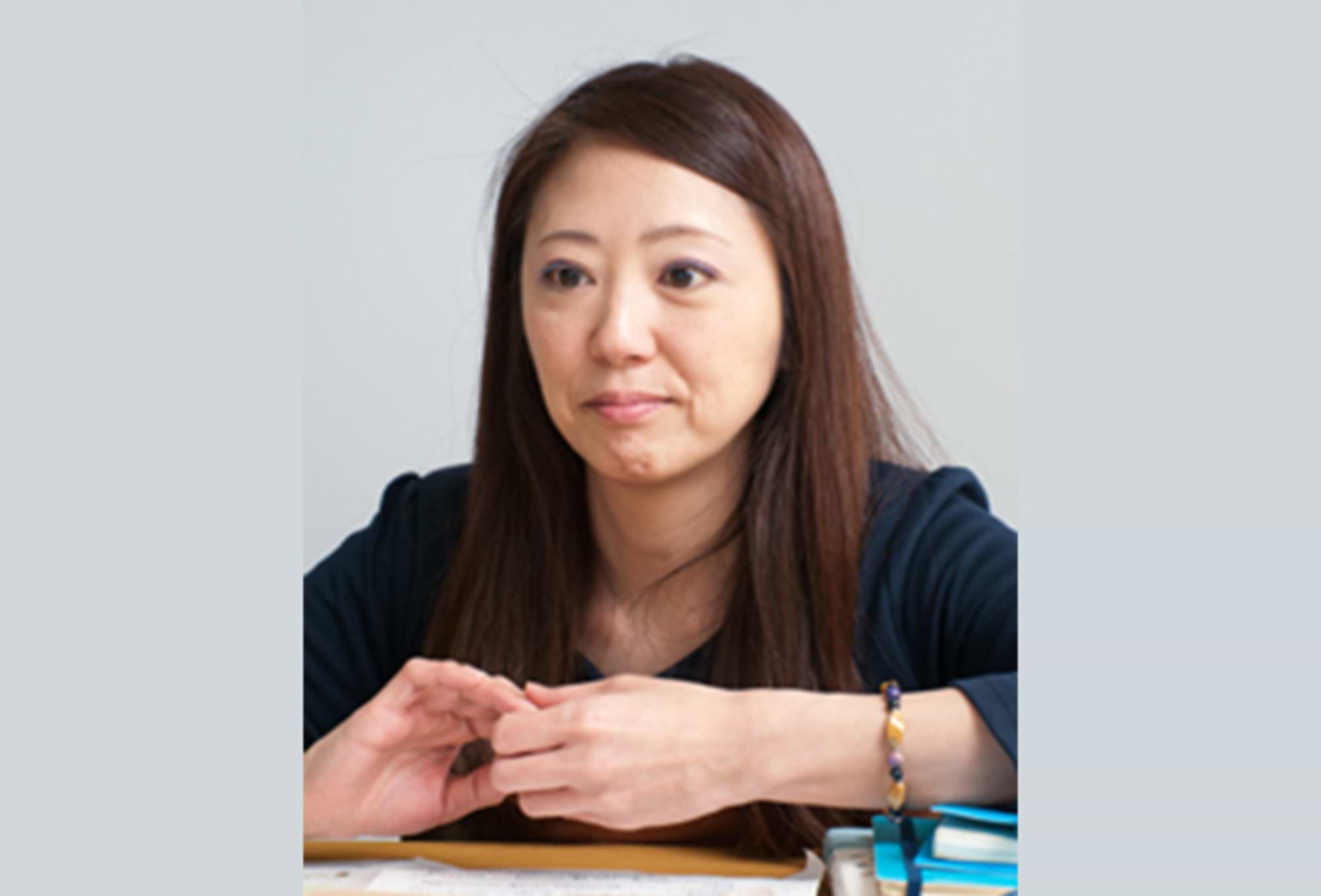
Ikuko Kaneda, Senior Executive Director of the Business Creation Bureau at Dentsu Inc. since 1993, reflected on her own experiences while discussing her evolution as a planner, challenges in the planning field, and her recent co-authored book " Social Economy."
──Looking back over the 20 years since joining in 1993, how has the role of planner changed? Based on that reflection, what are the current challenges? Your first assignment was in Sales Promotion (SP), correct?
Kaneda: I was in charge of what you'd call sales promotion planning. That involved planning in-store activities, devising promotions for distributors, and creating sales talk kits for salespeople. For campaigns, I planned and executed closed consumer campaigns like must-buy promotions.

──That was the early 90s, right?
Kaneda: By the time I joined, the bubble had already burst, so flashy promotions—like grand prize draws or extravagant point-of-sale displays—had significantly decreased. What was needed then were initiatives directly linked to "selling at the point of sale": developing sales pitches for distributors, strategies to secure shelf space, and strategic POP displays to encourage take-off (getting customers to pick up the product). It was an era when integrated storefront-TV campaigns were emerging and gaining attention as a new approach. It was the time when TV commercials, traditionally focused on image building, started featuring formats that evoked the actual point of sale – the "storefront."
──After that, you worked in SP, sales, media planning, interactive, and more. How did you evolve as a planner?
Kaneda: When I was working in sales promotion planning within SP, it coincided with the era when the concept of IMC (Integrated Marketing Communication) was beginning to emerge from overseas. At that time, someone above me established an IMC study group, and volunteers from other departments gathered. While cross-departmental labs or projects involving people from different divisions are commonplace now, back then such activities were rare, and regular work was highly siloed. Advertising was separate from sales promotion, and even within media, there was almost no collaboration between different media divisions. Our research group aimed for horizontal integration of the Promotion element within the 4Ps.
Vertical integration was another key challenge for the group. Here, vertical integration meant integrating everything from management and business strategy all the way down to the final point of communication. We discussed possibilities like collaborating with consulting firms to achieve this. That was nearly 20 years ago.
I happened to be involved as a sort of coordinator or administrative staff for the group, observing the discussions about concepts and challenges from the sidelines. I'd occasionally contribute my thoughts. The perspectives and values I gained through those discussions became my own planning philosophy and feel like they're deeply rooted within me now. Also, the idea that it's okay to work borderless, not confined to specific client projects, was something that developed within that activity.
──So the concept of IMC and the research group's activities themselves became the origin of your current role as a planner.
Kaneda: I believe that's precisely the origin. Both then and now, the fundamental challenges remain unchanged: the horizontal integration of communication and the vertical integration from business strategy down to the most granular communication points. Of course, the media environment has changed drastically over the past decade, client environments have shifted significantly, and the nature of communication design has undergone unprecedented transformation. But the core challenges for a planner at Dentsu Inc. haven't fundamentally changed.
──Looking back, the term "planning" started appearing in the industry, or rather, in society, around the late 90s when media planning entered the media buying process.
Kaneda: That's right. That's when the title "planner" emerged. While the role of "creator" existed, I believe media planners were probably the first to be formally recognized as a distinct job title requiring solutions-oriented planning beyond just creative work. Back then, I requested a transfer because I wanted to become a media planner.
──What do you think was essential for a media planner back then? Well, actually, what's essential now?
Kaneda: This applies universally, but as a prerequisite for using planning systems, "insight" is absolutely crucial. Simply inputting a given target and having the system crunch the numbers, or putting in inputs and having it spit out a plan like a slot machine – that's not planning. If that were the case, planners wouldn't be needed. Human wisdom that systems can't achieve is absolutely essential. For example, scheduling the annual budget or deciding which media classes to use—machines obviously can't do that. Only human judgment can make those calls. That sense, that intuition and ideas, and then building a watertight, logical story from there—that's what was demanded of media planners back then, and it still is today.
—So, would you say the planner's job is to reference the plan generated by the system and then make the actual fine-tuning adjustments?
Kaneda: More than fine-tuning, it's about creating solutions through dialogue with the system. Also, back then, media planning prioritized efficiency above all else, while also demanding strong logic. But things changed significantly with the emergence of 360-degree contact point planning and internet media. Factors like having a creative perspective on how to "move people" and whether the media structure exists to move people became incredibly important. The shift from merely delivering a message to focusing on how to move people represents a major turning point in the history of media planning.
──So, what impact did the spread of the internet have on media planning?
Kaneda: When I first became a media planner, the internet didn't exist; it emerged later. This had an impact in terms of shifting towards planning focused on "moving people." But this isn't just about the internet's arrival; it also connects to the trend of 360-degree planning and contact point management, which requires incorporating more points of contact beyond media, like in-store environments.
──Furthermore, over the past three years or so, social media has emerged, bringing yet another impact. What are your thoughts on that?
Kaneda: The advent of social media enabled not just two-way communication, but also the easy gathering of multiple people. As I wrote in the book 'Social Economy', the biggest change social media brought was the ability to create a sense of 'harmony' (wa) outside of physical spaces. This creation of 'wa' will become the next approach to branding. (※Details in future installments) Social media's impact goes far beyond just the emergence of a new medium. It's profoundly altering not just the economy and branding methods, but also people's lifestyles and values.
Looking back, I believe we're witnessing a continuous wave of integration within the planning domain. First, there was Phase 1: integrating across media, breaking down the silos. Next came Phase 2: Creative Media Planning, integrating advertising creative with media. The next wave brought emerging media like internet platforms and the integration of non-media elements – the era of 360-degree contact point planning, Phase 3.
Beyond that, we're now in the fourth phase. Amidst new approaches like strategic PR and social media, we're seeing a shift towards information creativity focused on "shaping public opinion." Of course, "integration" is a dangerous term; it doesn't mean simply unifying terminology. The outputs can be completely different. The key is whether there are people who are properly overseeing the whole picture while keeping the big picture in mind. I digress, but the impact of social media's emergence really cemented the importance of information creativity.
By repeatedly pursuing integration, the scope for building communication expands, and accordingly, the role of the planner becomes increasingly borderless. That's been the trend so far, and it will likely continue.
※1: The 4Ps refer to the strategic marketing framework combining four elements: Product, Price, Place (Distribution), and Promotion.
Was this article helpful?
Share this article


Newsletter registration is here
We select and publish important news every day
For inquiries about this article
Author

Ikuko Kaneda
Dentsu Inc.
PR Planning Bureau