Note: This website was automatically translated, so some terms or nuances may not be completely accurate.
 Planner's Retrospective Talk: What's Been & What's Next [3/3]
To all future planners: Your own homework and future plans
──We've been discussing challenges in the planning field, but you also mentioned this as your own homework in the book Social Economy published last September, right?
Kaneda: That's right. Typically, the pattern is to compile your own case studies, explain them, and turn that into a book. This time, however, I wrote it with the aim of deciphering current phenomena and setting an agenda for future corporate marketing activities. So, creating specific examples of my own work is something I'll be doing going forward. Each of the co-authors is currently working on their own projects, though. Professor Ikujiro Nonaka also wrote in his concluding commentary that bringing this to life is homework for all of us.
──As an advertising agency, we must ensure clients also think, "We'll have a long-term relationship with you."
Kaneda: While long-term engagement between companies and consumers is crucial, equally important going forward is whether we can become partners with our clients for that long-term engagement. Regarding the relationship between companies and consumers, as brands themselves struggle to create clear competitive advantages solely through product functionality, the era is coming where branding itself will be defined by how companies create spaces that foster a sense of "harmony" among consumers.
It's not just Japan; various authorities talk about co-creation or CSV (Creating Shared Value). Everyone says corporate value will increasingly be built not just by products, but by "how connections with society are forged." I think this kind of branding is beginning to take shape as we head into the next era.
──Ultimately, human connections are the most important thing. While we talk about "social" connections, it really comes down to how we politely maintain daily interactions. No matter how far we go, to move people's hearts, it takes people...
Kaneda: Because people are involved. You can't just send a single message and expect immediate action. I think we've entered an era where you can't move people without consistently observing their changes and maintaining a corporate presence that feels like you're always there with them.
When I spoke with a female social listening analyst overseas, she said, "Social listening means truly listening to everyone's voices. Traditional advertising agencies have built relationships like those between men and women who only give gifts on birthdays or dates. It's one-off listening. But that's not how it works anymore. You have to send messages every single day, keep in touch, and constantly communicate that you care about them and are looking out for them. Otherwise, you can't build a relationship. Companies need to pursue that kind of relationship, and advertising agencies must support them in building it." She said. Advertising agencies' work is often seen as that one-off, flow-based type. But it's definitely changing, and it's already changing, right?
However, alongside branding that fosters harmony among consumers, branding that creates and communicates products will certainly run parallel. Whether it's one-off or ongoing is another matter. For example, when a truly groundbreaking, powerful product launches, the approach of communicating its superiority while ensuring sufficient advertising volume remains effective. If we call this the traditional model, then naturally, there are cases where the traditional model still works. Branding will likely become a dual approach: creating products and communicating their message through advertising, alongside a more indirect form of branding that supports building community harmony, detached from the product itself.
──So it's not about leaning heavily toward one approach, right?
Kaneda: Leaning heavily toward one approach depends on the company's will, and there's no single right answer. For now, it's about running both approaches in parallel.
The real challenge in practicing community-building branding is defining the relationship between the company/brand and consumers. There are various patterns. In 'Social Economy,' we introduce the keyword "nurturing love" – the idea that companies and consumers jointly nurture something imperfect, rather than companies simply delivering finished products. We argue consumers seek this nurturing love.
So, what exactly do companies and consumers cultivate together through this "nurturing love"? If it's the product itself, then it's co-creation in product development. But if it's cultivating the product's philosophy together, then it's a theme-based community. At that point, the company has several options: can it be the secretariat, the producer, the sponsor, the facilitator, or a supporter watching and cheering from behind? How the company positions itself to engage with consumers is also a crucial point in the design process. What is the company? What role does it play?
──As points for planners, you mentioned that becoming a professional is something you're currently focused on, and that having a broad perspective is also important. Having worked as a planner for nearly 10 years now, I often feel that gathering information and maintaining a consumer perspective can easily be lost. How do you handle that?
Kaneda: I wouldn't say I'm particularly skilled at gathering information. But I do believe it's vital to observe the people around me. I look at things like: What is this person finding interesting in their work right now? What are they trying to challenge themselves with? What keywords are they using to approach their work lately? By looking at people this way and listening to their work stories, they find it interesting and are happy to talk. Naturally, I share my own stories too. They listen with interest.
As I keep doing this, information starts coming in, like, "Hey, that person's been working on this kind of thing lately in that field." I'm busy, so I don't go straight to them for a chat. But then, when I'm stuck on something in my own work, I'll suddenly remember, "Oh yeah, I heard that person had some info on this," and think, "That might be a hint. I should ask them." So I go and ask. Even if it's not a direct hint, it usually gives me some kind of clue. After repeating this for 20 years, a virtuous cycle naturally forms where information just comes to you. You don't have to forcefully seek out new information; people naturally provide it to you. People who get consulted a lot tend to accumulate a lot of information, right? There are people even more amazing than me who have this information cycle going. I think for all of them, through repeatedly consulting others and being consulted, an information cycle forms, creating an environment where information naturally flows in.
I'm not someone who's incredibly adept at using social media, actually (laughs). But while writing my book, I saw and heard a lot about people who are good at using social media and the information exchanges happening there. Social media is a system that creates this information cycle where, unlike real-life relationships that take time, you get information back in proportion to what you put out.
──So, in basic human interactions, when you think, "I should probably tell Mr. Kaneda about this," that's how an information cycle forms, right?
Kaneda: That's why another crucial skill for planners is "seeing people on a level playing field." I'm a Planning Director (PD), but just because I'm a PD doesn't mean I lecture people from above. Everyone has their own strengths and areas of expertise. I consciously avoid hierarchical thinking and look at people from a level playing field. I try to see them neutrally, without preconceived notions about who they are, starting from scratch. Doing this reveals things you couldn't see before. Plus, information flows more easily. Naturally cultivating that kind of environment around yourself feels incredibly important.
──You mentioned PD earlier. What are your thoughts on leadership going forward?
Kaneda: Traditionally, leaders were seen as having strong command, creating a master plan, and leading everyone toward that goal. But in this era of such uncertainty and complexity, I feel a different kind of leadership is needed. Formulating a master plan is incredibly difficult these days. The term "wasshoi" for carrying a mikoshi apparently comes from "carrying harmony" (wa o seo). So, perhaps the new leader is someone who is carried forward by everyone's "wasshoi." Rather than strong command, I think the model will shift toward leaders who draw out everyone's potential, make it easier for everyone to act, and inspire everyone to want to "Wasshoi!" Planners, too, can't plan alone. If they possess the ability to be "Wasshoi!"-ed, they can create strong plans, right? By pooling everyone's strength.
──That's right.
Kaneda: But even while being carried along, there are moments when you have to make a judgment call. The mikoshi can move this way or that, but you wonder, "Which way should it go?" Or people say different things like, "I want to go this way," "No, I want to go that way." In that chaos, someone needs to shout, "Let's go this way!" You don't necessarily need the commanding presence of a "Follow me!" type, but the judgment—or decisiveness—to say "Let's go this way" becomes crucial. A strong leader isn't just someone who says "Follow me!" They're someone who, when things get tough, listens to everyone's voices and makes the call: "Let's go this way." That's the kind of leader we want to be, right?
──Finally, could you share a word for aspiring planners?
Kaneda: I believe starting small is incredibly important. Rather than rushing to do digital or whatever else you feel you must do, it's crucial to commit to starting right there—perfecting whatever work domain you happen to encounter. Once you can fully master that domain, the next step naturally becomes visible. Sometimes you'll feel unsatisfied and move to a different domain; other times, you'll continue to refine your expertise in that same domain.
In that sense, don't rush thinking, "I must master this field and that field!" Instead, thoroughly explore the essence of the field you're in right now. You have to fully digest and master that field during the time you should be doing so. Otherwise, you can't move on.
That's why I still think, even now, that I never truly mastered sales. If I had, I imagine I would have gained a completely different perspective. But then again, I wouldn't be who I am today. Either way, when you fully commit to what you should be doing at that moment, the next step becomes clear. Isn't it about always giving 100% to what you have right now?
──Thank you very much.
Was this article helpful?
Share this article


Newsletter registration is here
We select and publish important news every day
For inquiries about this article
Back Numbers
Author
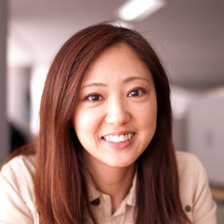
Ikuko Kaneda
Dentsu Inc.
PR Planning Bureau