
Note: This website was automatically translated, so some terms or nuances may not be completely accurate.
 The Potential of "Social Sourcing" to Obtain Resources from Society [6/11]
What Risk Management is Necessary for Co-Creating with Society?
Toshiaki Hasamura
Dentsu Inc.
※Glossary
【Social Sourcing】
A mechanism for co-creation with society by obtaining necessary resources—such as ideas, funding, and skills—from the community.
【Crowdfunding】
A mechanism for broadly collecting money from individuals via the internet. Various methods exist, including "donation-based," "reward-based," "lending-based," and "investment-based."
【Fundraising】
The act of collecting money for a specific purpose.
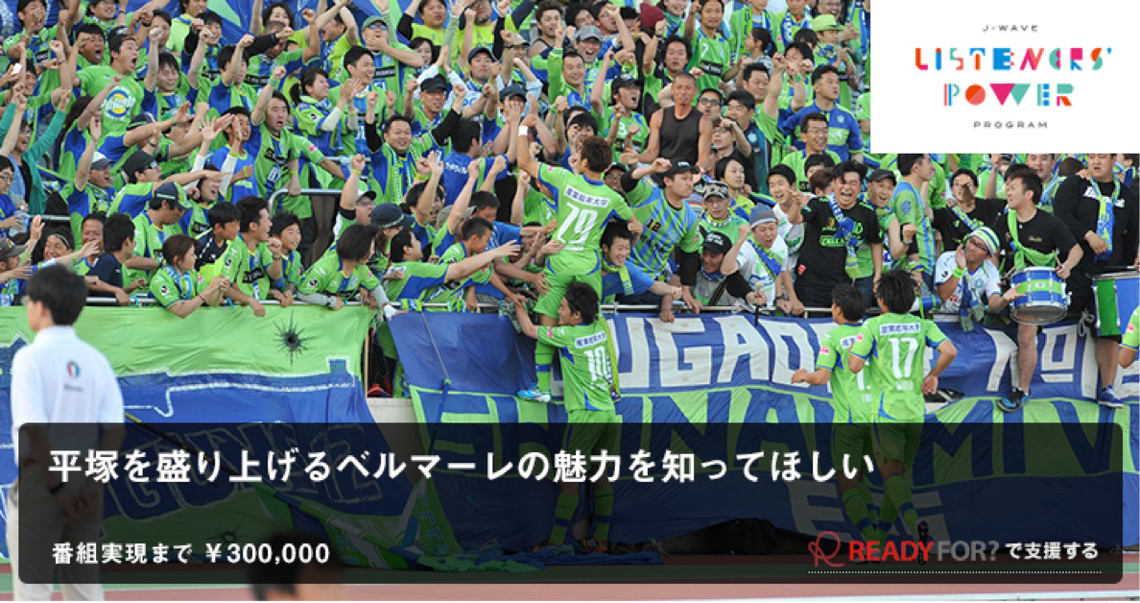
The funding campaign we introduced last time, " We want to create a radio program that conveys the appeal of soccer club 'Shonan Bellmare!' " by J-WAVE LISTENERS' POWER PROGRAM, successfully exceeded its funding goal.
This time, using purchase-type crowdfunding as an example, I would like to analyze the "risks" of social sourcing inherent in it.
As a premise, the J-WAVE LISTENERS' POWER PROGRAMand Hiroshima TV's "Television de Funding Hiroshima"featured in this column are examples of crowdfunding known as "reward-based." While other types exist, such as "donation-based," "investment-based," and "lending-based," we won't cover those here.
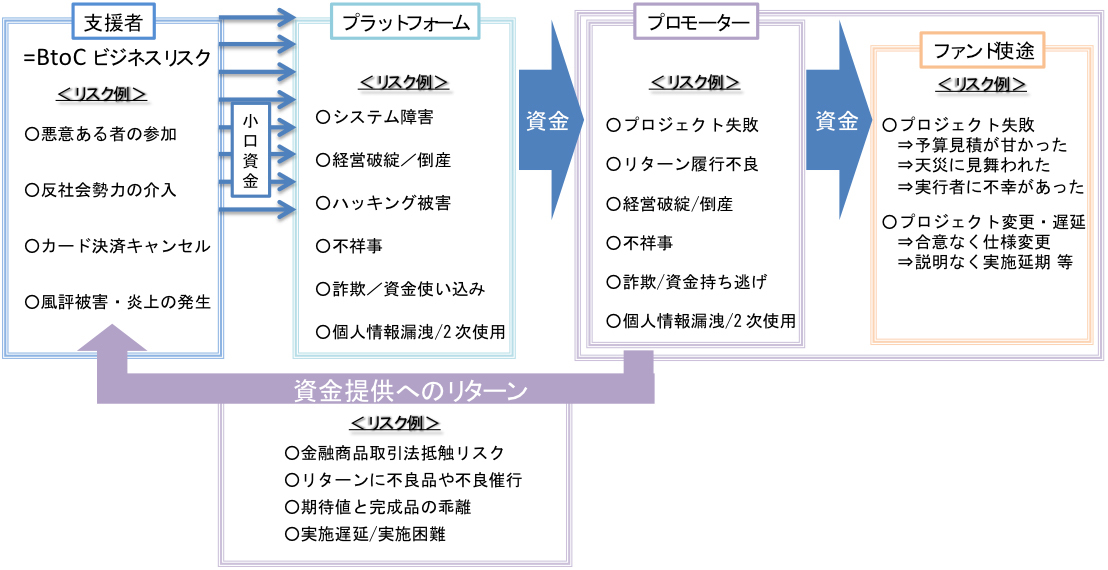
We will examine the three key players in crowdfunding projects—"supporters," "platforms," and "promoters"—and identify the risks each poses to the others.
◆Risks Posed by the Platform
First, from the perspective of backers and promoters, the risks inherent in the "platform" include:
[✔️] System failures or external attacks causing platform shutdown and project failure
[✔️] The project operator goes bankrupt or ceases operations before funds are transferred. Alternatively, the operator absconds with the funds.
[✔️] Personal information leaks or is compromised. Unauthorized secondary use or resale of personal information
[✔️] A project suffers significant damage due to some scandal
Regardless of intent, various risks are foreseeable.
As a method for backers and promoters to manage platform risks, selecting a platform with a proven track record, stable systems, high security awareness, robust organizational governance, and stable management may help mitigate risks.
However, since some aspects are visible externally while others are not, it's advisable to actively gather information through methods like researching user reviews and interviewing experienced project creators.
As the market expands further, various options may emerge, such as companies offering segregated management and trust protection for funds.
Major mass media-affiliated platforms include those operated by J-WAVE, Hiroshima TV, Shizuoka Shimbun, and Shizuoka Broadcasting System. Recent reports indicate industry growth, such as Fuji Television entering the crowdfunding platform business.
Platform fee rates vary significantly between operators, ranging from free (only card processing fees apply) to 20%. It is advisable to compare various factors while prioritizing safety and security when making your selection.
◆Potential Risks for Promoters
Risks associated with "promoters" from the perspective of backers and platforms include:
[✔️] The project stated as the goal fails. Or there was never any intention to realize it from the start (fraud).
[✔️] The promoter changes the project details, reward specifications, or timing without explanation
[✔️] The promoter goes bankrupt before project completion, making realization difficult
[✔️] Leaking personal information or using/reselling it without consent
[✔️] The quality of promised goods or services is significantly low
Unfortunately, cases suspected of being "fraudulent incidents" have occurred not only in the US, a crowdfunding pioneer, but also within Japan. It requires both the platform's screening ability and the discernment of each individual supporter to determine whether the person or organization is trustworthy and capable of delivering.
Simply reviewing a promoter's Facebook or Twitter account can reveal their character and social connections through their friends and past statements. As a backer, checking these before deciding to support can be helpful.
Additionally, promoters must be careful about the nature of the rewards. As mentioned at the beginning, in "purchase-type" crowdfunding, rewards cannot consist of "money" or equivalent items like "gift certificates." Rewards must be tangible goods or services that represent value.
◆Potential Risks from Backers
Risks associated with "supporters" from the perspective of the platform or promoter include:
[✔️] Difficulty preventing participation by malicious individuals (e.g., complainers, stalkers)
[ ✔️] Intervention by antisocial forces
[✔️] Cancellation of card payments after the target amount is reached
[✔️] Potential for online backlash or reputational damage
These risks are inherent not only to crowdfunding but to any B2C retail business. Most issues can be prevented by maintaining sincere and honest communication to build trust with backers. However, if you face malicious attacks or sabotage from individuals with harmful intent from the outset, it's essential to seek expert advice promptly.
◆For the Healthy Growth of the Crowdfunding Market
While we've listed various risks, these are generally risks that can occur in any business, not just crowdfunding. As with other businesses, addressing each one carefully is key.
What is unique to crowdfunding is the aspect of "receiving money upfront for something that does not yet exist in the world." A gap between supporters' expectations and the final product can be a source of trouble. While maintaining close communication between supporters, the platform, and the promoter to prevent issues is fundamental, the role of the platform is key for the healthy growth of this crowdfunding market going forward.
Realistically, it's impossible for the average person to independently investigate and judge the credibility and execution capabilities of every promoter. If supporters are expected to take full responsibility, the act of backing itself becomes burdensome, leading to market contraction. Therefore, for the market's healthy growth, a system that allows consumers to confidently and easily support projects they like is essential. I believe the players who can provide this confidence are the "platforms."
Platforms screen promoters who use their services. Beyond screening, some platforms also support promoters from project conception through execution. This screening capability, support capability, and the ability to compensate backers if incidents occur despite passing screening and receiving support will become the greatest value expected of platforms going forward. I believe that as this value is delivered to the market and the platform's brand value increases, this industry will develop further.
Although purchase-based crowdfunding began in Japan in 2011, no major incidents or accidents significant enough to become social issues have occurred yet. I would be very pleased if the market continues to grow healthily and becomes a public institution that supports Japanese startup entrepreneurship and regional revitalization.
Was this article helpful?
Share this article


Newsletter registration is here
We select and publish important news every day
For inquiries about this article
Back Numbers
Author
Toshiaki Hasamura
Dentsu Inc.
Business Development & Activation Division
During my student years, I incorporated a photography business (started a company). I covered approximately 40 countries. Subsequently, I joined Dentsu Inc. with the goal of launching a social business within an organization capable of significant social impact. While working on new business development led by Dentsu Inc., I also engaged in PRE/PFI consulting, such as advisory services for PFI concession bidding projects like airport privatization, and consulting for new commercial facility development project planning. Examples of business development include: - 2013: Conceived and participated in launching Japan's first crowdfunded mass media broadcast project, "LISTENERS' POWER PROGRAM." - 2016: Conceived and participated in establishing Japan's first FinTech industry hub, The FinTech Center of Tokyo "FINOLAB Inc.", where I remain active daily as part of the operational team. - 2018: Left Dentsu Inc.