Note: This website was automatically translated, so some terms or nuances may not be completely accurate.
 From the Front Lines of Content Marketing [17/34]
To build an epic brand story
Last time, I introduced the relationship between data and creativity from the perspective of evaluating content marketing. This time, I'd like to discuss the direction we aim for going forward, including future considerations.

Gunji: I sometimes think the content marketing we're trying to do is actually like the outermost layer, the epidermis, of the "marketing system" that you and your team are aiming for. What do you think?
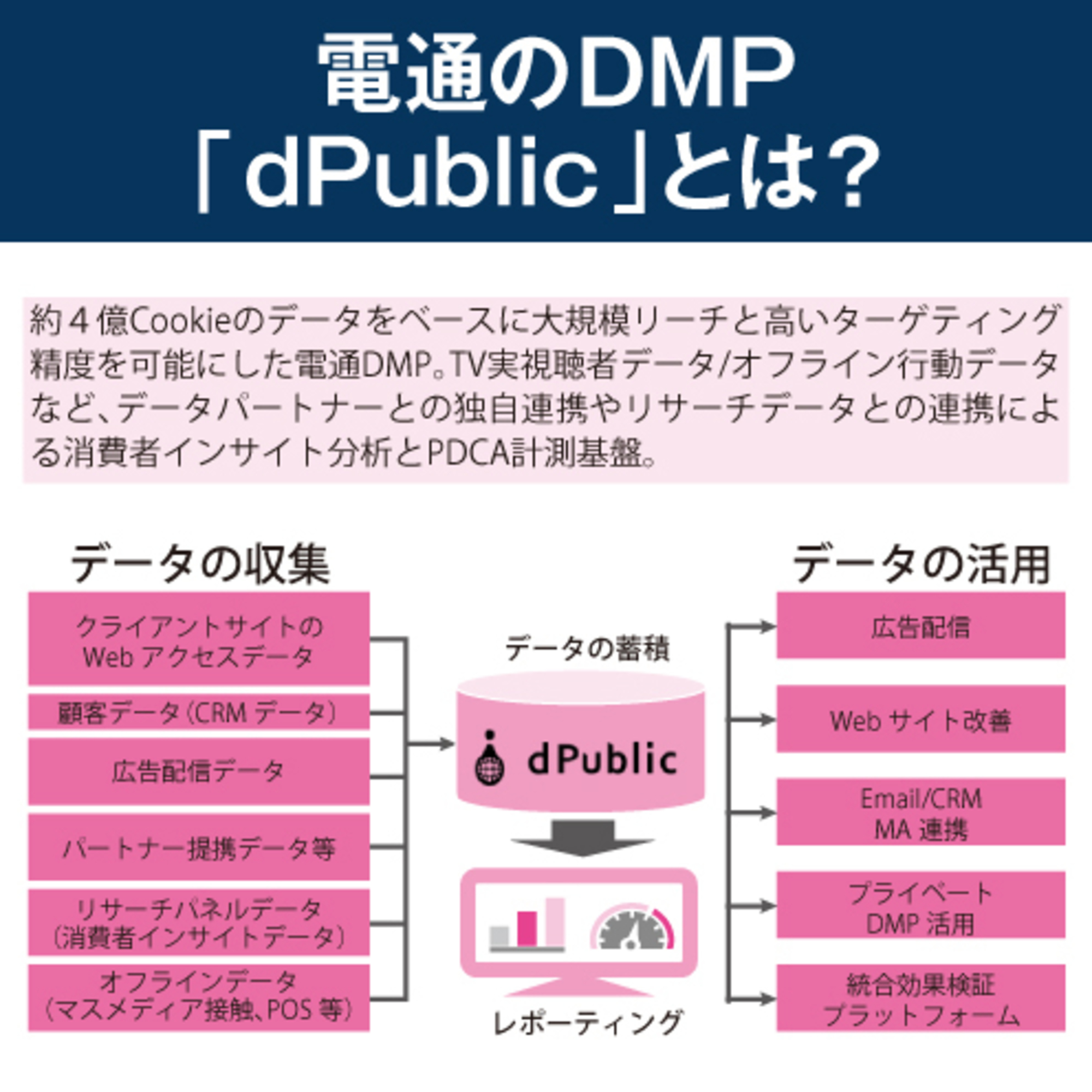
Yagi: The marketing system consists of two elements: "a system connecting customers and the company" and "a database centered around data accumulated as the system operates, enabling marketing utilization."
Gunji: Could you elaborate a bit more?
Yagi: This involves advancing three key areas.
The first is "simultaneous engagement with multiple customer segments." It's not just about executing pre-planned initiatives for predetermined targets. It enables delivering the right content to each customer segment at the right time. This is achieved by connecting customers with the company and assessing customer status in real time.
The second is "customer engagement informed by accumulated experience." Since each customer's experiences can be stored in a database, once you provide a customer with a certain experience, you can then offer the optimal experience based on that prior experience. Currently, technology enables us to deliver content segmentation that would be difficult to manage manually—for example, handling 500 different patterns. It also makes it possible to support offline customer interactions based on what content they viewed online.
The third is "planning based on integrated data." Integrating diverse data allows for a more precise understanding of customers. While statistical methods are sometimes necessary, we can gain a broad and deep understanding of customers—understanding how customers feel and behave after experiencing certain content. This enables the implementation of communication strategies that provide individualized responses to every customer.
For example, if we have open data on the number of visitors arriving at Narita Airport by country, website content viewing data by language, and department store sales data by country, we could potentially optimize sales. By analyzing Narita's country-specific arrival data, we could control signage and in-store promotions at Ginza department stores six hours later, along with staffing plans for multilingual support, to maximize revenue.

Gunji: If all that could be realized, it would create an incredible brand story, wouldn't it?
Yagi: But the crucial point is that implementing a marketing system is merely a means to an end. The goal is what kind of brand experience we provide to customers. And at the core of that, I believe content marketing as an experience provider is positioned.
Gunji: Even in content marketing, there's talk of "moving toward customer experience." Building brand loyalty comes from the content experience. Certainly, in the work I'm involved with, while the primary focus is the product experience, I'm seeing that the content experience is just as deeply connected to enhancing brand loyalty.
Yagi: It also depends on which media the content reaches customers through, right? I heard about a company where the call center agents were so exceptional that paying customers actually sent thank-you letters. If the same interactions had been conducted via email or chat, would this have happened? This shows that conversations with call center agents are also experiences. Therefore, deciding what constitutes experiential content and which media to use to deliver it to customers becomes a major point.
Gunji: While planning various initiatives for a membership site, I realized that user reactions are actually surprisingly positive when they see the company's stance. For example, initiatives that highlight individual comments or ideas, or respond thoughtfully, often receive praise.
I think this kind of corporate behavior can be expressed as web content, or it can be conveyed directly, like through a call center.
Saeki: I think it's crucial in today's world for companies to communicate how their products are made to their own employees, and furthermore, to convey the passion of those creators to consumers.
Gunji: But isn't it impossible to measure whether a company's approach to this is effective or not?
Saeki: Isn't that precisely what consumer research fundamentals like group interviews or mechanisms like NPS can measure? I hear a certain global tech company is now distributing wristbands to employees, attempting to capture employee happiness through biometric data. They're exploring whether a wristband alone could capture insights like, "That guy seems to be really enjoying programming," or "That guy is bustling around making sales and performing well."
Gunji: So you'd make users wear it (laughs). But if that worked, being able to capture behavioral and mindset changes simultaneously would be incredible.

Saeki: What kind of content that person is viewing. By tracking an individual's content viewing history, you can uncover their underlying points of interest.
Yagi: It really makes me think that the job of an ad agency is to discover latent needs and bring them to the surface with ideas that resonate emotionally. And precisely because we're in an era where data lets us see people, this kind of work is more important than ever.
Gunji: In copywriter training, the very first thing drilled into us is "whether that copy contains a discovery." That means using words to visualize the vague, latent needs or values within users. Old-school copywriters were really good at this. Lines like "Clothes for travel are clothes that live on in photos," or "Time doesn't flow. It accumulates."
Saeki: But since digital marketing became popular, it seems like targeting the obvious audience has inevitably taken priority, right?
Yagi: Exactly. Take one industry, for example. The market had been growing steadily, sales kept climbing, but then about six months ago, it suddenly hit a wall. And they couldn't recover from there. I suspect they managed to capture users who actively adopt new things, but they failed to broaden their base to include more cautious or skeptical users—those who make purchasing decisions based on different factors.
Gunji: They weren't cultivating their next customers, right?
Saeki: Even when leveraging digital, I think it's crucial to separate the visible and latent layers of demand. Marketing targeting the visible layer feels quite refined now, but as the market matures, uncovering the latent layer is where mid-to-long-term strategies like branding are starting to regain importance.
Gunji: Content marketing is often said to be essential for creating demand. This aligns perfectly with the challenge on the digital marketing side: the need to focus not just on the explicit segment but also on the latent segment. Definitely.
Yagi: Another factor is the broader trend of "servitization." Companies are increasingly recognizing the need to provide ongoing experiences not just before a purchase, but also after. This is especially true in fields like smartphones and internet services, where offering content or launching new services on the platform has become standard practice.
Gunji: That means it's expanding beyond the IT field into other sectors, right?
Yagi: The world of the Internet of Things (IoT), where various objects are said to connect to the internet, is one example. In fact, appliances and automobiles are already connected to the internet and starting to provide various services. As a result, the experiences gained from using those products accumulate as information and become an asset.
Gunji: So, how that data is collected and utilized is what constitutes a "marketing system," right?
Yagi: Exactly. What makes me think we're truly in the era of content marketing is that real-world actions are increasingly being captured digitally. We're getting much clearer insights into which users experienced which content and how that led to purchases. At this point, the importance of content that can change both feelings and actions is undoubtedly growing.
Saeki: Listening to both of you, I started thinking that underlying all this is something like brand affinity—whether people like the company or the brand. That might become the universal KPI going forward. With the market becoming this saturated, differentiating products themselves is getting harder. Instead, brand affinity is increasingly influencing sales in some segments. Even now, statistical methods like multivariate analysis show that brand factors like favorability and unaided brand recall contribute significantly to sales, even for direct clients. I believe we're entering an era where even those deeply immersed in digital marketing and data must take this "favorability" more seriously.

【Gunji's Eye】
What emerges when we view the term "content marketing" not merely as corporate information dissemination centered on owned media, but from a broader perspective? What becomes possible? I've shared some of the discussions I've had with Mr. Yagi and Mr. Saeki over the past few months while working together on the front lines.
Grand brand stories aren't realized through creativity alone. Supported by big data and marketing technology, we accumulate brand experiences by delivering the content consumers want, when they want it. What kind of team, what process, and what methods will enable us to sustain this effort continuously? Aiming for the ideal form, the Marketing Systems Team, Data Team, and Content Team intend to collaborate even more closely moving forward.
Was this article helpful?
Share this article


Newsletter registration is here
We select and publish important news every day
For inquiries about this article
Back Numbers

Author

Saiber Satoru
Dentsu Digital Inc.
Executive Officer and Co-Chief Digital Officer


Katsumasa Yagi
Dentsu Consulting Inc.
President and CEO / Senior Partner

Akiko Gunji
Dentsu Digital Inc.
Executive Officer
The Era When Companies Become MediaPractical Digital Marketing to Drive Customer ActionThe Age of Content MarketingFrom the Front Lines of Content MarketingDentsu Inc. Style Digital MarketingDigital Marketing TipsDigital Marketing: 10 Essential Principles for SuccessExploring the Digital Video Era with Viibar