Note: This website was automatically translated, so some terms or nuances may not be completely accurate.
 WMS2015 Special Interview [1/3]
"Tripartite Win-Win Innovation" Robert Walcott × Tetsuji Hirose
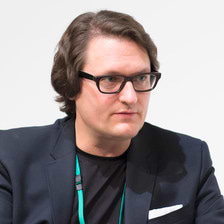
Robert Wolcott
Northwestern University Kellogg School of Management
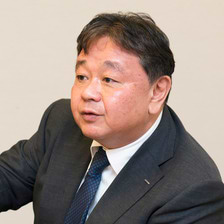
Hirose Tetsuji
Dentsu Inc.
―How to Win in the Digital Age, as Seen by a Marketing Pioneer
Part 1: Robert Walcott × Tetsuji Hirose "Tripartite Win-Win Innovation"
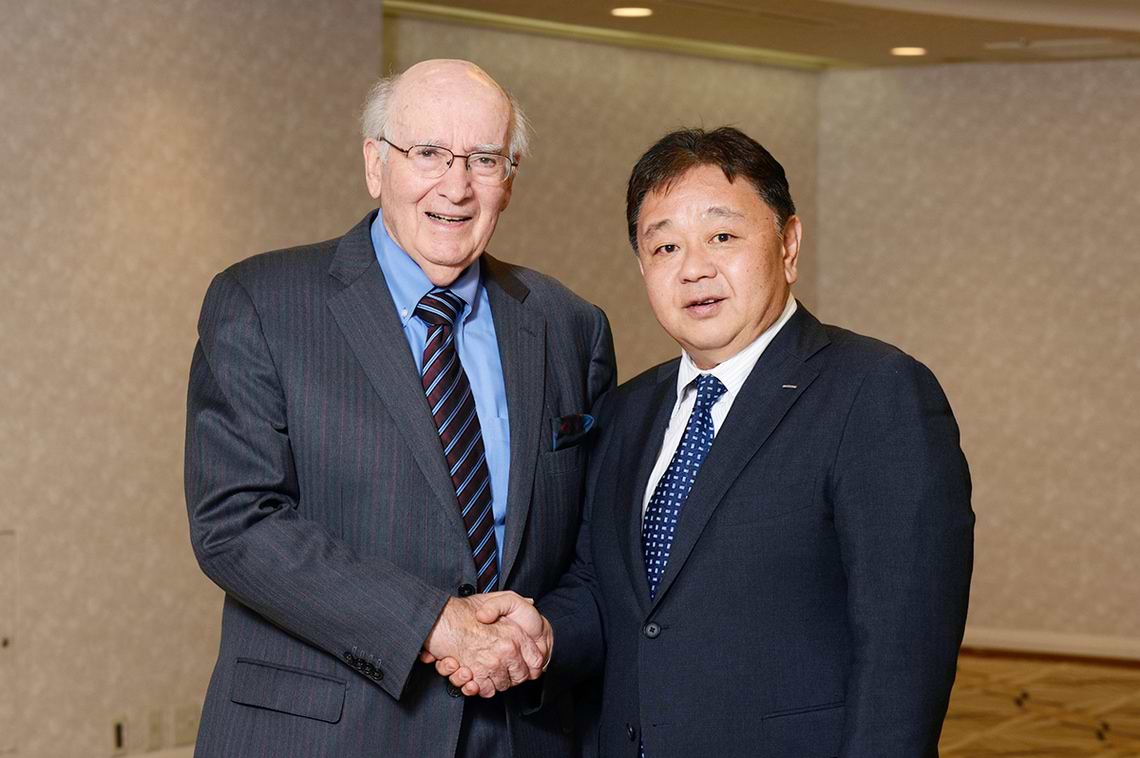
Japan's largest international marketing conference, the World Marketing Summit (WMS) Japan 2015, was held in Tokyo in October, attracting approximately 2,000 participants. WMS was founded in 2010 by Professor Philip Kotler of Northwestern University's Kellogg School of Management, often called the father of modern marketing, with the goal of "Creating a Better World Through Marketing." This was the second time it was held in Japan, following last year. Marketing luminaries sharing the desire to contribute to a better society by leveraging marketing insights and know-how gathered again in Tokyo.
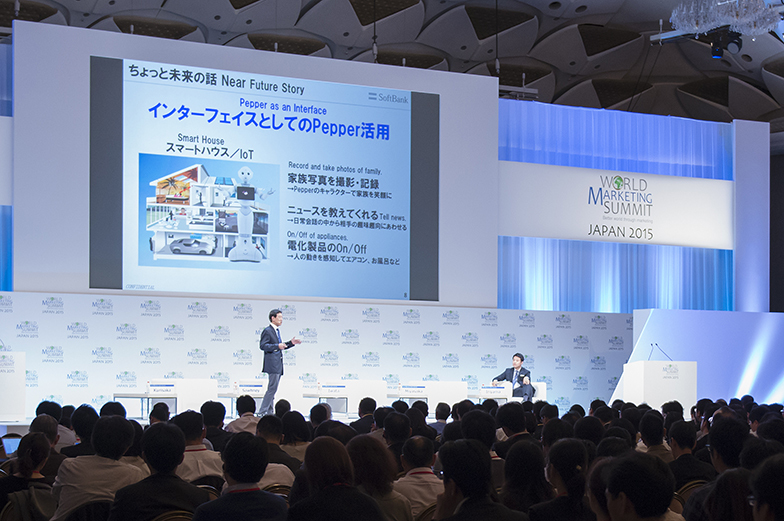
This year's theme was "Winning in the Global Marketplace in the Digital Age." A total of 32 leading marketing experts and executives from Japan and abroad engaged in passionate discussions. Tetsuji Hirose, President of Dentsu Consulting Inc. and Head of Dentsu's Marketing Solutions Division, who previously studied at Kellogg, interviewed two Kellogg professors—one specializing in innovation and the other in sales organization management—about the requirements for succeeding in the digital age.
Part 1 features Robert Walcott, whose expertise lies in innovation and entrepreneurship research. What strengths do Japanese companies possess in the eyes of a world-renowned researcher? And what perspective is required for innovation?
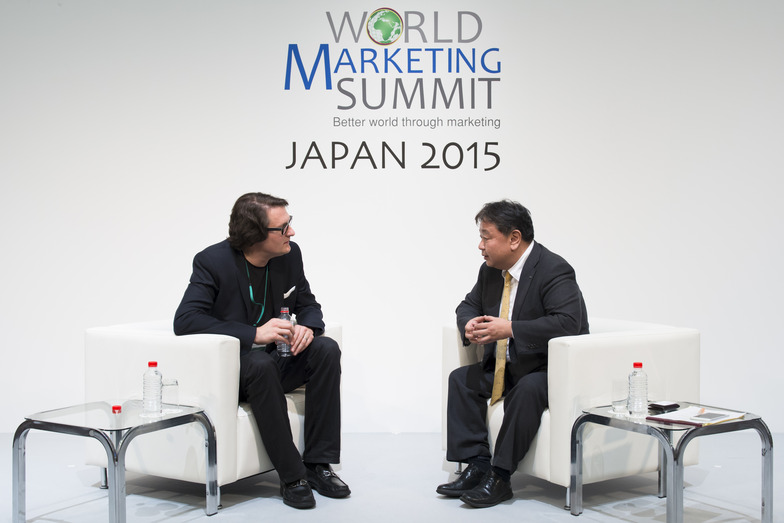
Industry, government, academia, and citizens transcend interests to inspire each other. An intimate network is in action.
Hirose: Professor Walcott, as a professor at Northwestern University's Kellogg School of Management, you teach entrepreneurship and innovation while also serving as co-founder and executive director of the Kellogg Innovation Network (KIN), a public-private-academic network. Could you first tell us about the background of KIN's establishment and its activities?
Walcott: The original impetus dates back to 2002, when I was still a doctoral student in industrial engineering. My research topic at the time was "Innovation in Large Corporations," and I was interviewing various corporate executives. During this process, I discovered that top executives from renowned companies were actually grappling with similar challenges and sought a forum to discuss the nature of corporate innovation free from profit and loss calculations. I realized that while internal company discussions had limitations, and industry associations with competitors were difficult for this topic, a university could provide a neutral platform for free and open information exchange and debate. That's how KIN began.
A key feature since its founding is that participants and member companies are invited only, with operations funded solely by membership fees and corporate donations. Beyond an annual international conference, we hold smaller thematic workshops and even study tours. Participation has grown year by year. Initially limited to business leaders, since 2008 we've welcomed NPOs, government officials, and entrepreneurs, enabling more multifaceted discussions.
This year's international conference will gather 250 participants from around the world. A defining feature of this conference is that we do not lecture; we strictly act as facilitators, drawing out the voices of our diverse participants. It becomes a place where participants listen to those with different perspectives, engage in lively exchanges of ideas, and expand their networks, receiving various stimuli and learning.
KIN stands for Kellogg Innovation Network, but the English word "kin" also means relatives. We see the participants of this gathering as one family, connected by a shared purpose: figuring out what needs to be done to create better innovation.
Japan tackling cutting-edge challenges. The world still wants to learn from it.
Hirose: Professor Walcott, you've also taught at Keio University's business school and likely have many opportunities to interact with Japanese companies. In that context, how do you view the characteristics of Japanese companies?
Walcott: Well, based on my limited experience, the first impression is the very strong seniority system. While the experience and insights of veterans are naturally important, fostering innovation requires an open atmosphere and a culture that embraces the flexible thinking of younger generations. Considering that highly talented young people are increasingly moving between companies these days, there's a need to balance how to effectively incorporate this young talent into corporate innovation.
Similarly, I believe many companies remain male-dominated. The diversity of talent that nurtures innovation stems from providing opportunities for everyone, including women. Another characteristic, perhaps, is that the domestic market was so large that companies focused on it for far too long. While this can foster uniqueness, looking ahead, there's a greater need to seriously engage with international markets.
Hirose: Japan also produced various innovations through its postwar economic growth, but after the Lost Decade following the bubble burst, I think there's a sense of lost confidence in some areas.
Walcott: Japanese companies possess multiple strengths in innovation: a culture and tradition of manufacturing excellence, abundant talent, and globally recognized companies and brands. The question is how to leverage these strengths to create new value.
Japanese-style innovation might emerge from ideas like applying Japan's world-leading robotics to its world-leading aging society, creating entirely new products and services. Precisely because Japan is sometimes ahead of the path the entire world will eventually follow, I believe the world still has much to learn from Japan.
In doing so, a "Can Do" spirit—one that seeks possibilities rather than preemptively defining limits or constraints—will be crucial.
Innovation that enriches society from three perspectives: Profit, People, and Planet
Hirose: That's very encouraging. Could you offer further advice on how to approach innovation moving forward?
Walcott: When lacking confidence, we tend to play it safe. But safety is a path anyone can take—one without failure, yet also without great success. To achieve success, innovation that includes taking risks is absolutely essential. Every company, during its founding period or times of rapid growth, must have had entrepreneurial spirit and innovation.
I believe one approach is to trace back to your company's DNA and learn what entrepreneurial spirit and innovation existed in the past. Furthermore, if you only analyze competitors as benchmarks, you're merely imitating them, and innovation won't emerge. A broad perspective on how to leverage expertise from other industries for your own business is also crucial.
Hirose: Finally, could you share what mindset you believe companies need going forward?
Walcott: While business is naturally profit-driven, I hope innovation leads to richer lives for people. Balancing Profit, People, and Planet is what's required of companies going forward, and it's also essential for sustainable corporate growth—this is actually the founding principle of KIN.
Of course, some companies still prioritize profit above all else. However, people are now more attuned than ever to the social significance and mission that companies should fulfill. Companies can generate profits by benefiting local communities and contributing to better lives for people. The philosophy of mutual prosperity will become increasingly important going forward.
Hirose: Dentsu Inc. also champions "Good Innovation." as its corporate philosophy, aiming to bring new value to people and society. Thank you for your valuable insights today.
Was this article helpful?
Share this article


Newsletter registration is here
We select and publish important news every day
For inquiries about this article
Author
Robert Wolcott
Northwestern University Kellogg School of Management
Professor
Hirose Tetsuji
Dentsu Inc.
Executive Officer