Note: This website was automatically translated, so some terms or nuances may not be completely accurate.
 The Changing Nature of How "Topics" Emerge and Are Created [2/2]
Turning youth topics into strategy. What are the methods?

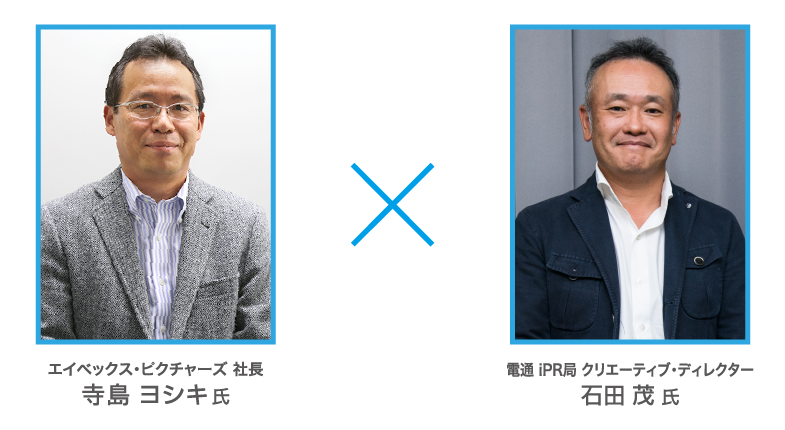
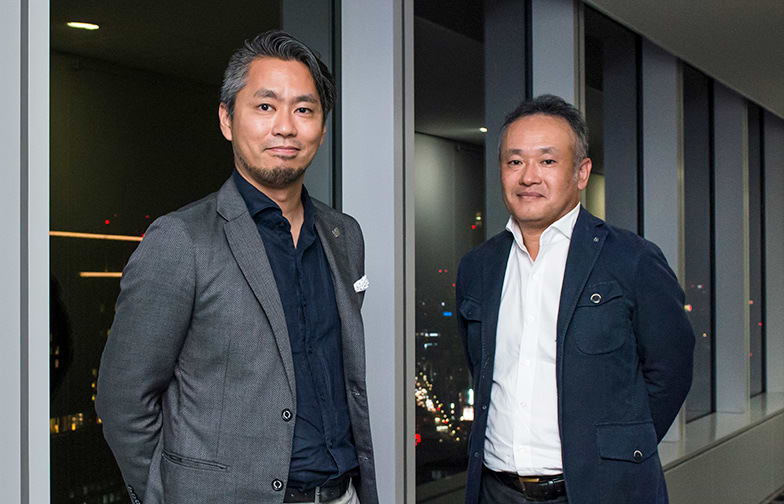
Yoshiki Terashima
Avex Pictures Inc.
Shigeru Ishida
Dentsu Inc.
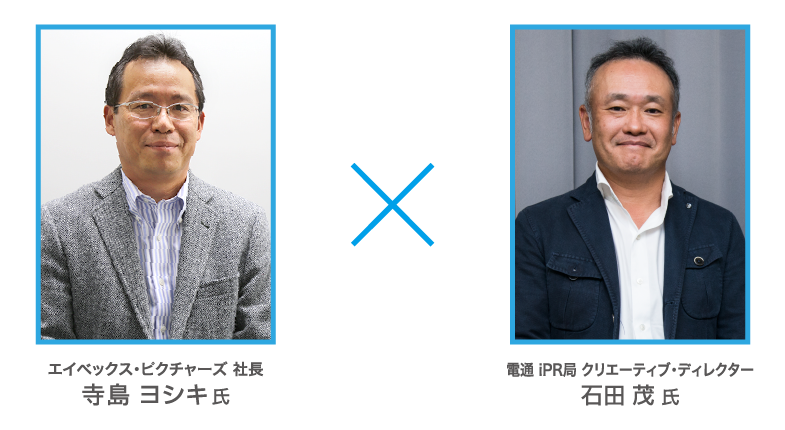
In the realm of content, particularly anime, fans disseminate diverse information through social media, sometimes sparking heated debates. What is the relationship between anime content and the topics that emerge on social media? How does this impact marketing? Yoshiki Terashima, President of Avex Pictures, involved in popular anime like "Osomatsu-san," and Shigeru Ishida of Dentsu Inc. iPR Bureau explore the current landscape and examine methods for transforming youth-driven topics into strategic advantages.
Understanding users requires social media analysis
Ishida: The way topics are created has changed significantly, shifting from the era dominated solely by mass media to the current age of social media dominance. Creating buzz now requires paying attention to communities on social media. Within this context, what is the current state of marketing for anime content?
Terashima: There are about 50 new TV anime series per season. Core users record them all and watch their favorites first. These fans typically gather information on Twitter. They narrow down their choices to about 10 series based on information spreading on Twitter and similar platforms, discarding the rest.
When it comes to physical package sales, rankings are largely determined by including event lottery tickets. This creates a dilemma, but it's how titles make it into the top five.
Ishida: So first you make the top 10, then get narrowed down to the top 5. It's a tough world to survive in.
Terashima: Exactly. To survive, analyzing user awareness is essential. This spring, we conducted the "Deep Dive Anime Awareness Survey" with Dentsu Inc. Anime fans are as varied as people come, each with distinct tastes and preferences. Analyzing social media is indispensable to understand them. The core audience is in their teens to thirties, and their primary touchpoint is social media. I personally check every tweet about our in-house anime productions and affiliated talent every morning.
Popular anime like "Osomatsu-san" generate tweets by the second, while less popular ones don't. You can immediately gauge interest levels. Furthermore, the vivid reactions on Twitter correlate directly with package pre-order numbers in physical stores and e-commerce.
Ishida: That's fascinating. While starting with social listening is standard practice for social media marketing, it's rare in Japan for top executives themselves to understand this and actively monitor Twitter.
Especially for genres like anime where strong communities form, grasping community trends is key to success. Companies advocating digital marketing aim for new approaches, so having top management personally practicing it is very encouraging.
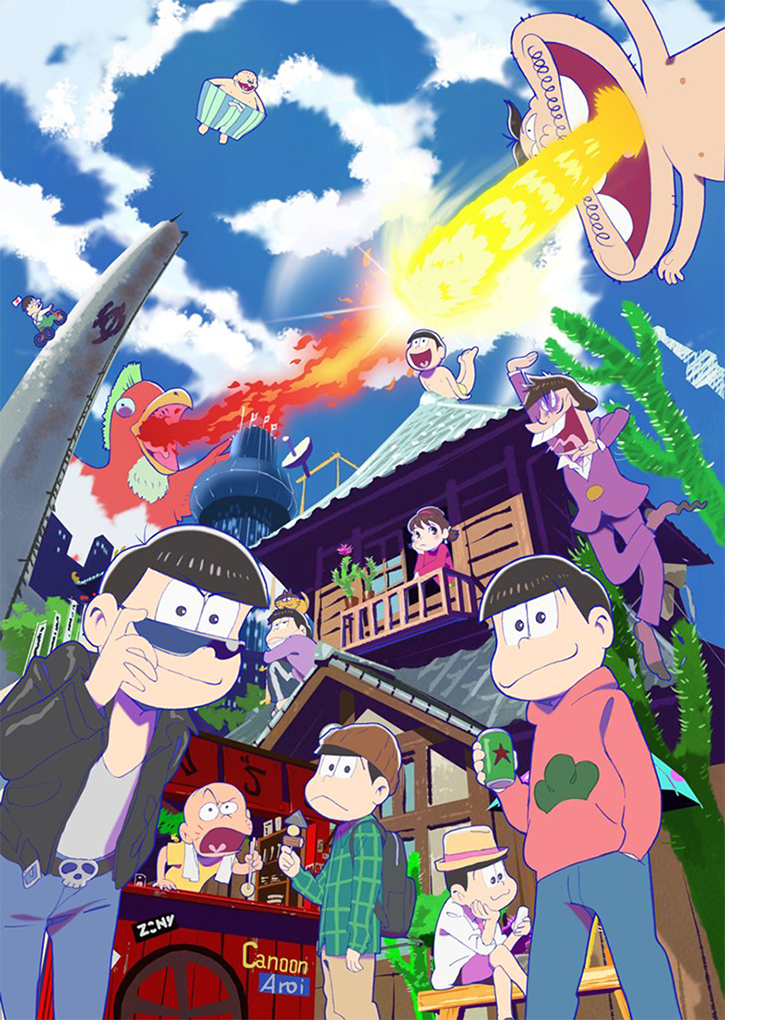
"Osomatsu-san"
An anime commemorating the 80th anniversary of Fujio Akatsuka's birth. It depicts the future of the classic gag manga "Osomatsu-kun," featuring the national icons, including the sextuplets, as adults. Its high-energy storylines gained popularity, and the official account has over 200,000 followers.
Focusing on satisfaction and turning criticism into a positive
Ishida: Around anime content, various communities form through SNS. Analyzing these reveals distinct roles within each account's community. We first call accounts that initiate topics within the community "Creators." Accounts that provide the initial topic make up 1% of the total. Accounts that then add to the conversation make up 9%. Together, these Creators account for 10%.
Beyond these, there are many accounts that spread topics laterally ("Spreaders"), with the remainder being "Watchers" who observe the topics. Understanding and approaching the community's internal structure is crucial.
Terashima: When dealing with communities, the biggest fear is concentrated criticism. We want influential influencers to give positive evaluations, but if we get the strategy wrong, it can ruin everything. That's why it's difficult to implement.
A case where criticism intensified was this October's bus tour organized by the fan club of the seven-member voice actress group derived from the anime "Wake Up, Girls!". It was a two-day, one-night event in Sendai. However, the participation fee was quite high at 50,000 yen, so it was heavily criticized online. "Alright! Then let's make the participants' satisfaction absolutely top-notch." We implemented unique, one-of-a-kind plans and prepared an abundant buffet for dinner.
Since it was a mystery tour, we prohibited all tweets during the event. After it ended, everyone tweeted simultaneously, expressing immense satisfaction with comments like "This was an amazing event!" I was startled by a post saying "I won't participate next time," but it continued with "It was such a great event that I want others to experience it." They turned criticism into a positive and generated buzz.
Ishida: I see. So you read the real-time situation on SNS, the top management made a judgment, and you took precise action. That's an excellent response. It's like a textbook example of real-time marketing. Campaigns centered around mass media tend to have somewhat fixed structures, but in communication that leverages the real-time nature of SNS, this kind of quick thinking is extremely important. Are there any other examples?
"Wake Up, Girls!"
An anime series "Wake Up, Girls!" set in Sendai, featuring seven girls aspiring to be idols, and the derivative voice actress unit. The seven cast members portraying the characters also perform as the real-world voice actress unit Wake Up, Girls! Their solo tour held this July-August drew approximately 10,000 attendees across four cities. A fan club-exclusive bus tour is scheduled for this fall, and the latest anime theatrical film is set for release on December 11.

Terashima: We held a pre-broadcast event for "Noragami ARAGOTO" at Hibiya Public Hall this summer, right when heatstroke cases were making headlines. So we gave out 1,000 bottles of mineral water for free. Then it spread on Twitter with people saying, "That's god-tier service!"
If you pursue profit too aggressively, or if that intent becomes apparent, backlash arises immediately. It's crucial to treat customers with sincerity and earn their reaction of "This is great!" I felt that genuine sincerity in interaction leads to authentic buzz.
Ishida: When marketing to a community, prioritizing your reputation within that community is paramount. The consensus within a community can shift from positive to negative at any moment. Here, I think what came across was Mr. Terashima's decision and response, which put the fans' feelings first.
"Noragami ARAGOTO"
A dark action fantasy series currently serialized in Monthly Shonen Magazine. After its anime adaptation, comic sales increased fivefold. The story centers on Yato, a poor and obscure god with the ability to cut through anything; Yukine, a spirit boy who became a divine tool; and Iki Hiyori, a girl with a half-demon constitution prone to losing her soul. It depicts battles with other gods and Yato's hidden past. The second season, "NORAGAMI ARAGOTO," has been airing since October.

Building consensus while conversing with fans
Ishida: But it's also true that many executives still see SNS and otaku culture as niche. Even if you explain, "It's mainstream now," they find it hard to imagine based on their own past experiences. However, times are changing, and I believe topics originating from SNS will only increase.
Terashima: It's only natural for business owners to want to know how their products and services are being evaluated. If your target audience is in their teens to thirties, social media reflects that instantly. It's a feature traditional media lacks, and conversely, it's now established as a medium in its own right. Why not utilize it? That's something I just can't understand.
Utilizing social media is now essential, and I believe it's crucial for business owners themselves to check it directly.
Ishida: As a genre actively using social media to launch new marketing campaigns targeting younger demographics, the "anime" business discussed here represents a pioneering case. There are many insights here that companies in other categories should adopt.
When advancing digital marketing, elements like content marketing, community marketing, and real-time marketing are essential. Here, they naturally utilize all these elements in their activities. Of course, being a fan-based business accelerates digital marketing, but I also felt a significant factor was top management deeply understanding the content and leading the charge.
Observing topics within the fan community while providing catalysts for new discussions. In other words, building community consensus through ongoing dialogue with fans. I consider this a modern form of PR.
While mass media once shaped societal and community consensus, the emergence of SNS has made community contexts visible. Now, amidst the coexistence of mass media and SNS, I believe the way new topics are formed is evolving. As someone involved in PR, I intend to focus on this field and continue researching and analyzing it.
Was this article helpful?
Share this article


Newsletter registration is here
We select and publish important news every day
For inquiries about this article
Author
Yoshiki Terashima
Avex Pictures Inc.
President
Shigeru Ishida
Dentsu Inc.
Executive Officer