Note: This website was automatically translated, so some terms or nuances may not be completely accurate.
 Shinmeikai "Strategic PR" [30/51]
"Are You Making the Most of PR?" Chapter 4: Maximizing Opportunities for Information Outreach
It's finally the end of the year. This column has been running for two and a half years now, and I realize even someone as easily bored as me has some staying power after all. All of this is thanks to everyone involved who has tolerated (or tacitly allowed?) the column's continuation. I am truly, truly grateful. And this time, building on that "stamina," I present the fourth installment of the "I Used It to the Fullest" series, which has become the longest-running in the series: "I Used Information Sharing Opportunities to the Fullest."
PR Requires Timing
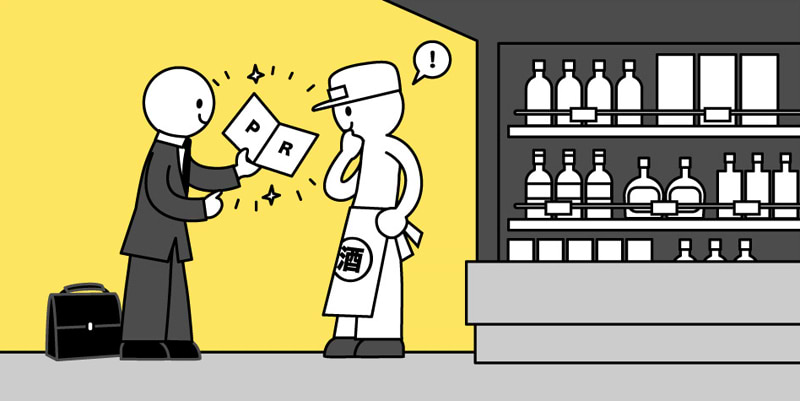
Advertising-style information dissemination typically requires timing around events like new product launches. However, through media buying, you can proactively control the timing. PR, however, is different. You can't just speak up whenever you want and expect anyone to listen. This is especially true when aiming for publicity through media outlets. Media outlets consider whether society and consumers genuinely need this information right now before deciding to report or feature it. You can't just approach them saying, "Hey, I've got this info—would it make news?"
When we PR professionals approach media with such information, the most crucial thing to consider is this "timing necessity." Almost 100% of the time, media professionals will ask, "Why now?" Of course, you absolutely cannot say something like "It's because of the client's schedule..." because they're asking from the perspective of "Is this tied to societal or consumer needs? It should be, right?" Therefore, you must meticulously prepare the logic beforehand: "Why is this company launching this product now? Why are they undertaking this activity now?"
However, this doesn't mean we just make things up. When you look at things from that perspective, you start to see some kind of background behind every event.
"Consumer preferences have diversified, and we've reached an era where even our flagship products must expand their lineup."
"Technologies we've been developing have matured, enabling significant product upgrades at price points consumers demand."
"Amidst a weak yen, rising raw material costs forced us to change packaging and product quantities."
"Consumer lifestyles have changed, prompting us to significantly revise the design of this product, which had remained unchanged until now."
And so on.
As shown above, there are various underlying factors—both positive and negative—such as efforts to meticulously tailor our products and services to shifts in the social environment and consumer preferences, or creating new markets through the realization of new technologies. However, companies often fail to genuinely delve into these reasons, instead attempting to communicate information based on a vague sense of "just because." This approach is problematic. Our skill as PR professionals lies in uncovering the core reasons and framing them within the broader social context. In that sense, we share a perspective similar to media editors and writers.
By the way, as an aside, I often hear people say, "Talking to PR folks is unbearable—they pry into everything, including personal matters." I think media reporters are the same; we simply can't feel secure unless we ask about absolutely everything. Even when we don't know where each piece of information will lead, we strive to get clients to recall and share details at their level—and even things they hadn't considered. After all, as representatives of companies making various interview requests, we can't afford to be running errands like kids saying, "Oh, I'll ask about that too."
Incorporating the company's vision when disseminating marketing information
But I digress. Let's get back to the point: "Maximizing every information-sharing opportunity." Companies actually don't have that many chances to share external information. Industries like convenience stores or restaurant chains, where core products or menus change frequently, might issue dozens of press releases a month. But for most companies, opportunities like that are rare. Furthermore, while marketing communications about products or services are relatively common, opportunities to share corporate information—such as personnel changes, financial results, or management policies—are extremely rare. Of course, some companies consciously strive to "show society what the company is doing," but they remain the exception rather than the rule.
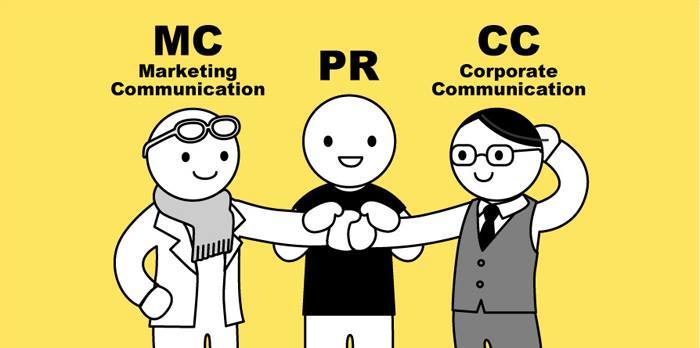
This leads to my proposal: why not incorporate corporate communications information—that is, information for corporate communication—into these marketing communication opportunities?
Currently, not many companies effectively integrate and coordinate both types of communications. However, this approach should yield significant synergistic benefits for both marketing communications and corporate communications. For instance, within corporate communications, which often face limited scope and opportunities for information dissemination, companies can leverage the broader, product/service-focused marketing communication channels to weave in corporate-perspective information. This could include "top management messages," "the company's current product development stance," or even "how the company utilizes young employees internally." Sprinkling such information throughout allows consumers to constantly envision the corporate face behind the products and services.
Conversely, by aligning the disparate communications from product-focused business units with the company's overarching domain, a sense of unity can be fostered. By connecting each product or service to the company's underlying intentions and stance, these communications converge toward the company's strategic direction. Furthermore, this initiative can yield internal benefits, compelling individual employees to focus on the company's direction. It means constantly and strongly keeping in mind often-neglected elements like the corporate vision and slogans, leading to genuine internal alignment. Many companies are now seriously embarking on such initiatives.
We also want to find various opportunities in communication methods
As mentioned earlier, beyond methods like "reprocessing information to align with social interest and enhance credibility" or "integrating corporate communication content into marketing communication opportunities," having multiple ways to disseminate even a single piece of information is also a key know-how for maximizing its use.
For example, beyond the traditional approach of disseminating information to society via media outlets through press releases, an increasing number of companies are now publishing information on their own websites in more accessible formats. This trend, accelerating among Western companies, reflects a shift away from relying solely on media-mediated information diffusion toward leveraging owned media to communicate messages directly and effectively to consumers.
In the West, driven by factors like growing distrust of traditional media, a policy of "objectively verifying information and disseminating it in a self-responsible manner" is gaining prominence. While Japan hasn't reached that level yet, it's certainly true that more companies are actively seeking to leverage this opportunity by connecting directly with consumers, including through social media. The future trend will likely involve leveraging each PESO media (Paid, Earned, Shared, Owned) channel's unique characteristics to utilize a single piece of content in the most appropriate way.
Regarding owned media, which holds particularly high expectations for companies, efforts are now being made beyond simply posting press releases. Content is being transformed into more accessible formats like infographics and videos for publication. Previously, complex research findings were effectively visualized and presented to consumers when reports were handed over to media outlets. In that sense, the media served as a valuable resource. However, we have now entered an era where companies themselves must undertake these processes. They must constantly keep the consumer front and center, considering how best to convey information clearly for each specific information channel.
Incidentally, according to a study by PR Newswire, adding images to information increases engagement rates by 14% compared to text-only content. When combined with video, engagement jumps to 200%, and with audio data, it soars to 350%. Even if it requires a little extra effort, it's worth putting in the work if you can expect such results.
For companies, having opportunities to disseminate information is something to be very pleased about. We hope you'll take this chance to challenge yourselves to find ways to make each piece of information more effective. You'll surely experience results unlike anything before!
Was this article helpful?
Share this article


Newsletter registration is here
We select and publish important news every day
For inquiries about this article
Back Numbers
Author

Inokuchi Tadashi
PR Consulting Dentsu Inc.
Executive Officer
Chief PR Planner
Shinmeikai "Strategic PR"Long time no see! CRAFTPRMeasuring PR Effectiveness: Supporting Management with Data-Driven InsightsNow is the time to reexamine the essence of PR / Its futureThe Future of Corporate Museums as PR AssetsBeyond Conference Report【Special Discussion】Public Relations Enters a New Era: Proposals for PR 4.0