Note: This website was automatically translated, so some terms or nuances may not be completely accurate.
 Interviews with the World's Creative Technologists [6/10]
"Umami," "kinetic energy," and "I love you" – all can be expressed through technology: Will Turneage
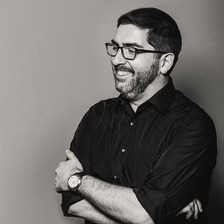
Will Turnage

Togo Kida
Dentsu Inc.

At Dentsu Lab Tokyo, we refer to those who express themselves using technology as Creative Technologists. This series interviews Creative Technologists worldwide about their work and creations, exploring what new forms of expression emerge from technology.
Will Turnage: Expressing Human Behavior Through Technology
The fifth interview in our series with creative technologists features Will Turnage. He led the technology team at the New York office of advertising agency R/GA.
In January of this year, he joined Inamoto & Co., founded by digital advertising pioneer Ray Inamoto, as Director of Technology. He supports clients in creating new businesses centered around data, design, and technology. This interview came about because author Kida attended and became interested in a session Will spoke at during SXSW (short for South by Southwest, a festival of music, film, and technology) in 2013, leading to contact between them.
We asked Will, who masterfully uses digital to meet client needs, how he creates technology-driven initiatives.
(This interview was conducted via online messaging)
From "sour" to "exercise volume," expressing it through technology
Kida: First, could you tell us about your work, Will, and share your favorite projects?
Will: I love projects that combine design, data, and technology. That's why I joined Inamoto & Co.—because it's a company that values these elements. One of my favorite projects is "FlavorPrint." We broke down the taste of food into 33 elements and assigned a color to each one. Then we visualized every recipe as a combination of those colors.
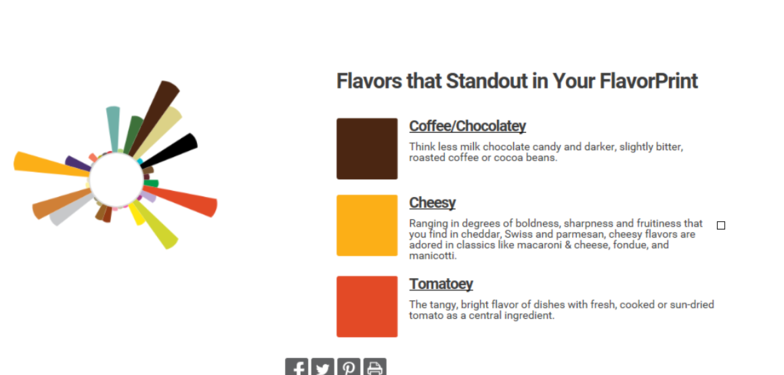
Kida: We classify flavors into elements like "sour" or "cheesy," turning them into "data," then "design" colorful pie charts based on their proportions. There's also "technology" that suggests recipes based on your preferences when you input your likes and dislikes. You can see all three elements are present.
Will: The client is McCormick, the spice company.
Kida: Will, you also worked on developing the Nike+ Fuel Band at your previous advertising agency, R/GA. It uses motion sensors to instantly calculate calories burned, measure activity levels and steps, and convert your exercise data into "data." That data is displayed as colorful "designs" on apps and websites, and it also includes "technology" that lets you set personal goals or compete with friends. By quantifying previously invisible exercise and converting it into visible graphics, it provides motivation to exercise.
Now, tell us about your career path. You first worked at Sony Music Entertainment before moving to an advertising agency. What significance did moving from the client side to the agency side hold for you?
Will: I never thought of it in terms of "ad agency or not." My constant focus was on proposing innovative, forward-thinking work to clients. At Sony Music Entertainment, my "clients" were record labels and artists. Each had goals and an audience they wanted to reach.
Back then (around the turn of the millennium), digital was fundamentally transforming the music industry. I was fully focused on figuring out how to build connections with listeners. This mindset is very similar to that of an advertising agency, so the transition felt natural.
Guiding clients toward their future potential
Kida: Next, let's talk about Inamoto & Co., where Will became Director of Technology this year. I understand it's a company that creates new businesses using the three forces of design, data, and technology. Your website mentions "Business Invention Studio" – what does that mean?
Will: We call it the Business Invention Studio to declare our commitment to taking clients' businesses where they should be headed. It's not just about solving their current problems, but also envisioning new business possibilities and revenue structures, guiding clients toward their ideal future state.
Additionally, since Inamoto & Co. receives investment from Digital Garage, which operates internet businesses and provides corporate support, we have the opportunity to work with companies possessing cutting-edge technologies that Digital Garage invests in.
Will the day come when we show love with Bitcoin?
Kida: I understand Inamoto & Co. believes that as AI replaces human jobs, the only thing humans can do is start businesses. Among your skills, Will, what can't be replaced by AI?
Will: Machines excel at repeating simple tasks over and over. Humans excel at getting used to things and coming up with different ways to do them. Computers are ahead of us in what we can do "right now," but humans are better than machines at creating entirely new approaches.
Kida: By the way, Will, I think you have deep insight into the topic of "Technology × Ideas." I still remember what you said at SXSW in 2013 about brainstorming. It was about approaching ideas from two angles: the concept of the project and what technology can make possible.
What defines a good idea using technology for you, Will?
Will: It's an initiative where the technology is so perfectly matched to the idea that you can't separate the two. I believe in the concept from Arthur C. Clarke's Third Law: "Any sufficiently advanced technology is indistinguishable from magic."
Kida: Recently, various new technologies, starting with AI (artificial intelligence), have been emerging one after another. What topics are you interested in when looking at technology and creativity?
Will: Like everyone else, I'm interested in machine learning, artificial intelligence, language analysis, and cryptocurrency. But rather than pursuing the fundamentals of technology, I focus on how to apply these technologies to the real world in ways that resonate with people. Consider a simple example: love locks.

Will: You know, the locks lovers put on bridges. Now, imagine applying that tradition to cryptocurrencies like Bitcoin or Ethereum. These currencies permanently record every transaction. What if you expressed love through a Bitcoin transaction? It would be visible to everyone, forever. What a beautiful way to show affection! Maybe someday we'll say "I love you" through a Bitcoin transaction.
It's a very simple example, but I hope it gives you a sense of how I think when applying new technology to everyday life.
Kida: So whether it's a LoveLock or a Bitcoin transaction, declaring your love and leaving it publicly recorded is the same. I really understand the idea of applying technology to human actions.
Finally, what do you want to create now?
Will: Tools with Heart. At Inamoto & Co., we often describe our work that way. We believe we must create things that aren't just practical, but also overflow with humanity, reminding us of our own humanity.
Kida: I'm very much looking forward to seeing what kind of work you'll be doing at Inamoto & Co.
[After the Interview]
Mastering technology like language
I think Will is a translator who can express human actions through technology.
I was amazed he could explain expressions of love using Bitcoin. Will categorizes human taste into 33 elements, creating graphics by quantifying their ratios as "data." He "designs" calories and steps into exciting forms to share with people, then applies these expressions through "technology."
This approach can also be applied when creating works using technology. First, to quantify something, you need to create a measuring stick. Just as taste was divided into 33 elements, you define units for quantification. Next, transform that into a form the recipient will enjoy. To have the data received emotionally rather than intellectually, instead of showing a block of numbers, he presents it as colorful visuals. Furthermore, by creating a mechanism that allows the recipient to interact with this expression, they can participate and play with the expression.
As seen on his personal website, Will is constantly creating something using technology. That's precisely why I believe he can instantly translate his ideas into technological expressions when planning. For Will, technology is likely a means of expression, just like words.
Full version of this article here
Was this article helpful?
Share this article


Newsletter registration is here
We select and publish important news every day
For inquiries about this article
Back Numbers


Author
Will Turnage
Creative Technologist
Togo Kida
Dentsu Inc.
CDC Dentsu Lab Tokyo
Creative Technologist