
Note: This website was automatically translated, so some terms or nuances may not be completely accurate.
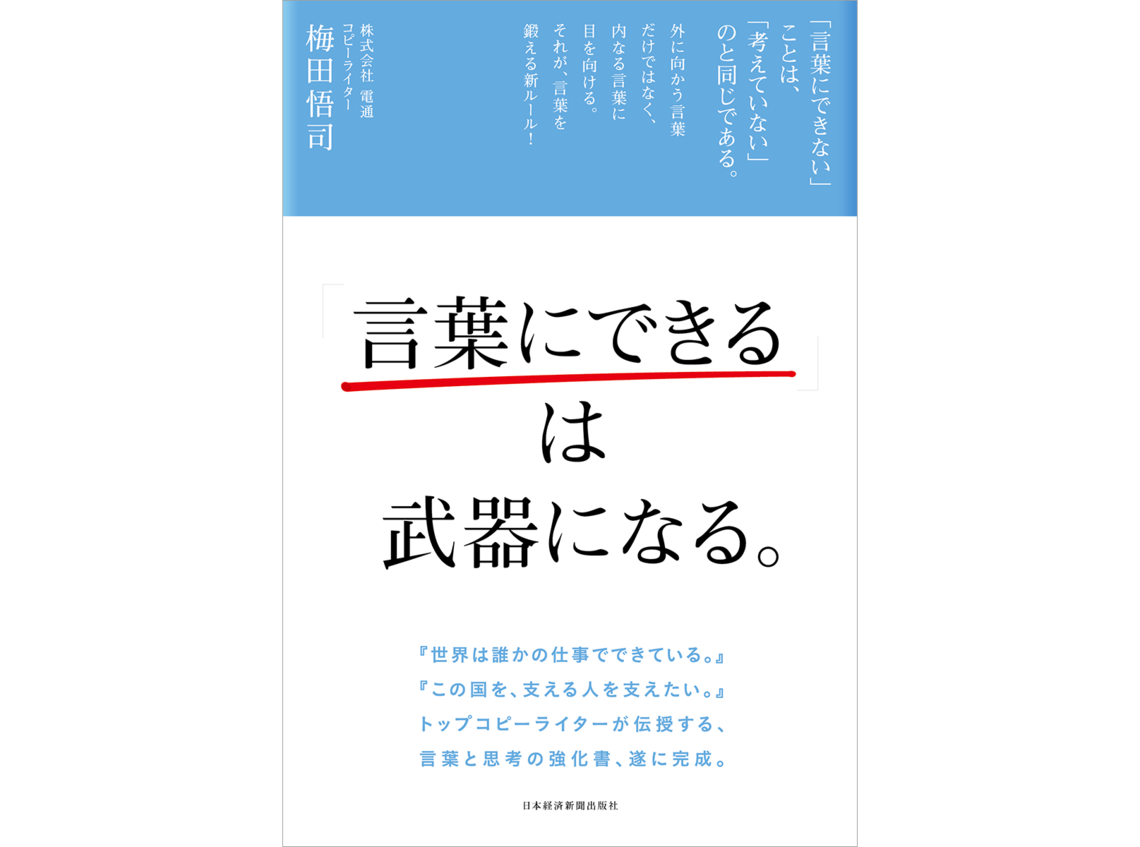
 The ability to put things into words is a weapon. [4/5]
Advancing ideas through the "T-shaped thinking method."

Satoshi Umeda
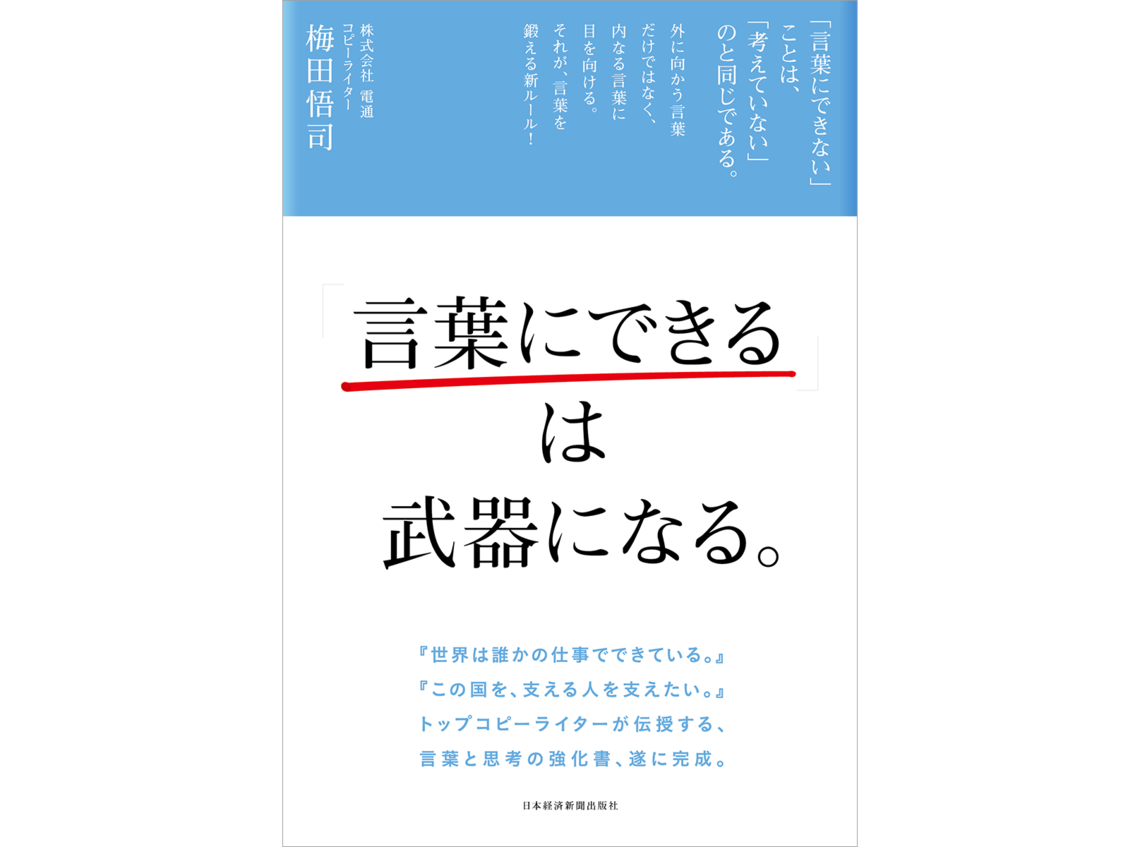
ISBN: 978-4-532-32075-1
In the previous column, I explained the importance of increasing the resolution of your inner words. The higher the resolution of your inner words, the more precisely you can grasp your own feelings, and the better they function as seeds for outward expression.
In this column, I'd like to continue explaining specific methods for enhancing the resolution of your inner words.
Install a "Thought Cycle" Within Yourself
Refining your words isn't about mastering expression techniques; it's about adding depth and breadth to your thinking, which ultimately sharpens your words. Below, I summarize the three steps I use to advance my thinking.
① Treat your thoughts not as vague notions, but as inner words, and write them down
② Observe your inner words from a bird's-eye view and expand them
③ Focus on advancing your thinking to increase the resolution of your inner words
Reading this method while envisioning a specific "topic you want to articulate" you're currently grappling with makes it much more personal. For example, it could be "What kind of work do I truly want to do?" during job hunting, the content of a proposal to a client, or even self-discovery like "Who am I?"
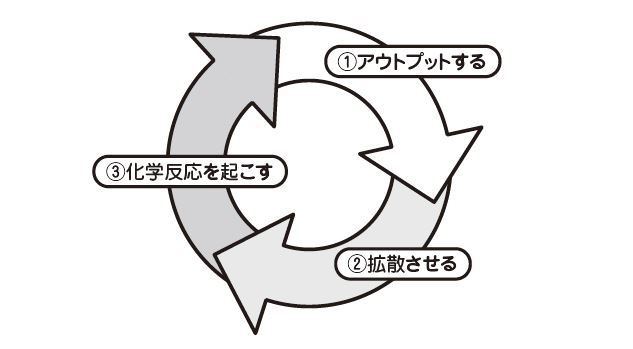
Stage 1 involves writing down the inner words swirling around in your head and giving them form. Grouping similar ideas together then allows you to grasp your habitual thought patterns and the directions your mind tends to take.
When your mind is filled with worries and thoughts, there's inevitably no room left to consider other possibilities. Therefore, by temporarily moving what you're currently thinking—those inner words floating in your mind—outside your head, you create space to think.
Next, in Stage 2, you use the "fragments of thought" written down in Stage 1 as material to further expand your thinking.
The first stage merely visualizes your inner words. In other words, it's a state where you've listed content you're considering solely within your own perspective. Recognizing the insufficient breadth and depth of your thinking at this stage allows you to advance your thought process. Merely thinking vaguely in your head leaves no room for an objective viewpoint, making it difficult to notice gaps or oversights in your thinking.
The final stage involves reaching places your usual self wouldn't consider by triggering a chemical reaction. Examples include deliberately thinking the opposite or imagining how a specific person other than yourself might feel. This third stage will be introduced in the next column along with specific methods.
Repeating this "Thinking Cycle" increases the vocabulary of your inner words, thereby enhancing the resolution of your inner language. This enables deeper contemplation of matters, adding depth to your thinking. Consequently, the words you naturally express outwardly gain depth and weight.
Advancing Your Thoughts with the "T-Shaped Thinking Method": Association and Deepening
Suppose you've started thinking about a topic you want to put into words.
Then, new inner words begin to surface one after another from the depths of your mind. As you spend more time developing your thoughts, you enter a stage where you recall past events and the emotions you felt at the time. And when you finally reach a point where you think, "Okay, I've thought about it enough," and try to speak it out loud...
Despite all that thinking, the words just won't come out.
As this situation shows, the act of "putting thoughts into words" isn't about the words themselves, but about how you think and how you grapple with your thoughts. The way to break through this situation boils down to writing things down and then advancing your thinking centered around those written seeds.
First, prepare an A4 sheet of paper or sticky notes. Using a thick marker pen, write down whatever words come to mind. It doesn't matter if they're single words, bullet points, or sentences. Forcing yourself to write sentences often leads to trying too hard to write well or overthinking logically, which doesn't yield good results. Therefore, initially, it's crucial to jot down whatever inner words pop into your head before they vanish, ensuring your thoughts aren't left behind.
Consider the words you write down here as the starting point for developing your thoughts—that is, for refining your inner words. Therefore, there's absolutely no need to think, "Is this really okay?", "Actually, I haven't thought of anything", or "This is embarrassing".
The next step is to expand and increase the resolution of these inner words, using the three keywords "Why?", "So?", and "Really?" as your focus.
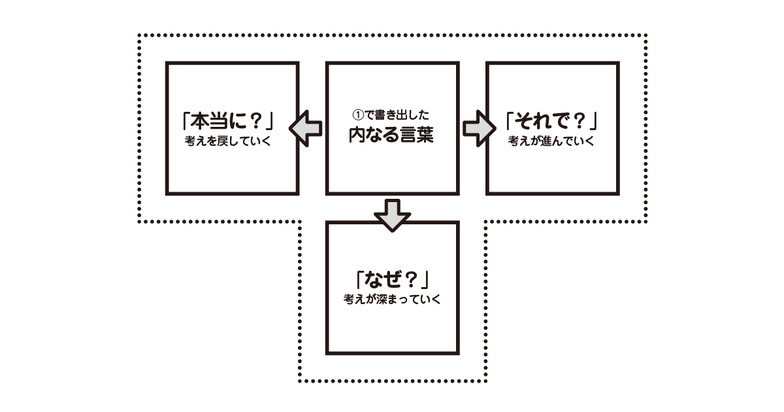
These three questions—Why?, So what?, and Really?—each guide your thinking in distinct directions: Why? delves deeper into the thought, So what? advances the thought, and Really? brings the thought back to its foundation.
When visualized, this process forms a "T" shape as your thinking progresses, hence the name "T-Shaped Thinking Method." Now, let's examine the effect of each.
"Why?": Digging Deeper
By asking yourself why you think that way or why that inner voice surfaced, you deepen your thinking. You get closer to your core, the source of your thoughts, and your fundamental values. It's easier to understand if you imagine deepening your thoughts down, down, down.
"So what?": Moving thoughts forward
Hidden behind "So?" are questions like: "So, what's the point?" "So, what do you ultimately want to achieve?" "So, what effect will this actually have?" By considering what results your current thoughts will produce, what effects they will yield, and whether they truly matter, you can propel your thinking forward.
"Really?": Pulling back
When thinking, we often unknowingly become short-sighted by focusing too narrowly on one aspect. Asking yourself "Really?" once your thoughts have progressed a certain distance helps you calm down and reset your perspective. This creates space to consider different directions your thoughts hadn't previously reached.
By envisioning a topic you wish to articulate and exploring it in three directions, you gradually gain a clearer grasp of your own thoughts. The crucial step is to strongly recognize each of these words and internalize them.
Next time, I'll introduce how to organize the inner words gained through this "T-shaped thinking method" and advance your thoughts to content you never even imagined.
Was this article helpful?
Share this article


Newsletter registration is here
We select and publish important news every day
For inquiries about this article
Back Numbers
Author